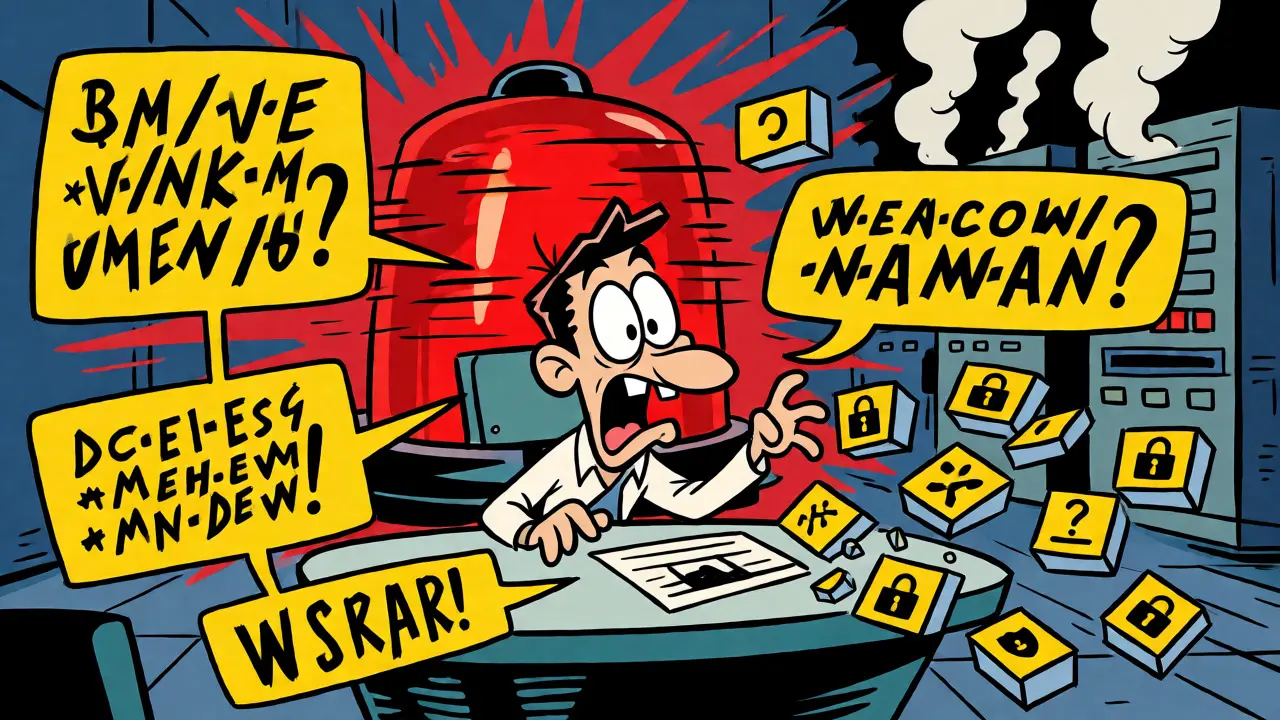
You’ve probably heard the term "vibe coding" floating around developer forums. It sounds chill-just describe what you want in plain English, let an LLM spit out the code, and ship it. But here’s the harsh reality: without strict vibe coding policies, this approach is a security nightmare waiting to happen. GitHub’s 2024 State of the Octoverse report revealed that 37% of AI-generated code contained security flaws requiring remediation. If you’re letting your team vibe their way through production deployments without guardrails, you aren’t moving fast; you’re accumulating technical debt and legal risk.
So, how do you balance speed with safety? You need a clear policy framework that defines exactly what to allow, what to limit, and what to prohibit outright. This isn’t about banning AI; it’s about governing it. Let’s break down the specific rules that separate successful implementations from chaotic "Wild West" scenarios.
What to Allow: The Green Zone for AI Assistance
First, don’t throw the baby out with the bathwater. AI is genuinely useful when applied to the right tasks. The key is identifying where augmentation beats manual effort without introducing critical risks.
Vibe Coding is an AI-assisted programming methodology where developers use natural language prompts to generate code via Large Language Models (LLMs). When governed correctly, it accelerates boilerplate creation significantly.
Allow AI for these specific areas:
- Boilerplate and Scaffolding: Generating standard CRUD operations, API endpoints, or database migrations. These are repetitive tasks where human error is common, but AI consistency is high.
- Unit Test Generation: Ask the model to write tests for existing functions. It’s faster than writing them by hand, and since you control the function logic, verifying the test coverage is straightforward.
- Documentation Drafts: Use AI to summarize complex code blocks into docstrings. Developers can review and tweak the wording, saving hours of mental load.
- Refactoring Suggestions: Let the AI propose cleaner syntax or more efficient algorithms for isolated functions. Always require a diff review before merging.
The underlying principle here is "Augmentation, Not Replacement." As noted in the Vibe Programming Framework, AI should enhance capabilities, not replace critical thinking. If the task requires deep architectural insight or novel problem-solving, keep the AI on a short leash.
What to Limit: The Yellow Zone of Conditional Usage
This is where most teams get sloppy. They allow AI everywhere but forget to enforce context. In the yellow zone, usage is permitted only if specific constraints are met. Think of this as "trust, but verify hard."
Limit AI usage under these conditions:
Mandatory Verification Protocols
You cannot just copy-paste AI output. The Cloud Security Alliance’s Secure Vibe Coding Guide emphasizes that developers must fully understand every line of generated code. A practical rule of thumb derived from industry best practices is allocating 15-20 minutes of dedicated review per 100 lines of AI-generated code. If a developer can’t explain why a specific regex pattern works or why a certain library was chosen, the code doesn’t merge.
File Length and Complexity Caps
Darren Coxon, author of "The Golden Rules of Full Stack Vibe Coding," advocates for strict component limits, such as no components exceeding 150 lines. Why? Because AI tends to produce verbose, monolithic code blocks that are hard to debug. By limiting file size, you force modularization, which makes AI errors easier to isolate. One developer on Reddit noted, "Enforcing the 150-line rule made our AI-generated code actually maintainable."
Design System Adherence
AI often hallucinates UI patterns that don’t exist in your design system. Limit AI generation of frontend components unless you provide the exact CSS classes or component library documentation in the prompt. Without this constraint, you’ll end up with inconsistent styling that defeats the purpose of using a design system.
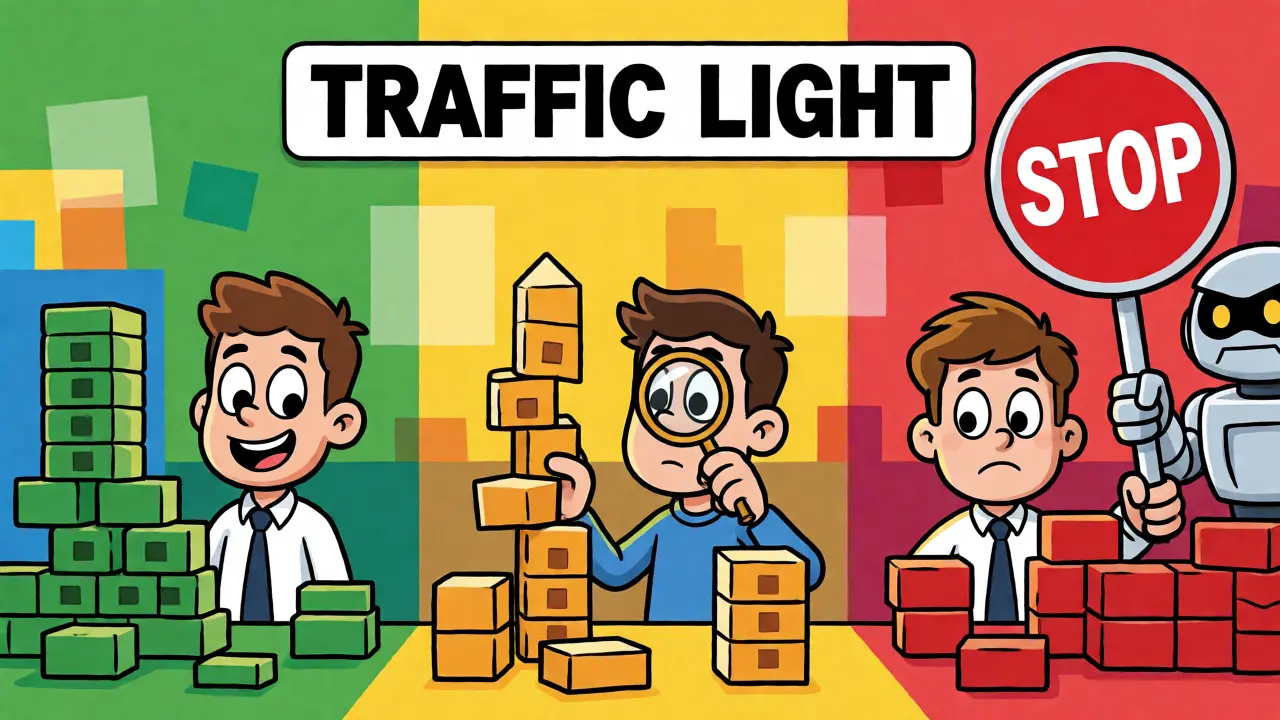
What to Prohibit: The Red Zone of Hard Stops
Some things simply shouldn’t be delegated to an LLM, especially in enterprise environments. These prohibitions are non-negotiable because they directly impact security, compliance, and intellectual property rights.
| Practice | Risk | Required Alternative |
|---|---|---|
| Hardcoding Secrets | API keys or DB credentials exposed in client-side code. | Use environment variables; never commit secrets to version control. |
| Unverified SQL Queries | SQL injection vulnerabilities from dynamic string concatenation. | Use parameterized queries or ORMs exclusively. |
| Wildcard CORS Settings | Insecure direct object references allowing any domain access. | Explicitly list trusted domains in CORS configuration. |
| Client-Side Data Storage | Sensitive data leaked via local storage or cookies. | Store sensitive data server-side; use HttpOnly, Secure cookies. |
Let’s dig into why these are prohibited. Replit’s Security Checklist explicitly bans storing sensitive data in browser environments like local storage or session storage without proper attributes. Why? Because AI models often suggest convenient but insecure patterns, like putting an API key in a JavaScript variable visible to anyone inspecting the page source. If a junior dev uses vibe coding and embeds Stripe keys in client-side code, you’re one bad deploy away from a breach.
Another critical prohibition is accepting AI output without security scanning. The Cloud Security Alliance warns that "ignorance isn't a defence when regulators come knocking." You must integrate automated security scanners (like SAST tools) into your CI/CD pipeline. If the scanner flags a potential XSS vulnerability or insecure dependency in AI-generated code, the build fails. No exceptions.
Governance Structures: Who Owns the Policy?
Policies don’t enforce themselves. The Superblocks Enterprise Vibe Coding Playbook highlights the difference between indie developers and enterprises. Indie devs might rely on self-discipline, but enterprises need structure. For organizations with 500+ employees, 82% of documented implementations require formal governance bodies.
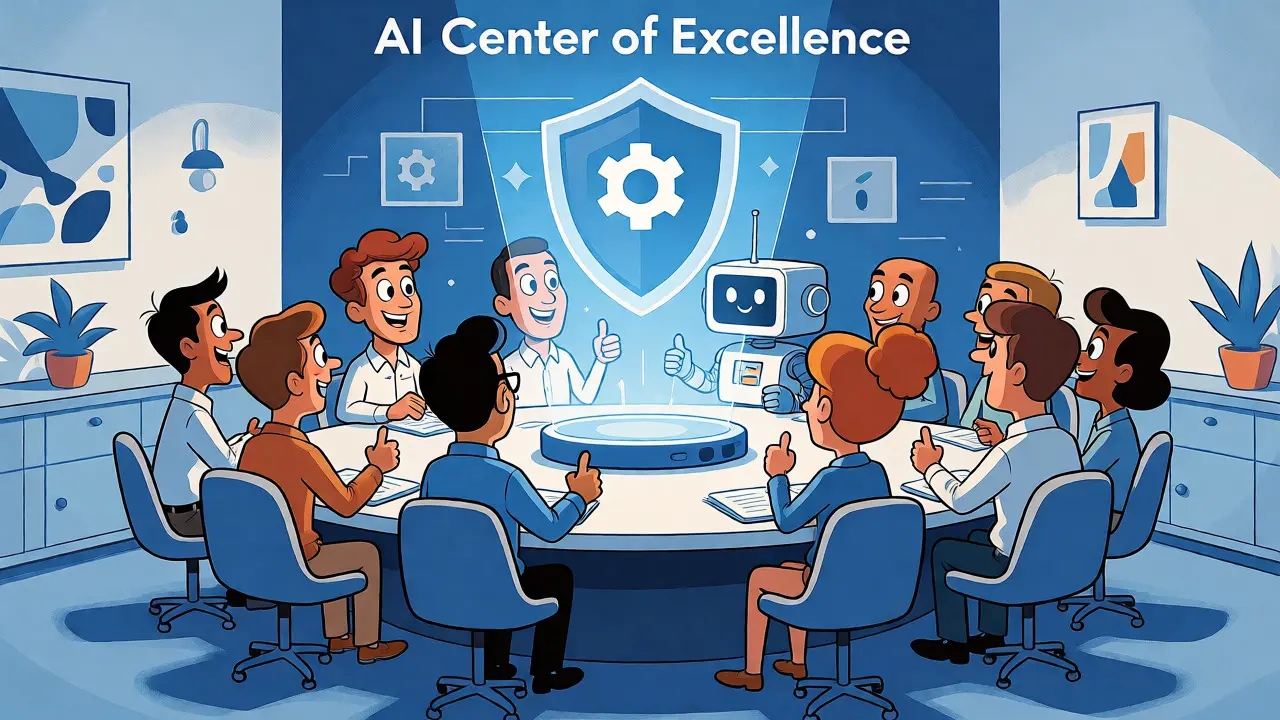
Consider establishing an AI Center of Excellence (CoE) or a cross-functional committee. This group defines the "Golden Rules," reviews new AI tools, and audits compliance. Their job isn’t to block innovation but to create a "single pane of glass" for visibility. They ensure that while Developer A uses Cursor and Developer B uses Copilot, both adhere to the same security standards.
For smaller teams, a lightweight "peer review mandate" works. Every pull request containing AI-generated code must have at least two approvals: one from a peer and one from a security-focused reviewer. This human-in-the-loop workflow reduces security incidents by 63%, according to case studies cited in the Vibe Framework documentation.
Implementation Roadmap: From Pilot to Production
Don’t roll out vibe coding policies overnight. Start small. Gartner predicts that 70% of enterprises will have formal AI coding policies by 2026, up from 28% in Q1 2025. Don’t wait until you’re part of the majority to start preparing.
- Pilot Phase (Weeks 1-3): Select one low-risk project. Apply the "Green Zone" allowances strictly. Track time saved vs. time spent reviewing.
- Feedback Loop: Survey developers. Did the 150-line limit feel restrictive? Was the verification process too heavy? Adjust thresholds based on real data.
- Security Integration: Automate checks. Ensure your linter rejects hardcoded secrets and wildcard CORS settings automatically.
- Scale Gradually: Expand to medium-risk projects. Introduce training sessions focused on "prompt engineering for security"-teaching devs how to ask for safe code.
Remember, the goal is "moving fast with control," not uncontrolled acceleration. Teams that skip the pilot phase often face the "Wild West" scenario described by Superblocks, where inconsistent code quality leads to integration hell.
Common Pitfalls and How to Avoid Them
Even with good policies, execution fails if you ignore human behavior. Here are three traps to watch for:
- The Illusion of Correctness: AI sounds confident even when wrong. Developers might assume the code works because it looks syntactically correct. Combat this by requiring unit tests for all AI-generated logic, not just UI components.
- Context Blindness: AI doesn’t know your legacy system’s quirks. It might suggest a modern async pattern that breaks compatibility with your older backend. Always provide context in prompts: "We are using Node.js v14, so avoid optional chaining."
- Documentation Decay: 68% of developers report difficulty understanding AI code without docs. Enforce the "Knowledge Preservation" principle. If AI writes the code, AI (or the developer) must also write the comments explaining why it was written that way.
By addressing these pitfalls proactively, you turn vibe coding from a risky experiment into a reliable productivity booster.
Is vibe coding safe for production environments?
Yes, but only with strict governance. GitHub reports show 37% of AI code has security flaws, so mandatory human review and automated security scanning are essential prerequisites for production use.
Should we ban AI for senior developers?
No. Senior developers benefit most from AI for boilerplate and refactoring. However, they must lead by example in adhering to verification protocols, ensuring they don't bypass reviews due to confidence in their own skills.
What is the biggest security risk in vibe coding?
Hardcoding secrets (like API keys) in client-side code and SQL injection vulnerabilities from unparameterized queries are the top risks. These should be prohibited entirely in favor of environment variables and ORMs.
How much time should be spent reviewing AI code?
Industry benchmarks suggest 15-20 minutes of dedicated review per 100 lines of AI-generated code. This ensures developers understand the logic and catch subtle bugs that automated linters miss.
Do we need an AI Center of Excellence?
For enterprises with 500+ employees, yes. Smaller teams can manage with a designated security champion who owns the policy updates and audits. The goal is centralized visibility over decentralized tool usage.


Finally someone gets it. We don't need some foreign consultant telling us how to code when American devs have been doing this right for decades. 🇺🇸
The statistics presented herein are highly suspect and likely manipulated by Big Tech interests to justify increased surveillance of developer workflows. One must consider that the 'security flaws' cited may actually be intentional backdoors inserted by the LLM providers themselves, who profit from our remediation efforts. It is prudent to assume that every AI-generated line contains a hidden telemetry beacon reporting your proprietary logic to offshore servers in regions with lax data protection laws. The push for an 'AI Center of Excellence' is merely a mechanism to centralize control and monitor individual productivity metrics under the guise of governance. I remain skeptical of the claim that human review reduces incidents by 63%, as this figure lacks independent verification and could easily be fabricated to encourage compliance with these restrictive policies. Furthermore, the emphasis on 'vibe coding' seems designed to distract from the fundamental instability of current transformer architectures which lack true logical reasoning capabilities. Until we see open-source models trained exclusively on verified, non-commercial datasets, any adoption of these tools represents a significant vector for supply chain attacks. The industry's rush to integrate these unproven technologies suggests a herd mentality rather than a rational assessment of risk versus reward. Developers are being conditioned to accept lower quality output in exchange for perceived speed, which will inevitably lead to a collapse in software reliability standards. The mention of 'legal risk' is particularly telling, as it implies that the liability will fall on the enterprise while the model providers retain all intellectual property rights over the generated code. This asymmetry of risk and reward is characteristic of monopolistic practices in the tech sector today.
This guide is a breath of fresh air! 🌬️ The distinction between augmentation and replacement is crucial for nurturing junior talent without letting them drown in hallucinated syntax. I especially love the practical advice on limiting file lengths; it forces modularity which is often overlooked in the excitement of rapid generation. Teaching devs to prompt for security context is a game-changer for long-term maintainability. Let's keep the human element at the heart of engineering!
Lazy devs blame tools for their own sloppiness. If you cant read the code you paste, you dont deserve to merge it. Moral integrity matters more than speed.
Oh my goodness, the drama here is absolutely palpable!! 😱 You cannot just throw AI at production and hope for the best... it is simply irresponsible!!! Every single line needs scrutiny, otherwise you are inviting disaster into your stack!! The 37% flaw rate is terrifyingly high, and ignoring it is practically negligence!!! We need strict enforcement, not suggestions!!!
The article misses the point. AI doesn't make code bad, bad developers do. If you know what you're doing, you don't need these hand-holding policies. Just use common sense.
Man, they are hiding something. Why do they push this so hard? Because they want to replace us all eventually. That 37% error rate? Fake. They want you dependent on their cloud services so you can never leave. It’s a trap, bro. Don’t let them feed you the vibes until they own your brain. 🤖💀
While the sentiment is appreciated, the analysis lacks depth regarding specific implementation costs. The assumption that peer reviews scale linearly with team size is flawed, leading to bottlenecked pipelines. Furthermore, the citation of Gartner predictions is often self-fulfilling prophecy rather than empirical fact. A more rigorous approach would involve longitudinal studies on defect density post-AI integration, which are currently scarce. Without such data, these policies are largely anecdotal.
I feel like everyone is missing the emotional toll here! It’s not just about bugs, it’s about the anxiety of not understanding your own codebase because it was written by a machine! 😭 And why does no one talk about how lonely it feels when you’re just prompting instead of coding? We are losing the soul of programming!