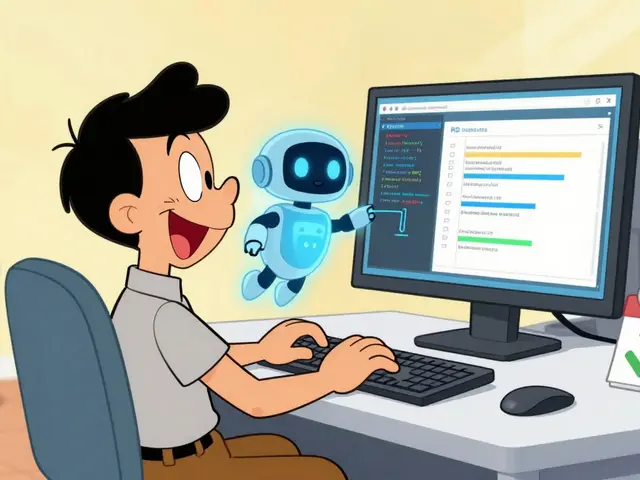
You type a prompt, hit enter, and wait. The AI spits out code. It looks clean. But does it actually work? That’s the million-dollar question in vibe coding, an emerging software development paradigm where AI models generate functional code through conversational interfaces with minimal human intervention. If you’re relying on these tools for production apps, you need hard data, not just hype. Recent benchmarks reveal a messy reality: while top models like GPT-5.2 are getting better, no AI consistently delivers perfect applications on the first try.
The Reality Check: What Benchmarks Actually Measure
Before we look at scores, let’s define what we’re measuring. Traditional unit tests don’t cut it here. We need to know if the whole application runs, imports correctly, and handles errors. Three major frameworks dominate this space right now: Vibe Code Bench, a long-horizon evaluation framework by Vals AI that measures accuracy across hundreds of complex application specifications., rlancemartin/vibe-code-benchmark, an open-source GitHub repository using binary scoring for import and runtime success., and Testsprite, a proprietary system evaluating automation depth and IDE compatibility..
These aren’t just checking syntax. They measure four critical metrics:
- Import Success: Did the modules load without crashing?
- Run Success: Did the app start up?
- LLM-Based Quality Assessment: An AI judge (like OpenAI o3-mini) rates the logic.
- Deployment Success: Can it actually be deployed in environments like LangGraph?
Leaderboard: Who Wins on Accuracy?
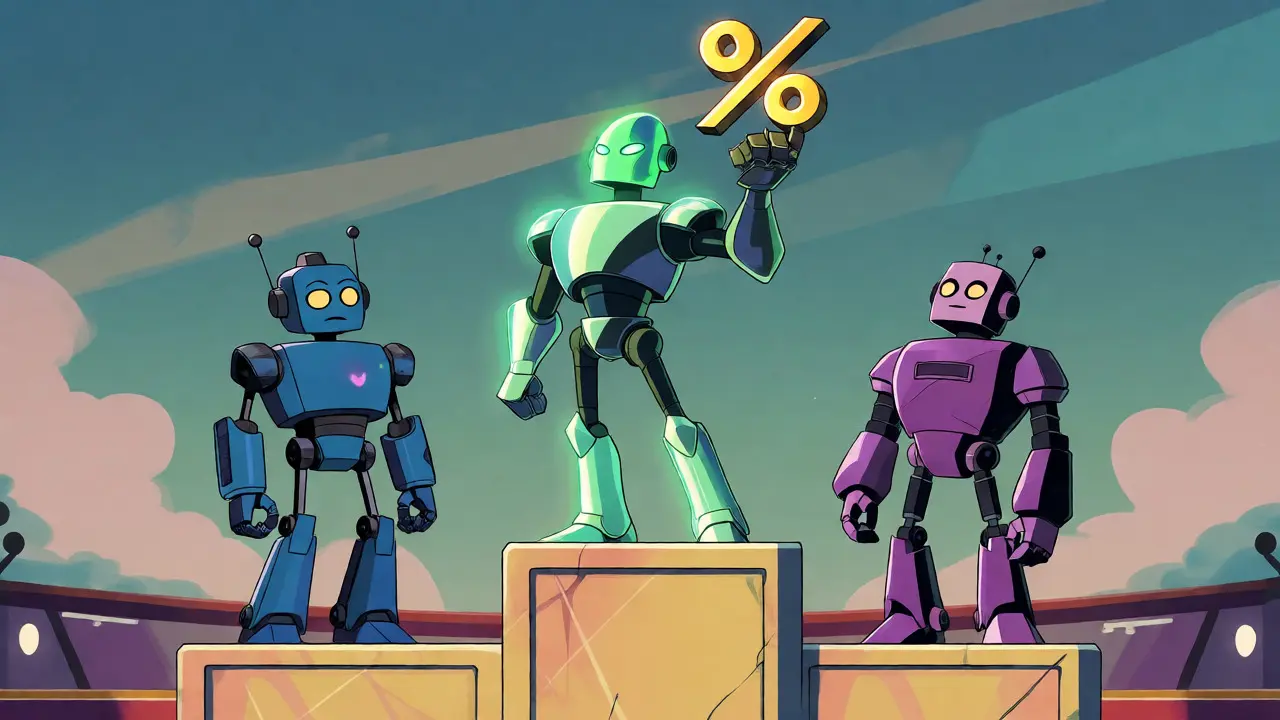
If you want raw numbers, look at Vals AI’s March 2025 report. They tested 347 application specs. The results were surprising. GPT-5.2, the latest iteration from OpenAI, leading current benchmarks with 35.56% accuracy on complex tasks. took the top spot with 35.56% accuracy. That’s a huge jump-10.95 percentage points over GPT-4.5. But let’s put that in perspective. A 35% pass rate means two out of three times, the code is broken or incomplete.
Claude Sonnet 4.5 followed closely at 22.62%. While lower, Claude often excels in reasoning-heavy tasks where context retention matters more than brute-force code generation. Testsprite’s data adds another layer: their accuracy tool boosted pass rates from 42% to 93% after just one iteration. This suggests that iteration is more valuable than initial perfection. Don’t expect magic; expect a draft that needs fixing.
| Model | Accuracy Score | Key Strength | Common Failure Mode |
|---|---|---|---|
| GPT-5.2 | 35.56% | SQL Generation & UI Logic | Long-horizon context loss |
| GPT-5.1 | 24.61% | Balanced performance | Inconsistent API handling |
| Claude Sonnet 4.5 | 22.62% | Reasoning & Debugging | Over-engineering simple tasks |
The Long-Horizon Problem
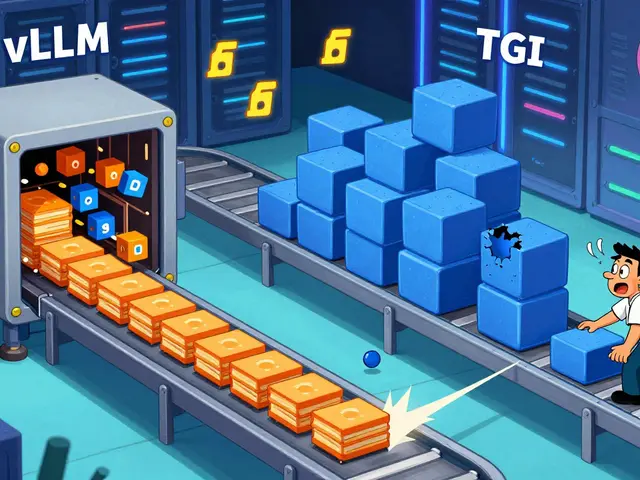
Here is the biggest headache: complexity. Most benchmarks show that models crash and burn when tasks get too big. In Vals AI’s distribution analysis, 68.3% of samples fell into the '0 to 12.5%' accuracy bucket. Why? Because models forget. They lose track of your original instructions as the conversation gets longer. This is called "direction following" failure.
Less-performant models forgot key aspects of initial prompts in 41.7% of failed tasks. Top models maintained prompt fidelity through 93.2% of long-horizon tasks, but even they struggle. If you’re building a full-stack app with database integration, expect trouble. Dr. Michael Chen from Stanford noted that database integration has just a 22.8% success rate. That’s a red flag for anyone trying to vibe-code a backend service.
Speed vs. Quality: The Trade-Off
Not all tools are created equal when it comes to speed. YouTube tech reviewer Alex Chen found that terminal-based tools like Claude Code, a CLI-based assistant known for rapid task completion in under 2 minutes. completed simple tasks in under two minutes. Compare that to GUI-heavy tools that might take seven minutes per task. For prototyping, speed wins. You can iterate faster.
But speed doesn’t mean quality. Tools like Cline (VSCode extension) scored high on planning but burned through cash. Users reported API costs exceeding $300 monthly. Is that worth it? Only if the time saved outweighs the cost. For many, the answer is yes. 78.4% of users cited faster prototyping as the main benefit. But 63.2% admitted spending more time fixing AI bugs than writing code originally. It’s a trade-off you have to manage.
Security and Validation: The Hidden Cost
Never deploy AI code without checking it for security. Testsprite’s CTO, Dmitri Petrov, revealed that 58% of AI-generated code contains security vulnerabilities. Static analysis of 12,000 samples showed that common patterns like hardcoded secrets or unvalidated inputs slip through easily.
This is why "accuracy gates" are becoming standard. 78.4% of enterprise teams now implement validation steps before deployment. You need tools that integrate with your CI/CD pipeline. If your vibe coding tool doesn’t hook into your existing workflow, you’re adding friction, not removing it.

How to Choose Your Tool
Picking the right tool depends on your specific job-to-be-done. Here’s a quick guide based on real-world usage patterns:
- For Rapid Prototyping: Use CLI tools like Claude Code or Open Code. They are fast and cheap for small tasks.
- For Complex Logic: Stick with GPT-5.2 or Claude Sonnet 4.5 via an IDE extension like Cursor. You need the context window and reasoning power.
- For Enterprise Security: Integrate a validator like TestSprite or PVS-Studio. Do not rely on the LLM alone to catch bugs.
- For Full-Stack Apps: Be careful. Database and API integration remain weak spots. Plan for significant manual debugging.
Also, consider the setup cost. Open-source benchmarks like rlancemartin’s require Python 3.10+ and about 8-12 hours of setup. Commercial tools like Testsprite cost $49/user/month but offer plug-and-play integration. Calculate your ROI before committing.
Frequently Asked Questions
What is the average accuracy of current vibe coding tools?
Current benchmarks show an average accuracy of around 35% for complex tasks. GPT-5.2 leads with 35.56%, while most other models hover between 20-25%. Simple tasks see higher success rates, but full-stack applications remain challenging.
Why do AI coding tools fail on long projects?
The primary cause is "context drift." As conversations lengthen, models forget initial constraints and architectural decisions. About 41.7% of failures are due to the model ignoring key parts of the original prompt.
Is vibe coding secure enough for production?
Not without validation. Studies indicate 58% of AI-generated code contains security vulnerabilities. Always use static analysis tools and human review before deploying to production environments.
Which framework is best for beginners?
For beginners, IDE-integrated tools like Cursor or VS Code extensions (Cline) are easier to set up than CLI benchmarks. They provide visual feedback and easier error correction, reducing the learning curve.
Do I still need to know how to code?
Yes. 83.4% of AI outputs require basic debugging skills. You need to understand the generated code to fix logical errors, especially in database integrations and API connections.