Imagine building a working app in ten minutes without writing a single line of syntax. Sounds like sci-fi? It’s actually happening right now, thanks to vibe coding. Coined by Andrej Karpathy in early 2025, this approach lets you talk to AI agents in plain English, watch code appear, and iterate until it works. But with great hype comes great confusion. Is vibe coding just lazy programming? Will it replace engineers entirely? Or is it the next evolution of how we build software?
If you’ve scrolled through tech Twitter or LinkedIn lately, you’ve probably seen developers arguing about whether vibe coding is the future or a fad. The truth sits somewhere in the messy middle. This guide cuts through the noise. We’ll separate the myths from the facts, show you where vibe coding shines, and explain why your technical knowledge matters more than ever.
Key Takeaways
- Vibe coding is not dead: It’s a legitimate workflow for rapid prototyping and MVPs, defined by natural language interaction rather than manual syntax.
- It won’t replace senior devs: Instead, it elevates them. You need deep domain knowledge to validate AI output and fix edge cases.
- Scope matters: Vibe coding excels at unit-level tasks and small apps but struggles with complex, large-scale systems without strict specifications.
- Testing is non-negotiable: Because you aren’t reading every line, automated tests become your safety net against hidden bugs.
What Actually Is Vibe Coding?
Let’s clear up the definition first. Vibe coding isn’t just using autocomplete. It’s a fundamental shift in control. As Karpathy described it, you "fully give in to the vibes," meaning you focus on the running system’s behavior rather than the underlying code structure. You prompt, run, observe, and adjust. If it breaks, you tell the AI what went wrong, and it fixes itself.
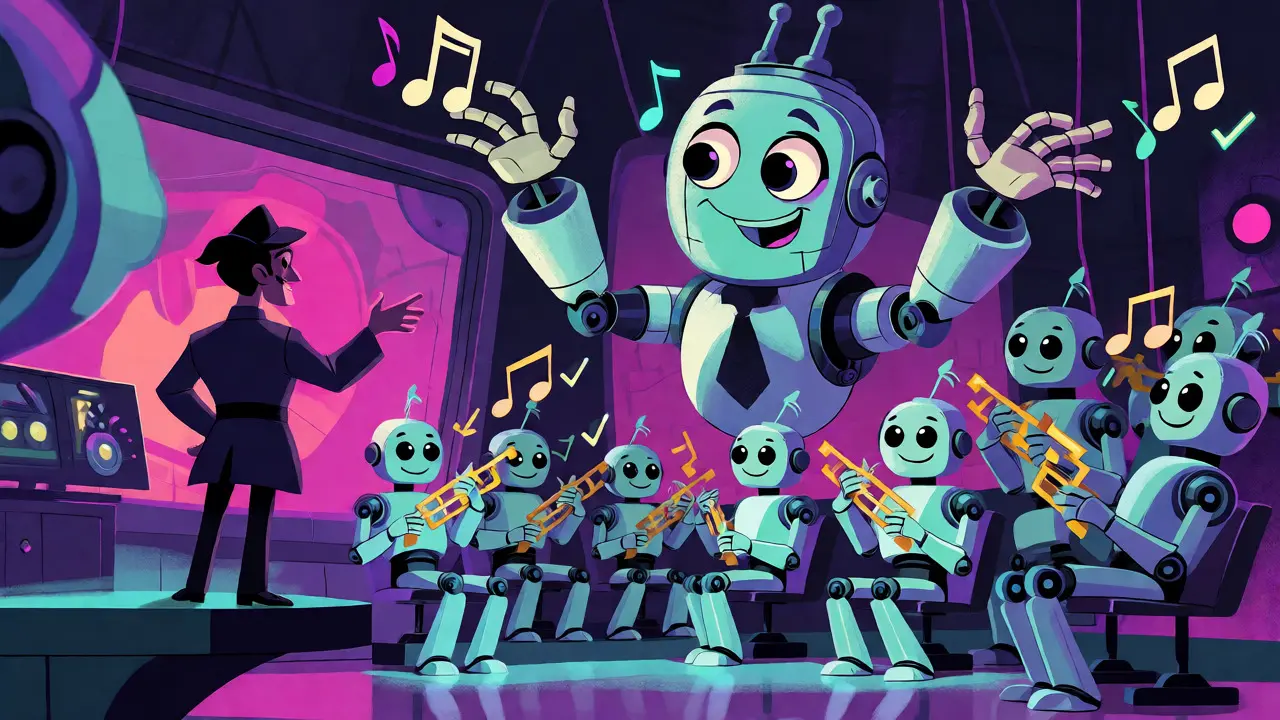
This method democratizes development. Product managers, designers, and founders can now turn business ideas into working prototypes without waiting for an engineering sprint. Red Hat Developer notes that this aligns with how humans naturally think-we describe goals, not instructions. However, calling it "coding" is a bit of a misnomer. It’s closer to directing an orchestra where the musicians are AI models. You don’t play the violin; you ensure the melody sounds right.
Myth #1: Vibe Coding Is Just Lazy Programming
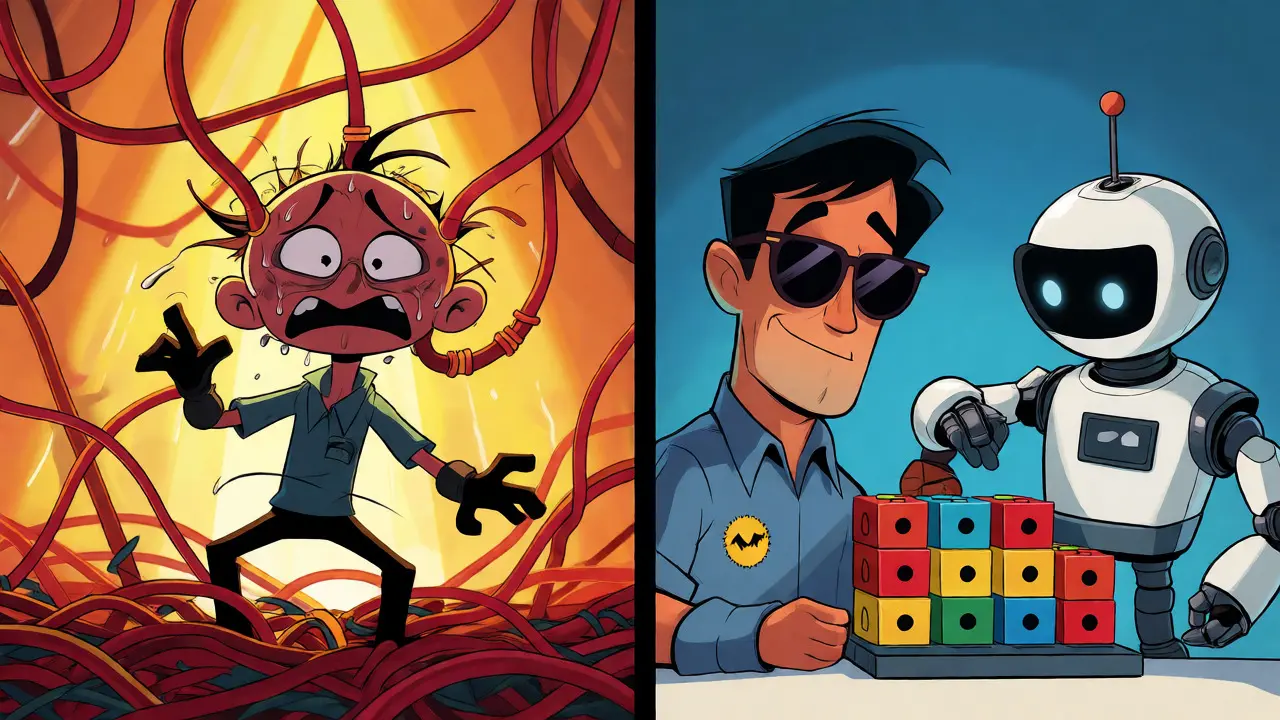
The biggest criticism is that vibe coders don’t understand what they’re shipping. They copy-paste errors, ignore security flaws, and ship spaghetti code. While bad habits exist, labeling the entire practice as lazy misses the point. Software development has always been about automating solutions to business problems. Code is just the medium.
Think about it: if you know exactly what needs to happen, writing boilerplate CRUD operations is tedious work. Offloading that to an AI frees you to focus on architecture, user experience, and logic. The "lazy" developer might ship broken code, but the skilled vibe coder uses AI to accelerate learning. They treat code as a disposable artifact-generated, tested, and replaced if needed-rather than a precious manuscript to be hand-crafted.
Myth #2: AI Will Replace Skilled Developers
Will vibe coding make junior developers obsolete? Probably not. In fact, it makes experienced engineers more valuable. Here’s why: AI is a force multiplier, not a replacement. It amplifies your existing skills. If you don’t know what a race condition looks like, you won’t know when the AI introduces one.
Consider a recent example involving a Network Monitor project. An AI helped scaffold the interface quickly, but migrating from Python to Rust required deep knowledge of system programming and GTK4 libraries. The AI could write the syntax, but only a human expert could optimize memory usage and handle concurrency correctly. Technical knowledge determines your effectiveness in three areas:
- Prompting: Using precise terminology to guide the AI.
- Validation: Spotting subtle logical errors or security vulnerabilities.
- Optimization: Refining performance based on domain-specific constraints.
Without these skills, you’re just guessing. With them, you’re building faster than ever.
Facts: Where Vibe Coding Shines (And Where It Fails)
To use vibe coding effectively, you need to know its boundaries. It’s not a silver bullet for enterprise ERP systems. It thrives in specific contexts where speed and iteration matter more than long-term maintainability.
| Use Case | Suitability | Why |
|---|---|---|
| Rapid Prototypes / MVPs | High | Idea-to-code in minutes; perfect for validating concepts. |
| Landing Pages & UI Components | High | Visual feedback loop allows quick iteration on design. |
| Unit-Level Logic | Medium-High | Easier to verify isolated functions with tests. |
| Complex Enterprise Systems | Low | Requires strict specs; risk of "whack-a-mole" bugs. |
| Security-Critical Modules | Low-Medium | Needs rigorous audit; AI may miss edge-case exploits. |
Red Hat Developer highlights that vibe coding belongs at the unit level. When you ask an AI to write a function, you can write a test for it immediately. If the test passes, you trust the output. But for larger scopes, you need specifications. Without them, you fall into the "whack-a-mole trap." Fix one bug, break two others, and lose track of the system’s state. The code becomes the only source of truth, and if you didn’t read it, you don’t own it.
The Role of Testing in the Age of AI
Here is a hard truth: instructions become obsolete the moment code is generated. Once the AI writes the file, your prompt doesn’t matter. The code is the reality. This makes testing critical. You cannot rely on visual inspection alone for backend logic.
Successful vibe coders adopt a "test-first" mindset, even if they aren’t writing the implementation first. Ask the AI to generate tests alongside the code. Or better yet, define the acceptance criteria in your prompt. For example, instead of saying "make a login form," say "create a login form that validates email format, handles password masking, and returns a specific error message for invalid credentials." Then, verify those behaviors automatically.
One developer reported building five concepts and three MVPs in just a few months using this approach. The key wasn’t just prompting-it was knowing which parts of the system needed robust validation and which could remain flexible.
Tools of the Trade: What Works Best?
You don’t need exotic hardware. Most vibe coding happens in integrated environments where chat interfaces live side-by-side with code editors. According to recent benchmarks, Claude Code currently leads the pack for vibe coding tasks, though competitors like GitHub Copilot Workspace and Cursor are close behind.
But the tool is secondary to the technique. Whether you use Claude, GPT-4o, or Llama 3, the magic lies in clarity. Ambiguous prompts lead to ambiguous code. Specific prompts lead to usable results. Treat the AI like a junior engineer who knows every library but lacks context. Give it context, constraints, and examples.
Beyond the Hype: The Future of Human-AI Collaboration
Vibe coding isn’t going away. It’s too accessible and too aligned with modern product development cycles. Businesses prioritize value delivery over code purity. If an app works and users love it, does it matter if the variable names are terrible? Not really.
However, this doesn’t mean technical foundations vanish. As AI handles more syntax, human roles shift toward system design, integration, and ethical oversight. You become the architect, not the bricklayer. This requires a different skill set: strong communication, deep domain expertise, and the ability to debug abstractly.
So, should you try vibe coding? Yes. Start small. Build a personal dashboard. Create a simple API wrapper. Feel the flow. You’ll quickly learn where AI helps and where you need to step in. The goal isn’t to stop coding-it’s to code smarter.
Is vibe coding suitable for production applications?
It depends on the complexity. For small to medium-sized apps with clear requirements, yes. For large, mission-critical systems, it’s risky without rigorous refactoring and documentation. Many teams use vibe coding for internal tools or MVPs before rewriting core modules manually.
Do I still need to know how to code?
Absolutely. You need enough knowledge to read, debug, and optimize the AI-generated code. Without technical literacy, you can’t identify hallucinations, security flaws, or performance bottlenecks. Think of it as needing to speak the language to direct the translator effectively.
Which AI model is best for vibe coding?
As of late 2026, Claude Code and advanced versions of GPT-4 are top contenders. Benchmarks suggest Claude often provides more coherent multi-file edits, while GPT-4 excels at creative problem-solving. The best tool is often the one integrated into your existing IDE workflow.
How do I prevent "spaghetti code" when vibe coding?
Enforce modular design. Ask the AI to create separate files for components, services, and utilities. Regularly refactor and enforce linting rules. Treat the initial generation as a draft, then clean it up manually or via automated formatting tools.
Can non-developers use vibe coding?
Yes, for basic applications. Designers and product managers can build functional prototypes. However, scaling these prototypes usually requires developer intervention to handle database connections, authentication, and deployment infrastructure.