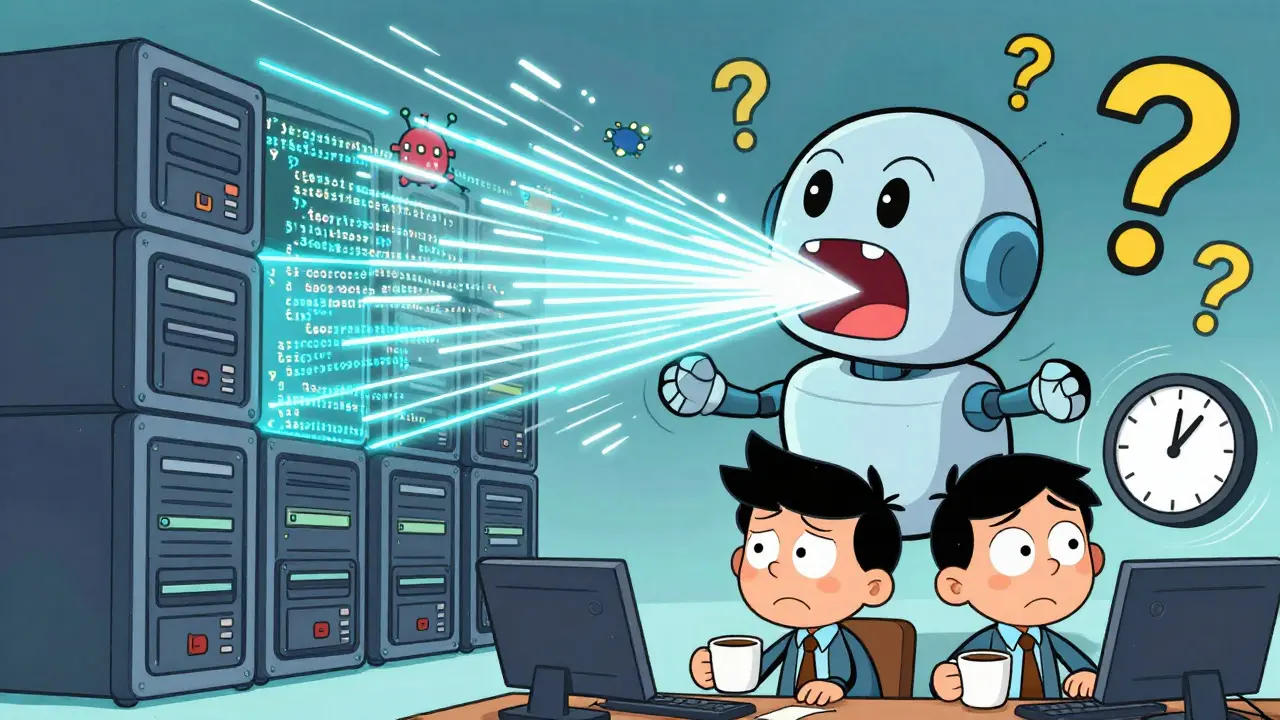
Imagine shipping a critical update to your banking app, only to discover weeks later that the AI-generated code contained a subtle logic error no human reviewer caught. This isn't a hypothetical; it's the reality facing engineering teams today as AI code verification becomes a non-negotiable part of the development lifecycle. With 63% of professional developers now relying on AI tools to write code, the volume of generated output has far outpaced our ability to manually inspect every line. The result? A growing gap between what machines produce and what we can trust.
The core problem is simple: AI models are probabilistic. They guess the next token based on patterns, not mathematical certainty. When you ask an LLM to fix a memory leak, it might give you a perfect solution or a plausible-looking bug. Without robust mechanisms to verify correctness, track origin, and ensure authenticity, you're flying blind. This article breaks down the three pillars of trustworthy AI for code-verification, provenance, and watermarking-and explains how they work together to secure your software supply chain in 2026.
Why Traditional Code Review Isn't Enough Anymore
For decades, peer review was the gold standard for quality control. Developers read each other’s code, spotted errors, and shared knowledge. But when an AI generates thousands of lines per day, human attention becomes the bottleneck. OpenAI’s internal data from late 2025 showed that their code review model had to handle over 100,000 external pull requests daily. No human team can keep up with that pace while maintaining high accuracy.
The issue isn't just speed; it's cognitive load. Studies indicate that after reviewing about 40 minutes of complex code, developer fatigue sets in, leading to missed bugs. AI-generated code often looks clean and idiomatic, which ironically makes it harder to spot logical flaws because it doesn't look "wrong" at first glance. This creates a false sense of security. We need systems that don't just flag syntax errors but mathematically prove correctness or statistically validate behavior against expected outcomes.
Pillar One: Verification Methods Explained
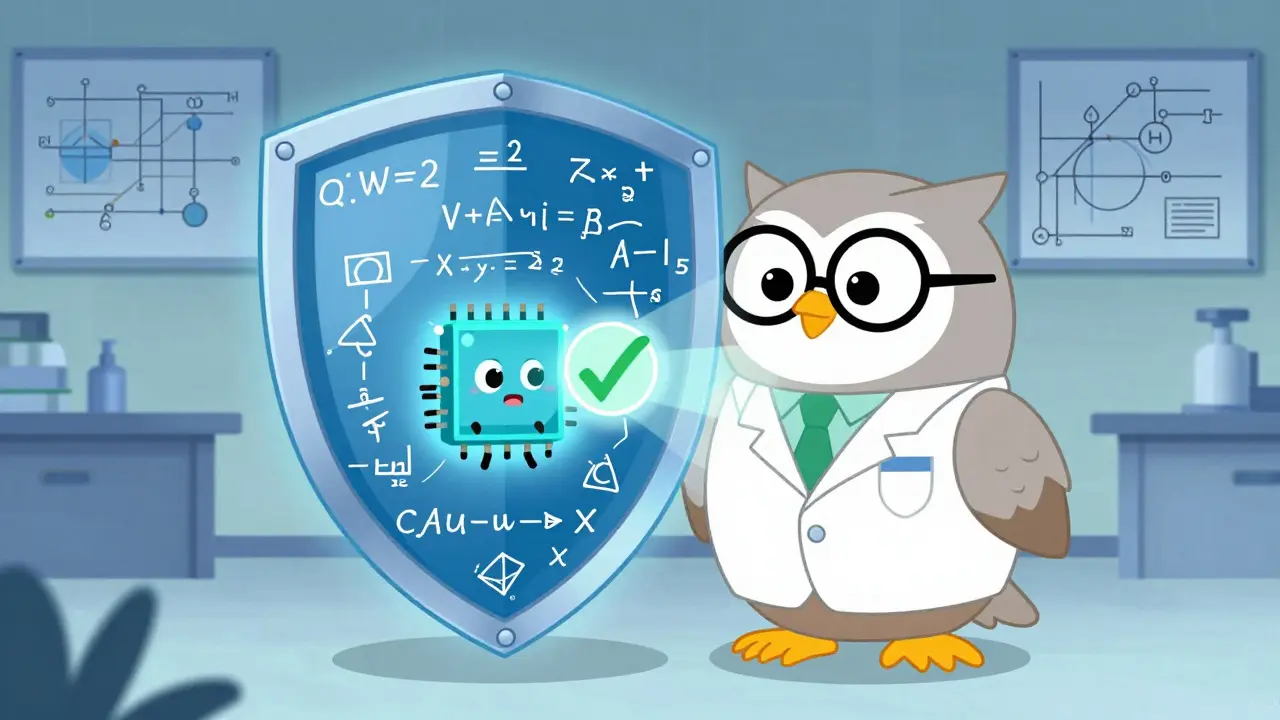
Verification is the act of proving that code does exactly what it’s supposed to do, nothing more and nothing less. In the context of AI, this has evolved from simple static analysis to sophisticated formal methods and cryptographic proofs.
Formal Verification is a method that uses mathematical logic to prove that a system satisfies its specifications without executing the code. Companies like TrustInSoft have pioneered tools that provide mathematically proven memory safety. Their analyzer eliminates runtime errors by checking every possible state of the program before it ever runs. It’s rigorous, but it requires specialized training. Most engineers report an 80-120 hour learning curve to master these tools, though the payoff is significant: a 70-85% reduction in critical bugs in safety-critical systems like medical devices and autonomous vehicles.
On the other end of the spectrum, we have Cryptographic Verification, exemplified by Provably.ai. Launched in early 2025, this approach uses Zero-Knowledge (ZK) protocols to allow agents to prove the correctness of their computations independently. For example, if an AI agent runs a SQL query on a database, ZK proofs let you verify the result is correct without seeing the underlying data or the full computation process. The average verification time is under 2.3 seconds, making it suitable for real-time applications where latency matters.
Then there’s the practical middle ground: AI-Assisted Code Review. Tools like GitHub Copilot’s review features use large language models to scan code for common pitfalls. These tools prioritize precision over recall, meaning they aim to catch fewer issues but ensure that when they do flag something, it’s likely a real problem. This reduces developer annoyance and builds trust in the tool itself.
| Method | Key Advantage | Main Limitation | Best Use Case |
|---|---|---|---|
| Formal Verification (e.g., TrustInSoft) | Mathematical certainty; eliminates runtime errors | High learning curve; complex integration | Safety-critical systems (medical, automotive) |
| Cryptographic Proofs (e.g., Provably.ai) | Fast verification (<2s); privacy-preserving | Limited to specific computation types (SQL, etc.) | Financial services; real-time data processing |
| AI-Assisted Review (e.g., GitHub/OpenAI) | Low friction; integrates into existing workflows | Probabilistic; may miss subtle logic errors | General web development; rapid prototyping |
Pillar Two: Establishing Code Provenance
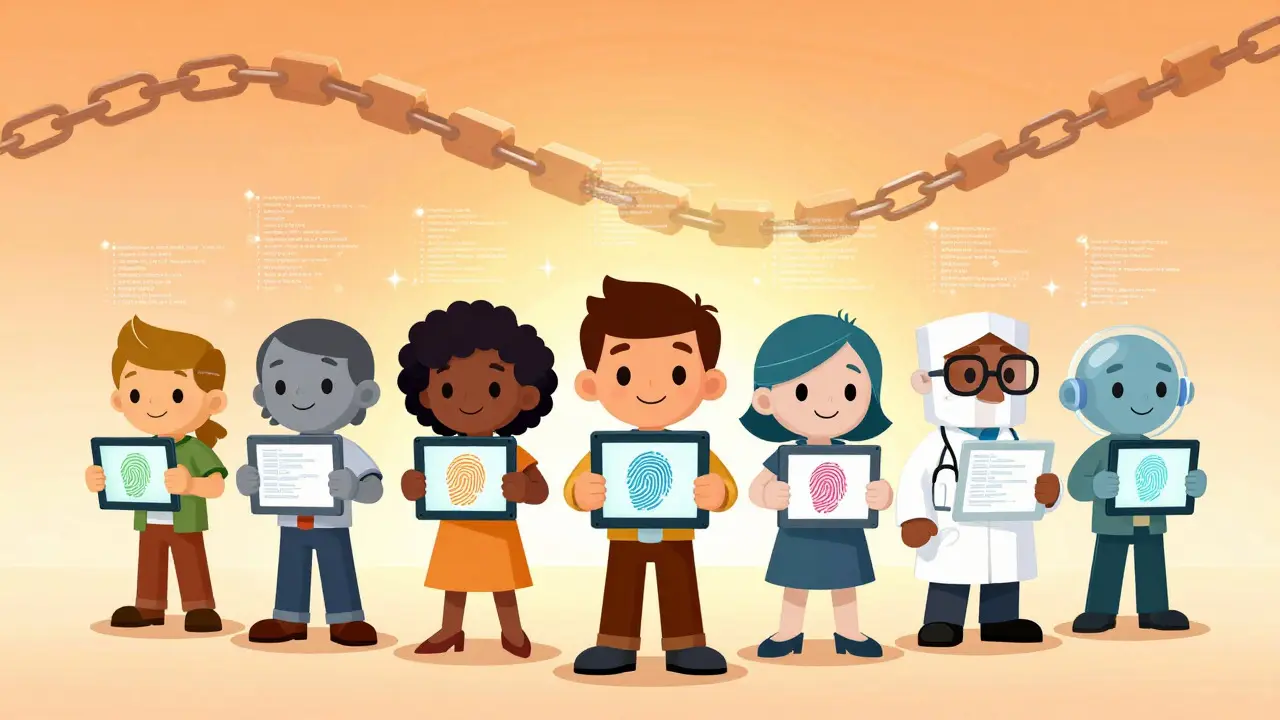
Verification tells you if the code is right. Provenance tells you where it came from. In a world where AI can generate code in milliseconds, knowing the origin of a function is crucial for accountability. If a bug appears in production, did it come from a junior developer, a senior engineer, or an AI model? And if it was AI, which model version and prompt were used?
Code provenance involves tracking the lineage of every piece of code. This includes metadata such as the timestamp, the author (human or machine), the toolchain version, and the specific parameters used during generation. GitHub’s updated documentation from January 2026 emphasizes this, noting that effective review requires repository-wide context. Without provenance, debugging becomes a guessing game.
Implementing provenance usually starts with standardized commit messages and metadata tags. For AI-generated code, this means embedding information about the model (e.g., GPT-5 vs. Claude 3.5) and the confidence score assigned by the verifier. Some teams are moving toward immutable logs using blockchain-like structures to ensure that once a code change is recorded, it can’t be silently altered. This is particularly important in regulated industries like healthcare, where the EU AI Act now requires appropriate technical measures to address risks in critical infrastructure.
Pillar Three: Watermarking AI-Generated Content
Watermarking is the digital equivalent of signing your name on a painting. For code, it means embedding invisible markers into the source files that identify them as AI-generated. This isn't just about copyright; it's about transparency. If a user knows a module was written by an AI, they might test it differently or apply stricter scrutiny.
Current watermarking techniques for code are evolving rapidly. Early methods relied on statistical anomalies in token selection, but these are easily stripped by reformatting or minor edits. Newer approaches use semantic watermarks, where specific variable naming conventions or comment structures are subtly biased to create a detectable pattern. While not yet universal, these methods are becoming standard in enterprise deployments to maintain a clear distinction between human-curated and machine-generated assets.
Watermarking also plays a role in licensing. If you’re using open-source AI models to generate proprietary code, watermarks help track usage and ensure compliance with licenses. As the market for AI code verification tools grows-reaching $187 million in Q4 2025-watermarking is becoming a key differentiator for vendors who want to offer end-to-end traceability.
Implementation Challenges and Real-World Feedback
Theory is great, but how does this play out in actual engineering teams? Feedback from deployed systems reveals a mixed bag of successes and frustrations. On one hand, users report catching subtle memory leaks in 30% of AI-generated functions, saving hours of debugging. On the other hand, 28% of reviewers complain about false positives wasting 15-20 minutes per review cycle.
The biggest hurdle remains integration. 63% of GitHub survey respondents cited workflow disruption as their primary concern. Adding formal verification steps can slow down deployment cycles if not carefully managed. Teams are finding success by adopting a tiered approach: strict formal verification for core modules, AI-assisted review for peripheral features, and lightweight provenance checks for everything else.
Another challenge is the skill gap. Not every developer understands formal methods or cryptographic proofs. Organizations are investing in training programs, but the ramp-up period is typically 3-6 months. During this time, productivity may dip before it rises. Leaders need to manage expectations, framing these tools not as immediate fixes but as long-term investments in software reliability.
Future Trends: Where Is Trustworthy AI Heading?
Looking ahead to 2027 and beyond, several trends are shaping the landscape. First, the verification-generation gap is narrowing. Currently, verifiers are 5-10x faster than generators, but analysts predict this will shrink to 2-3x as models become more efficient. This means verification will become cheaper and more accessible, potentially mandatory for all enterprise AI code generation by 2028.
Second, we’re seeing a shift toward automated, continuous verification. Instead of running checks only at commit time, tools will monitor code in real-time during execution, flagging anomalies as they happen. This proactive approach could reduce the number of bugs reaching production by another 40%.
Finally, regulatory pressure is accelerating adoption. The EU AI Act and similar frameworks in other regions are pushing companies to prove that their AI systems are safe and accountable. This isn't just good practice anymore; it's legal requirement. Companies that fail to implement robust verification, provenance, and watermarking strategies risk fines and reputational damage.
Frequently Asked Questions
What is the difference between code verification and code testing?
Testing checks if code works for specific inputs, while verification proves that code works for all possible inputs within a defined scope. Verification uses mathematical or logical proofs, whereas testing relies on empirical observation. Verification is exhaustive; testing is sample-based.
Is formal verification too expensive for small startups?
It depends on the product. For consumer apps, the cost may outweigh the benefits. However, for fintech, healthtech, or any startup handling sensitive data, the risk of a single critical bug can be fatal. Many startups now use hybrid approaches, applying formal methods only to core algorithms while using AI-assisted reviews for the rest.
How does code watermarking affect performance?
Most modern watermarking techniques have negligible impact on runtime performance. They primarily affect the file size slightly due to embedded metadata or subtle structural changes. The overhead is generally less than 1% of total execution time, making it imperceptible to end users.
Which industries require AI code verification the most?
Financial services (58% adoption rate) and healthcare (52%) lead the way due to strict regulatory environments. Automotive and aerospace follow closely, where safety-critical systems demand mathematical proof of correctness. General tech sectors are adopting these practices faster due to competitive pressure and rising bug costs.
Can AI verify its own code effectively?
Yes, but with caveats. AI reviewers are highly effective at catching syntax errors, style violations, and common logic bugs. However, they struggle with deep architectural flaws or novel edge cases. That’s why human oversight remains essential for final sign-off, especially in critical systems.

ok so the part about the banking app bug made me actually flinch because that is literally what happens to us all the time right now and nobody talks about it enough!!
we are drowning in code that looks perfect but breaks in the weirdest edge cases because the AI just guessed the next token instead of actually thinking through the logic flow like a human would
i love that they mentioned the cognitive load thing because after forty minutes of reviewing dense code my brain basically shuts off and i start approving things on autopilot which is terrifying when you think about it
the formal verification stuff sounds intense but if it cuts critical bugs by eighty percent for medical devices then maybe its worth the pain of learning those tools even if it takes months
also the ZK proof thing where you verify the result without seeing the data is super cool for privacy reasons especially with all the data breaches we see lately
i am not sure how well this scales for small startups though but for big banks or healthcare companies it feels like a no brainer at this point
definitely need to look into that Provably.ai tool since speed matters a lot in our stack and waiting two seconds is nothing compared to debugging for days
You are conflating verification with testing again. Verification is mathematical proof. Testing is empirical sampling. The article gets this right in the FAQ but most engineers still mix them up.
oh great another lecture from the guy who thinks he knows everything about every single tech stack under the sun 😂
but seriously good point because half the teams i work with call their unit tests 'verification' and then wonder why production is on fire
its funny how we keep reinventing the wheel here with AI code review when we already had static analysis tools doing half this job twenty years ago
the only difference now is that the volume is insane so we have to automate more of it which makes sense given the scale
i guess being sarcastic is easier than admitting we were lazy about proper testing back in the day huh?
good points all around
the tiered approach mentioned in the article is really the only way to make this work in practice
you cant apply formal verification to every little css tweak or api endpoint handler
it has to be reserved for the core business logic and safety critical paths
everything else can just use the ai assisted review tools which are low friction and integrate well with existing workflows
this keeps the team productive while still catching the big scary bugs before they ship
also the provenance tracking is underrated
knowing exactly which model version generated a piece of code is crucial for debugging later on
without that metadata you are just guessing when something goes wrong in production
loved the breakdown of the three pillars
watermarking seems like the least sexy part but honestly it might be the most important for long term trust
if users know a module was written by an ai they might test it differently which is a good thing
it adds a layer of transparency that we have been missing for a while now
also the regulatory pressure from the eu ai act is going to force a lot of companies to adopt these practices faster than they planned
sooner or later it wont just be best practice it will be legal requirement
exciting times ahead for software engineering i think
the skill gap issue is real