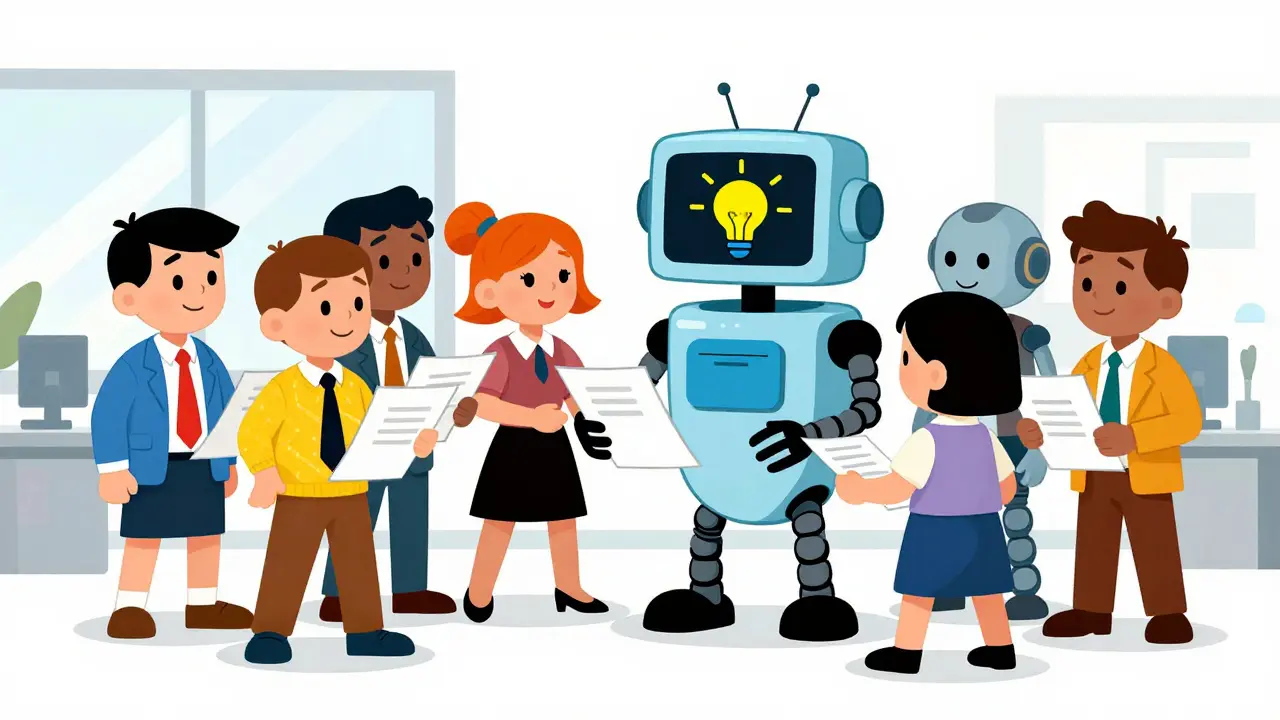
Most teams treat content as a one-and-done deal. You write it, publish it, and hope for the best. That approach is dead in 2026. With generative AI, content isn't static; it's a living asset that needs constant feeding, checking, and pruning. If you aren't managing the full lifecycle-from the first spark of an idea to the final archive-you're leaking budget and losing search visibility.
The shift isn't just about speed. It's about precision. Traditional content management relied on human intuition and periodic audits. Today, Large Language Models (LLMs) and vector databases allow us to automate the heavy lifting while keeping brand voice consistent and factual accuracy high. This guide breaks down how to build a robust AI-driven content lifecycle that scales without sacrificing quality.
1. Creation: From Prompt to First Draft
The creation phase is where most people think AI ends up. But in a mature lifecycle, this is just the start. The goal here isn't to replace writers but to remove friction. You use LLMs to generate structural outlines, suggest headlines based on semantic intent clusters, and draft initial copy.
However, raw AI output is rarely ready for prime time. It lacks nuance and often hallucinates facts. Your process must include a "human-in-the-loop" step immediately after generation. Writers should focus on injecting brand personality, verifying claims against primary sources, and ensuring the tone matches your audience's expectations. Use AI to handle the repetitive parts-like summarizing research papers or generating meta descriptions-so your team can focus on strategic storytelling.
- Ideation: Use AI to analyze trending topics and identify keyword gaps.
- Drafting: Generate multiple variations of headers and intros to A/B test mentally before writing.
- Fact-Checking: Run drafts through verification tools to flag unsupported claims.
2. Management and Organization: The Hidden Backbone
You can have great content, but if you can't find it, it's useless. This is where many AI workflows fail. They create assets but don't organize them intelligently. Modern content management systems (CMS) now integrate with vector databases to store not just the text, but the context.
AI automates metadata extraction and contextual tagging. Instead of manually assigning tags like "marketing" or "tips," the system analyzes the semantic meaning of the content and applies precise labels. This creates a searchable ecosystem where you can retrieve similar articles, check for redundancy, and maintain version histories effortlessly. For enterprise-scale operations, this means you never lose track of what you've published or where it lives.
3. Optimization: Making Content Work Harder
Publishing isn't the finish line; it's the starting gun for optimization. AI continuously analyzes engagement metrics like click-through rates (CTR), dwell time, and bounce rates. Machine learning models detect when a piece is underperforming and suggest targeted refinements.
For example, if an article has high impressions but low clicks, AI might suggest tweaking the headline for higher emotional resonance. If users drop off halfway through, the system might recommend breaking up long paragraphs or adding visual aids. This data-driven process boosts discoverability and audience resonance without requiring a complete rewrite. It turns your content library into a self-learning system that adapts to user behavior in real-time.

4. Distribution: Right Time, Right Place
Even the best content fails if it reaches the wrong audience at the wrong time. AI-driven distribution systems use predictive analytics to determine the optimal publishing window for each channel. Machine learning algorithms evaluate behavioral patterns, such as peak interaction times and platform-specific dwell durations, to ensure maximum visibility.
Furthermore, AI automatically reformats content for different environments. A blog post can be instantly adapted into a LinkedIn carousel, an email newsletter snippet, and a Twitter thread. Each version adjusts its tone, layout, and metadata to fit the algorithmic priorities of that specific platform. This ensures brand consistency while maximizing reach across search, social, and owned channels.
| Phase | Primary AI Function | Key Benefit |
|---|---|---|
| Creation | Generative Drafting & Ideation | Speed & Consistency |
| Management | Vector Storage & Auto-Tagging | Retrievability & Scale |
| Optimization | Performance Analysis & SEO Refinement | Higher Engagement |
| Distribution | Predictive Timing & Multi-Format Adaptation | Maximized Reach |
| Archiving | Trend Decay Detection & Compliance Checks | Repository Freshness |
5. Review and Governance: Keeping Trust High
In 2026, trust is your most valuable currency. Search engines prioritize expertise, authoritativeness, and trustworthiness (E-E-A-T). AI helps enforce these standards by running automated checks for bias, factual accuracy, and compliance with regulatory requirements.
Before any content goes live, AI tools can scan for sensitive language, verify citations against trusted sources, and ensure alignment with brand guidelines. This predictive governance reduces the risk of reputational damage. It also allows smaller teams to operate with the rigor of large editorial departments. By embedding review steps directly into the workflow, you catch errors early rather than issuing public retractions later.
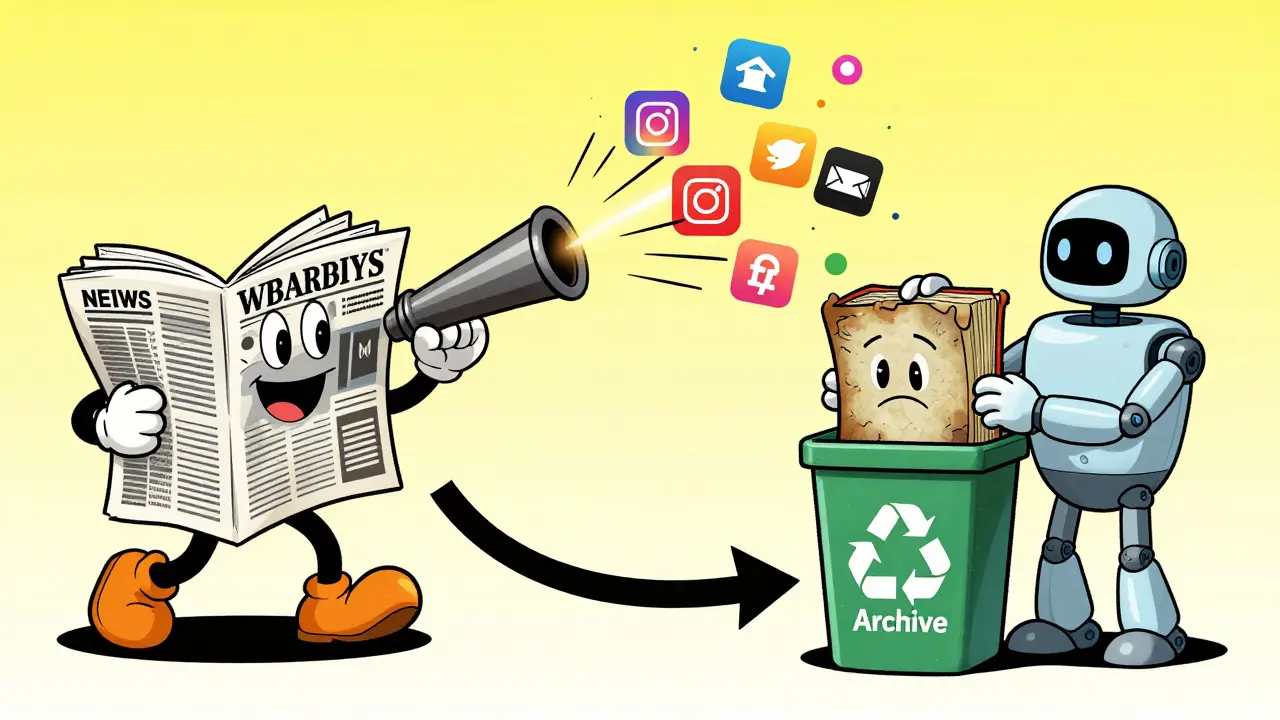
6. Archiving and Retirement: The Silent Killer of SEO
This is the phase most organizations ignore. Outdated content drags down your site's authority. Google penalizes pages that provide stale information, especially in fields like health, finance, and technology. AI identifies outdated, redundant, or low-performing assets through version analysis and trend decay detection.
When a topic loses relevance, AI flags it for updating or archiving. You might choose to update a few key sections to keep the page alive, or redirect traffic to a newer, more comprehensive resource. Proper archiving maintains repository freshness and ensures compliance. It keeps your digital library authoritative and up-to-date, preventing old mistakes from haunting your current performance.
Building the Technical Foundation
To run this lifecycle, you need more than just a chatbot. You need a structured technical development sequence. Start with scoping: define clear business objectives and measurable outcomes. Are you trying to increase organic traffic? Reduce customer support tickets? Align your AI parameters with these goals.
Next, select the right model architecture. Fine-tuning pre-trained language models on your own data improves semantic accuracy and tone consistency. Then, integrate these models with your existing CMS and workflow tools via APIs. This orchestration layer makes AI accessible to non-technical teams, accelerating production without compromising governance. Finally, deploy in controlled environments to test stability and security before going fully live.
Continuous Improvement: The Loop Never Ends
The AI content lifecycle is iterative. Continuous monitoring detects drift in model performance or shifts in audience engagement trends. New data is ingested to retrain models, ensuring outputs remain relevant and accurate. This transforms static workflows into adaptive ecosystems. As search algorithms evolve and user behaviors change, your content system learns and adjusts automatically.
By embedding AI in every stage, you achieve predictive governance, semantic consistency, and evergreen visibility. Content becomes a dynamic digital property that adapts with market conditions. Don't let your content gather dust. Build a lifecycle that keeps it working for you, today and tomorrow.
What is the AI content lifecycle?
The AI content lifecycle is the end-to-end process of managing digital assets using artificial intelligence. It includes phases like creation, management, optimization, distribution, analysis, and archiving. This approach uses machine learning and automation to maintain content relevance, improve scalability, and ensure longevity over time.
How does generative AI help in content creation?
Generative AI accelerates ideation and drafting by producing first drafts, suggesting structures, and adapting tone to brand voice. It handles repetitive tasks like summarization and meta-description generation, allowing human writers to focus on strategy, nuance, and fact-checking.
Why is content archiving important in an AI-driven workflow?
Outdated content harms SEO and brand credibility. AI identifies low-performing or stale assets through trend decay detection. Archiving or updating these pieces ensures your content library remains fresh, compliant, and authoritative, which search engines favor.
What role does metadata play in AI content management?
Metadata enables quick retrieval and organization. AI automates contextual tagging and classification, storing content in vector databases. This creates a searchable ecosystem where teams can easily find related assets, check for redundancy, and manage versions efficiently.
How do I ensure my AI-generated content stays evergreen?
Embed continuous optimization and monitoring into your workflow. Use AI to analyze performance metrics and suggest updates. Regularly retrain models with new data and refresh content based on changing search trends and user behavior to maintain visibility and accuracy.
Can AI handle content distribution across multiple platforms?
Yes. AI distribution engines use predictive analytics to determine the best time and channel for each asset. They can automatically reformat content for email, social media, and web, adjusting tone and layout to fit each platform's algorithmic requirements.
What are the risks of relying solely on AI for content?
Risks include hallucinations (factual errors), lack of brand nuance, and potential bias. To mitigate this, implement a human-in-the-loop review process for fact-checking and tone adjustment. Always align AI outputs with strict governance and compliance standards.
How does AI optimize content for SEO?
AI analyzes engagement metrics, keyword gaps, and semantic intent clusters. It suggests refinements to headlines, structure, and keywords to boost discoverability. This data-driven approach ensures content aligns with current search algorithms and user queries.
Is the AI content lifecycle different from traditional content management?
Yes. Traditional management is often static and manual. The AI lifecycle is dynamic and iterative, using continuous data feedback to refine content, predict trends, and automate distribution. It treats content as a living asset that evolves with audience behavior.
What tools are needed to implement an AI content lifecycle?
You need a CMS integrated with AI capabilities, vector databases for storage, LLMs for generation, and analytics platforms for performance tracking. APIs connect these tools, creating an orchestrated workflow that supports creation, review, and distribution.


another corporate buzzword salad designed to make middle managers feel important while they outsource their souls to silicon valley algorithms
I appreciate the structured approach presented here. The emphasis on vector databases for contextual tagging is particularly insightful for enterprise scalability.
oh honey you really think a chatbot can capture the soul of storytelling? please. ai writes like a robot who read a dictionary once and got excited about it. it has no heart no pulse no real experience just statistical probability dressed up as creativity and we are all supposed to bow down to this digital overlord that hallucinates facts like its an olympic sport. i tried using one for my blog last week and it suggested i serve raw fish to my readers because it confused 'sushi' with 'surprise'. absolutely terrifying stuff. we need humans to keep the culture alive not some cold algorithm deciding what trends based on clickbait metrics
this whole thing is just a way to fire american writers and replace them with chinese servers. wake up sheeple
while the concerns regarding job displacement are certainly valid and understandable given the rapid pace of technological change, it is perhaps more productive to view these tools as collaborative partners rather than replacements, allowing us to focus our human energy on higher-level strategic thinking and creative nuance that machines simply cannot replicate, thereby fostering a more harmonious integration of technology and human expertise in the workplace.
life is movement why stop at publishing? let the content breathe evolve decay and rebirth just like nature itself. the cycle is everything. embrace the chaos of the algorithm and dance with the data streams. do not fear the machine but understand its rhythm. when you align your intent with the flow of information you become unstoppable. keep pushing forward always seeking the next iteration because stagnation is death in the digital age