Key Takeaways
- High-Risk Labels: AI used for hiring, firing, or promotions is now largely classified as "high-risk," triggering strict audit requirements.
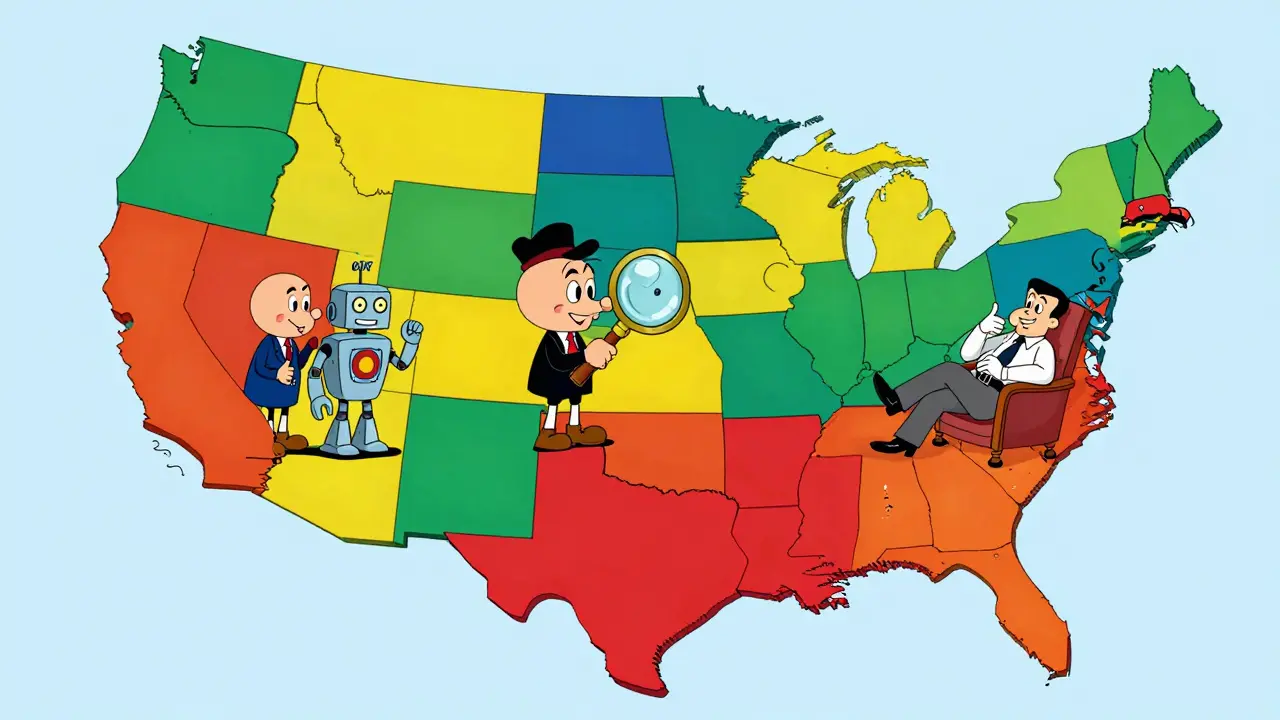
- State Patchwork: Compliance varies wildly-Colorado requires annual impact assessments, while Texas focuses mainly on avoiding intentional harm.
- Transparency is Mandatory: In most major hubs, you must tell employees and candidates when AI is influencing their career trajectory.
- Human Oversight: The right to a human review of automated decisions is becoming a legal standard, not a courtesy.
The New Rules of the Game: High-Risk AI
For years, companies treated AI tools as magic black boxes. You put data in, you got a result, and you trusted it. Those days are over. In states like Colorado, the law now distinguishes between the people who build the tech (Developers) and those who use it (Deployers). If you're an employer using AI to decide who gets a raise or who gets the boot, you're a Deployer of a High-Risk System. Under the Colorado Artificial Intelligence Act (CAIA), which hits full effect on June 30, 2026, this classification isn't just a label-it's a legal burden. Employers have to run annual impact assessments to make sure their bots aren't accidentally filtering out people based on race, gender, or age. If the AI starts discriminating, the company can't just shrug it off; they have 90 days to report it to the State Attorney General.Navigating the State-by-State Compliance Maze
If you run a business with employees in multiple states, you're likely feeling the headache of a fragmented legal landscape. You can't just have one "AI Policy" for the whole company because the rules in Austin are worlds apart from the rules in Denver or San Francisco. In California, the focus is on transparency and digital identity. The California Privacy Protection Agency (CPPA) has cracked down on Automated Decision-Making Technology (ADMT). If you're using AI to track productivity or evaluate performance, you're bound by the Fair Employment and Housing Act. Plus, with laws like SB 942, if you use AI-generated content in a professional setting, you have to disclose it clearly. You can't pass off a deepfake as a real person without a "manifest disclosure." Contrast that with Texas. The Texas Responsible Artificial Intelligence Governance Act (TRAIGA) is much more business-friendly. It doesn't demand audits or complex disclosures for private companies; it mostly forbids intentional discrimination. For a company operating in both states, the smartest move is usually to adopt the Colorado or California standard across the board. Why? Because it's cheaper than managing two different systems and far safer than risking a massive lawsuit in a strict jurisdiction.| Jurisdiction | Primary Requirement | Audit Necessity | Worker Notification |
|---|---|---|---|
| Colorado (CAIA) | Annual Impact Assessments | Mandatory (Annual) | Required for all decisions |
| California (CPPA/SB 942) | Algorithmic Accountability | Required for ADMT | Required (Manifest/Latent) |
| New York City (LL 144-21) | Independent Bias Audits | Mandatory (Independent) | Required + Opt-out option |
| Texas (TRAIGA) | Avoid Intentional Bias | Not Required | Limited/Not Required |
| Utah (UAIP) | Interaction Disclosure | Not Required | Mandatory for GenAI bots |
Productivity Tools: When Monitoring Becomes a Liability
We've all heard of "bossware"-the software that tracks your keystrokes or monitors your screen. But Generative AI has turned these tools into something much more powerful and dangerous. Modern productivity tools don't just track hours; they analyze the quality of your work, the tone of your emails, and your perceived "efficiency" using complex algorithms. Here is where the legal trap lies: if an AI-powered productivity tool decides a worker is underperforming, but the algorithm is biased against non-native English speakers or people with certain disabilities, that is algorithmic discrimination. In New York City, under Local Law 144-21, any tool used for these types of employment decisions must undergo an annual bias audit by an independent party. You can't just trust the vendor's word that the tool is "fair." Employers are now legally responsible for the outcomes of the tools they buy. If a third-party vendor's AI makes a discriminatory decision, the employer-not the software company-is often the one left holding the bag in court. This means "due diligence" now involves demanding bias testing data and retention records (which Colorado requires you to keep for four years) before signing a contract.The Expansion of Worker Rights
For a long time, if you were fired by a computer, your only recourse was to prove the human who bought the computer was biased. In 2026, worker rights have shifted from reactive to proactive. We're seeing the birth of a "Digital Bill of Rights" in the workplace. First, there's the Right to Notice. You have a right to know when an AI is interviewing you or grading your performance. In Utah, if you're chatting with a bot, the company has to tell you. Second, there's the Right to Human Review. In high-risk scenarios, workers can demand that a real person look at the AI's decision. Third, in places like NYC, you actually have the right to opt-out of an AI assessment entirely in favor of a traditional method. We're also seeing specific protections against the misuse of identity. California's AB 2602 and AB 1836 prevent companies from using AI to create digital replicas of a person's voice or likeness without consent. This is huge for performers and creative professionals, but it also prevents companies from using "deepfake" versions of employees for training or marketing without a contract.
Avoiding the Compliance Pitfalls
If you're implementing these tools, don't just treat this as an IT project. It's a legal project. The biggest mistake companies make is assuming that a "vendor certification" is enough. It isn't. You are the "Deployer," and that means the legal liability stops with you. Start by auditing your tech stack. Which tools are making decisions about people? Which tools are monitoring behavior? If they fall into the high-risk category, you need a paper trail. Document your risk assessments, keep your bias audits public (if in NYC), and ensure your employee handbook explicitly outlines how AI is used and how a worker can appeal an automated decision.Can I be fired if an AI decides I'm not productive enough?
Legally, yes, but the process must be fair. In jurisdictions like Colorado and California, the AI used to measure your productivity must be tested for bias. If the tool disproportionately targets a protected group, the termination could be seen as discriminatory, and you may have the right to a human review of that decision.
Do I have to tell my employees I'm using AI to screen resumes?
In many cases, yes. New York City, Colorado, and California all have various transparency requirements. In NYC, you must notify candidates in advance and provide a way for them to opt out. In Colorado, transparency notices are mandatory for any AI system influencing employment decisions.
What happens if my AI vendor's tool is biased?
Under laws like the CAIA in Colorado, the employer (the Deployer) is responsible for the discriminatory outcomes, even if the tool was built by a third party. You cannot shift the legal liability back to the vendor; you are expected to conduct your own risk assessments and monitoring.
Is the EU AI Act relevant for U.S.-based companies?
Yes, if your company does business in the European Union or has employees there. The EU AI Act is one of the strictest in the world and has already banned certain uses, such as emotion recognition in the workplace, which could affect how you deploy monitoring tools globally.
How long do I need to keep data from automated hiring tools?
If you operate in Colorado, you must retain all data related to Automated Decision Systems (ADS) for at least four years. This includes the input data, the resulting scores or rankings, the criteria the AI used, and the results of your bias testing.