
Imagine deploying a customer support chatbot that accidentally reveals a user's medical history because it was trained on leaked private data. Or picture a hiring tool that consistently rejects qualified candidates from specific neighborhoods due to hidden biases in its training set. These aren't just hypothetical nightmares; they are real-world risks that organizations face daily as they integrate Large Language Models (LLMs) into their core operations.
In 2026, nearly 70% of organizations use LLMs, according to recent industry reports. But speed of adoption has outpaced safety protocols. Many teams built these systems first and thought about the risks later. Now, the focus is shifting from "Can we build this?" to "Is this safe to run?" This shift requires robust risk assessments and clear impact statements. It’s not just about checking boxes for compliance; it’s about protecting your users, your brand, and your bottom line.
Why Traditional Risk Frameworks Fall Short
You can’t treat an LLM like a standard software application. Traditional software follows strict rules: if input A happens, output B occurs. LLMs are different. They generate text based on probabilities learned from vast amounts of data. This makes them powerful but unpredictable.
Consider the concept of hallucinations. An LLM might confidently state a fact that is completely false. In a creative writing app, this might be funny. In a legal or medical context, it could be dangerous. Standard bug testing doesn't catch this because there isn't a single "correct" answer to test against. You need a framework designed specifically for generative AI.
The MIT AI Risk Repository categorizes these unique challenges into four modules: Input, Language Model, Toolchain, and Output. Understanding these categories helps you pinpoint where things might go wrong before they do.
- Input Module Risks: Users might enter harmful prompts (NSFW content) or malicious actors might use adversarial prompts to trick the model into revealing secrets.
- Language Model Module Risks: The model itself might leak privacy data, exhibit toxicity or bias, hallucinate facts, or fall victim to model attacks.
- Toolchain Module Risks: Vulnerabilities in the software used to build the model, hardware issues during training, or unsafe third-party APIs can introduce security gaps.
- Output Module Risks: The final response might contain copyrighted material, misinformation, or discriminatory language.
Identifying Bias and Fairness Issues
Bias is one of the most persistent problems in AI. If your training data contains historical prejudices, your model will likely repeat them. For example, a resume screening tool trained on past hiring data might undervalue candidates from certain universities or demographics simply because those groups were underrepresented in previous hires.
To address this, you need to conduct a thorough audit of your training data. Ask yourself: Who created this data? What voices are missing? Are there stereotypes present in the text?
Researchers at Hainan University highlight that model bias propagation happens when toxic or stereotypical content enters the dataset and spreads through the model's outputs. To mitigate this, consider using techniques like data scrubbing, where you remove sensitive or biased information before training. You can also implement post-processing filters that detect and flag biased language in real-time.
Remember, no model is perfectly unbiased. As AI expert Amir Feizpour notes, models are "as unbiased and objective as their designers." Your goal isn't perfection; it's transparency and continuous improvement. Document your findings and share them openly with stakeholders.
Preventing Privacy Leaks and Data Exposure
Privacy is paramount. Studies show that up to 5% of training data for major models like GPT-4 may contain sensitive personal information. If your model memorizes this data, it could spit it out during a conversation-a phenomenon known as privacy leakage.
This is especially risky in industries like healthcare or finance, where patient or client confidentiality is legally protected under regulations like GDPR or HIPAA. A single slip-up can result in massive fines and reputational damage.
How do you prevent this? Start by auditing your data sources. Ensure you have explicit consent to use any personal information. Use differential privacy techniques, which add noise to the data to protect individual identities while preserving overall patterns. Additionally, implement strict access controls so only authorized personnel can view raw training data.
The European Data Protection Board (EDPB) recommends a systematic approach to identifying and mitigating privacy risks across the entire LLM lifecycle. This includes regular audits, employee training, and clear policies on data handling.

Mitigating Hallucinations and Misinformation
Hallucinations occur when an LLM generates plausible-sounding but factually incorrect information. This is a significant risk for applications relying on accuracy, such as news summarization or educational tools.
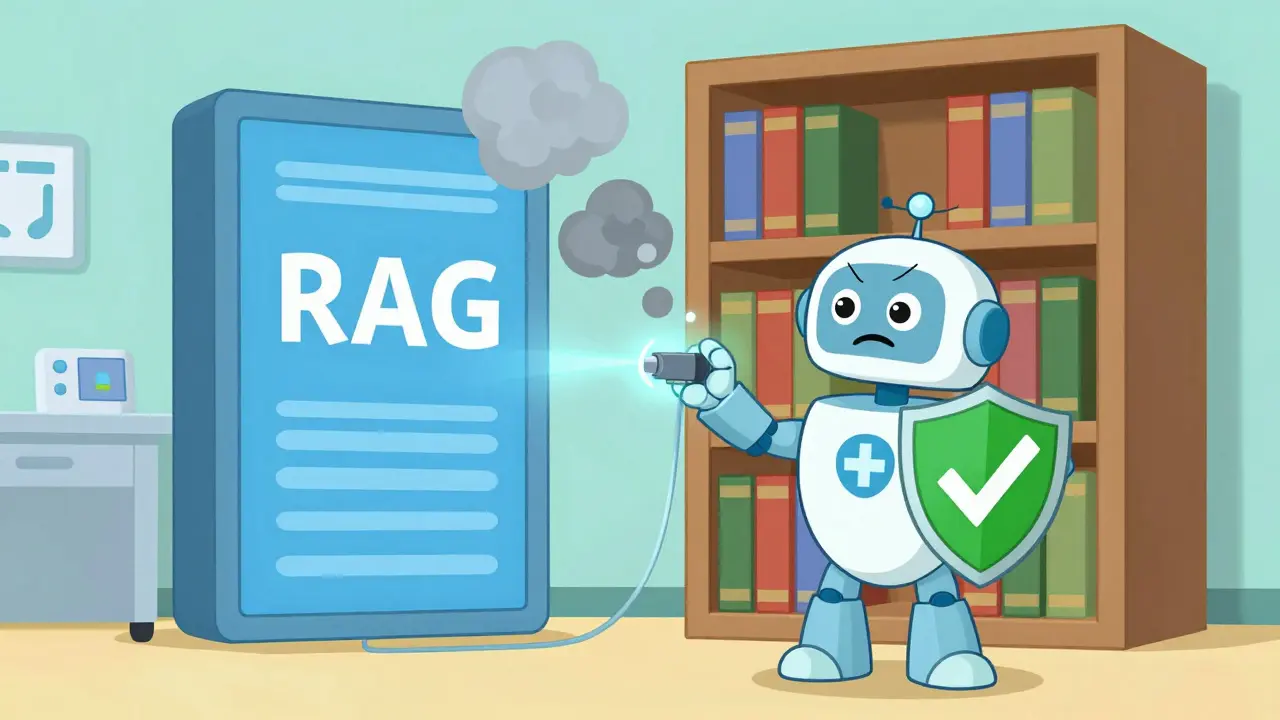
One effective mitigation strategy is Retrieval-Augmented Generation (RAG). Instead of letting the model generate answers from memory alone, RAG connects the model to a trusted knowledge base. When a user asks a question, the system retrieves relevant documents first, then uses the model to synthesize an answer based on that evidence. This creates an auditable trail and significantly reduces hallucination rates.
Another approach is to fine-tune your model on high-quality, verified datasets. The more accurate your training data, the less likely the model is to invent facts. Regularly evaluate your model's performance using benchmark tests that check for factual consistency.
Building a Comprehensive Risk Assessment Framework
A good risk assessment isn't a one-time event; it's an ongoing process. Here’s a step-by-step guide to building your framework:
- Define Scope: Identify all components of your LLM system, including data sources, algorithms, infrastructure, and user interfaces.
- Identify Risks: Use established frameworks like the MIT AI Risk Repository or ISO/IEC 42001 standards to catalog potential threats.
- Assess Impact: Evaluate the likelihood and severity of each risk. Consider factors like financial loss, legal liability, and reputational harm.
- Implement Controls: Develop safeguards such as input validation, output filtering, and monitoring systems.
- Monitor Continuously: Set up alerts for unusual behavior, such as sudden spikes in error rates or unexpected outputs.
- Review and Update: Reassess risks regularly as new vulnerabilities emerge or your system evolves.
Tools like Deepchecks provide automated testing suites that help monitor model behavior throughout its lifecycle. They can detect drift, adversarial attacks, and other anomalies early on.
Writing Effective Impact Statements
An impact statement communicates the potential consequences of deploying an LLM system. It should be clear, concise, and accessible to non-technical stakeholders. Include the following elements:
- Purpose: What problem does the model solve?
- Data Sources: Where did the training data come from? Is it representative?
- Known Limitations: What scenarios might cause errors or biases?
- Mitigation Strategies: What steps are taken to reduce risks?
- User Rights: How can users opt-out or correct inaccurate information?
Transparency builds trust. By being upfront about limitations, you empower users to make informed decisions about how they interact with your system.
Regulatory Compliance and Standards
As governments worldwide tighten regulations around AI, compliance becomes crucial. The ISO/IEC 42001 standard provides guidelines for managing AI-related risks. It emphasizes accountability, transparency, and human oversight.
In Europe, the AI Act imposes strict requirements on high-risk AI systems, including mandatory risk assessments and conformity evaluations. Failure to comply can result in heavy penalties. Stay updated on local laws and adapt your practices accordingly.
| Risk Type | Mitigation Strategy | Effectiveness Level | Implementation Complexity |
|---|---|---|---|
| Bias | Data Scrubbing & Post-Processing Filters | High | Medium |
| Privacy Leakage | Differential Privacy & Access Controls | Very High | High |
| Hallucinations | Retrieval-Augmented Generation (RAG) | High | Medium |
| Adversarial Attacks | Input Validation & Monitoring | Medium | Low |
Real-World Examples and Lessons Learned
Let’s look at two case studies to illustrate these concepts in action.
Case Study 1: Healthcare Chatbot
A hospital deployed an LLM-powered chatbot to assist patients with basic queries. Initially, the model performed well. However, after a few months, it began providing incorrect medication advice due to hallucinations. The team implemented RAG, linking the model to a verified drug database. Errors dropped by 90%, and patient satisfaction improved significantly.
Case Study 2: Hiring Algorithm
A tech company used an AI tool to screen resumes. Audits revealed the algorithm favored male candidates over equally qualified female applicants. The root cause was biased training data reflecting historical hiring trends. The company retrained the model on diverse, anonymized data and added fairness constraints. Diversity metrics improved steadily over the next year.
Next Steps for Your Organization
If you’re starting from scratch, begin small. Pick one critical application and perform a pilot risk assessment. Involve cross-functional teams-engineers, legal experts, ethicists, and end-users-to get diverse perspectives.
Invest in education. Train your staff on AI ethics and risk management principles. Encourage a culture of responsibility where everyone feels empowered to report potential issues.
Finally, stay curious. The field of AI risk is evolving rapidly. Keep an eye on emerging research, join industry forums, and learn from others’ experiences. Remember, building safe AI is a journey, not a destination.
What is the difference between risk assessment and impact statements for LLMs?
Risk assessment involves identifying and evaluating potential harms associated with an LLM system, such as bias or privacy leaks. An impact statement is a document that summarizes these risks, their likelihood, and the measures taken to mitigate them, intended for stakeholders and regulators.
How can I detect bias in my LLM training data?
You can detect bias by analyzing demographic representation in your dataset, using statistical tests to identify disparities, and employing specialized tools that flag stereotypical language or associations. Regular audits and diverse review panels are also essential.
Is Retrieval-Augmented Generation (RAG) enough to prevent hallucinations?
RAG significantly reduces hallucinations by grounding responses in verified sources, but it’s not foolproof. Combine it with quality control checks, prompt engineering best practices, and continuous monitoring to ensure reliability.
What are the key components of ISO/IEC 42001 for AI risk management?
ISO/IEC 42001 focuses on establishing an Artificial Intelligence Management System (AIMS). Key components include defining organizational context, leadership commitment, planning, support resources, operational controls, performance evaluation, and improvement processes tailored to AI-specific risks.
How often should I update my LLM risk assessment?
Ideally, conduct formal reviews quarterly or whenever significant changes occur, such as updates to the model architecture, new data sources, or shifts in regulatory requirements. Continuous monitoring should happen in real-time.

Hey everyone, this is a really solid breakdown of the risks we need to watch out for with LLMs. I've been working on some internal tools here in India and seeing how quickly things can go wrong if you don't have those guardrails in place. The part about bias in hiring data hit close to home because we saw similar issues when we first started using automated screening. It's wild how much historical prejudice gets baked into the datasets without us even realizing it. We had to do a complete overhaul of our training data to make sure we weren't accidentally filtering out qualified candidates just because of where they went to school or lived. It was a lot of work but totally worth it to keep things fair and inclusive. I think the MIT framework mentioned here is super helpful for structuring these audits. It gives you a clear map of where to look for trouble before it happens. Input validation is key, obviously, but also thinking about the output side is crucial. You can't just trust the model to be nice all the time. You have to actively filter and monitor what comes out. Also, the idea of RAG is something every team should be looking at right now. It adds that layer of verification that makes the whole system way more reliable. Great read overall.
Oh great, another article telling us how to not break the internet with our shiny new AI toys. Spoiler alert: most companies are just going to slap a 'risk assessment' sticker on their code and call it a day. Good luck with that.
i totally get why people feel overwhelmed by all this stuff but i think its important to take it step by step. nobody expects perfection right away. its about trying your best and learning as you go. the guide mentions transparency which i love because hiding mistakes only makes things worse. if we are open about what the model might get wrong users can help us fix it. its like a team effort really. also the part about privacy leaks is scary but differential privacy sounds like a cool solution even if i dont fully understand the math behind it yet. maybe someone can explain it simply? just kidding. seriously though thank you for sharing this it helps a lot.
The point about traditional software testing failing for LLMs is spot on. In my experience building enterprise applications, we spent months trying to create unit tests for generative outputs and it was a nightmare. There is no single correct answer for a creative writing prompt or a nuanced customer service response. We ended up shifting focus to outcome-based testing and monitoring user feedback loops instead. It was a culture shift for the QA team but necessary. The MIT risk repository categories are a good starting point for documentation too. We use them to structure our incident reports when things do go sideways. It helps isolate whether it was an input issue or a model hallucination. Keeps the blame game minimal and the fixes targeted.
Let me elucidate the operational dynamics of the Retrieval-Augmented Generation paradigm within the context of mitigating epistemological hallucinations in large language models. The integration of external knowledge bases serves to anchor the probabilistic generation process in verifiable truth vectors, thereby reducing the variance of factual inaccuracies. This is not merely a technical adjustment but a fundamental restructuring of the inference pipeline to prioritize evidence-based synthesis over parametric memory recall. Furthermore, the implementation of differential privacy mechanisms introduces stochastic noise to the training dataset, ensuring that individual data points cannot be reverse-engineered from the model weights. This aligns with the regulatory frameworks such as GDPR which mandate strict data protection protocols. The complexity lies in balancing the utility of the model with the privacy guarantees provided by the noise addition. Too much noise degrades performance while too little compromises security. It requires a delicate calibration of the epsilon parameter in the differential privacy algorithm. Additionally, the continuous monitoring of model drift is essential as the underlying data distributions may shift over time leading to potential biases or inaccuracies. Organizations must invest in robust MLOps pipelines that facilitate real-time detection and mitigation of these anomalies. The human-in-the-loop approach remains indispensable for validating edge cases and ensuring ethical compliance. We cannot rely solely on automated systems to navigate the nuanced landscape of societal values and legal requirements. Therefore, a hybrid approach combining advanced technical safeguards with rigorous human oversight is the only viable path forward for responsible AI deployment.
Oh wow, look at Lucia there, dropping the jargon bomb so hard I thought my screen would crack. But seriously, she has a point about the epsilon parameter, even if she explained it like she was reading from a textbook written by robots. I find that teams often overlook the 'Toolchain Module Risks' mentioned in the post. Everyone focuses on the model itself but forgets that the APIs and libraries connecting everything are full of holes. We had a breach last year because a third-party logging library wasn't updated and it exposed sensitive prompt data. It was embarrassing. So yes, audit your dependencies. And stop pretending that 'bias scrubbing' is a magic wand. It's messy work. You have to constantly re-evaluate your datasets because society changes and what was acceptable yesterday might be offensive today. It's a never-ending cycle of maintenance. But hey, at least we're talking about it. That's progress, right?
I cannot stress enough how vital the emotional intelligence aspect of these assessments is. When we talk about bias, we are talking about real human beings who are being rejected, ignored, or harmed by algorithms they cannot see or understand. It is devastating. The case study about the healthcare chatbot giving bad medication advice? That could have killed someone. The weight of that responsibility falls on the developers and the organizations deploying these tools. We have to be dramatic about it because the stakes are life and death. Ignorance is not an excuse. Every engineer needs to sit down with ethicists and ask themselves, 'Who does this hurt?' If the answer is anyone, you need to pause and rethink your approach. The technical solutions like RAG and differential privacy are great, but they are cold. They don't capture the human impact. We need to build empathy into our workflows. Make it mandatory. Force teams to confront the potential harm head-on. It is uncomfortable but necessary.
its interesting how everyone jumps to the technical fixes but the cultural shift is probably harder. getting engineers to care about fairness metrics as much as latency is tough. i prefer to keep things simple and just follow the ISO standards mentioned. they give a clear checklist. no need to reinvent the wheel. just do the audits and document everything. if something goes wrong you have proof you tried. thats usually enough for regulators anyway.