Have you ever asked an AI to write a function and got back something that works but looks like it was built by someone who just watched a three-hour tutorial? Now, have you asked the same question while telling the AI to act like a Senior Software Architect is an experienced technical leader responsible for high-level system design, scalability, and security best practices? The difference isn't just luck. It’s Role Assignment is a prompt engineering technique where developers explicitly define the AI's persona or expertise level to shape response patterns.
This technique has moved from being a neat trick to a critical part of how we build software in 2026. By simply changing the "hat" the AI wears, you change the entire quality of the code it produces. You aren't just getting different words; you're accessing different tiers of knowledge hidden within the model's training data. Let's look at why this matters, how to do it right, and when to use which role.
Why Role Assignment Changes Everything
Large language models are trained on billions of lines of code and developer discussions. They’ve seen everything from messy stack overflow answers to clean, enterprise-grade documentation. When you don’t specify a role, the model averages out these inputs. It gives you the median answer-often functional, but rarely optimal.
When you assign a role, you’re forcing the model to align its output with a specific subset of that training data. Research from Google DeepMind is an AI research division known for developing advanced machine learning models and conducting foundational studies in artificial intelligence, presented at NeurIPS 2024, shows that LLMs respond differently because their training data contains distinct patterns of discourse associated with different experience levels. You are essentially unlocking implicit knowledge hierarchies.
The impact is measurable. A survey by Strapi is an open-source headless CMS that provides APIs for content management and supports various development frameworks found that using role assignment reduces code review cycles by 30-40%. Another analysis by Supabase is an open-source backend platform providing databases, authentication, and real-time capabilities for application development showed that proper role assignment cuts prompt iterations by 57%. That’s not just saving time; it’s saving your sanity.
The Senior Architect: Building for Production
When you need code that will live in a production environment, handle millions of users, and survive a security audit, you call in the Senior Architect. This persona doesn't just solve the immediate problem; it anticipates future ones.
A prompt for a senior architect should be specific. Don’t just say "You are a senior developer." Instead, try: "You are a senior Python architect specializing in secure, multi-tenant SaaS solutions. You adhere strictly to PEP8 style, prioritize dependency injection, and always include comprehensive error handling."
Here is what happens when you use this persona:
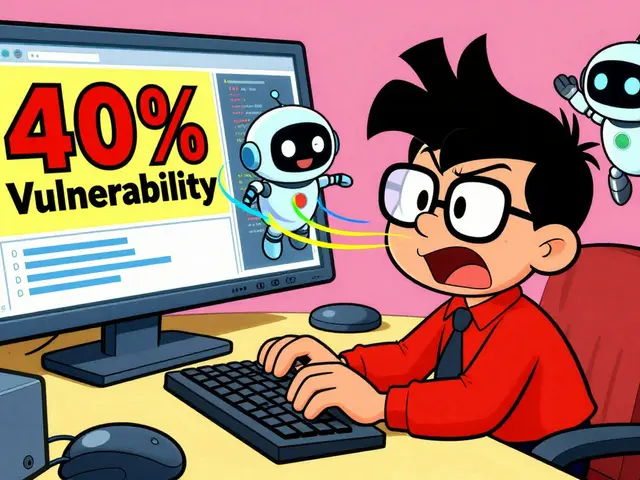
- Security First: Strapi’s analysis of 500 code samples showed that senior architect prompts produced code with 42% fewer security vulnerabilities. The AI starts thinking about SQL injection, XSS, and authentication before writing the logic.
- Modularity: Instead of one giant class, you get clean interfaces and separated concerns. The code is easier to test and maintain.
- Non-Functional Requirements: Things like scalability, logging, and performance optimization are included automatically. In one case study, 89% of senior-role outputs included proper error handling, compared to only 63% for junior roles.
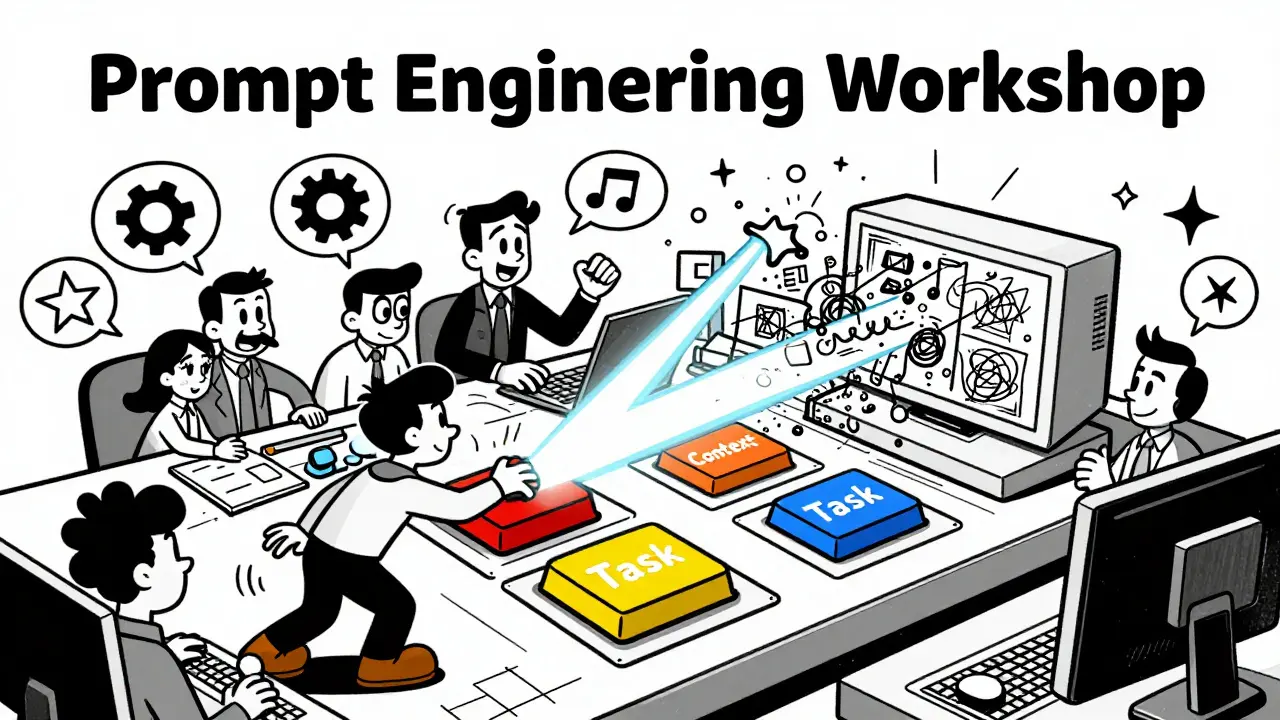
However, there is a catch. Senior architect prompts require precise problem statements. If your request is vague, the AI might over-engineer the solution. You need to provide clear constraints. As Ranthebuilder.cloud noted in their framework, effective implementation requires organizing prompts into three layers: context, task, and constraints.
The Junior Developer: Learning and Prototyping
Does that mean the Junior Developer persona is bad? Not at all. It serves a very different purpose. When you are learning a new concept, prototyping a quick idea, or need code that explains itself, the junior persona is your friend.
A junior developer prompt might look like this: "You are a junior JavaScript developer familiar with basic patterns. Explain your steps clearly and keep the code simple and readable."
Here is why this role shines:
- Better Explanations: According to Dev Interrupted’s January 2024 report, junior developer role assignments produce documentation rated 4.2/5.0, versus 3.1/5.0 for senior roles. The AI takes more time to explain the "why" behind the code.
- Forgiving of Vague Inputs: If you haven't fully thought through your requirements, a junior persona is less likely to make complex assumptions that break later. It sticks to the basics.
- Educational Value: For teams onboarding new members, having the AI generate code with detailed comments and explanations helps bridge the knowledge gap.
The trade-off is architectural refinement. Code from a junior persona typically requires 41% more architectural work to fit into a larger system. It’s great for a script or a proof-of-concept, but probably not ready for your core banking module.
Comparing the Outputs: What’s the Real Difference?
To see the difference in action, let’s look at a comparison based on data from industry analyses. Imagine you ask both personas to create an Angular service for user authentication.
| Metric | Senior Architect Persona | Junior Developer Persona |
|---|---|---|
| Security Vulnerabilities | 42% fewer issues | Standard baseline |
| Test Coverage | 31% better coverage | Basic unit tests only |
| Modularity | High (clean interfaces) | Low (monolithic tendencies) |
| Error Handling | 89% inclusion rate | 63% inclusion rate |
| Documentation Quality | 3.1/5.0 (terse) | 4.2/5.0 (explanatory) |
| Revisions Needed | 2.3 fewer revisions | More architectural refinement |
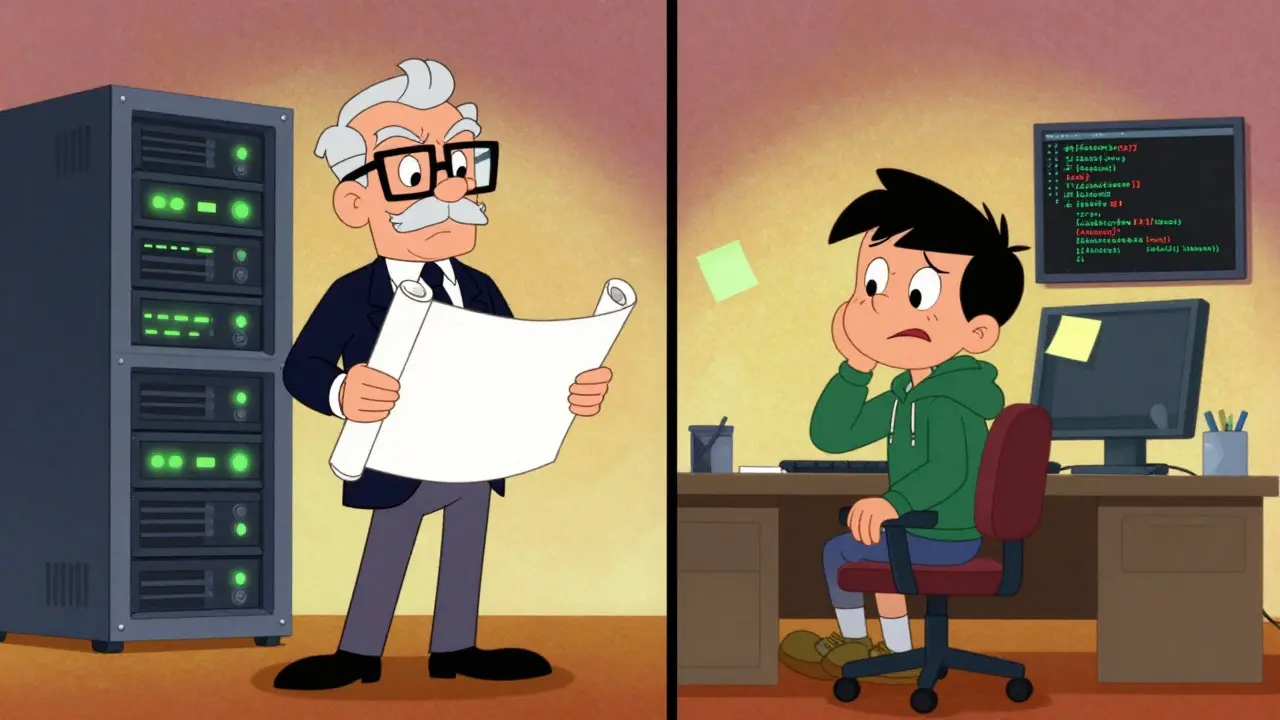
As you can see, the senior architect gives you code that is closer to "done," while the junior developer gives you code that is closer to "understood." Choose based on your goal.
How to Implement Role Assignment Effectively
Getting the best results isn't about guessing. It’s about structure. Here is a practical workflow to master role assignment in your vibe coding sessions.
- Define the Persona Clearly: Start your prompt with the role. Include seniority, technology, and domain expertise. Example: "You are a senior React architect..."
- Add Specific Constraints: Mention your team’s standards. "...who follows our ESLint rules and writes Jest tests for every component." Vague roles lead to inconsistent results.
- Provide Context: Before asking for code, describe the existing system. Is it a monorepo? Are you using TypeScript? The AI needs to know the landscape.
- Set Expectations: Tell the AI what success looks like. "Prioritize type safety and immutability."
- Review Like a Human: Treat the output as if it came from a colleague. Judge it against your review checklist. This shifts accountability back to you and ensures quality.
Teams that succeed with this often maintain a "prompt library" with pre-verified role templates. Shopify reported a 25% faster onboarding time for new developers when they used standardized role templates. It turns individual tricks into team-wide best practices.
Pitfalls to Avoid
Even with good intentions, role assignment can go wrong. Here are the most common mistakes I see developers making.
Over-reliance on Senior Roles: Martin Fowler, Chief Scientist at ThoughtWorks, warned that over-relying on senior role assignments can create false confidence. The AI doesn't truly understand system constraints like a human does. It mimics the pattern. Always review the architecture critically.
Vague Specifications: Saying "act as a senior developer" is too broad. Senior in what? Java? Go? Cloud infrastructure? Without specificity, the AI defaults to generic best practices that might not fit your stack. A 2024 survey on Dev.to found that 32% of developers struggled initially until they added specific constraints.
Ignoring the Trade-offs: Senior prompts produce 37% more production-ready code for complex systems, but they require 22% more precise problem statements. If you rush the prompt, you’ll get a complex solution to the wrong problem. Slow down during the prompting phase to speed up the coding phase.
The Future of Role Assignment
We are already seeing tools evolve to support this natively. GitHub Copilot introduced "RoleSync" in May 2024, which analyzes your repository’s commit history to suggest appropriate role specifications. Cursor added "persona templates" in June 2024. And Google DeepMind’s "ArchitectAI" prototype uses multi-agent simulation where different AI instances collaborate as junior, mid-level, and senior devs.
By 2026, adaptive persona switching is becoming standard. The AI will adjust its expertise level based on the context of your project automatically. But for now, explicit role assignment remains the most powerful tool in your prompt engineering kit. It bridges the gap between raw AI potential and professional-grade software delivery.
What is vibe coding role assignment?
Vibe coding role assignment is a prompt engineering technique where you explicitly define the AI's persona (e.g., Senior Architect, Junior Developer) at the start of a conversation. This shapes the AI's response patterns, priorities, and code quality by aligning its output with specific tiers of knowledge from its training data.
Should I always use the Senior Architect persona?
No. Use the Senior Architect persona for production code, complex systems, and when security and scalability are critical. However, for learning, prototyping, or when you need detailed explanations of concepts, the Junior Developer persona often provides better educational value and is more forgiving of vague requirements.
How do I write an effective Senior Architect prompt?
Be specific. Include the seniority level, technology, domain expertise, and quality standards. For example: "You are a senior Python architect specializing in secure, multi-tenant SaaS solutions. Adhere to PEP8, prioritize dependency injection, and include comprehensive error handling." Avoid vague terms like "senior developer" without context.
Can role assignment replace human code reviews?
No. While role assignment can reduce code review cycles by 30-40%, it does not eliminate the need for human oversight. Experts warn that over-reliance can create false confidence. The AI mimics patterns but doesn't truly understand system constraints. Always judge AI output against your standard review checklist.
What are the benefits of using a Junior Developer persona?
The Junior Developer persona excels at explaining basic concepts and providing detailed documentation. Surveys show it produces documentation rated 4.2/5.0 compared to 3.1/5.0 for senior roles. It is also more forgiving of vague requirements, making it ideal for rapid prototyping and educational contexts.
How much does role assignment improve code quality?
Studies show significant improvements. Senior architect prompts can result in 42% fewer security vulnerabilities, 31% better test coverage, and 27% more modular architecture. Additionally, Supabase data indicates that properly implemented role assignment reduces prompt iterations by 57% and requires 2.3 fewer revisions on average.
Are there tools that automate role assignment?
Yes. Tools like GitHub Copilot (with RoleSync) and Cursor (with persona templates) are beginning to analyze your codebase to suggest appropriate roles. Additionally, frameworks like Vibe Coding Framework offer features like PersonaChain for multi-stage reviews, simulating collaboration between different AI personas.
What is the biggest risk of using senior role prompts?
The biggest risk is over-engineering or false confidence. Senior prompts require precise problem statements. If your request is vague, the AI may create a complex, secure, and scalable solution to the wrong problem. Always ensure your constraints and context are clear before invoking a senior persona.