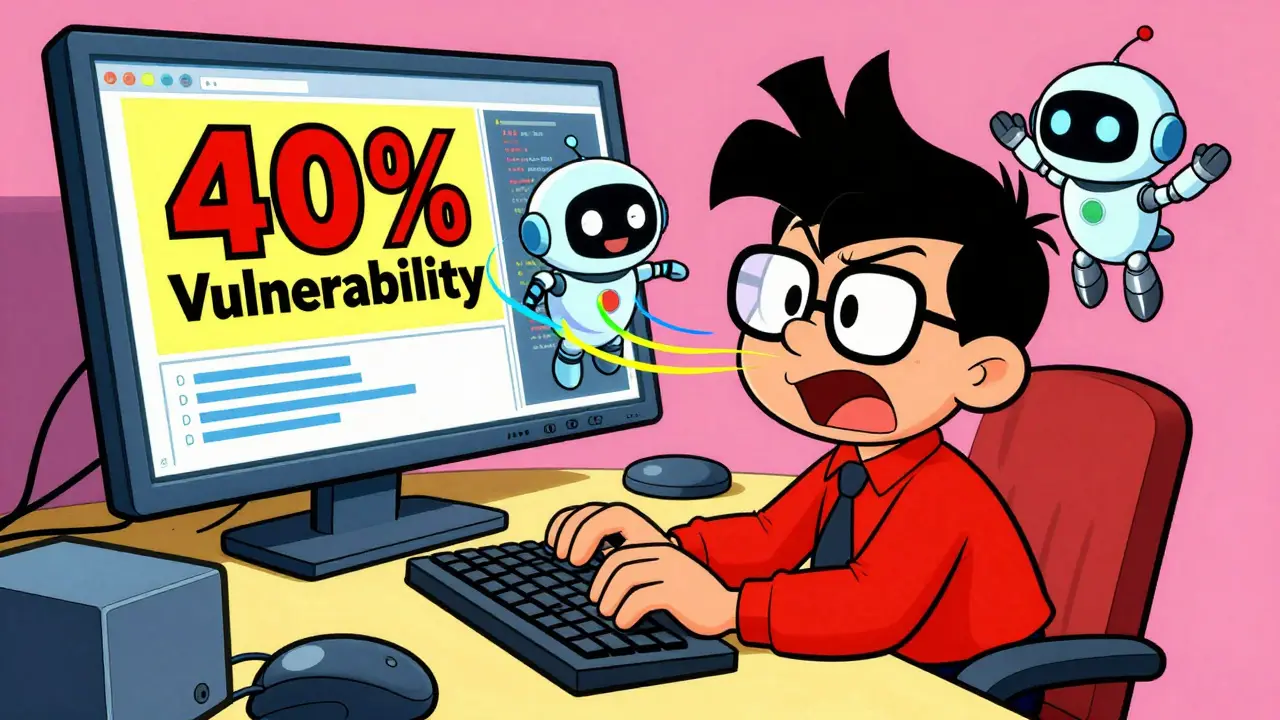
You type a prompt. An AI writes the code. You deploy it. It works. But does it work securely? If you’ve been riding the wave of vibe coding, you know the speed is intoxicating. Tools like GitHub Copilot, v0.dev, and Replit’s GhostWriter let you build applications at breakneck pace. Yet, that same speed hides a dangerous truth: up to 40% of AI-generated code suggestions contain vulnerabilities.
The problem isn’t just bad code; it’s missing guardrails. When developers rely on AI to write logic, they often skip the boring but critical stuff-security headers, encryption standards, and policy enforcement. This article cuts through the hype to show you exactly how to implement secure defaults for Content Security Policy (CSP), HTTPS, and essential security headers in your vibe-coded projects. We’ll look at why these matter, how major platforms handle them, and what you need to do manually to keep your apps safe from XSS attacks and data breaches.
The Hidden Risks of AI-Assisted Development
Vibe coding represents a paradigm shift in software development. Emerged around early 2023 as large language models achieved sufficient coding capability, this approach lets natural language prompts generate functional application code. However, this convenience introduces unique security challenges that traditional development didn’t face at the same scale.
Research from Replit’s January 15, 2025 security guide highlights a stark reality: up to 40% of AI suggestions may contain vulnerabilities. These aren’t always syntax errors. Often, they are logical flaws or insecure configurations that surface only at runtime. As noted by Wiz Academy researchers Alex Xenoudakis and Michael Podolski in their January 12, 2025 publication, “AI copilots tend to generate code that’s not quite as safe as it looks. Even the smallest logic flaw in this code can be exploited by adversaries.”
The risk compounds when developers assume the platform handles everything. While platforms like Vercel and Replit offer infrastructure-level protections, they don’t automatically configure every layer of your application’s security posture. For instance, detailed error messages exposed to end-users-a common oversight in rapid AI deployment-contributed to 22% of API breaches in Q1 2025, according to Cloud Security Alliance (CSA) documentation.
Why Secure Defaults Matter More Than Ever
In traditional development, teams have time to review code, run penetration tests, and harden configurations. In vibe coding, the feedback loop is minutes, not weeks. Without secure defaults, you’re deploying vulnerable applications before you even realize they’re broken.
Consider the impact of missing security headers. Performance benchmarks from Wiz’s January 2025 research show that applications without proper security headers experience 37% more successful Cross-Site Scripting (XSS) attacks compared to properly configured ones. That’s not a minor statistic; it’s a direct correlation between configuration negligence and compromise.
Furthermore, the speed-security paradox is real. The slightest cloud misconfiguration or overentitled account could lead adversaries to code-generating AI applications. As warned by Wiz Academy, making security automatic and integrated is no longer optional-it’s essential for sustainable adoption of AI-assisted development practices.
Implementing HTTPS and TLS Correctly
HTTPS is the foundation of web security, but in the rush to deploy, developers often accept default settings without verifying their strength. For vibe coding workflows, you must enforce strict transport security.
Start with TLS 1.2 or higher as your minimum standard. Older versions like TLS 1.0 and 1.1 are deprecated and vulnerable to known exploits. Most modern platforms, including Vercel and Replit, handle SSL certificates automatically. However, automation doesn’t mean compliance. You still need to ensure your HTTP Strict Transport Security (HSTS) header is configured correctly.
Your HSTS header should include:
max-age=31536000: Forces browsers to use HTTPS for one year.includeSubDomains: Applies the policy to all subdomains.preload: Allows your domain to be included in browser preload lists, blocking any HTTP attempts entirely.
Replit’s platform takes a comprehensive approach here, implementing “production-grade security features” including default HTTPS and DDoS protection. If you’re using GitHub Copilot with a custom hosting provider, verify that your server configuration enforces these standards manually. Don’t assume the AI will remember to add the HSTS header to your Nginx or Apache config files.
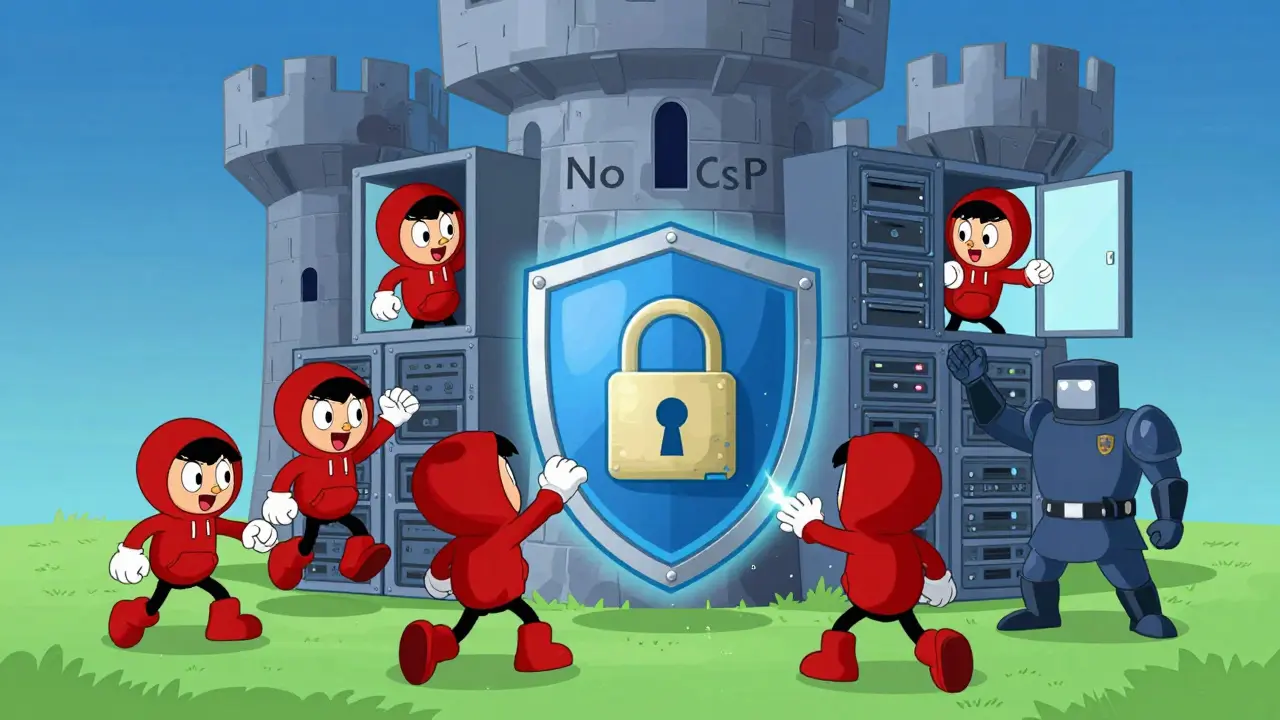
Content Security Policy: Your First Line of Defense
Content Security Policy (CSP) is arguably the most critical defense against XSS attacks in modern web applications. It tells the browser which sources of scripts, styles, and other resources are allowed to load. Without CSP, an attacker who injects malicious JavaScript can steal user sessions, redirect users to phishing sites, or deface your app.
Implementing CSP in vibe coding requires specific directives. Start with default-src 'self', which restricts all resource loading to your own origin. Then, explicitly whitelist external domains you trust. For scripts, avoid using inline scripts (<script> tags within HTML) unless absolutely necessary. Instead, use nonces or hashes to validate script integrity.
Here’s a baseline CSP header configuration:
Content-Security-Policy: default-src 'self'; script-src 'self' https://trusted-cdn.example.com; style-src 'self' 'unsafe-inline';Note the use of 'unsafe-inline' for styles. Many CSS frameworks require inline styles, so you may need this exception. However, never use 'unsafe-inline' for scripts if you can help it. Misconfigured CSP directives are reported in 41% of vibe coding projects, according to Wiz’s January 2025 data. Test your CSP strictly in development mode before deploying to production to avoid breaking functionality.
Essential Security Headers Checklist
Beyond CSP and HTTPS, several other headers form a robust security perimeter. These headers instruct browsers on how to handle content, frames, and referrer information. Ignoring them leaves doors open for clickjacking, MIME-type sniffing, and information leakage.
| Header Name | Recommended Value | Purpose |
|---|---|---|
| X-Content-Type-Options | nosniff |
Prevents browsers from MIME-sniffing responses away from declared content-type. |
| X-Frame-Options | DENY or SAMEORIGIN |
Prevents clickjacking by stopping your site from being embedded in iframes. |
| Referrer-Policy | strict-origin-when-cross-origin |
Controls how much referrer information is sent with requests. |
| Permissions-Policy | camera=(), microphone=() |
Restricts access to browser features like camera and microphone. |
These headers are small changes with big impacts. For example, setting X-Frame-Options: DENY completely blocks your application from being loaded in another site’s iframe, neutralizing many clickjacking attacks. Similarly, Referrer-Policy: strict-origin-when-cross-origin ensures that sensitive URL paths aren’t leaked to third-party sites when users click outbound links.
Platform Differences: Vercel vs. Replit vs. GitHub
Not all vibe coding platforms treat security equally. Understanding where your platform helps-and where it leaves you hanging-is crucial for maintaining secure defaults.
Vercel automatically handles HTTPS and SSL certificates, providing firewall and DDoS mitigation capabilities. However, it requires manual configuration for CSP and other security headers. This creates a partial security gap. Wiz identified vulnerabilities in Base44’s subdomains where public Swagger UIs were exposed due to lack of proper header restrictions. If you’re on Vercel, you must actively configure your vercel.json or middleware to inject these headers.
Replit takes a more holistic approach. Their January 15, 2025 security guide highlights “five fundamentals for secure vibe coding,” including automatic HTTPS, native Git integration, and encrypted secret management. Platforms with comprehensive secure defaults like Replit demonstrate 63% fewer critical vulnerabilities in AI-generated applications compared to those requiring manual setup. Chief Security Officer David Opton emphasizes making security automatic and integrated.
GitHub Copilot focuses heavily on dependency scanning via Dependabot but lacks built-in security header management. Developers using Copilot must manually implement protections in their CI/CD pipelines. According to CSA’s April 9, 2025 analysis, inconsistent CSP enforcement across platforms remains a major weakness. If you’re using GitHub Actions, integrate tools like Snyk or Checkmarx to scan for missing headers during the build process.
Common Pitfalls and How to Avoid Them
Even with the best intentions, vibe coders fall into predictable traps. Here are the most common issues and how to fix them.
Leaving console.log statements in production. AI tools often leave debugging code intact. These logs can expose sensitive data, such as API keys or user tokens. Use automated linting rules (like ESLint) to strip console statements before deployment.
Mishandling environment variables. A frequent complaint on GitHub discussions about v0.dev involves exposed API keys due to .env file mishandling. Never commit .env files to version control. Use platform-specific secret management systems, like Replit’s Secrets or Vercel’s Environment Variables, to store credentials securely.
Inadequate input validation. AI-generated code sometimes skips sanitization routines, leading to SQL injection or command injection vulnerabilities. Always review AI output for input handling. Implement parameterized queries and escape user inputs rigorously. As CSA advises, carefully review AI-generated code to ensure it includes proper input validation and sanitization routines.
Ignoring prompt injection risks. With 18% of AI application breaches in 2024 caused by prompt injection, you must sanitize inputs that feed back into your LLM. Treat user input as untrusted data, even if it’s destined for an AI model.
Building a Secure Workflow
Securing vibe-coded applications isn’t a one-time task; it’s a continuous workflow. Integrate security checks into your development cycle to catch issues early.
First, automate scanning in your CI/CD pipeline. Tools like Snyk and Checkmarx can detect vulnerabilities in dependencies and code structure. Second, enforce artifact signing using solutions like Sigstore to ensure provenance tracking. Third, generate Software Bill of Materials (SBOMs) to maintain visibility into all components used in your application.
Documentation quality varies significantly by platform. Replit scores 4.5/5 for security documentation clarity, while GitHub rates lower at 3.2/5 in developer surveys. Leverage community support on Reddit’s r/ai_coding (12,500 members) and GitHub Discussions, where developers share CSP templates and security header configurations specifically for AI-generated applications.
The learning curve averages 15-20 hours for developers to become proficient in securing AI-generated applications. Invest this time upfront. The cost of a breach far exceeds the effort of configuring secure defaults.
Future Trends and Regulatory Pressure
The landscape is shifting rapidly. Gartner predicts that by 2026, 75% of enterprises will require AI coding platforms to implement security headers by default. Regulatory considerations are evolving too, with NIST’s updated SSDF framework requiring automated security validation for AI-generated code in government contracts.
Wiz’s upcoming AI Security Posture Management capabilities, scheduled for Q2 2025 release, will inventory AI services and coding tools across cloud environments to automatically detect misconfigurations. This suggests a future where security is not just a developer responsibility but a platform-enforced mandate.
Platforms without comprehensive secure defaults will face significant market pressure. Projects using platforms with automatic security features experienced 58% fewer critical vulnerabilities in Q1 2025. As vibe coding matures, expect stricter controls and less tolerance for manual security oversights.
What is vibe coding?
Vibe coding refers to the practice of using AI-powered tools like GitHub Copilot, v0.dev, and Replit’s GhostWriter to generate application code based on natural language prompts. It enables rapid development but introduces unique security challenges due to the potential for AI-generated vulnerabilities.
Why is Content Security Policy (CSP) important in vibe coding?
CSP is critical because it mitigates Cross-Site Scripting (XSS) attacks by restricting which sources of scripts and resources the browser can load. Since AI-generated code may inadvertently allow unsafe inline scripts or external domains, CSP acts as a final safeguard to prevent execution of malicious code.
How do I configure HSTS for my vibe-coded application?
Configure your HTTP Strict Transport Security header with max-age=31536000; includeSubDomains; preload. This forces browsers to use HTTPS for one year, applies the policy to subdomains, and allows preloading in browser lists to block any HTTP attempts entirely.
Which platform offers better secure defaults for vibe coding?
Replit currently offers more comprehensive secure defaults, including automatic HTTPS, DDoS protection, and encrypted secret management. Vercel handles HTTPS automatically but requires manual configuration for CSP and other security headers, creating a potential security gap.
What are the most common security pitfalls in AI-generated code?
Common pitfalls include leaving console.log statements in production, mishandling environment variables (leading to exposed API keys), inadequate input validation causing SQL injection, and ignoring prompt injection risks. Automated scanning and strict access controls help mitigate these issues.
Should I use 'unsafe-inline' in my CSP?
Avoid 'unsafe-inline' for scripts whenever possible, as it weakens CSP protection against XSS. You may need it for styles if using CSS frameworks that require inline styles, but always prefer nonces or hashes for script validation to maintain strong security posture.


the big tech giants are watching u. they want ur data not security. CSP is just a placebo for the masses while they harvest everything. dont trust replit or vercel they are all part of the same machine. my firewall blocks them all but i still feel watched 👁️👄👁️
I must say, it is absolutely scandalous that anyone would consider deploying code without meticulously checking every single header themselves, regardless of what the AI suggests or what the platform claims to do automatically. The notion that one could simply 'vibe' their way through security configurations is not only negligent but frankly, it borders on professional malpractice in the modern era of software development where the stakes are incredibly high and the consequences of failure can be devastating for both the developer and the end user alike.
omg stop with the doom scrolling 🙄 most ppl here are just scared of change. if u r smart u just add the headers and move on. why make it so hard?? 😂✨
i know a guy who got hacked because he forgot x-frame-options so yeah this stuff matters dont ignore it
Look, while I appreciate the dramatic flair of your previous comments, let's remember that technology is ultimately a tool for empowerment and connection. Yes, there are risks, but there are also incredible opportunities for innovation if we approach them with an open mind and a bit of sarcasm towards the overly cautious crowd. Let's embrace the chaos! :D
Is security real or just a construct we impose on the void of code? Perhaps the true vulnerability lies not in the headers but in our own desire for control in an inherently chaotic universe. 🤔
Boring article.