Most companies aren't building their own LLMs from scratch. Instead, they're plugging in third-party AI tools to handle everything from customer support to data analysis. While this lets businesses scale quickly, it creates a massive blind spot: you're essentially outsourcing your risk. When a vendor's AI hallucinates, leaks sensitive data, or exhibits bias, the public doesn't blame the vendor-they blame your brand. The real danger isn't just a buggy feature; it's the assumption that a standard security questionnaire from five years ago is enough to vet a generative AI provider.
The Gap Between Traditional TPRM and AI Risk
For years, Third-Party Risk Management (TPRM) was a checkbox exercise. You asked if the vendor had a firewall, checked their encryption, and called it a day. But Generative AI introduces "probabilistic" risks-meaning the output changes every time. Traditional frameworks can't catch a model that slowly drifts into toxicity or a vendor that secretly uses your corporate data to train their next public version.
AI risk is multifaceted. It's not just about whether the server is secure; it's about explainability (can the vendor tell you why the AI made a specific decision?) and data lineage (where did the training data come from, and was it legally sourced?). If you treat AI vendors like any other software provider, you're missing the most volatile part of the equation: the model's behavior.
The Shared Responsibility Model for AI
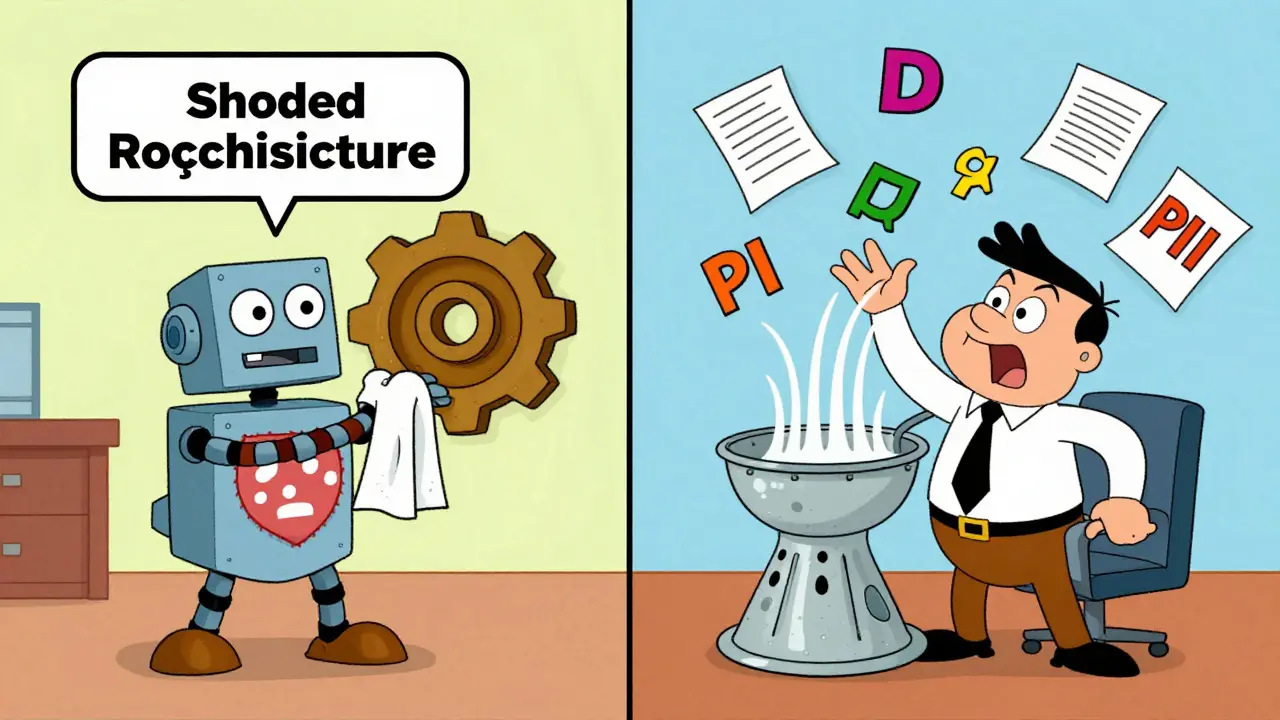
In the cloud world, we're used to the idea that AWS secures the hardware and you secure the data. The same logic now applies to AI. You cannot simply "buy" security; you enter a Shared Responsibility Model. This means the burden of safety is split between the provider and the user.
The vendor is responsible for the "plumbing": the underlying model architecture, the base training data, and the core safety guardrails. Your organization, however, is responsible for the "implementation": how you prompt the AI, what data you feed into it, and how you validate the outputs before they hit a customer. If you feed a vendor's AI a database of unmasked PII (Personally Identifiable Information), that's your failure, not theirs.
| Risk Area | Vendor Responsibility | Your Organization's Responsibility |
|---|---|---|
| Model Bias | Reducing algorithmic bias in base weights | Monitoring outputs for bias in specific use cases |
| Data Privacy | Secure hosting and encryption of data | Defining data access levels and masking PII |
| Accuracy | Providing a robust, stable model | Human-in-the-loop verification of outputs |
| Compliance | Adhering to global AI regulations | Ensuring the AI's use aligns with industry laws |
Modernizing the Vendor Assessment Process
If you're still relying on vendors to "self-certify" via a PDF questionnaire, you're flying blind. Statements of capability are meaningless without evidence. We saw this play out in 2024 with massive breaches at AT&T, where vulnerabilities in third-party systems exposed customer details because the assessment templates didn't require actual proof of controls.
To get a real picture of risk, you need an evidence-based approach. Stop asking "Do you have a privacy policy?" and start asking for SOC 2 reports, redacted test results, and third-party audit certifications. You want to see the actual logs of how they handle data drift and how they mitigate "prompt injection" attacks.
Effective assessments should follow a tiered system:
- Risk Ranking: Don't treat all vendors the same. A chatbot for the company cafeteria is low risk; an AI tool analyzing financial quarterly reports is high risk.
- Inherent Risk Assessment: Determine the potential damage if the vendor fails. Does this AI have access to your production database?
- Residual Risk Evaluation: Once the vendor shows you their controls, how much risk is actually left? This is where you decide if the business value outweighs the danger.
Using AI to Fight AI Risk
Ironically, the best way to manage the deluge of AI vendor data is to use Generative AI itself. Manually reviewing a 100-page security whitepaper for every vendor is a productivity killer. Modern risk teams are now using AI to automate the boring parts of due diligence.
AI can be used to extract specific clauses from contracts across fifty different vendors to see who is actually claiming ownership of your data. It can scan a vendor's website and social media in real-time to find "red flag" news-like a reported breach or a sudden change in leadership-long before a quarterly review happens. By automating the intake of questionnaires and scoring responses, risk officers can stop being "paper pushers" and start acting like strategic analysts.
Operationalizing AI Governance
Governance isn't a document that sits on a shelf; it's a living process. When you onboard an AI vendor, you need to establish a continuous monitoring loop. This means setting up triggers for reassessment. For example, if a vendor updates their model from version 3.5 to 4.0, that should automatically trigger a new risk review because the model's behavior and bias profile have changed.
You should also implement scenario planning. Use AI to simulate a "worst-case" scenario: What happens if this vendor's AI starts hallucinating incorrect medical advice to our clients? Do we have a kill-switch? How quickly can we migrate to a different provider? If you can't answer these questions, your governance is purely theoretical.
What is the biggest mistake companies make when vetting AI vendors?
The most common error is relying on "self-attestation." Vendors will always say their AI is safe and unbiased. The mistake is not demanding evidence-such as third-party audit reports or SOC 2 compliance-to back up those claims.
Does the Shared Responsibility Model mean I'm not liable for vendor errors?
Absolutely not. While the vendor manages the model, you are responsible for how it's used and the final output. If a vendor's AI produces a biased result and you publish it, you are legally and reputationally responsible for that output.
How often should AI vendors be reassessed?
Annual reviews are too slow for AI. Reassessments should be triggered by "events," such as a major model version update, a change in the vendor's data privacy policy, or a known security breach in a related tool.
How do I handle vendors who refuse to explain how their models work?
This is a major red flag. If a vendor cannot provide a level of explainability or auditability, you cannot effectively manage the risk. In these cases, you should either limit the AI's access to sensitive data or look for a more transparent provider.
What are the key metrics for measuring AI vendor risk?
Focus on a few concrete metrics: the rate of hallucinations in a test set, the latency of safety guardrail responses, the percentage of data encrypted at rest, and the time it takes for the vendor to notify you of a data breach.
Next Steps for Risk Officers
If you're just starting to tighten your AI vendor game, don't try to boil the ocean. Start by creating an AI Inventory. You can't manage what you can't see. Find every "shadow AI" tool your employees are using-those browser extensions and free plugins-and bring them into your formal assessment process.
From there, refine your contracts. Move away from generic liability clauses and add specific language regarding data ownership and training prohibitions. Ensure your contracts explicitly forbid the vendor from using your proprietary data to improve their general-purpose models. Finally, move toward a continuous monitoring model where AI-driven tools alert you to vendor risk in real-time, rather than waiting for the next annual audit.