
Imagine building a fully functional inventory tracking app in three days instead of three weeks. That’s the promise of vibe coding, a development approach where you describe what you want in plain English, and artificial intelligence handles the rest. But here is the catch: does this speed actually save you money, or are you just creating a messy codebase that will cost a fortune to fix later?
In 2026, the debate isn’t about whether AI can write code-it clearly can. The real question is how to calculate the return on investment (ROI) when the traditional metrics of developer hours and billable rates no longer apply in the same way. If you are a founder, product manager, or engineering lead looking to adopt these tools, you need a model that accounts for hidden technical debt, not just upfront savings.
The Core Components of Vibe Coding ROI
To build an accurate ROI model, you have to break down the value into three distinct buckets: cost reduction, speed acceleration, and quality implications. Most people focus only on the first two, which leads to disastrous long-term outcomes.
Cost Reduction: This is the easiest part to quantify. Instead of hiring a full-time senior developer at $120,000 per year ($60/hour), you pay for AI tool subscriptions. Platforms like GitHub Copilot costs around $19 per user per month for businesses, while Cursor sits at $20 per month. For a small team, the monthly burn rate drops from thousands to hundreds. Dr. Elena Rodriguez from Leanware notes that this approach reduces pre-revenue burn rates by 85-95% compared to traditional teams.
Speed Acceleration: Time-to-market is compressed dramatically. Microsoft reported in their Q2 2025 earnings call that tasks taking weeks now happen in hours. Real-world data from Bancolombia shows a 30% increase in code generation, resulting in 18,000 automated application changes annually. For MVPs, this means getting user feedback in days rather than months.
Quality Implications: This is where the model gets tricky. While AI eliminates 30-50% of boilerplate coding tasks, it often introduces subtle bugs or insecure patterns. IBM’s analysis warns that vibe coding struggles with complex systems requiring precision. You gain speed, but you might lose architectural integrity if you don’t have human oversight.
Building Your ROI Calculation Model
You cannot rely on gut feeling. You need a formula. The standard ROI calculation is:
ROI = ((Net Profit / Total Investment) * 100)
However, for vibe coding, we need to adapt this. "Net Profit" here is the value of time saved minus the cost of fixing AI errors. "Total Investment" includes subscription fees plus the time humans spend reviewing code.
Let’s look at a concrete example. Suppose your company has an average developer salary of $60/hour. Your team uses vibe coding to save 200 developer hours per month. That’s $12,000 in potential savings. Now, subtract the costs:
- AI Tool Subscriptions: $150/month (for a small team)
- Code Review Time: Developers still need to review AI output. Let’s say they spend 20 hours/month reviewing. That’s $1,200.
- Technical Debt Refactoring: IBM estimates hidden debts can consume 15-25% of time savings. Let’s allocate 10 hours for refactoring messy links. That’s $600.
Total Investment = $150 + $1,200 + $600 = $1,950.
Net Savings = $12,000 - $1,950 = $10,050.
ROI = (($10,050 / $1,950) * 100) = 515%.
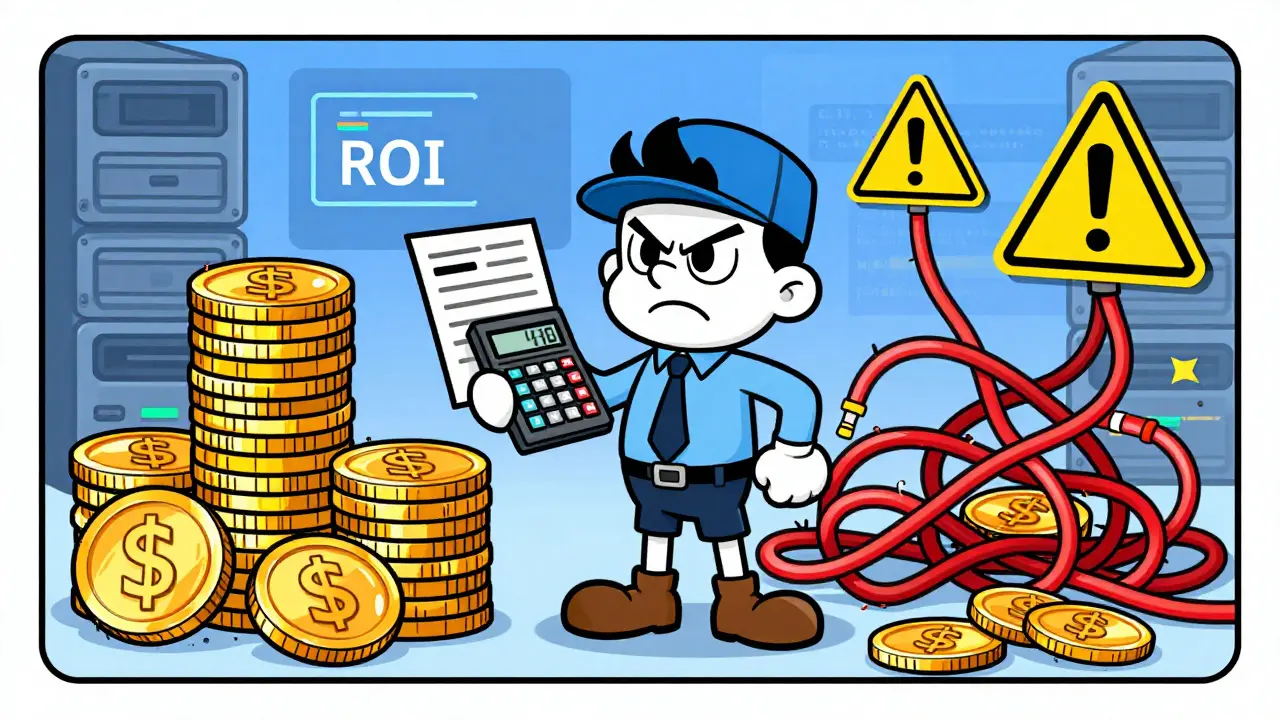
This looks incredible. But notice what happens if the complexity increases. If the project requires complex ecosystem integration, the review and refactoring time might triple. Suddenly, that 515% ROI drops significantly. This is why context matters more than the raw numbers.
Tool Comparison: Where Does the Value Come From?
Not all AI coding tools are created equal. Your ROI depends heavily on which platform you choose based on your specific needs. Here is how the major players stack up in 2026:
| Platform | Primary Use Case | Monthly Cost (Approx.) | Best For | Limitations |
|---|---|---|---|---|
| GitHub Copilot | Enterprise Integration | $19/user | Large teams, existing codebases | Requires strong prompting skills |
| Cursor | Rapid Prototyping | $20 | Startups, non-technical founders | Less support for legacy systems |
| Replit | Full-stack Apps | $20+ | End-to-end deployment without setup | Code often needs heavy refactoring |
| IBM watsonx.ai | Enterprise Security | $500+ | Regulated industries, high security | Higher entry cost, complex setup |
If you are building a consumer MVP, Cursor or Replit offers the highest speed ROI. If you are maintaining a bank’s core system, GitHub Copilot or IBM watsonx.ai provides the necessary governance to prevent costly security breaches. Choosing the wrong tool for the job destroys your ROI instantly.
The Hidden Costs: Technical Debt and Security
Here is the part most guides skip. When you move fast, you create mess. Nanobyte Technologies’ 2026 forecast warns of "hidden debts, like messy links that slow updates." These aren’t just abstract concepts; they are real dollars lost in future maintenance.
Consider the health tech startup mentioned in TechCrunch’s September 2025 post-mortem. They built their patient management system using pure vibe coding to save money. It worked fine until they hit 10,000 users. Then, scalability issues emerged. The result? $250,000 in rework costs. Their initial ROI looked great, but their long-term ROI was negative.
To protect your ROI, you must budget for:
- Automated Scanning: Integrate tools like Snyk to catch security vulnerabilities early. Unstructured vibe coding can introduce open-source license conflicts or weak encryption.
- Refactoring Sprints: Dedicate 15-20% of your development time to cleaning up AI-generated code. Don’t let it accumulate.
- Human Oversight: Keep a senior engineer in the loop for architecture decisions. AI is great at writing functions, but poor at designing systems.
When Should You NOT Use Vibe Coding?
Vibe coding is not a silver bullet. There are scenarios where the ROI is negative because the risk is too high. Avoid relying solely on AI-driven development for:
- Complex Ecosystem Integrations: If your app needs to talk to ten different legacy APIs with unique authentication protocols, AI will likely hallucinate connections that break under load.
- High-Stakes Security Applications: Financial transactions or medical records require precision that current LLMs struggle to guarantee without extensive human validation.
- Long-Term Scalability Projects: If you plan to scale to millions of users, the architectural foundation needs to be rock solid. AI-generated code often lacks the optimization needed for massive scale.
For internal tools, scripts, and MVPs, vibe coding shines. For core business logic in regulated industries, treat it as an assistant, not the driver.
Practical Steps to Maximize Your ROI
If you want to capture the benefits of vibe coding without falling into the debt trap, follow this structured approach:
- Start Small: Begin with low-risk projects like internal dashboards or marketing landing pages. Measure the time saved versus the review time required.
- Train Your Team: Non-technical founders need 10-15 hours to learn effective prompting. Experienced developers need less, but they must learn to critique AI output critically.
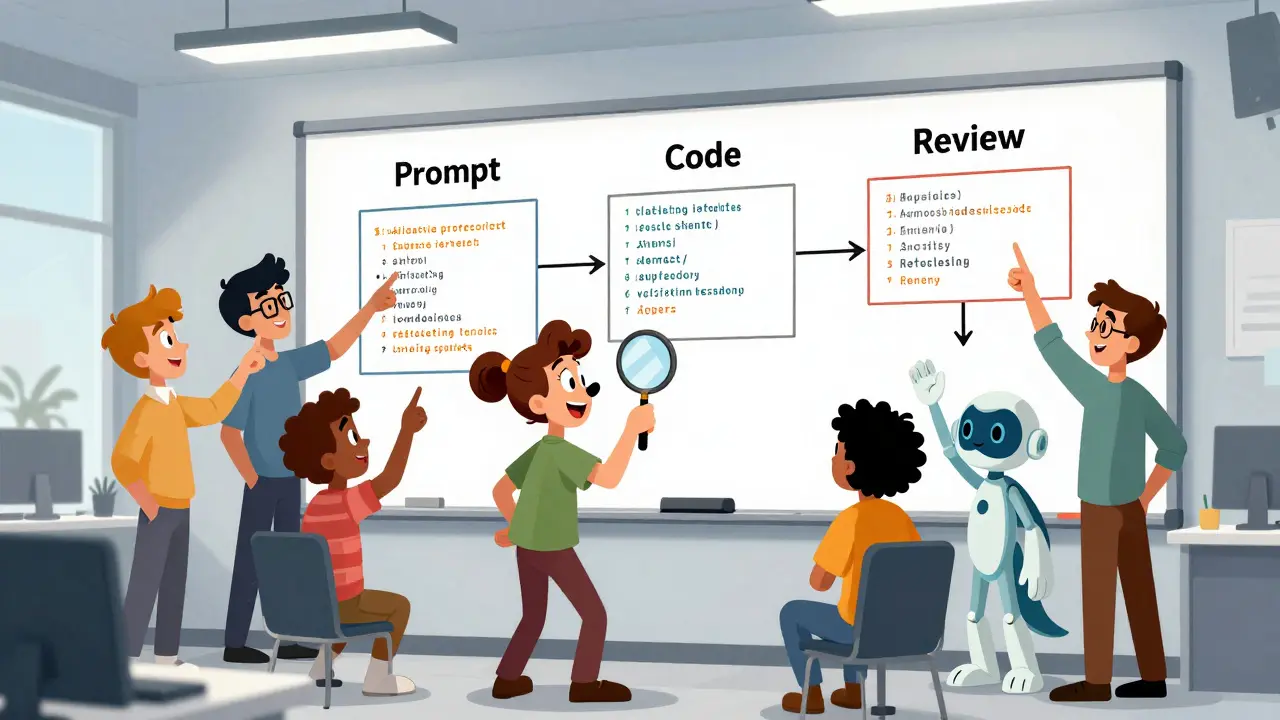
- Establish Validation Protocols: Never deploy AI-generated code directly to production. Create a checklist for security, performance, and readability.
- Monitor Metrics: Track not just development speed, but bug rates and maintenance hours. If bugs increase by 20%, your speed gains are being eaten by quality losses.
- Iterate on Prompts: Treat prompts as code. Version control them. Share best practices across your team to reduce the learning curve over time.
By treating vibe coding as a disciplined process rather than a magic wand, you ensure that the speed gains translate into actual financial returns.
What is the average ROI of using AI coding tools like GitHub Copilot?
While exact figures vary by use case, studies suggest development time reductions of 40-60% for appropriate projects. When factoring in subscription costs and review time, companies often see net savings ranging from 200% to 500% ROI for MVPs and internal tools. However, this drops significantly for complex enterprise systems without proper oversight.
How do I account for technical debt in my vibe coding ROI model?
You should allocate 15-25% of your projected time savings as a buffer for refactoring and debugging. IBM’s analysis indicates that unstructured AI coding can accumulate hidden debts. Include costs for automated scanning tools and dedicated refactoring sprints in your total investment calculation.
Is vibe coding suitable for non-technical founders?
Yes, for rapid prototyping and MVPs. Non-technical founders typically need 10-15 hours to become proficient in prompting. Tools like Replit and Cursor allow them to build functional apps without traditional developer intermediaries. However, they should still consult with engineers before scaling to production.
Which AI coding tool offers the best value for startups?
Cursor and Replit are popular choices for startups due to their affordability ($20/month) and ease of use. Cursor excels in rapid prototyping within existing IDEs, while Replit offers end-to-end deployment capabilities. GitHub Copilot is better suited for larger teams with established engineering workflows.
Can vibe coding replace human developers entirely?
No. While AI can generate code quickly, it lacks the strategic thinking required for complex system architecture, security governance, and long-term scalability. Human oversight remains essential for validating code quality, managing technical debt, and making critical design decisions.