Imagine your junior developer writes a feature in ten minutes. It works perfectly. You merge it. Two weeks later, your database is exposed because the AI suggested hardcoding an API key instead of using environment variables. This isn't a hypothetical nightmare; it's happening right now. As "vibe coding"-using natural language prompts to generate software via tools like GitHub Copilot, Cursor, or Claude Artifacts-becomes standard, procurement teams are facing a new crisis. Speed has skyrocketed, but so have vulnerabilities.
In July 2026, the question isn't whether to adopt AI-assisted development. The data shows 68% of developers already use it. The real question is: how do you buy these tools without buying your company into a security lawsuit? If you are evaluating vibe coding platforms for enterprise adoption, you need more than a demo. You need a rigorous procurement checklist that addresses specific security protocols and legal liabilities. Here is exactly what you need to check before signing that contract.
The Hidden Risks of Vibe Coding Adoption
Vibe coding lowers the barrier to entry for writing code, but it raises the ceiling for catastrophic errors. According to Aikido’s April 2025 security analysis, 73% of AI-generated code contains at least one vulnerability if not properly reviewed. Why? Because large language models train on public repositories. They learn patterns, both good and bad. When you ask an AI to write a login function, it might reproduce a known vulnerability from its training data 14.7% of the time, as documented by Codefortify in January 2025.
The risk isn't just technical; it's cultural. Developers get comfortable accepting output they don't fully understand. Reddit discussions from March 2025 highlighted 147 instances where developers accidentally committed API keys to GitHub while using vibe coding tools. In 89% of those cases, the project used GitHub Copilot without proper `.gitignore` configuration. Your procurement process must account for this human factor. You aren't just buying a tool; you are buying a workflow that requires strict guardrails.
Essential Security Criteria for Procurement
When evaluating vendors, move beyond basic features. You need to demand specific security architectures. Archit Jain’s comprehensive checklist identifies twelve critical categories, but three stand out as non-negotiable for enterprise contracts.
- Default Network Restrictions: Does the tool block outbound HTTP requests by default? Claude Artifacts scores high here (92/100) because it blocks external network access unless explicitly allowed. GitHub Copilot scored only 68/100 because it allows outbound traffic by default, requiring manual configuration to secure. Environments that prevent outbound requests avoid 90% of early-stage security incidents.
- Secrets Management Integration: The tool must enforce protection of API keys through `.env` files and integrate with scanning tools. GitGuardian detected 2.8 million exposed secrets in GitHub repositories in Q1 2025 alone. Look for tools like Cursor v2.0, which released built-in secrets scanning in May 2025, reducing exposed credentials by 73% in internal tests.
- Parameterized Query Enforcement: Ensure the AI suggests parameterized queries for all database interactions. NMN’s February 2025 analysis found that 62% of AI-generated database code contained SQL injection vulnerabilities when this safeguard was missing.
Ask the vendor: "How does your tool prevent the reproduction of known CVEs (Common Vulnerabilities and Exposures)?" If the answer is vague, keep looking. You want tools that integrate with Static Application Security Testing (SAST) like Semgrep or Dynamic Application Security Testing (DAST) like OWASP ZAP directly in the IDE.

Navigating Legal Terms and IP Ownership
Security keeps your data safe; legal terms keep your intellectual property safe. This is where many procurement deals stall. The core issue is copyright. Who owns the code generated by the AI? More importantly, is the code infringing on someone else’s copyright?
GitHub’s terms state that "you own the code you create," but they reserve the right to use it to improve Copilot. For enterprises, this ambiguity is unacceptable. You need explicit indemnification clauses. According to a June 2025 survey by Davis Polk & Wardwell, 68% of enterprise legal teams are concerned about potential infringement claims related to training data. Your contract must include:
- IP Ownership Guarantee: Clear language stating the enterprise owns all outputs, free from third-party claims.
- Training Data Transparency: Disclosure of sources used for model training. With the ongoing *Andersen v. GitHub* lawsuit, transparency is becoming a legal necessity.
- Data Privacy Compliance: Explicit adherence to GDPR Article 25 (data protection by design). The EU Data Protection Board issued guidelines in February 2025 requiring security validation for AI-generated code in GDPR-covered systems.
Only a few major players currently provide explicit GDPR compliance documentation. Supabase, Cursor, and Replit (enterprise plans) lead here. Others require significant customization, which increases your legal overhead.
Comparing Top Vibe Coding Tools for Enterprise
| Tool | Security Score (Aikido) | Key Security Feature | Legal/GDPR Clarity | Cost (Enterprise/User/Mo) |
|---|---|---|---|---|
| GitHub Copilot | 68/100 | IDE Integration | Moderate (Ambiguous IP terms) | $19 |
| Claude Artifacts | 92/100 | Blocks Outbound Requests by Default | High (Anthropic Whitepaper) | Varies (API usage) |
| Cursor | 85/100 (Est.) | Built-in Secrets Scanning (v2.0) | High (Explicit GDPR Docs) | $20+ |
| Supabase AI | 90/100 | Automatic JWT Auth & Row-Level Security | High (Explicit GDPR Docs) | Usage-based |
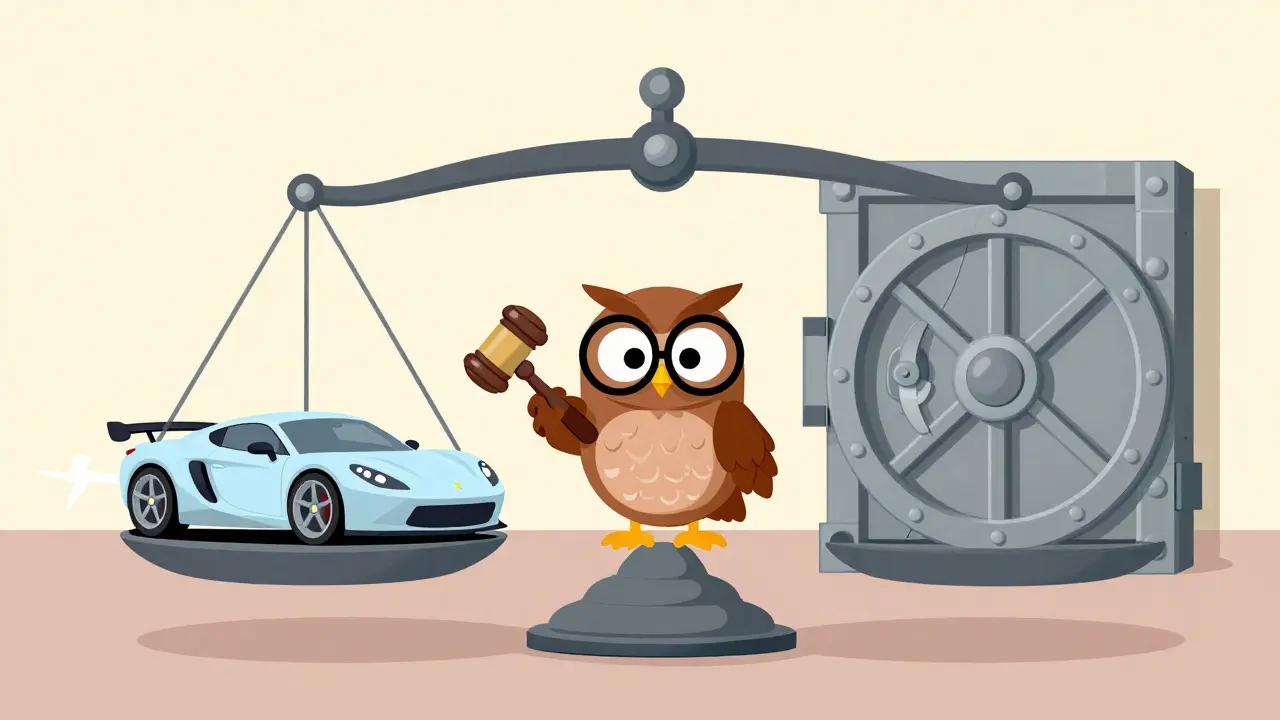
Note the trade-off. GitHub Copilot leads in market share (48%) but lags in default security. Claude Artifacts and Supabase prioritize security-by-design, which reduces the burden on your internal security team. TestSprite, a newer player focused on testing AI code, adds $15/user/month but reduces vulnerability rates by 51%. Consider if the cost of a breach outweighs the subscription fee.
Implementation Strategy: Beyond the Purchase
Buying the tool is only step one. Implementation requires a structured protocol. Thoughtworks’ May 2025 report concludes that vibe coding produces production-grade software only when integrated with comprehensive security protocols. Follow this five-phase approach:
- Project Clarity: Define scope and risk tolerance. Not every module needs AI generation. Core authentication logic should remain human-written or heavily audited.
- Tool Configuration: Enforce `.gitignore` rules immediately. Configure rate limiting (minimum 100 requests/minute per user) to prevent brute-force attacks during development.
- Prompt Strategy: Train developers on security-aware prompting. Ask the AI to "explain security implications" alongside code generation.
- Mandatory Code Review: Human review catches 83% of security flaws that automated tools miss. Make this non-negotiable. Use SCA (Software Composition Analysis) tools in your CI/CD pipeline.
- Deployment Monitoring: Implement health checks and monitor for anomalies post-deployment.
Expect a learning curve. Teams require 2-3 weeks to master secure vibe coding practices. Snyk’s March 2025 survey found that teams implementing structured training reduced security incidents by 58%. Don't skip the training budget.
Future-Proofing Your Procurement
The landscape is shifting fast. Gartner predicts that by 2027, 60% of the enterprise market will be captured by tools prioritizing security-by-default configurations. Meanwhile, legal standards are tightening. The IEEE published the P2898 Standard for AI-Generated Code Security and Compliance in June 2025. While not yet law, it sets the benchmark for best practices.
As you finalize your procurement checklist, remember that the cheapest tool is often the most expensive in the long run due to remediation costs. Prioritize vendors who offer transparency in training data, robust default security settings, and clear legal indemnification. Your developers want speed, but your CISO wants safety. The right vibe coding tool delivers both-if you know what to look for.
What is the biggest security risk in vibe coding?
The biggest risk is the accidental inclusion of vulnerable patterns from the AI's training data. Without proper review, 73% of AI-generated code contains at least one vulnerability, such as hardcoded API keys or SQL injection flaws.
Who owns the code generated by AI tools like GitHub Copilot?
Generally, the user owns the code, but terms vary. GitHub states users own their creations but allows GitHub to use them for improvement. Enterprises should seek explicit IP ownership guarantees and indemnification clauses in their contracts to mitigate copyright risks.
Which vibe coding tools are best for GDPR compliance?
Supabase, Cursor, and Replit (enterprise plans) currently provide explicit GDPR compliance documentation. Other tools may require significant customization to meet Article 25 data protection by design requirements.
How can we prevent AI tools from exposing API keys?
Enforce strict `.gitignore` configuration, use tools with built-in secrets scanning (like Cursor v2.0), and mandate that all sensitive data is stored in environment variables rather than hardcoded in the source file.
Is human code review still necessary with AI coding assistants?
Yes, absolutely. Human review remains non-negotiable. Studies show that critical human review catches 83% of security flaws that automated tools miss, especially in complex logic and authentication flows.


another corporate fear-mongering piece disguised as advice because if you dont have a procurement team that costs more than the actual dev work then this is just noise
we vibe code we ship fast and if it breaks we fix it later thats the agile way baby
Your lack of understanding regarding enterprise-grade security protocols is truly alarming, om gman. The concept of 'fixing it later' is precisely what leads to catastrophic data breaches in large-scale deployments where legacy systems intersect with modern AI-generated artifacts. One must consider the nuanced implications of GDPR Article 25 compliance, which mandates data protection by design rather than by accident. Furthermore, the statistical probability of introducing SQL injection vulnerabilities through unvetted LLM outputs is not merely a theoretical concern but a documented reality supported by Aikido’s April 2025 analysis. It is imperative that organizations adopt a rigorous procurement checklist that includes default network restrictions and secrets management integration to mitigate these risks effectively. Ignoring these critical security architectures is akin to driving without seatbelts in a high-speed vehicle; eventually, gravity will prevail. We must elevate our discourse beyond simplistic developer anecdotes and engage with the complex legal and technical frameworks that govern modern software development. The distinction between hobbyist coding and enterprise engineering is vast, and conflating the two demonstrates a profound ignorance of industry standards. Therefore, one should approach the adoption of vibe coding tools with the utmost caution and diligence, ensuring that all potential vectors for exploitation are thoroughly analyzed and mitigated before deployment. This is not about stifling innovation but about fostering a sustainable and secure technological ecosystem.
I see people getting worked up over machines writing code like its some kind of existential threat to human intelligence or something
look from my perspective down here in SA we just want the thing to work and not leak our customer data so maybe stop fighting each other and actually read the part about gitignore files because honestly its pretty basic stuff
The moral decay of our profession is evident when we allow algorithms to dictate the very fabric of our digital existence without proper ethical scrutiny
We have become mere conduits for silicon hallucinations losing our soul to the void of automated generation
It is a tragedy that we prioritize speed over sanctity allowing the machine to erode the sacred bond between coder and code
This is not progress it is a slow descent into chaos where responsibility is diffused until no one is left to blame
We must reclaim our agency and demand transparency from these opaque black boxes that claim to understand logic yet produce such fragile constructs
The silence of the engineers who accept this fate is deafening echoing through the halls of abandoned best practices
Let us stand firm against the tide of lazy automation and restore dignity to the craft of building software with intention and care
i mean i think saranya makes a fair point about the gdpr stuff even though she writes like a textbook sometimes but yeah i totally agree that you cant just let the ai do whatever it wants especially if you are working with user data because then you get in trouble with the lawyers and nobody likes that
i tried using cursor recently and it was kinda cool but i did forget to check the .gitignore file once and almost pushed an api key which was scary so yeah maybe we should be careful but also lets not lose the fun part of coding too right?
it is a bit overwhelming reading all these stats but i guess it is good to know what to look for when buying tools for the team so thanks for sharing this info even if it is a bit dry
interesting read