Imagine asking an AI assistant to "write a quick login system" and getting back code that looks perfect but leaves your database wide open. This is the reality of vibe coding, a practice where developers rely on conversational, low-detail prompts rather than precise technical specifications. While this approach feels fast and intuitive, it often leads to what experts call anti-pattern prompts. These are specific types of instructions that trick Large Language Models (LLMs) into generating insecure or inefficient code. The problem isn't just about bad luck; it's a systematic failure in how we communicate with these models. If you're using AI to write code, understanding what *not* to ask is just as critical as knowing what to ask.
The term "vibe coding" gained popularity around mid-2023, but its risks have only become clearer as more teams integrate tools like GitHub Copilot and ChatGPT into their workflows. According to research from Endor Labs, when developers use vague prompts without security constraints, the density of weaknesses in generated code spikes dramatically. In one analysis, basic "write code" prompts resulted in 64% higher weakness density in GPT-3 outputs compared to structured prompts. For GPT-4, the gap was 59%. This isn't a minor statistical blip; it’s a significant jump in risk that can turn a productive afternoon into a costly incident response nightmare.
Why Vague Prompts Create Security Holes
To understand why anti-patterns happen, you have to look at how LLMs work. They don't think like senior engineers who instinctively check for edge cases. Instead, they pattern-match against their training data. Here’s the catch: insecure code is far more prevalent in public repositories than secure code. Why? Because secure code is often proprietary, while buggy or insecure snippets get shared openly on forums and GitHub. When you give an LLM a vague prompt, it defaults to the most common solution it has seen, which is frequently the insecure one.
Dr. Marcus Johnson, lead author of the DevGPT dataset analysis, explains that this is a fundamental bias in the model. If you ask for a file upload handler without specifying sanitization requirements, the model will likely generate standard PHP or Python code that accepts any file type. It doesn't know you care about MIME types or file size limits unless you tell it. This lack of context leads directly to vulnerabilities like CWE-20 (Improper Input Validation). Simon Willison’s research highlights that prompting for "code that processes user input" without mentioning sanitization is one of the most dangerous moves a developer can make.
The Cost of Ignoring Anti-Patterns
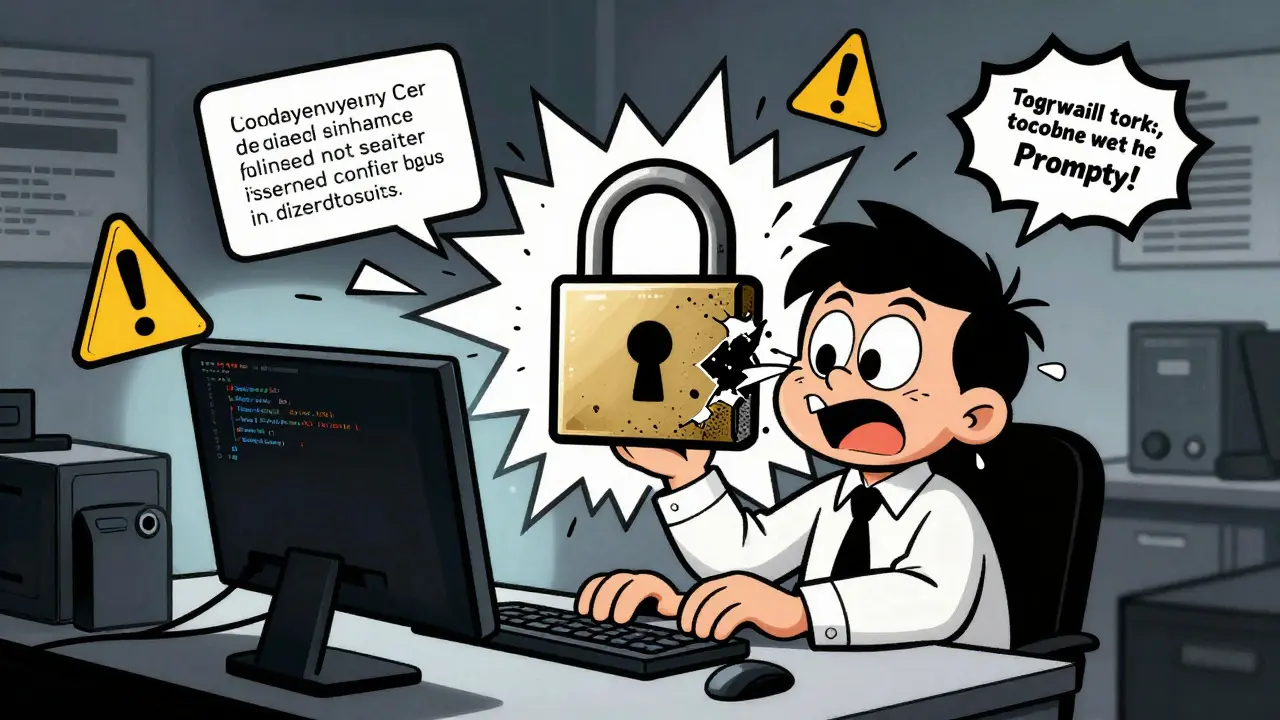
The consequences of these mistakes aren't theoretical. On Reddit’s r/Programming subreddit, a thread titled "How many of you have deployed AI-generated code with security holes?" sparked over 1,200 comments. A developer known as 'SecureCoder42' shared a story that resonated with many: they asked ChatGPT to "write a PHP file upload handler" and deployed it straight to production. Two weeks later, they were hacked through a file inclusion vulnerability. The incident cost them $85,000 in response efforts. That’s the price tag of a two-second prompt.
This isn't an isolated case. GitHub’s 2024 survey found that 56% of developers who used vibe coding prompts experienced at least one security incident in AI-generated code. Compare that to just 18% of developers who used structured prompts with explicit security constraints. The time wasted is equally staggering. Developers reported spending an average of 3.7 hours per incident fixing issues that could have been prevented with better initial instructions. In a world where speed is everything, losing nearly four hours to debug a simple logic error or security flaw is a massive drag on productivity.
| Prompt Type | Avg. Interactions Needed | Security Incident Rate | First-Response Accuracy |
|---|---|---|---|
| Vague "Vibe" Prompt | 4.3 | 56% | Baseline |
| Structured "Recipe" Prompt | 1.2 | 18% | 4.1x Higher |
| Question Pattern | 1.2 | N/A | Moderate |
Common Anti-Patterns to Avoid
So, what exactly should you stop doing? Based on data from the OWASP AI Security Top 10 and industry reports, here are the biggest offenders:
- The "Quick Fix" Request: Asking for a "quick API endpoint" or "fast login system." Speed implies skipping checks. LLMs interpret this as permission to omit validation and error handling.
- Missing Context: Failing to specify the language version, framework, or environment. A prompt for "Python code" is ambiguous. Is it Python 3.8 or 3.12? Are you using Django or Flask? Context-free prompts required 3.7 times more iterations to achieve satisfactory outputs.
- Ignoring Input Validation: Requesting code that handles user data without mentioning sanitization. This is the direct path to SQL injection and XSS vulnerabilities.
- Over-Reliance on Defaults: Assuming the AI knows your security standards. It doesn't. It knows the most common code, not your company's specific security posture.
One particularly dangerous anti-pattern is requesting code that "bypasses security restrictions." While sometimes necessary for testing, if left in production, it creates massive exposure. The OWASP report noted that prompts lacking security constraints effectively outsource your security thinking to an AI that has no security mandate.
How to Write Better Prompts
Fixing this doesn't mean writing novels. It means being specific. The Endor Labs framework suggests a simple structure: "Generate secure [Language] code that: [Task]. The code should avoid critical CWEs, including [List of relevant CWEs]."
Let's look at a practical example. Instead of saying "Write a function to parse JSON," try this:
- Define the Task: "Write a Python function to parse incoming JSON webhooks."
- Specify Constraints: "Handle missing keys gracefully by returning default values."
- Add Security Context: "Avoid CWE-20 (Improper Input Validation) by validating key types. Limit payload size to 1MB."
This extra effort takes about 15-20% more time upfront, but it pays off. The DevGPT study showed that "Recipe" prompts, which include detailed specs, outperformed vague prompts by 4.1x in first-response accuracy. You spend a minute writing a better prompt to save ten minutes debugging broken code later. It’s a trade-off worth making.
Another powerful technique is the "step-by-step debugging approach." Instead of asking for the final code immediately, prompt the AI to "walk through this function line by line and track variable values." This forces the model to expose its logic, reducing logic errors by 47% according to Endor Labs’ internal testing. It turns the AI from a black box into a collaborator you can audit.
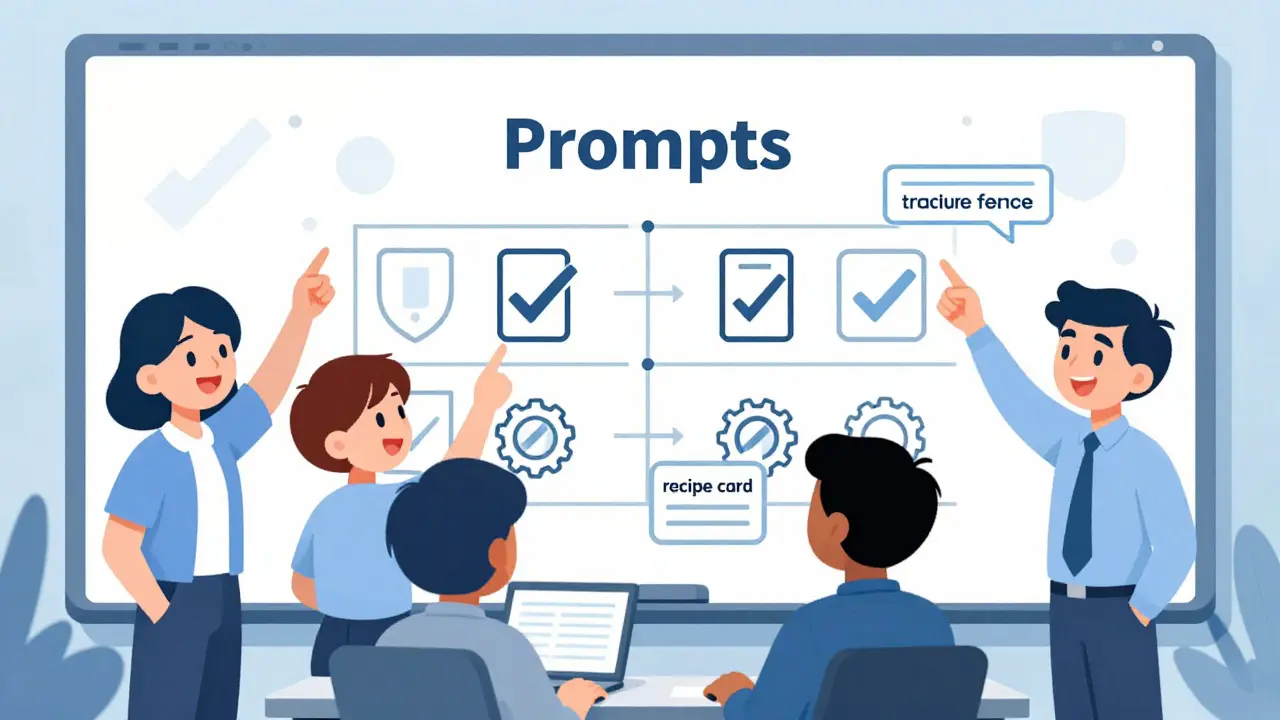
Building a Culture of Secure Prompting
Individual habits matter, but team culture matters more. If your organization uses AI coding assistants, you need guidelines. Gartner predicts that 70% of organizations with AI coding assistants will implement prompt pattern guidelines by 2026. Currently, adoption varies wildly. 84% of large enterprises have formal guidelines, but only 32% of small businesses do. This gap leaves smaller teams vulnerable.
Implementing these changes requires overcoming resistance. Many developers view security-conscious prompting as "slowing them down." A Red Hat survey found that 41% of developers skip security specifications when under deadline pressure. To combat this, you need to make secure prompting frictionless. Tools are starting to help. GitHub’s Copilot update in June 2025 now flags vague prompts and suggests security-conscious alternatives, reducing insecure prompt usage by 43% among its users.
Integrating prompt patterns into your CI/CD pipeline is another step. Google’s internal case study showed they reduced AI-generated vulnerabilities by 78% by requiring prompt documentation alongside code submissions. It sounds bureaucratic, but it works. It creates a paper trail and forces developers to think before they hit enter.
The Future of Prompt Engineering
We are moving toward a future where prompt engineering is as standard as linting. The Prompt Engineering Standards Consortium (PESC) published the first industry-standard taxonomy in October 2025, categorizing 47 distinct anti-patterns. This gives us a shared language for what goes wrong. Microsoft’s Visual Studio Code now offers real-time prompt analysis, identifying vague instructions as you type.
However, human behavior remains the biggest hurdle. Even with guardrails, 31% of developers find ways to bypass safety checks when stressed. The goal isn't to police developers, but to make the right choice the easy choice. As Endor Labs’ CEO predicted, within three years, secure prompt patterns will be automatic. Developers won't even think about it; they'll just do it. Until then, the burden is on us to be intentional about every prompt we send.
Vibe coding is here to stay. It’s faster, more natural, and often fun. But it comes with a hidden cost. By recognizing anti-pattern prompts and adopting structured alternatives, you can keep the speed without sacrificing security. The next time you’re about to hit send on a vague request, pause for a second. Add one constraint. Specify one version. Mention one security concern. It might just save you $85,000.
What is vibe coding?
Vibe coding is a development practice where programmers use conversational, low-detail prompts to generate code from AI assistants, relying on general descriptions rather than precise technical specifications.
Why are anti-pattern prompts dangerous?
Anti-pattern prompts are dangerous because they lack security constraints and context, causing LLMs to generate code based on common but often insecure patterns found in training data, leading to vulnerabilities like SQL injection and improper input validation.
How can I improve my AI coding prompts?
You can improve prompts by adding specific details such as language versions, framework names, input validation requirements, and explicit references to Common Weakness Enumerations (CWEs) to avoid. Using a "Recipe" style prompt with clear inputs, outputs, and constraints significantly increases accuracy.
Do larger companies have better prompt practices?
Yes, 84% of enterprises with over 5,000 employees have implemented formal prompt pattern guidelines, compared to only 32% of small businesses. This disparity suggests that smaller teams are more vulnerable to AI-generated security incidents due to less structured prompting.
Is prompt engineering going to be automated?
Experts predict that secure prompt patterns will become as automatic as linters within three years. Tools like GitHub Copilot and Visual Studio Code are already introducing real-time prompt analysis to suggest better structures, aiming to make secure prompting the default behavior.