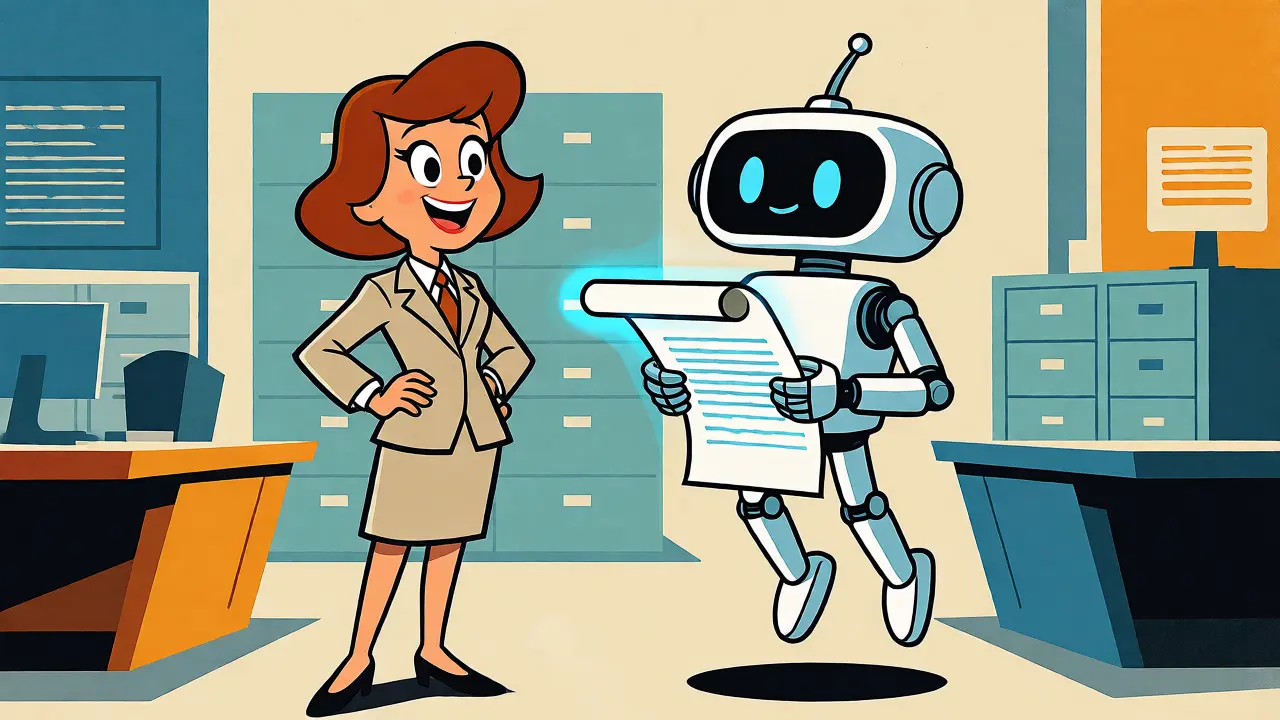
You’ve probably heard the term vibe coding thrown around in tech circles lately. It sounds trendy, maybe even a bit risky. The idea of letting an AI write code without you looking at every line feels like handing the keys to your car to a stranger who claims they know how to drive. But here’s the twist: for specific parts of your business, this isn’t just safe-it’s smart.
We’re not talking about rewriting your core banking transaction engine or replacing your ERP system overnight. We’re talking about the back-office functions-the quiet, repetitive, often ignored tasks that eat up developer time but don’t generate direct revenue. This is where vibe coding shines. It allows non-technical staff or junior developers to build small, contained tools quickly, freeing up senior engineers for high-stakes work. If you’re wondering where to start without blowing up your production environment, this guide breaks down the safest, highest-value entry points for enterprise adoption.
What Is Vibe Coding and Why Does It Matter Now?
To understand why this works, we need to define what we’re actually doing. Vibe coding is a development approach where AI agents handle full coding workloads end-to-end, allowing users to build software by describing intent rather than writing syntax. Unlike traditional AI-assisted programming (like GitHub Copilot), which suggests lines as you type, vibe coding involves agents that plan, create files, run commands, and fix their own errors based on natural language prompts.
The distinction matters because it changes who can build software. In traditional models, you need deep knowledge of syntax and architecture. With vibe coding, you need clarity of thought. You describe the problem-"Create a script that scans our S3 buckets for unencrypted data and emails the security team if any are found"-and the AI builds it. For enterprise back-offices, this democratizes tool creation. It doesn’t replace engineers; it shifts their role from writing boilerplate to setting constraints and reviewing outputs.
Why now? Because the barrier to entry has collapsed. Tools like Claude Code, Cursor, and Windsurf have matured enough to handle multi-file projects reliably. They act as junior pair programmers. They can read error logs, propose fixes, and refactor code. But crucially, they lack the long-term architectural context of a senior engineer. That’s why keeping them in "low-risk" zones is essential.
The Sweet Spot: Internal Workflow Automation
The most obvious and lowest-risk application is automating tedious internal workflows. Think about the spreadsheets your finance or HR teams live in. Or the manual data entry between two disconnected SaaS platforms. These are perfect candidates for vibe coding.
Consider a scenario where your operations team needs a daily report combining sales data from Salesforce and inventory levels from NetSuite. Traditionally, this requires a developer to write a Python script, set up a cron job, and maintain it. With vibe coding, an ops manager can prompt an agent: "Write a Python script that pulls yesterday's sales from Salesforce API and current stock from NetSuite, merges them into a CSV, and saves it to our shared drive." The AI generates the code. A developer reviews it for security and efficiency, then deploys it.
This approach reduces the "IT ticket backlog" significantly. Business employees gain the ability to customize their own toolkits instantly. They can generate reports, visualize findings, and optimize performance with minimal IT involvement. The risk is contained because if the script fails, no customer sees it. No revenue is lost. The worst-case scenario is a delayed report, which is easily fixed by tweaking the prompt.
- Speed-to-value: What used to take weeks of sprint planning now takes hours of prompting and review.
- Parallel experimentation: Teams can test multiple workflow variations simultaneously without hiring more devs.
- Cost efficiency: As of late 2025, complete vibe coding setups cost a fraction of a single full-time engineer, offering elastic capacity that scales with demand.
Documentation and Knowledge Management
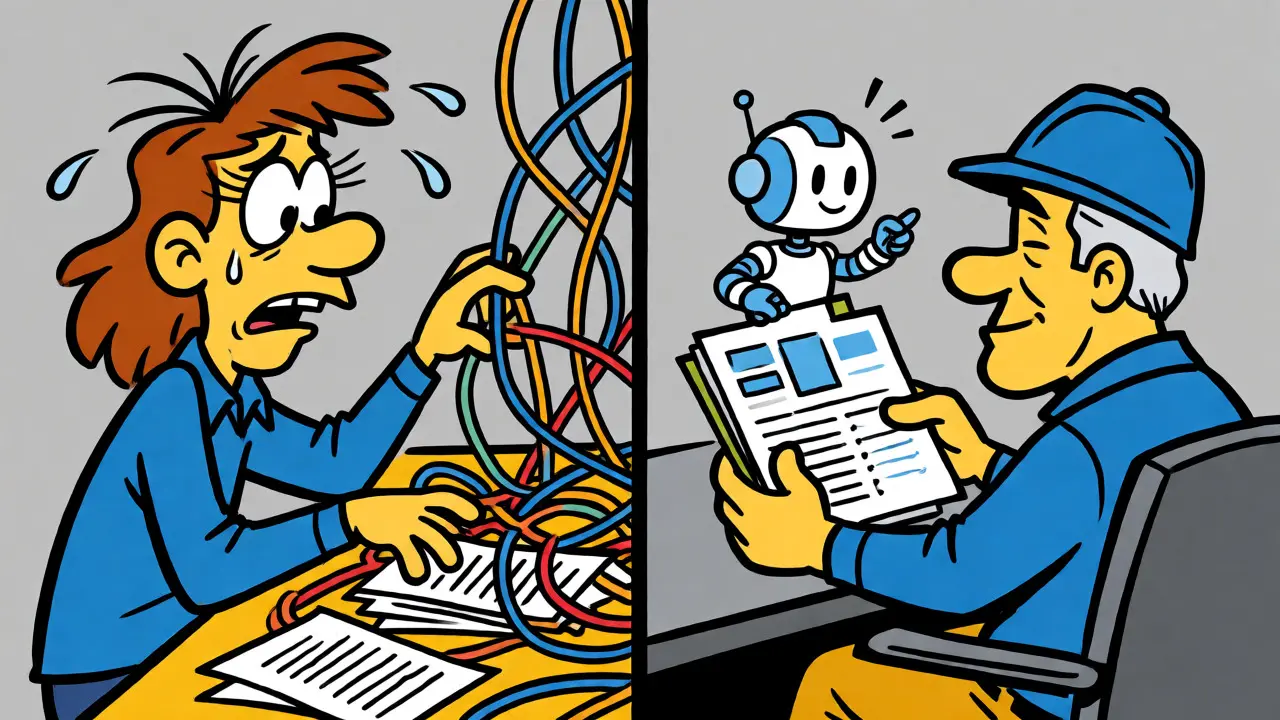
One of the biggest pain points in enterprise engineering is documentation. Nobody wants to write it, and nobody trusts it when it exists. Vibe coding offers a compelling solution here. Instead of asking developers to manually update changelogs or deployment guides, you can integrate AI agents into your CI/CD pipeline.
Imagine an agent that monitors project history. When a pull request is merged, the agent analyzes the diff and automatically generates a draft for the changelog or updates inline code comments. It can also create deployment guides based on configuration files. This ensures critical information is captured alongside operational changes, reducing the burden on busy teams.
However, there’s a caveat. AI-generated documentation can sometimes be vague or misaligned with actual behavior. It might describe what the code *should* do rather than what it *does*. To mitigate this, treat AI docs as drafts. Implement a lightweight validation step where a human reviewer checks for accuracy and clarity before publishing. This hybrid approach captures the speed of AI generation while maintaining the reliability of human oversight.
| Attribute | Traditional Manual Docs | Vibe-Coded Auto-Docs |
|---|---|---|
| Creation Speed | Slow (days per module) | Instant (seconds per commit) |
| Accuracy | High (if maintained) | Moderate (requires review) |
| Maintenance Burden | High (often neglected) | Low (auto-updated) |
| Consistency | Variable (depends on author) | Uniform (standardized tone) |
Compliance and Monitoring Scripts
Security and compliance teams often drown in repetitive validation tasks. Checking storage buckets for encryption, scanning infrastructure configurations for non-compliance, or auditing access logs are all rule-based problems. Rules are exactly what LLMs excel at interpreting.
DevOps and security teams can use vibe coding to draft monitoring scripts rapidly. For example, you might ask an agent to "Write a Terraform check that flags any EC2 instance without a 'Owner' tag." The AI generates the policy-as-code template. This lowers the barrier for teams new to frameworks like Open Policy Agent (OPA) or Sentinel.
The risk here is superficiality. An AI might suggest a check that looks correct syntactically but misses edge cases. For instance, it might check for the presence of a tag but fail to validate its format. Therefore, never deploy vibe-coded compliance rules directly to production enforcement. Use them for "shadow mode" monitoring first. Let the AI flag issues, but have humans review the alerts for a few weeks. Once the false positive rate drops, you can promote the rules to hard enforcement. Layering AI suggestions with robust, established scanning tools provides a safety net.
Risk Mitigation Strategies for Enterprises
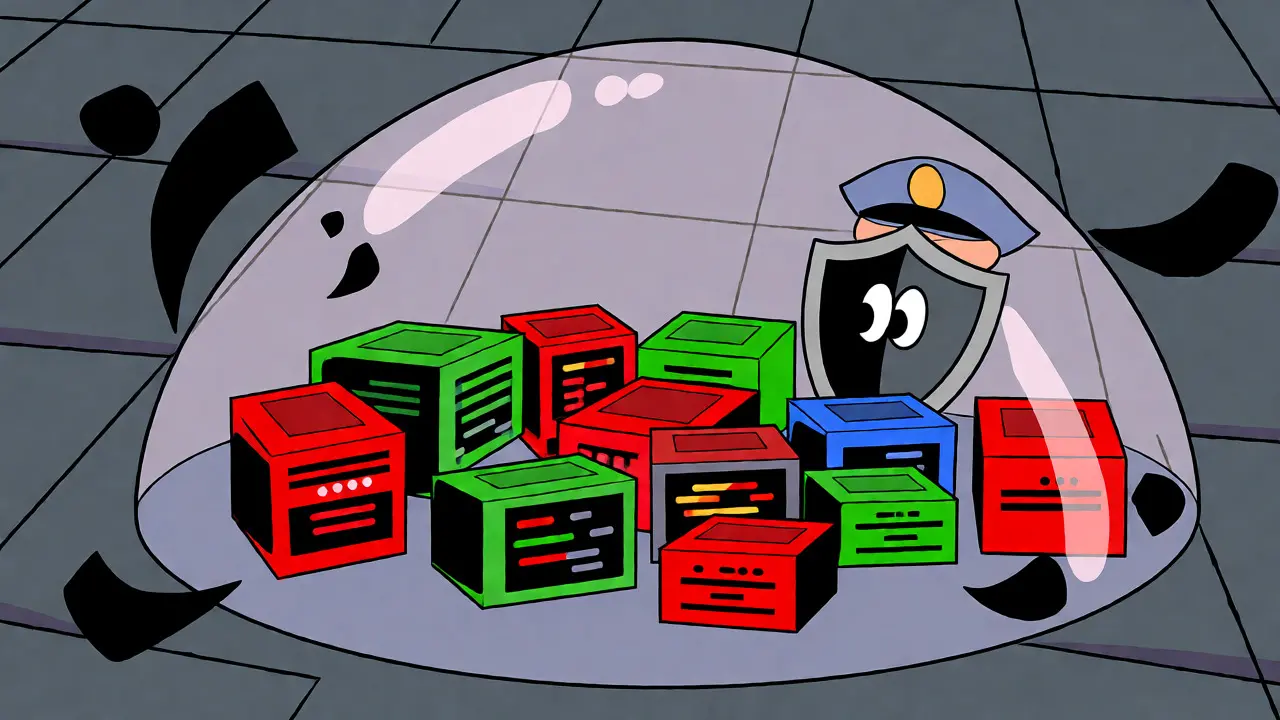
Just because these use cases are "low-risk" doesn't mean they are risk-free. Unmanaged vibe coding amplifies open-source supply chain risks. If the AI imports a malicious dependency, your internal tool inherits it. Here is how to keep things tight:
- Secure-by-design backends: Ensure your internal tools run in isolated environments. Use private clouds or proprietary hardware for sensitive data processing.
- Strict Access Controls: Limit what the AI agent can touch. It shouldn't have root access to your database. Give it read-only permissions where possible, and restrict file handling to specific directories.
- Input/Output Guardrails: Enforce prompt hygiene. Validate outputs against security policies before execution. Configure guardrails that block unsafe operations, such as direct system calls or deleting critical files.
- Token Tracking: Use tools like Langfuse or OpenTelemetry to monitor token consumption. Unexpected loops in AI logic can spike costs quickly. Set alerts for threshold exceedances.
Remember, sustained success still requires engineers. Their role shifts from writing code to orchestrating agents. They handle onboarding, context engineering, and integration. They are the ones ensuring that the "vibe" stays aligned with enterprise standards.
When Not to Use Vibe Coding
It’s equally important to know where to draw the line. Vibe coding is not suitable for high-stakes, customer-facing applications where downtime equals revenue loss. Do not use it for:
- Core Financial Systems: Calculations involving money must be deterministic and rigorously tested. AI hallucinations in interest rate calculations can be costly.
- Critical Infrastructure: If a failure brings down the website, keep it under traditional development control.
- Complex Security Logic: While AI can write simple checks, nuanced authentication flows require human architectural insight.
Treat vibe coding as a prototype factory. Start with experimental, disposable tools. Gradually expand to scalable systems only after governance matures and trust is established. The goal is to augment your workforce, not to gamble your stability on unreviewed code.
Is vibe coding secure enough for enterprise data?
Vibe coding itself presents potential security risks if unmanaged, such as exposing vulnerabilities or leaking data through unreviewed code. However, for back-office functions running in isolated, private cloud environments with strict access controls, it is considered low-risk. The key is treating AI output as a draft that requires human security review before deployment.
Do I need developers to use vibe coding tools?
Not necessarily for creation, but yes for deployment and maintenance. Non-technical staff can generate prototypes using vibe coding platforms. However, enterprises should have developers review the code for security, efficiency, and integration with existing systems before moving it to a production-like environment.
How does vibe coding differ from GitHub Copilot?
GitHub Copilot is an AI-assisted tool that suggests code snippets as you type, requiring you to write and validate the rest. Vibe coding uses autonomous agents that can plan, write entire files, run tests, and fix errors based on high-level prompts. Copilot assists a coder; vibe coding acts as a junior developer.
Can vibe coding replace my QA team?
No. AI can generate unit tests and check for basic errors, but it lacks the contextual understanding of business logic and edge cases that human QA specialists provide. For back-office tools, AI testing speeds up the process, but human verification remains critical for accuracy.
What is the cost benefit of vibe coding for back-office?
As of 2025, vibe coding setups operate at a fraction of the cost of hiring additional full-time engineers. It reduces the backlog of small internal requests, allowing expensive engineering resources to focus on high-value product features instead of minor automation tasks.

they just want to automate the humans out of the loop because they know we're onto them. this isn't about efficiency it's about control. you think they care about your back office? nah. they care about owning the data flow and making sure no one can audit what the ai actually did behind the curtain. keep your eyes open.