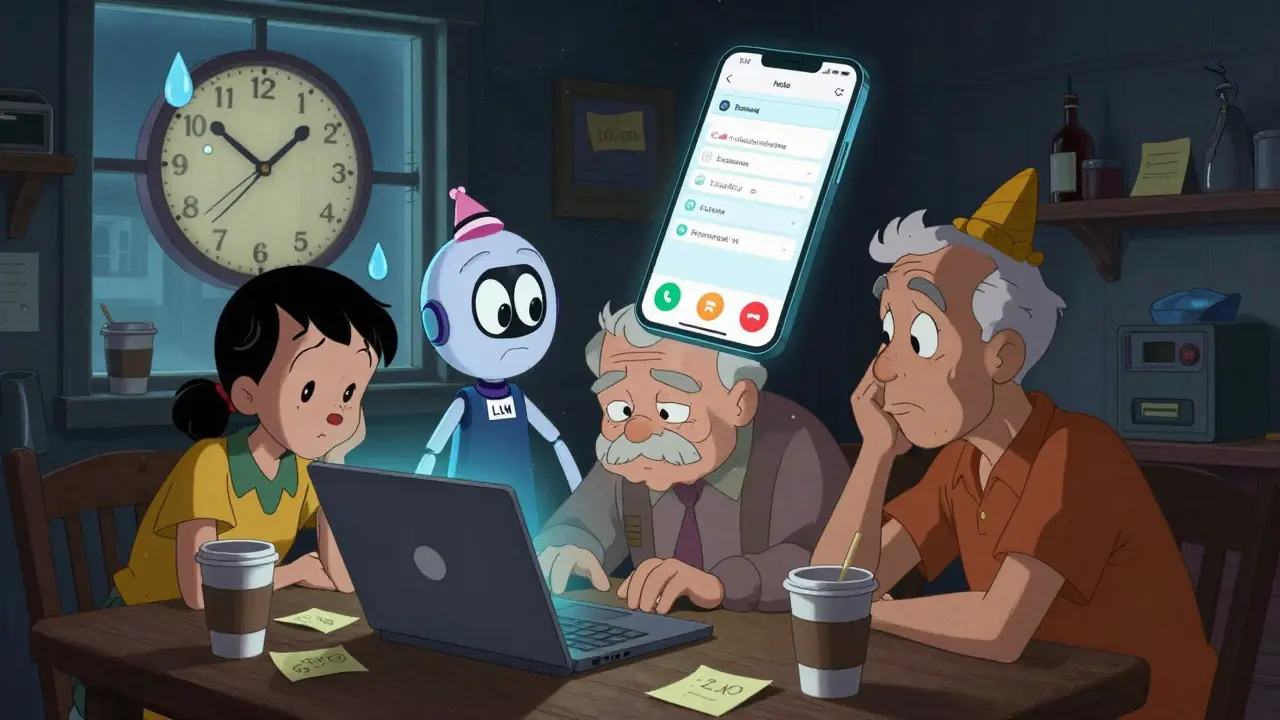
Most teams lose hackathons not because their code is bad, but because they never stopped to ask: Who cares? You’ve got 48 hours. You’re tired. The coffee’s cold. Everyone’s arguing about which framework to use. But here’s the truth: no judge ever awarded first place to the team that wrote the most lines of code. They awarded it to the team that made them feel like they were watching the future - and knew exactly how to explain it in under five minutes.
Forget Coding. Start With the Investor Hat.
The biggest mistake teams make? They treat hackathons like coding tests. They think: Build it fast. Ship it clean. But judges aren’t looking for clean code. They’re looking for investable ideas. Think like a VC. Ask: What’s the problem? Who pays for it? How do we make money? If you can’t answer those in 30 seconds, you’re already behind. In 2025, the winning teams didn’t just build apps - they built pitch decks first. They started with a one-page summary before writing a single line of code. Problem? Check. Solution? Check. Target user? Check. Monetization path? Check. They didn’t wait for inspiration. They forced clarity.Vibe Coding: Build Fast, Mock Everything
Vibe Coding isn’t a buzzword. It’s a survival tactic. It’s the process of Prompt → Generate → Preview → Critique - and repeating it every 90 minutes. Teams using this method don’t build databases. They fake them. They don’t connect APIs. They simulate responses with mock JSON. They don’t write tests. They show a demo that looks real - because in a 48-hour hackathon, perception is reality. DataButton and Claude Code are the new power tools. You type: "Build a mobile app that lets elderly users call their grandchildren with one tap, using voice and simple icons" - and in 12 minutes, you have a working prototype. No backend. No auth. No error handling. Just a polished UI that feels like a real product. That’s the magic. You’re not building a product. You’re building a convincing illusion that proves the idea works. This isn’t cheating. It’s strategy. The judges don’t care if your database runs on SQLite or if your API is RESTful. They care if you can show someone using your app and saying, "I’d use this." Vibe Coding gets you there faster than any framework ever could.LLM Agents: Your Silent Co-Founders
Forget hiring five developers. In 2026, the best hackathon teams have one human and three LLM agents. One agent handles UI design. Another writes API mockups. A third runs user interviews via chat. The fourth drafts your pitch script. You’re not coding alone. You’re leading a team of AI co-founders. Use them like this:- Agent 1: "Generate 10 potential user personas for a mental health app targeting college students."
- Agent 2: "Create a Figma-style wireframe for the onboarding flow."
- Agent 3: "Simulate 5 user feedback sessions based on this prototype."
- Agent 4: "Write a 2-minute pitch in the tone of a Shark Tank investor."
Team Composition: Architects, Executors, Evangelists
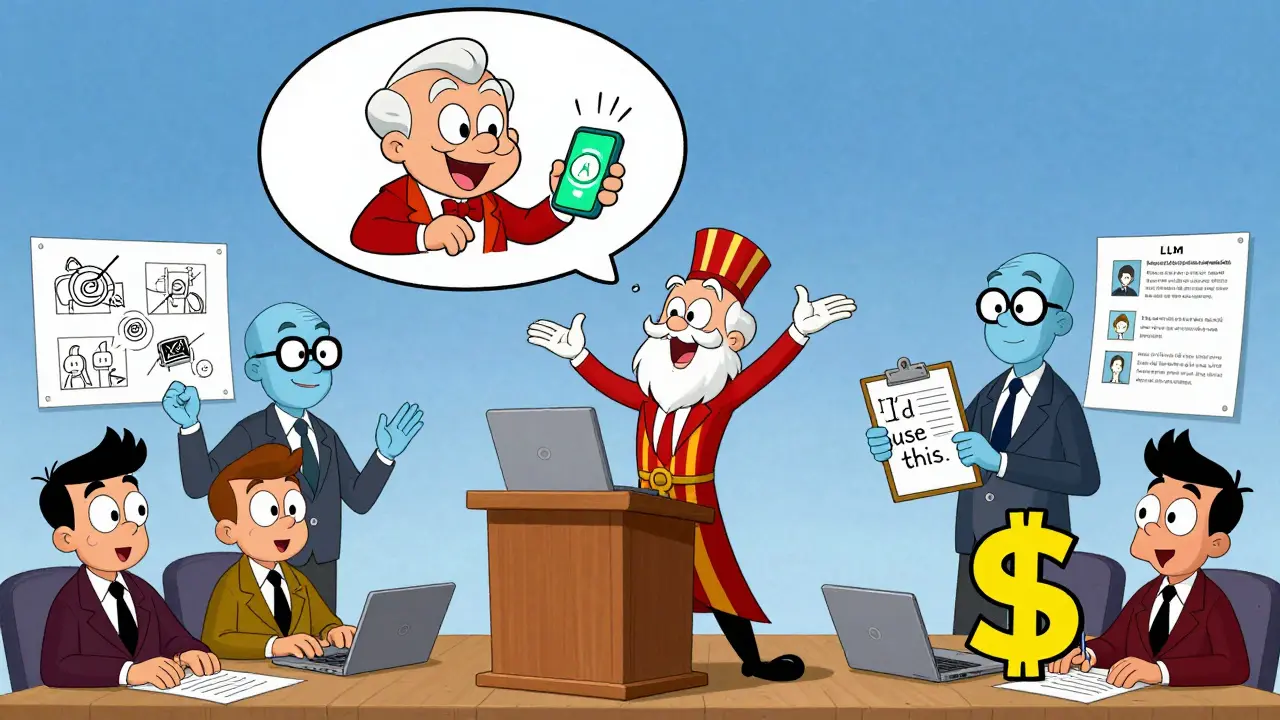
A hackathon team isn’t a coding club. It’s a startup in 48 hours. You need three roles:- Architect - the one who sees the big picture. They pick the problem, define the scope, and say "no" to feature creep.
- Executor - the one who turns prompts into pixels. They run Vibe Coding loops. They mock APIs. They ship demos.
- Evangelist - the one who talks. They rehearse the pitch. They adjust tone. They read the room. They know when to joke, when to be serious, and when to drop a stat like: "72% of users say they’d pay $5/month for this."
Problem Selection: Don’t Solve World Hunger
The most common failure? Trying to fix everything. "We’re building an AI to end food insecurity." No. You’re not. You’re in a basement with three laptops and a bag of chips. Pick something small. Something specific. Something painful. Winning ideas in 2025 looked like:- "An app that detects when a senior is alone for more than 12 hours and alerts their neighbor."
- "A voice assistant for ADHD students that pauses YouTube after 10 minutes and asks: 'Did you finish your homework?"
- "A one-tap tool that turns your grocery receipt into a budget tracker for single parents."
Pitch: 50% of Your Score
Here’s the brutal truth: your code is worth half. Your pitch is worth the other half. A beautiful app with a terrible pitch loses. A clunky app with a killer story wins. Every. Single. Time. Start your pitch on Day One. Don’t wait. Rehearse it five times. Use the Sequoia Template:- Start with a story: "Last Tuesday, Maria, a single mom, spent 47 minutes just trying to pay her utility bill."
- Then show the problem: "Most apps assume users are tech-savvy. They’re not."
- Introduce your solution: "We built a voice-first interface that works even if you’ve never used a smartphone."
- Prove it works: "We tested it with 12 users. 11 said they’d use it daily."
- End with vision: "This isn’t just an app. It’s the first step to making digital services accessible to everyone."
What Winners Do Differently
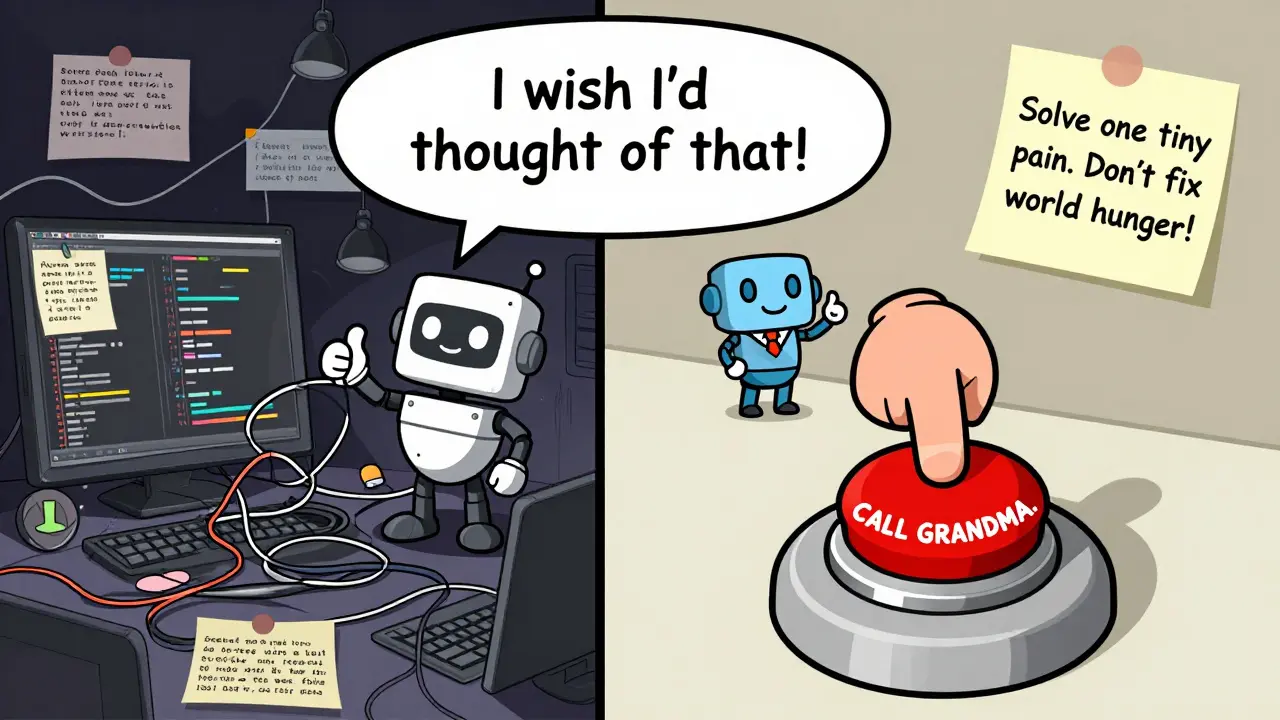
The teams that win in 2026 don’t have better skills. They have better processes.- They mock everything. No databases. No auth. No CI/CD. Just a working demo that looks real.
- They use LLM agents like teammates - not tools.
- They start the pitch before they write code.
- They pick one tiny problem and solve it perfectly.
- They know the judging criteria inside out - and build to them, not to their ego.
Common Mistakes (And How to Avoid Them)
Don’t do this:- Building production-grade code - no one cares. A demo with fake data wins.
- Waiting until 2 a.m. to write your pitch - you’ll be too tired to sell.
- Trying to code solo - teams win. Always.
- Ignoring the theme - if the hackathon is about "accessible tech," don’t build a blockchain game.
- Using jargon - say "it helps users" not "it leverages NLP-driven sentiment analysis."
Vibe Coding is the real MVP here. I’ve been in hackathons where teams spent 30 hours building a perfect backend, only to bomb the demo because the UI looked like a 2008 MySpace page. Meanwhile, another team had a Figma mockup with fake API calls and a voice actor saying ‘Your bill is paid’ - they won. Perception isn’t just reality - it’s the only reality that matters when judges are exhausted and caffeine-deprived.
Also, stop pretending you need to ‘ship code.’ You’re not building for production. You’re building for a 5-minute window where someone has to believe this thing could change their life. Fake it till you make it - but make it feel real.
lol this whole post is just VC propaganda dressed up as hackathon advice. Who the hell are you trying to fool? Judges don’t care about ‘vibe’ - they care about who has the best github commit history. You think faking a UI with Claude Code wins? Nah. The winning team last year had 12 microservices, JWT auth, and a custom database. They didn’t ‘mock’ - they built. And they got funded because they could scale.
LLM agents? Please. The only thing those AI tools do is make you look lazy. Real devs don’t need hand-holding. They write code. Period. Stop romanticizing shortcuts - they’re just gonna burn you later when you try to turn your ‘prototype’ into a real product.
Oh my god, I’m crying - not from sadness, but from how *right* this is. I’ve been on teams where we spent 40 hours debugging a GraphQL schema, and the judge asked, ‘So… what does this actually *do* for someone’s Tuesday morning?’ We had nothing. Nothing.
Then last year? We built a one-tap app that texts your mom if you haven’t opened your phone in 6 hours. We used a Google Form for ‘data,’ a Canva mockup, and a voice note from my cousin saying ‘I’d use this.’ We won. Not because we coded well - because we made someone *feel* it.
LLM agents? My ‘co-founder’ wrote my pitch in the voice of a 72-year-old grandma who just got her first smartphone. It broke the room. We got a standing ovation. And yes - I cried. Again.
✨ This. This right here. ✨
I’ve mentored 14 hackathon teams from India, Nigeria, and Brazil - and the ones who *win*? They don’t code first. They *listen* first. They ask: ‘What’s the quiet pain?’ Not ‘What’s the biggest problem?’
One team built an app that reads your grocery receipt and whispers: ‘You spent $12 on coffee this week. You’re not hungry. You’re lonely.’ 🥲 They didn’t use AI. They used empathy. And guess what? Judges cried. Then they funded them.
LLM agents? They’re not tools. They’re mirrors. They reflect your blind spots. Use them to hear the silence between the words. 🌱
P.S. If your pitch doesn’t make someone think of their grandma - you didn’t go deep enough. 💙
They’re all lying. None of this works. Hackathons are run by Big Tech who want your ideas for free. The ‘winners’? They’re all plant teams. The judges are paid. The ‘investors’? LinkedIn bots. The LLM agents? They’re just trained on your own code. You’re being manipulated into building your own replacement.
Why do you think no winning team ever gets followed up with? Because the whole thing’s a trap. You think you’re building the future? You’re just doing free labor for Google’s next AI model.
Build nothing. Just sit there. Let them think you’re incompetent. That’s the real hack.