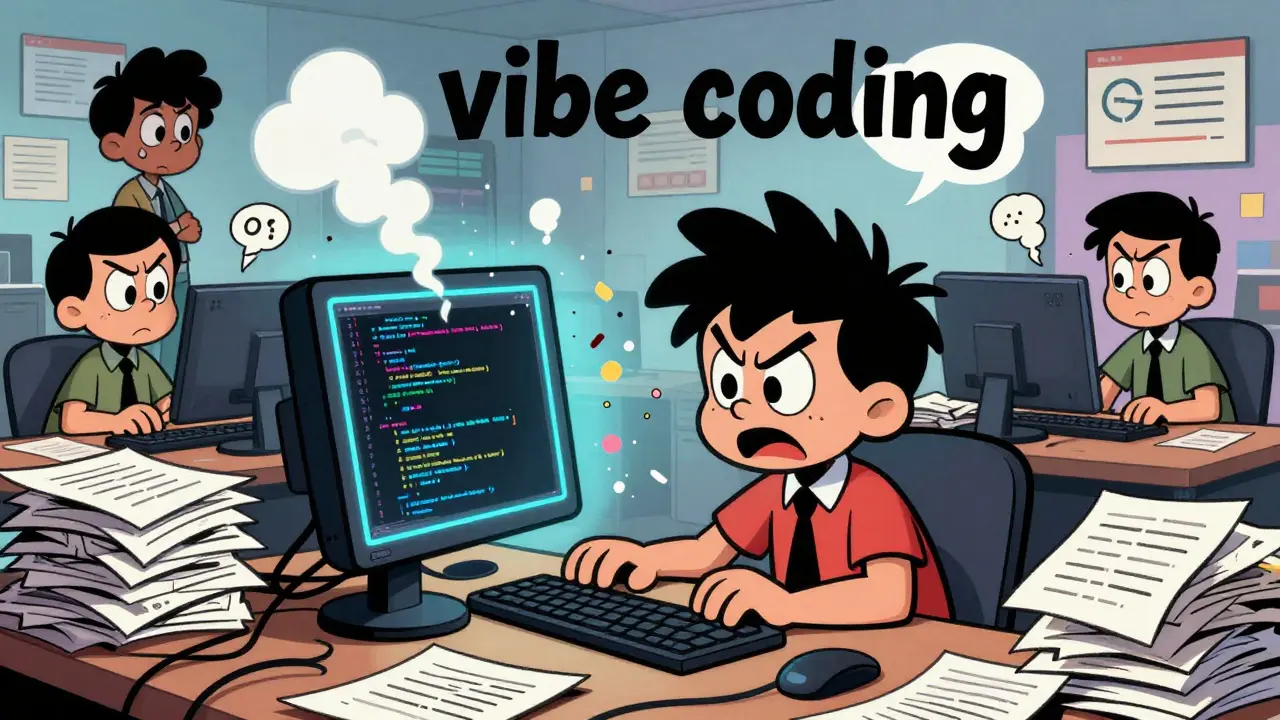
You’ve probably heard the term vibe coding is a colloquial term for prompt-driven, largely unstructured code generation where developers feed natural-language requests to Large Language Models (LLMs) and accept or tweak outputs without upfront specs. It sounds fun. You type “build me a payment webhook,” hit enter, and watch lines of code appear. But here’s the problem: when you scale that approach across a team or integrate it with existing systems, things fall apart fast. The endpoints don’t match. The security headers are missing. The JSON schemas drift between sessions.
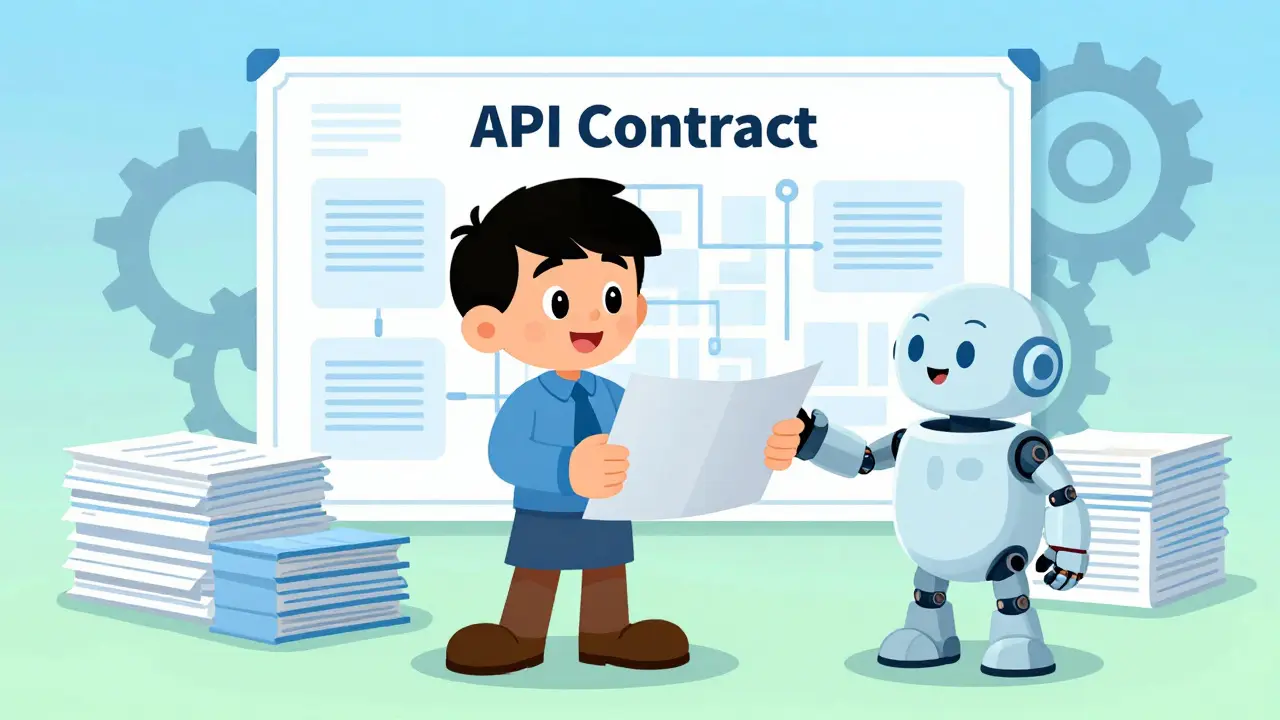
This is why we need API Design in Vibe-Coded Systems, specifically the practice of defining machine-readable API contracts, specifications, or formal descriptions before any implementation is produced by AI agents. It’s not about slowing down creativity; it’s about saving yourself from weeks of debugging inconsistent contracts later. By putting contracts before implementation, you turn ad-hoc AI generation into a predictable, verifiable engineering workflow.
Why Pure Vibe Coding Fails at Scale
Let’s be honest about what happens when you rely solely on vibes. Without structured design, LLMs like GitHub Copilot or Claude might produce different endpoint names or payload shapes every time you ask them to do something similar. One day your API expects `user_id`, the next it wants `userId`. Your client code breaks. You spend hours reverse-engineering what the AI decided was best yesterday.
Baytech Consulting warns that while vibe-coded prototypes appear cheap initially, they often lead to major rework costs-sometimes measured in hundreds of developer hours per mid-size project-when scaling systems or integrating with existing APIs. Security gaps are another huge risk. AI-generated code without explicit security requirements often omits proper authentication or authorization checks. In enterprise contexts, fixing those vulnerabilities can cost tens of thousands of dollars.
The core issue isn’t the AI itself; it’s the lack of constraints. When you let an LLM make architectural decisions implicitly-like choosing database schemas or service boundaries-you create brittle systems that are hard to refactor later. This is where Spec-Driven Development (SDD), a methodology where a formal, machine-readable specification is authored before any implementation and then drives code generation, testing, documentation, and AI agent guidance, comes in as the antidote.
The Contract-First Workflow: Step-by-Step
So how do you actually do this? You don’t need to abandon the speed of AI assistance. You just need to add a layer of structure. Here’s a practical pipeline based on insights from Itential and Test Collab:
- Capture Intent: Start by describing the desired API behavior in plain English. For example, “Accept POST requests at /webhooks/stripe, validate signature header, process checkout.session.completed events, update order status, and return 200 within 5 seconds.”
- Create Formal Specs: Translate that intent into a machine-readable format like OpenAPI, a specification format for REST APIs that defines paths, HTTP methods, query parameters, headers, request/response bodies, and status codes, AsyncAPI, a specification format for event-driven APIs that describes channels, messages, and bindings, or JSON Schema, a vocabulary that allows you to annotate and validate JSON documents. Use an LLM to draft this if you want, but you must review and edit it manually.
- Validate Contracts: Developers review these contracts before any code is generated. This is your quality gate. Does the spec include all necessary error cases? Are the performance expectations clear?
- Guide Generation: Prompt the LLM with the validated contracts plus structured instruction files like CLAUDE.md, a structured instruction file used to encode architecture preferences, error-handling patterns, and coding standards for AI agents or AGENTS.md, a configuration file that guides multi-agent systems on how to build software according to specific constraints. Tell the model explicitly: “Do not invent endpoints or fields not present in the spec.”
- Test Against Contracts: Generate contract tests using tools like Pact or Dredd. If the generated code violates the spec, fix the spec or regenerate the code. Don’t patch the code manually unless absolutely necessary.
This workflow ensures that the API contract becomes the single source of truth for both humans and AI agents. It dramatically reduces hallucination risk and makes onboarding new developers easier because they can read the spec instead of guessing from scattered code snippets.
VibeContract: Bringing Design by Contract to AI
If you’re familiar with older software engineering concepts, you might recognize Design by Contract (DbC), a programming paradigm originating with Bertrand Meyer and Eiffel in the late 1980s that uses preconditions, postconditions, and invariants to define component behavior. The 2026 vision paper VibeContract, a research proposal extending Design by Contract principles into LLM-based coding workflows to ensure predictable and verifiable development takes this idea and applies it directly to vibe coding.
VibeContract proposes breaking high-level intents into explicit task sequences. For each task, the LLM generates formal contracts capturing inputs, outputs, constraints, and behavioral properties. Then, developers validate those contracts before code generation begins. At the API boundary level, this means specifying preconditions (required headers, auth constraints), postconditions (response schema guarantees), and invariants (idempotency rules) as part of the contract.
Think about a payment webhook again. A DbC-style contract would specify that the response must be sent within 5 seconds (an invariant). If the generated code takes 6 seconds due to a slow database query, the contract test fails immediately. You catch the bug before it hits production. This transforms vibe coding from an exploratory, error-prone activity into a rigorous engineering process.
| Approach | Primary Artifact | Constraint Level | Risk Profile |
|---|---|---|---|
| Pure Vibe Coding | Natural Language Prompts | Low (Ad-hoc) | High Hallucination & Security Risks |
| Spec-Driven Development (SDD) | OpenAPI/JSON Schema | High (Machine-Readable) | Low Risk, High Predictability |
| Test-Driven Development (TDD) | Unit Tests | Medium (Logic-Level) | Moderate Risk, Good Logic Coverage |
| VibeContract | Task-Level Contracts | Very High (Pre/Post Conditions) | Minimal Risk, Formal Verification |
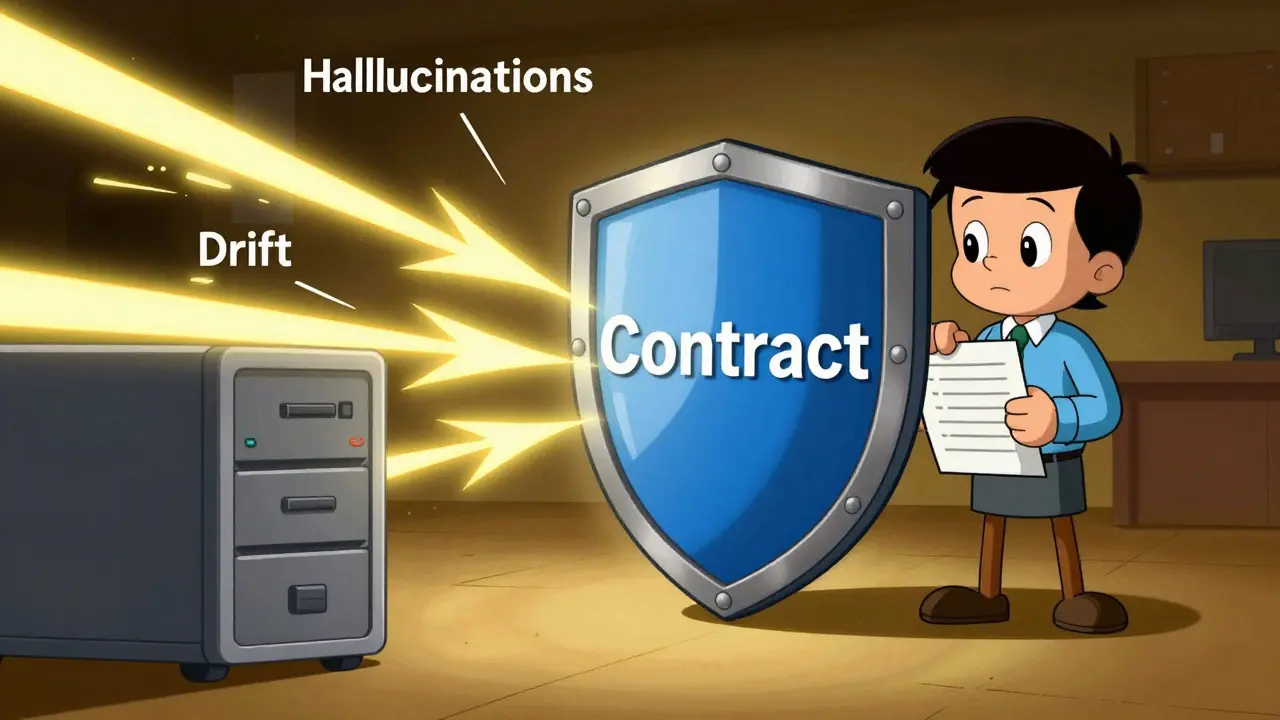
Handling Change and Drift
One of the biggest challenges in any dynamic system is keeping documentation and code in sync. In traditional development, this drift happens slowly. In vibe coding, it can happen in seconds if you run two different prompts without a central reference point.
The solution is simple but requires discipline: all changes begin in the spec. If a business requirement changes-say, you now need to support a new currency in your payment API-you update the OpenAPI document first. Then, you use the LLM to regenerate the affected server handlers, client SDKs, and tests. This prevents spec-implementation drift.
To manage versioning, track API versions (e.g., v1, v2) directly in your spec files. Downstream clients can adopt new versions while old ones are maintained. This mirrors classical API-first practices but adds the benefit of automated regeneration. Tools like Postman or SwaggerHub can help visualize these changes, ensuring everyone sees the same truth.
Practical Tips for Getting Started
You don’t have to overhaul your entire organization overnight. Start small. Pick one critical API endpoint-maybe that Stripe webhook-and apply the contract-first method. Write the human-readable spec, translate it to OpenAPI, and generate the code under strict constraints. Measure the time it takes versus debugging a vibe-coded mess later.
Here are some heuristics to keep in mind:
- Use Lightweight Specs for Internal Tools: For small internal endpoints, a partial OpenAPI spec combined with natural language constraints might suffice. Reserve full formalism for external or critical APIs.
- Leverage Plan Mode: As suggested by the Beyond Vibe Coding guide, which advocates for generating an architecture plan before implementation to improve developer understanding and code quality, use AI tools to generate a plan before writing code. This helps you understand the structure and identify potential issues early.
- Invest in Instruction Files: Spend time crafting good CLAUDE.md or AGENTS.md files. These files encode how the AI should build (architecture preferences, error handling) while the spec encodes what to build. This combination is powerful for guiding multi-agent systems.
- Automate Contract Testing: Integrate contract tests into your CI/CD pipeline. If a commit breaks the contract, fail the build. This enforces compliance automatically.
The upfront cost might seem high-perhaps 1-2 days for a medium-size API-but it prevents weeks of debugging inconsistent contracts later. In regulated industries like finance or healthcare, this isn’t just a best practice; it’s a necessity for proving that implementations match documented contracts.
What is the difference between API-first and Spec-Driven Development?
API-first focuses strictly on designing web APIs before implementation, typically using formats like OpenAPI. Spec-Driven Development (SDD) is broader, extending spec-first discipline to schemas, event contracts, infrastructure workflows, and AI agent behavior. API-first can be seen as a subset of SDD.
How does VibeContract reduce hallucinations in AI-generated code?
VibeContract integrates Design by Contract principles by requiring formal contracts for inputs, outputs, and constraints before code generation. This constrains the solution space for the LLM, forcing it to adhere to predefined rules rather than inventing arbitrary structures, thus reducing hallucinations.
Is it worth spending extra time on specs for small projects?
For very small, throwaway prototypes, maybe not. However, even for small projects, lightweight specs prevent immediate integration headaches. The investment scales with complexity; for anything intended for production or team collaboration, the upfront time saves significant debugging effort later.
Can I use an LLM to write my API specs?
Yes, you can use an LLM to draft initial specs from natural language descriptions. However, you must manually review and validate these specs. The LLM might miss edge cases or security requirements, so human oversight is critical to ensure the contract is accurate and complete.
What tools are recommended for contract-based testing?
Tools like Pact (for consumer-driven contracts), Dredd (for OpenAPI testing), and Postman/Newman collections are industry standards for verifying that implementations match their specifications. Integrating these into your CI/CD pipeline ensures continuous compliance.