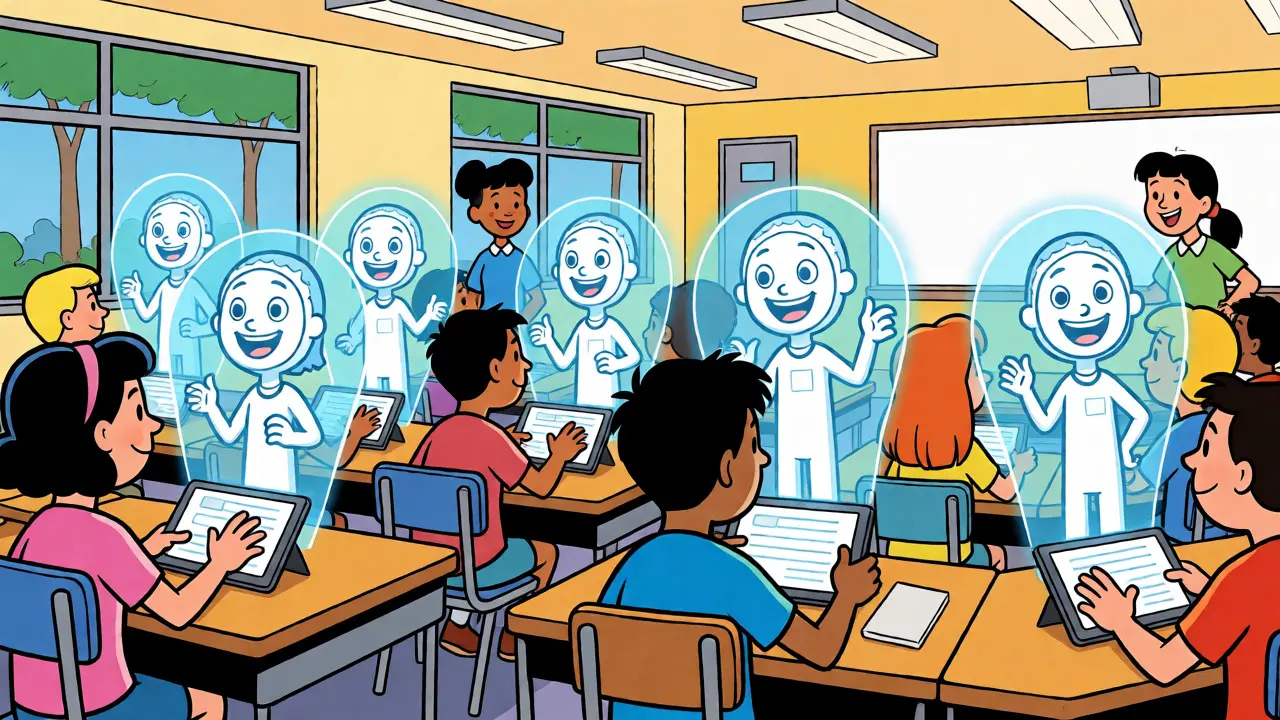
Imagine walking into a classroom where every student has a personal tutor that knows exactly what they struggled with last week, adjusts today’s lesson to their current mood, and grades their homework instantly. That isn’t science fiction anymore; it’s the reality of Generative AI in education. As of late 2026, adoption rates have hit an all-time high, with nearly 86% of educational institutions integrating these tools. But here is the catch: most schools are using this technology wrong. They treat it like a fancy search engine instead of a pedagogical partner.
If you are an educator, administrator, or ed-tech developer, you need to move beyond basic prompt engineering. You need to understand how Generative AI reshapes the three pillars of schooling: Curriculum Design, the structured planning of learning objectives and materials, Assessment, the measurement of student understanding through adaptive testing, and Tutoring, personalized instructional support tailored to individual learner needs. This guide breaks down exactly how to implement these changes without losing the human element that makes teaching matter.
The Shift from Static Content to Dynamic Curricula
Traditional curriculum design is slow. A teacher spends hours drafting a syllabus, only to find it outdated by mid-semester. Generative AI flips this model on its head by enabling dynamic content generation. Tools like Magic School offer over 80 specific AI tools for teachers that can draft entire course outlines, lesson plans, and standards-aligned texts from simple prompts. This isn't just about speed; it's about relevance.
Consider the "human-AI-human" model proposed by researchers in Washington State. The process starts with a human inquiry (what do my students need?), moves through AI generation (drafting multiple variations of a lesson), and ends with human reflection (selecting the best fit). This loop ensures that while the AI handles the heavy lifting of content creation, the teacher retains agency over the pedagogical strategy. For example, a history teacher might ask an AI to generate five different perspectives on the Industrial Revolution, then choose the one that best aligns with their class's specific demographic interests.
Furthermore, AI helps streamline administrative burdens that often eat up 30-40% of a teacher's time. Generating Individualized Education Programs (IEPs) or complex rubrics used to be tedious paperwork. Now, platforms like School AI use large language models to draft these documents based on student data inputs. This frees up educators to focus on high-leverage activities like fostering discussion and providing emotional support, rather than drowning in documentation.
Rethinking Assessment: From Grading to Feedback Loops
Assessment is arguably the area most disrupted by Generative AI. The old model-teach, test, grade weeks later-is broken because feedback arrives too late to influence learning. Modern AI-driven assessment focuses on real-time feedback loops. According to recent data, 59% of students acknowledge that their assessment methods are changing due to AI integration. Why? Because AI allows for Adaptive Question Generation.
Unlike static multiple-choice tests, adaptive systems adjust difficulty based on previous answers. If a student misses a question on fractions, the next question doesn't just repeat the same problem; it simplifies the concept or offers a visual hint before retrying. This creates a diagnostic report in real-time, showing not just what the student got wrong, but why they likely made the error. Platforms utilizing these algorithms provide immediate performance insights, allowing instructors to intervene before misconceptions solidify.
| Feature | Traditional Assessment | AI-Enhanced Assessment |
|---|---|---|
| Feedback Timing | Days or weeks after submission | Instantaneous, during interaction |
| Personalization | One-size-fits-all questions | Adaptive difficulty and format |
| Data Insight | Final score only | Detailed pattern analysis and knowledge gap mapping |
| Teacher Workload | High manual grading load | Automated grading with exception handling |
However, a major pitfall exists: over-reliance on automated grading for subjective tasks. While AI excels at checking factual accuracy or grammar, it struggles with nuanced argumentation unless fine-tuned specifically for that domain. Teachers must remain the final arbiters of quality, using AI as a first-pass filter rather than the sole judge. This hybrid approach preserves academic integrity while leveraging efficiency.
Tutoring and Personalized Learning Paths
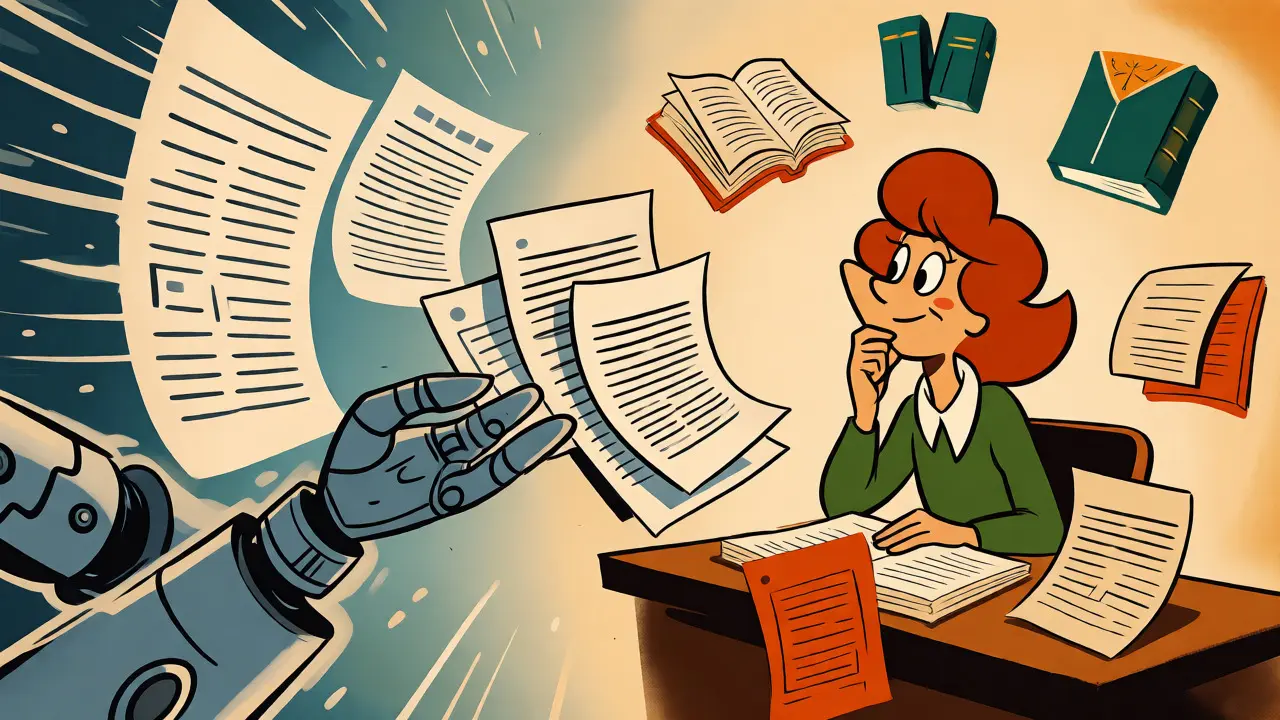
The holy grail of education has always been 1-on-1 tutoring, historically reserved for those who could afford it. Generative AI democratizes this access. Research indicates a 62% increase in test scores among US students using AI-powered instruction systems, largely attributed to the ability to identify and address knowledge gaps immediately. Tools like Langua demonstrate this powerfully in language learning, offering intelligent conversation practice that adapts to the user's proficiency level.
Effective AI tutoring isn't just about answering questions; it's about guiding thinking. Rajen Sheth, CEO of Kyron Learning, notes that instruction should respond "as learning happens," guiding students through their reasoning processes. This requires AI tutors that don't just give answers but ask Socratic questions. For instance, if a student asks, "Why did the Roman Empire fall?", a good AI tutor responds, "What factors do you think contributed most? Let's look at economic records together," rather than dumping a Wikipedia summary.
Additionally, AI enables Intelligent Spaced Repetition. By analyzing memory retention patterns, AI schedules reviews exactly when a student is likely to forget material. This optimizes study time, reducing burnout and improving long-term retention. Students no longer cram; they review strategically, guided by algorithms that understand cognitive science principles better than most human planners.
Tools and Platforms Driving the Change
You don't need to build your own LLM to benefit from these shifts. Several specialized platforms are leading the charge in K-12 and higher education:
- Magic School: Best for quick content generation. It offers standards-aligned lesson plans and assessments, making it ideal for teachers short on prep time.
- Canva for Education: Focuses on visual literacy and design. Its Magic Design AI helps students create professional presentations and infographics, building digital skills alongside subject knowledge.
- Deck.Toys: Transforms passive lessons into interactive experiences. It uses gamification and visual pathways to keep engagement high, tracking progress through detailed analytics dashboards.
- Sendsteps.ai: Enhances live classroom interaction. It turns lectures into two-way conversations via AI polls and quizzes, providing instant participation metrics.
Choosing the right tool depends on your primary goal. If you need to save time on lesson planning, start with Magic School. If engagement is low, try Deck.Toys. If you want deep, personalized practice, look at specialized tutoring bots like Langua. Most offer free tiers or trials, allowing schools to pilot these technologies without massive upfront investment.
Challenges and Ethical Considerations
Despite the benefits, implementation is messy. Only 7% of schools worldwide have formal AI guidance policies as of early 2026. This lack of structure leads to inconsistent usage and potential ethical pitfalls. One major concern is bias. If an AI model was trained on biased historical texts, it may reproduce those biases in generated curricula. Teachers must critically evaluate AI outputs, acting as editors rather than passive consumers.
Another issue is the "digital divide." While many students have home internet, not all have access to premium AI tools or devices capable of running advanced apps. Schools must ensure equitable access, perhaps by providing lab time or subsidized licenses. Furthermore, there is the risk of skill atrophy. If students rely entirely on AI for writing or calculation, do they lose foundational skills? Educators need to design assignments that require critical thinking and synthesis, areas where AI is less effective than human cognition.
Finally, privacy remains paramount. Student data fed into AI models must be protected under regulations like FERPA in the US or GDPR in Europe. Institutions must verify that their chosen platforms comply with these standards, ensuring that sensitive learner information isn't used to train public models without consent.
The Future Role of the Teacher
So, does this make teachers obsolete? Absolutely not. In fact, their role becomes more critical. As AI handles content delivery and routine assessment, teachers shift toward being facilitators, mentors, and designers of learning experiences. They become "AI Co-Pilots," curating the vast possibilities offered by generative models to fit specific classroom contexts.
The future belongs to educators who master AI Literacy. This means understanding how LLMs work, recognizing their limitations, and teaching students to use them responsibly. Competency-based education (CBE) will thrive in this environment, as AI allows students to progress upon mastery rather than seat time. Teachers will spend less time lecturing and more time coaching individual learners through complex problems, fostering creativity and critical analysis that machines cannot replicate.
How does Generative AI improve curriculum design?
Generative AI accelerates curriculum design by automatically generating lesson plans, texts, images, and quizzes from text prompts. It allows teachers to create personalized, standards-aligned content quickly, adapting materials to diverse learner needs and reducing administrative workload significantly.
Can AI replace human teachers in assessment?
No, AI complements rather than replaces human teachers in assessment. While AI provides instant feedback and grades objective tasks efficiently, human teachers are essential for evaluating nuanced arguments, providing contextual feedback, and ensuring ethical and fair evaluation practices.
What are the risks of using AI for student tutoring?
Risks include potential hallucinations (incorrect information), bias in training data, reduced development of independent problem-solving skills, and privacy concerns regarding student data. Proper oversight and AI literacy training mitigate these issues.
Which platforms are best for K-12 AI integration?
Popular platforms include Magic School for lesson planning, Canva for Education for visual projects, Deck.Toys for interactive lessons, and Sendsteps.ai for live classroom engagement. Choice depends on specific institutional goals like content creation or student interaction.
How does AI support personalized learning paths?
AI supports personalized learning by analyzing individual student performance data to adapt content difficulty, recommend targeted resources, and schedule spaced repetition reviews. This ensures each student progresses at their own pace, addressing specific knowledge gaps effectively.