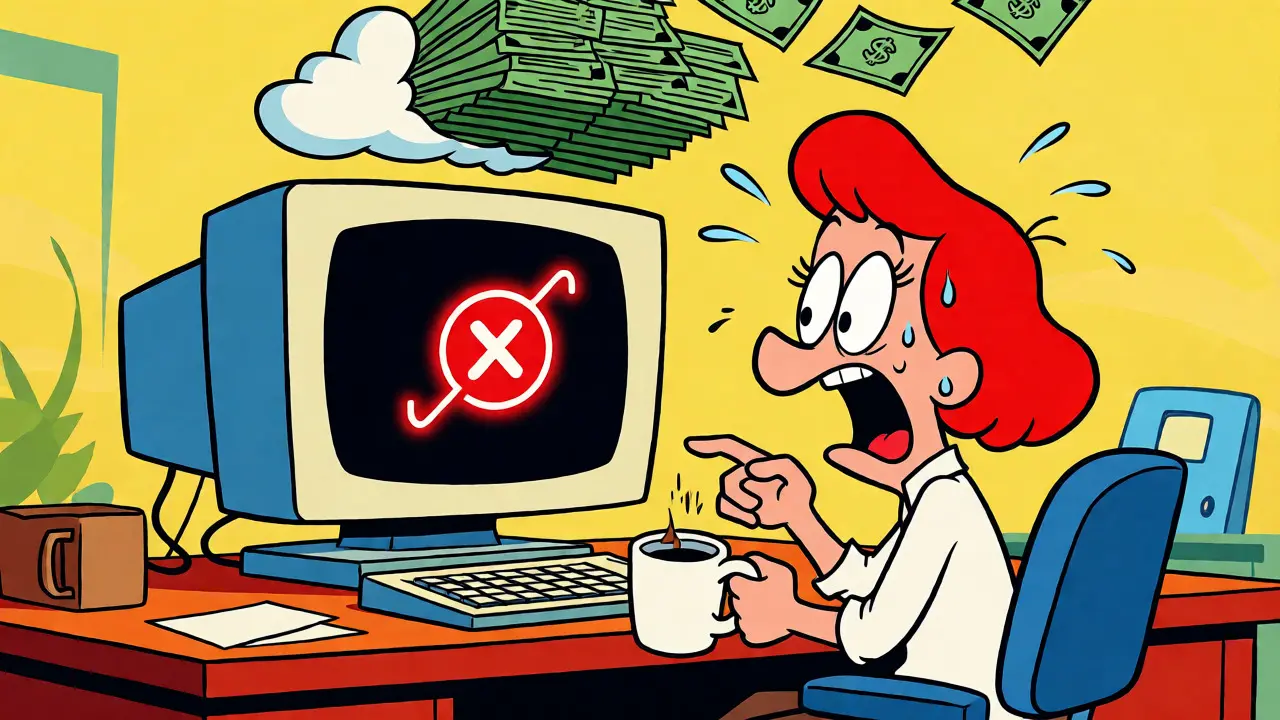
You just watched your dev team ship a feature in twenty minutes. It looked clean. The static analysis report was green. Then, three days later, you got an AWS bill for $42,000 because an AI-generated code snippet accidentally committed hardcoded cloud credentials to a public repository. This isn't a hypothetical horror story; it’s happening right now in companies adopting vibe coding.
Vibe coding-where developers use natural language prompts to generate code via AI assistants like GitHub Copilot or Cursor-is reshaping how software gets built. But while speed is the headline feature, security is the silent killer. If you’re evaluating these platforms for your organization, you need to look past the flashy demos and assess the actual security posture. Here is what you actually need to check before signing that contract.
The Speed Trap: Why Traditional Security Checks Fail
Traditional AppSec relies on reviewing code line-by-line. Vibe coding breaks this model. When an AI generates hundreds of lines of boilerplate in seconds, manual review becomes impossible. More importantly, AI doesn't "think" about security context the way a human does. It predicts the next likely token based on training data, not necessarily the most secure implementation.
A study by Xygeni in 2025 found that developers using vibe coding prototypes applications up to 3.7x faster. That sounds great until you realize those prototypes often lack input validation, use outdated libraries, or fail to follow secure development practices. A June 2025 Reddit thread documented a developer who spent weeks debugging an authentication bypass that static scanners missed entirely. The AI wrote code that worked functionally but failed securely. Static analysis tools often flag syntax errors, not logical flaws like broken access control or insecure defaults.
Key Security Risks You Need to Hunt For
When assessing a vibe coding platform, you aren't just buying a code generator; you're buying into a specific set of risks. Backslash Security’s July 2025 research highlighted several critical gaps common in these stacks:
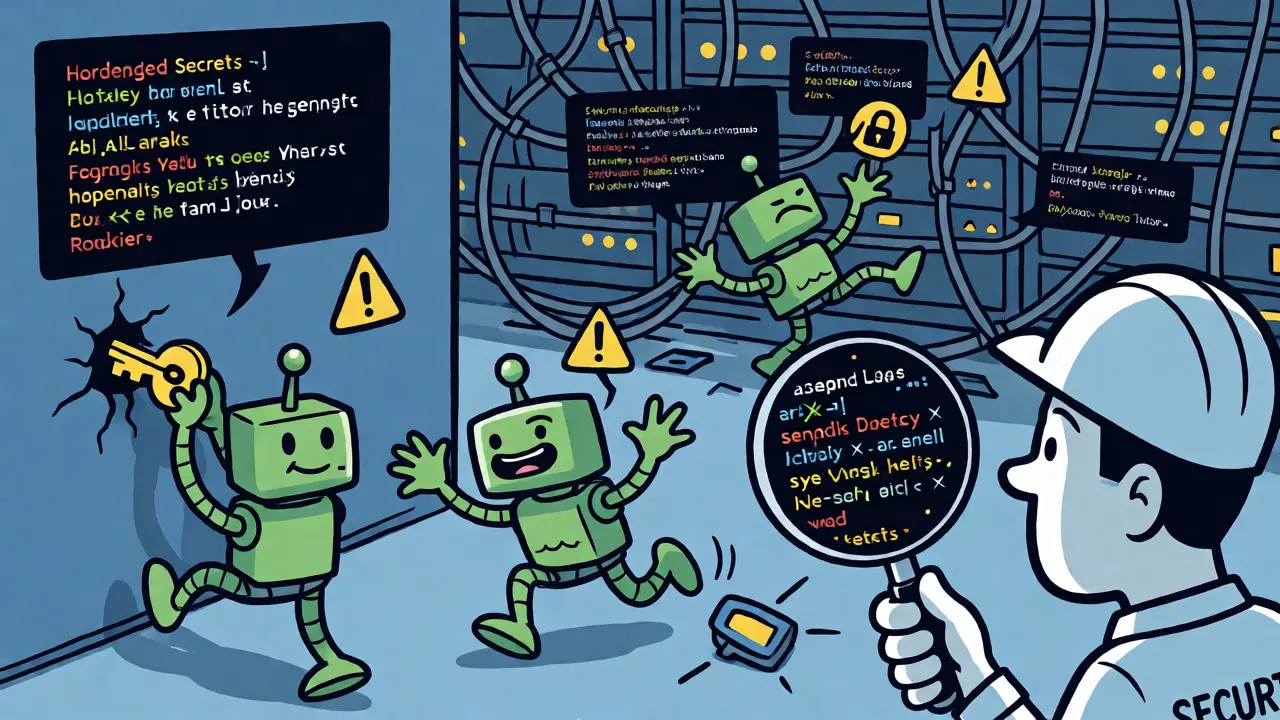
- Secret Leakage: AI models often suggest hardcoding API keys or database passwords directly into source files for convenience. If your git history isn't scrubbed, those secrets are exposed forever.
- Insecure Defaults: AI tends to favor popular, simple patterns. In web development, this often means defaulting to less secure session management or skipping CSRF protection unless explicitly prompted.
- Dependency Hell: Tools like GitHub Copilot have been known to suggest deprecated libraries with known vulnerabilities. One security engineer noted that Express.js 3.x (with known issues) appeared in 37% of API controller implementations suggested by the tool.
- Architectural Blindspots: AI can write perfect functions but terrible architecture. It might create microservices that talk to each other without proper encryption or authentication boundaries.
Platform Comparison: Where Do the Big Players Stand?
Not all vibe coding tools handle security equally. While they all promise speed, their ability to catch or prevent security flaws varies significantly. Here is a breakdown of the current market leaders based on recent security assessments.
| Feature | GitHub Copilot | Cursor | Windsurf | Dedicated Sec-Tools (e.g., Bright) |
|---|---|---|---|---|
| Native Secret Scanning | No (Requires plugins) | Basic | Yes (Integrated) | Advanced |
| Dynamic Testing (DAST) | No | No | Limited | Yes (Live Exploitation) |
| Architecture Analysis | Low | Medium | Medium | High |
| Cost (Per User/Month) | $39 (Business) | $20 (Pro) | Varies | $99+ |
| Primary Weakness | Suggests deprecated libs | Misses auth bypasses | Weak crypto defaults | Higher cost/complexity |
Notice the pattern? The more popular, general-purpose tools (Copilot, Cursor) focus on developer experience, not security depth. They assume you will bring your own security tools. Dedicated security platforms are emerging to fill this gap, offering dynamic validation that actually tries to break the code rather than just reading it.
Static vs. Dynamic: The Critical Difference
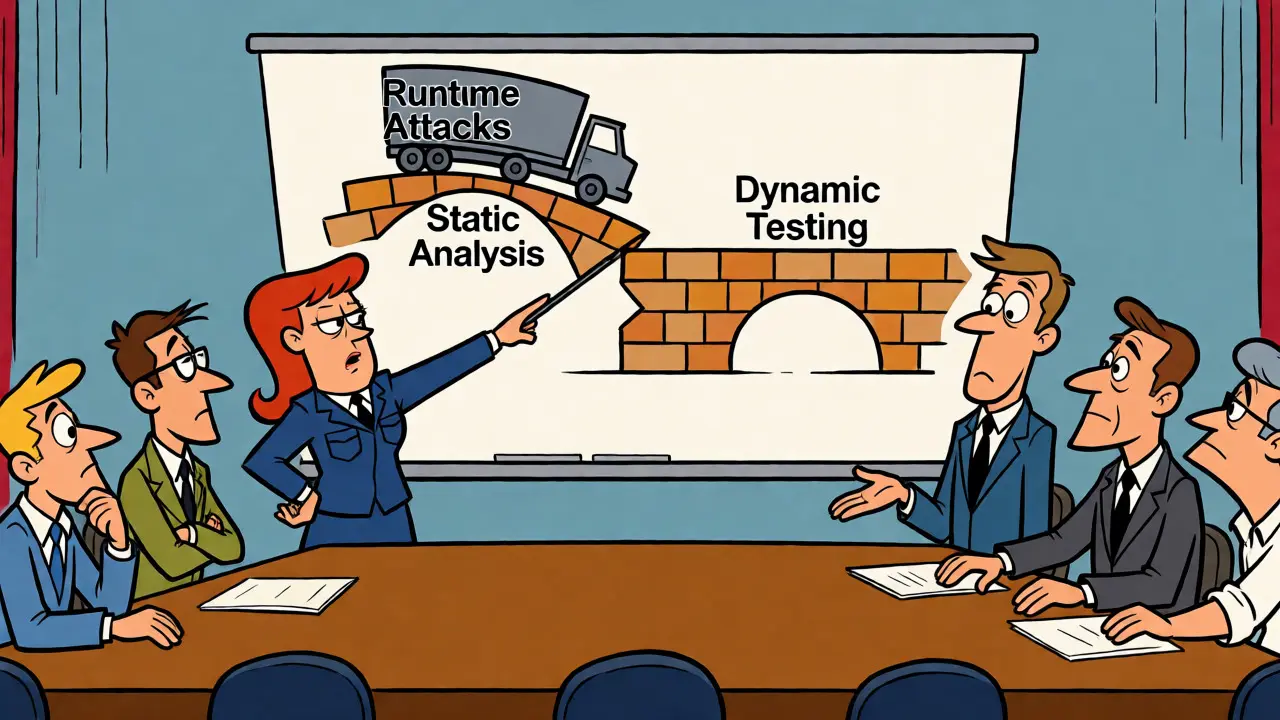
This is the most important technical distinction buyers must understand. Most teams rely on SAST (Static Application Security Testing). SAST looks at code at rest. It checks for patterns like `eval()` usage or missing headers. But attackers don't attack code at rest; they attack running systems.
Bright’s testing demonstrated that an application assessed as having zero vulnerabilities by static analysis contained four critical issues when subjected to dynamic testing. These included authentication bypass paths and sensitive IDOR (Insecure Direct Object Reference) exposures. If your vibe coding strategy only includes static scanning, you are flying blind. You need DAST (Dynamic Application Security Testing) integrated into your CI/CD pipeline to catch runtime behaviors that AI introduces.
Governance and Policy: The Human Factor
Technology alone won't save you. According to ISACA’s May 2025 survey, only 29% of enterprises have specific security policies for vibe coding. This is a massive governance gap. Without clear rules, developers treat AI suggestions as gospel.
Effective governance requires three things:
- Mandatory Human Review: Apiiro notes that automating the secure path reduces backlog, but human eyes are still needed for design-level risks. However, this creates a productivity drag-expect a 22% slowdown if reviews are too strict.
- Secure Prompt Templates: Developers shouldn't just ask "make a login page." They should use templates that enforce security constraints, such as "create a login endpoint using bcrypt hashing and rate limiting." Xygeni research shows this reduces vulnerabilities by 41%.
- Separation of Environments: Ensure that AI-generated prototypes don't accidentally connect to production databases during testing. Dev/prod separation is non-negotiable.
Regulatory and Compliance Implications
If you operate in regulated industries, vibe coding adds compliance complexity. NIST’s July 2025 AI Security Framework Update specifically addresses AI-generated code security. GDPR enforcement actions have already targeted companies where vibe coding led to data exposures. If your AI tool sends code snippets to external servers for processing, you need to verify where that data goes and who owns it. Data residency and privacy clauses in vendor contracts are no longer optional checkboxes-they are critical risk mitigators.
Buyer’s Checklist: Questions to Ask Vendors
Before you roll out vibe coding across your engineering org, ask these questions:
- Does the tool integrate with my existing SCA/SAST/DAST stack? If not, how much extra work is it to bridge the gap?
- How does the tool handle secret detection? Does it warn me before I commit a hardcoded key?
- Can I customize prompt templates for security best practices? Or am I stuck with generic suggestions?
- What is the data retention policy? Are my proprietary code snippets used to train future models?
- Is there runtime protection? If a vulnerability escapes review, does the platform protect the live application?
Vibe coding is here to stay. The velocity gains are too significant to ignore. But treating AI-generated code as "trusted by default" is a dangerous gamble. The winners in this new era won't be the teams that code fastest, but the ones that validate most rigorously. Don't let the ease of generation blind you to the complexity of securing it.
Why is static analysis insufficient for vibe coding?
Static analysis checks code structure and known patterns but misses logical and runtime vulnerabilities. AI-generated code often passes static checks while containing functional logic that fails under dynamic conditions, such as broken access controls or race conditions that only appear when the application is running.
Do AI coding tools automatically fix security vulnerabilities?
No. Current AI tools prioritize functionality and syntactic correctness over security. They may even introduce vulnerabilities by suggesting outdated libraries or insecure defaults. Security fixes require explicit prompting, dedicated security tools, or manual intervention.
What is the biggest financial risk of unsecured vibe coding?
The primary financial risks are unexpected cloud costs from leaked credentials (like the $42k AWS bill example) and the cost of remediating security incidents post-deployment. Remediation costs rise exponentially the later a bug is found, especially if it reaches production.
How does vibe coding affect compliance with regulations like GDPR?
Vibe coding can complicate compliance if AI tools process sensitive code or data externally. Organizations must ensure that data sent to AI providers complies with data residency laws and that AI-generated code adheres to privacy-by-design principles, which may not happen automatically.
Should we ban vibe coding until security improves?
Banning it usually stifles innovation. Instead, implement guardrails: mandate security scanning in CI/CD, use secure prompt templates, and require human review for critical components. Treat AI as a junior developer who needs supervision, not a senior architect who works independently.