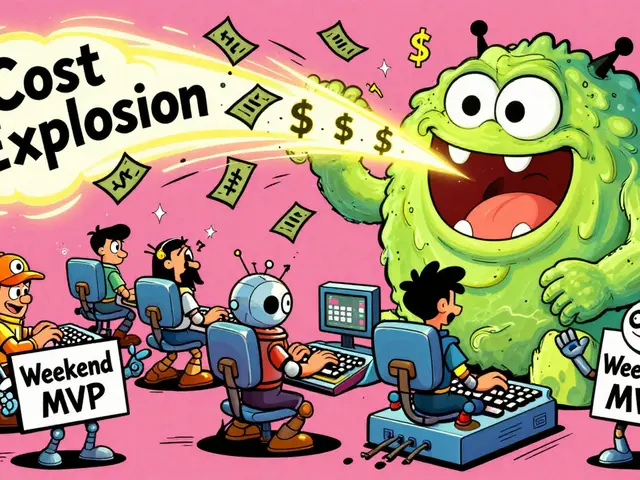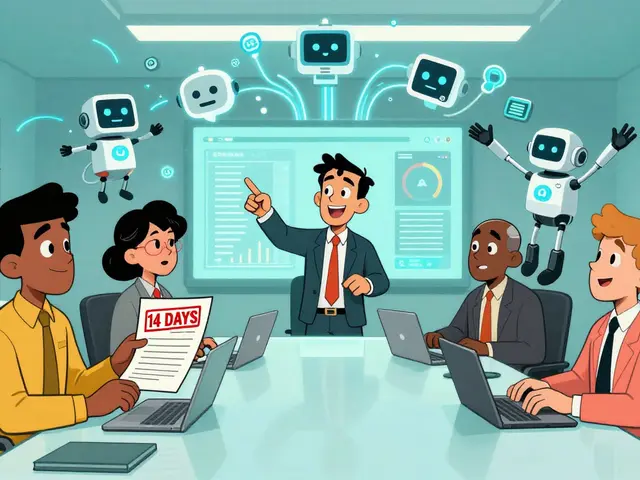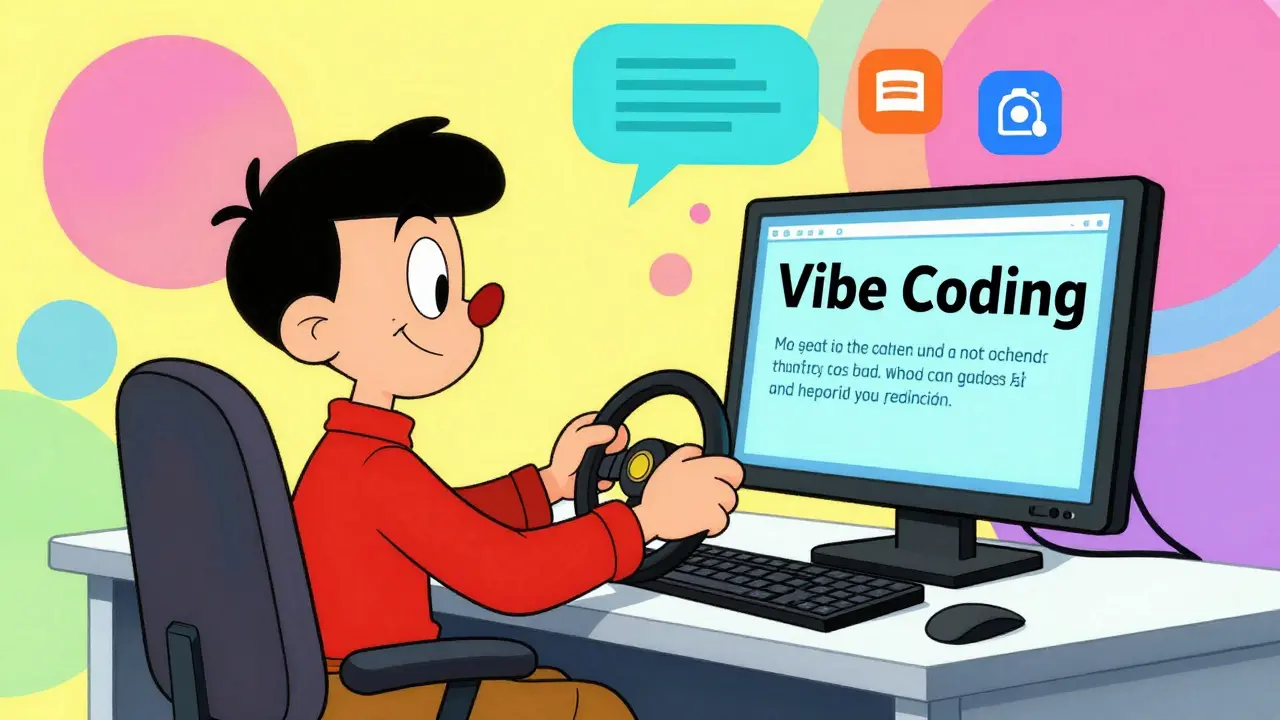
Remember when writing code meant typing every single character from scratch? Those days are fading fast. Today, developers are using natural language to guide Vibe Coding, which is a development paradigm where programmers use conversational prompts to direct AI systems in generating, refining, and optimizing software code. This shift has turned the keyboard into a steering wheel rather than a typewriter.
But here’s the catch: just because you can build an app faster doesn’t mean you’re building it better. In fact, without the right metrics, speed can become your biggest enemy. You might be shipping features in hours instead of weeks, but if those features are riddled with hidden bugs or security holes, that speed is an illusion. The real challenge for engineering leaders in 2026 isn’t adopting AI tools-it’s measuring whether those tools are actually helping.
Why Traditional Metrics Fail Vibe Coding Teams
If you’re still tracking "lines of code" or even standard "story points" as your primary success indicators, you’re likely missing the forest for the trees. Traditional software metrics were built for manual labor. They assumed that more time spent meant more effort exerted. But when an AI generates a complex API integration in seconds, those old rules break down.
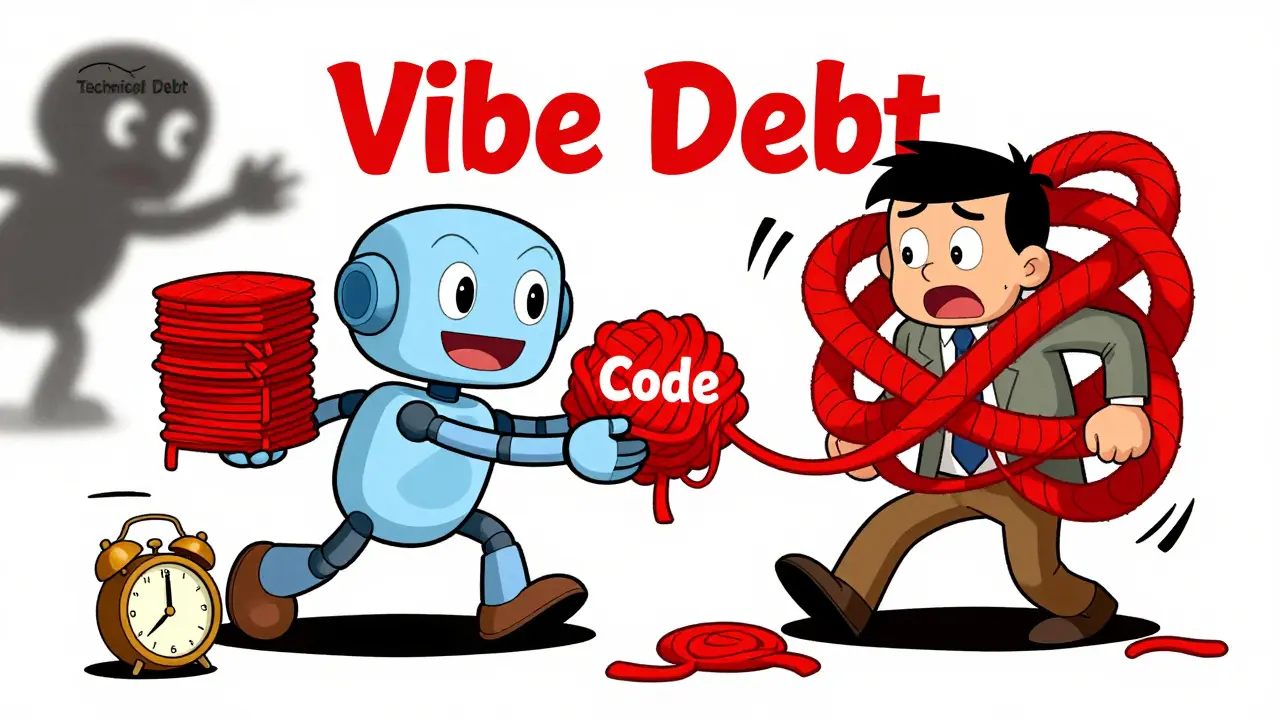
The problem is twofold. First, velocity spikes can mask quality drops. Second, the nature of the work changes. Developers spend less time writing syntax and more time reviewing logic. If your KPIs don’t account for this cognitive shift, you’ll end up rewarding teams for churning out fragile code that requires constant refactoring later. We call this accumulation of unmanaged technical debt "Vibe Debt."
Core Velocity Metrics: Beyond Simple Speed
Speed matters, but you need to measure the right kind of speed. It’s not about how many commits you make; it’s about how quickly value reaches the user without breaking things. Here are the three critical velocity metrics for vibe coding programs:
- Lead Time for Changes: This measures the time from code commit to production deployment. In traditional workflows, this often took days. With effective vibe coding implementations, Cloudflare’s 2025 internal data shows median reductions from 2.7 days to just 1.3 days. This metric tells you if your pipeline is truly accelerated or just clogged with bad code that needs fixing.
- Cycle Time by Task Type: Not all code is created equal. Boilerplate and configuration tasks see massive acceleration-up to 81% faster according to Second Talent’s 2026 industry report. However, business logic implementation only sees a 34% improvement. Tracking cycle time by task type helps you identify where AI adds value and where human expertise remains irreplaceable.
- Context Switching Time: This is a newer, crucial metric. It measures the seconds between asking the AI for help and returning to your primary workflow. HackerNews community analysis suggests optimal values stay below 8 seconds. If this number creeps up, your tooling is interrupting flow rather than enhancing it.
Quality Metrics: Catching Defects Before They Ship
Here is the hard truth: early-stage vibe coding implementations often suffer from higher defect escape rates. Arsturn’s 2025 study of 147 enterprise projects found that defect rates to production averaged 18% higher in teams new to AI-assisted development. Why? Because developers trust the AI too much and skip rigorous verification steps.
To combat this, you must track specific quality indicators:
- Defect Escape Rate: Track how many bugs make it to production versus how many are caught in testing. Successful teams that implement proper verification frameworks eventually see this drop to 7% lower than traditional methods. The key is establishing a baseline and watching for trends.
- Vulnerability Density: Security is where vibe coding faces its steepest learning curve. Snyk’s 2025 security analysis revealed that initial AI-generated code had 27% higher security vulnerability rates. You need automated scanning specifically tuned for common AI patterns, such as hardcoded secrets or insecure default configurations.
- Rework Frequency: How often does a feature need to be rebuilt after release? High rework frequency indicates that the initial prompt engineering was weak or that the developer didn’t fully understand the generated solution.
Understanding and Managing Vibe Debt
You know about technical debt-the cost of choosing easy solutions now over better solutions later. Vibe Debt is the specific accumulation of poorly understood, hastily accepted AI-generated code that lacks documentation, tests, or architectural coherence. It’s invisible until it crashes your system during peak traffic.
Patrick Udo, Senior Developer Advocate at Microsoft, emphasizes that defect density alone is misleading. You must track vibe debt through metrics like the percentage of AI-generated code requiring significant refactoring after three months. In poorly managed implementations, this averages 38%. That means nearly two-thirds of your AI-written code becomes a liability within a quarter.
To manage this, introduce these tracking mechanisms:
- Prompt Dependency Index: How tightly coupled is your codebase to specific, complex prompts? If changing one requirement breaks ten other modules because they relied on obscure AI outputs, your dependency index is too high.
- Refactor Frequency: Track how often AI-generated components need structural changes. Components requiring refactoring more than twice in six months typically have 3.7x higher defect rates, according to community data from DevProjournal.com.
- Comprehension Verification Rate: This is the most controversial but vital metric. Dr. Marcus Chen of Synopsys argues that the critical missing KPI is AI code comprehension rate-how much of the generated code the implementing developer actually understands. Low comprehension correlates directly with long-term defect rates.
| Metric | Traditional Development | Vibe Coding (Optimized) | Key Risk Area |
|---|---|---|---|
| Lead Time (Commit to Deploy) | 2.7 days (median) | 1.3 days (median) | Insufficient testing coverage |
| UI Component Cycle Time | 6.6 hours | 3.2 hours | Inconsistent design system adherence |
| Security Vulnerabilities | Baseline rate | 27% higher initially | Lack of security-specific prompt guidelines |
| Maintenance Cost (Year 1) | Standard | 22% higher | Accumulation of vibe debt |
| On-Time Delivery Rate | Variable | 63% of projects | Scope creep due to ease of generation |
The Human Factor: Cognitive Load and Engagement
Software development is still a human endeavor, even when AI writes the code. Dr. Elena Rodriguez, Principal Researcher at Google Cloud AI, notes that the most valuable KPIs aren’t just speed metrics but the ratio of human-to-AI cognitive load. Optimal teams maintain a 60-40 human-AI contribution balance for sustainable quality.
If your developers are spending 90% of their time prompting and 10% thinking, you have a problem. You’re automating the wrong layer. Conversely, if they’re doing 90% of the work manually, you’re wasting the tool’s potential.
Track these engagement metrics:
- Prompt Iterations per Task: How many back-and-forth exchanges does it take to get working code? Community consensus suggests that if it takes more than 3 iterations, the task should probably be refactored manually or the prompt strategy needs overhaul.
- AI Dependency Ratio: What percentage of code is directly implemented versus AI-generated with minimal modification? GitHub’s 2025 Developer Survey found that successful teams maintain ratios between 30-50% AI contribution. Higher ratios often indicate a lack of oversight.
- Developer Satisfaction Scores: Regularly survey your team. Are they feeling empowered or replaced? Context switching fatigue is real. If satisfaction drops, check your context switching times and prompt complexity metrics.

Implementing Your Vibe Coding Dashboard
You don’t need to track every metric listed above on day one. Start with the basics and expand as your team matures. Here is a phased approach to building your measurement framework:
- Phase 1: Baseline Velocity (Months 1-2): Focus on Lead Time and Cycle Time. Establish what "normal" looks like for your team before optimizing. Don’t worry about defects yet; just ensure the pipeline works.
- Phase 2: Quality Guardrails (Months 3-4): Introduce Defect Escape Rate and Vulnerability Density. Implement automated scanning for AI-specific risks. Set thresholds for acceptable risk levels.
- Phase 3: Debt Management (Months 5-6): Begin tracking Refactor Frequency and Prompt Dependency Index. Identify hotspots where vibe debt is accumulating and schedule dedicated cleanup sprints.
- Phase 4: Cognitive Balance (Month 6+): Monitor Prompt Iterations and AI Dependency Ratios. Adjust training and processes to ensure developers remain engaged architects, not just prompt operators.
Integration is key. These metrics shouldn’t live in spreadsheets. They need to be part of your CI/CD pipeline. SideTool’s case studies show that adding automated "vibe code verification" stages reduced production defects by 29%, despite an initial 15% slowdown in the pipeline. That trade-off is worth it.
Common Pitfalls to Avoid
Even with good intentions, teams often stumble. Watch out for these traps:
- Ignoring Junior Developer Risks: Junior developers (0-3 years experience) often deploy AI-generated code they don’t fully understand. 40% admit to this behavior. Provide them with structured training-Cloudflare’s data shows they need 14-21 hours compared to 6-10 for mid-level devs-to bridge the comprehension gap.
- Focusing Only on Output Volume: Rewarding lines of code or number of features shipped encourages sloppy work. Shift incentives toward stability, security, and maintainability.
- Neglecting Documentation: AI-generated code often lacks comments. Teams using detailed prompt documentation see 33% more reliable metric collection. Make documenting the *prompt* and the *intent* as important as documenting the code itself.
- One-Size-Fits-All Dashboards: Juniors need learning metrics. Seniors need quality oversight metrics. Project managers need delivery velocity metrics. Customize views accordingly.
The goal isn’t to police your developers. It’s to give them visibility into their own effectiveness. When a developer sees that their high iteration count correlates with post-release bugs, they’ll naturally adjust their approach. Data drives behavior change better than mandates ever will.
Looking Ahead: Standardization and Automation
We are moving toward a future where vibe coding KPIs are as standardized as traditional software metrics. IEEE is already drafting working group standards for "Measurement Practices for AI-Assisted Development," expected by Q4 2026. Tools like SideTool’s Vibe Analytics Platform are beginning to use machine learning to correlate specific prompt patterns with downstream quality metrics, enabling predictive adjustments before defects occur.
By 2027, Forrester predicts that 89% of development organizations will track specialized vibe coding KPIs. The organizations that thrive will be those that treat these metrics not as an afterthought, but as a core component of their engineering culture. They will balance the exhilarating speed of AI with the disciplined rigor of human oversight.
Start small. Pick one velocity metric and one quality metric. Track them consistently. Share the results with your team. Iterate. The technology is powerful, but only if you can measure its impact accurately.
What is vibe debt?
Vibe debt refers to the accumulation of technical debt specific to AI-generated code. It occurs when developers accept AI output without sufficient understanding, testing, or documentation. This leads to code that is difficult to maintain, prone to hidden bugs, and costly to refactor later. Metrics like "refactor frequency" and "prompt dependency index" help quantify this debt.
How does vibe coding affect defect rates?
Initially, vibe coding can increase defect escape rates by up to 18% due to over-reliance on AI and insufficient verification. However, mature teams that implement proper testing frameworks and review protocols can reduce defect rates by 7% compared to traditional methods. The key is balancing speed with rigorous quality checks.
What is the ideal human-to-AI contribution ratio?
Experts suggest an optimal balance of 60% human cognitive load to 40% AI contribution. This ensures that developers remain actively engaged in architectural decisions and logic verification, preventing the loss of contextual understanding that leads to long-term maintenance issues.
Which KPIs are most important for security in vibe coding?
The most critical security KPIs are Vulnerability Density in AI-generated code and Verification Coverage. Since AI-generated code initially shows 27% higher vulnerability rates, automated scanning for common AI pitfalls (like hardcoded secrets) and mandatory security reviews for critical paths are essential.
How do I measure developer comprehension of AI code?
Comprehension can be measured indirectly through "Prompt Iterations per Task" and directly via periodic code walkthroughs where developers explain AI-generated segments. High iteration counts (>3) often signal low comprehension. Additionally, tracking the percentage of code requiring significant refactoring after three months serves as a strong proxy for initial understanding.