You’ve probably been there. You join a new project, open the internal wiki, and find pages of dry technical specs. But nobody explains why the code looks like spaghetti in module X, or why the team hates the current deployment pipeline. That missing context is the "vibe." In 2026, ignoring it is costing companies millions in lost productivity. Vibe-coded knowledge sharing isn't just about writing down facts; it's about capturing the emotional and cultural atmosphere that drives how work actually gets done.
This approach has moved from a nice-to-have to a core component of project maintainability. According to Gartner’s Q3 2025 Digital Workplace report, 54% of Fortune 500 companies now use some form of vibe documentation. If you’re still relying on standard Jira tickets and Confluence pages without any human element, you’re likely seeing higher turnover and slower onboarding. Let’s look at how to build this into your workflow without making it feel like forced corporate theater.
Why Standard Documentation Fails Vibe-Coded Projects
Traditional documentation assumes that logic rules all. It doesn’t. Dr. Linda Hill from Harvard Business School noted in a recent MIT Sloan Review article that teams documenting their creative process with emotional context achieve 27% higher innovation output. The catch? It only works if the documentation feels authentic. When we strip away the "how it feels" from the "how it works," we lose the decision-making rationale. Why did we choose PostgreSQL over MongoDB? The tech spec says "better relational integrity." The vibe doc says "the backend team trusts SQL more after the NoSQL migration disaster of 2024." That second sentence saves the next engineer three weeks of trying to force a square peg into a round hole.
The problem with standard wikis is that they are static. They don’t capture the energy of a brainstorming session or the stress levels during a launch week. Connecteam’s 2023 survey showed that organizations implementing vibe-focused documentation saw 42% higher team retention. People stay where they understand the unwritten rules. Without these rules, new hires spend months guessing, leading to what Dr. Ethan Bernstein calls "vibe-washing"-superficial attempts to document culture that actually add cognitive load because they feel fake.
Core Components of Effective Vibe Documentation
So, what goes into a vibe-coded wiki? It’s not just adding emojis to text fields. The Knowledge Management Consortium’s Version 1.0 Standard, launched in November 2025, outlines seven core elements. Three of them are critical for maintainability:
- Emotional Context Markers: Tags like #high-energy, #stress-mitigation, or #collaborative-breakthrough attached to specific commits or decisions. Nulab’s Backlog platform users reported a 73% improvement in understanding decision contexts using these tags.
- Decision-Making Atmosphere: A brief note on whether a decision was made via consensus, top-down mandate, or heated debate. This helps future developers know if the choice is firm or negotiable.
- Psychological Safety Indicators: Notes on who felt comfortable speaking up during a review. If a junior dev was silenced, noting that prevents repeating the pattern.
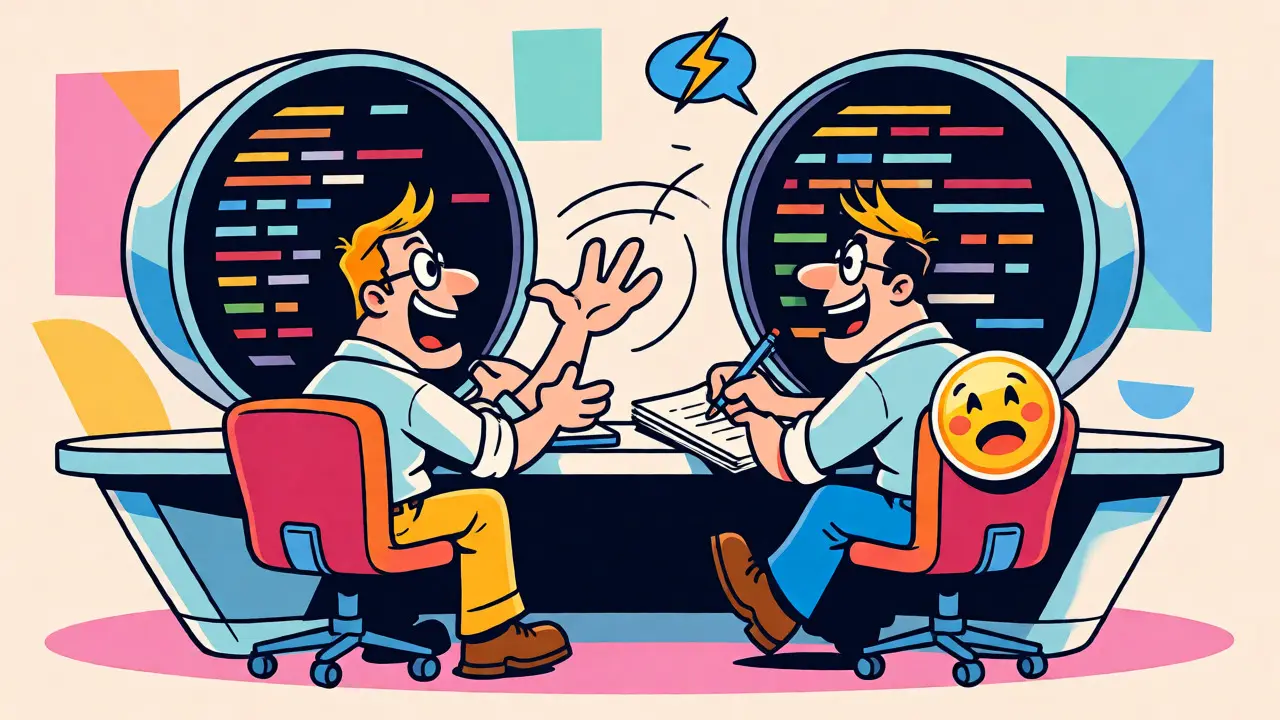
Video demos play a huge role here. ProProfs’ 2025 analysis found that wikis including video demos had 63% higher usage rates than text-only docs. But don’t film staged scenarios. Film actual problem-solving moments. A 90-second clip of two engineers debugging a live issue shows the team dynamic better than ten paragraphs of description. At Box, embedding these "vibe snippets" directly into Slack channels increased documentation contributions by 63%. They stopped treating it as a separate task and made it part of the conversation flow.
Choosing the Right Platform for Your Team Size
Not every tool handles vibe coding equally. Your choice depends heavily on team size and existing workflows. Here is a comparison of leading platforms as of late 2025:
| Platform | Best For | Vibe Feature Highlight | Cost (Approx.) | User Satisfaction |
|---|---|---|---|---|
| ThoughtFarmer | Enterprise Teams (>100 users) | AI-powered 'Vibe Analytics' dashboard tracking 12 cultural dimensions | $12/user/month | High (G2 Q2 2025) |
| Confluence | Technical Heavy Teams | Custom 'Vibe Templates' (requires manual setup) | $5.75/user/month | Moderate (3.9/5) |
| ProofHub | Small Teams (<50 users) | Emoji-based sentiment tagging integrated into timelines | $45/month flat | High (4.6/5) |
| Connecteam | Frontline/Mixed Teams | Unlimited storage for audio/video vibe clips | Varies | High |
If you’re a small startup under 30 people, ProofHub’s flat rate and emoji integration are hard to beat. Zavvy’s 2024 study showed 39% higher adoption rates among small teams using tools that integrate vibe docs into project timelines rather than separate knowledge bases. For larger enterprises, ThoughtFarmer’s AI analytics can spot when team energy dips below productive thresholds with 84% accuracy. Confluence remains popular but scores 22% lower in vibe effectiveness unless you heavily customize templates. One Reddit user, u/DevLeadStruggles, noted that their Confluence implementation failed because leadership treated it as a compliance checkbox, leading to 83% abandonment.
Implementation Strategy: Avoiding the "Vibe-Washing" Trap
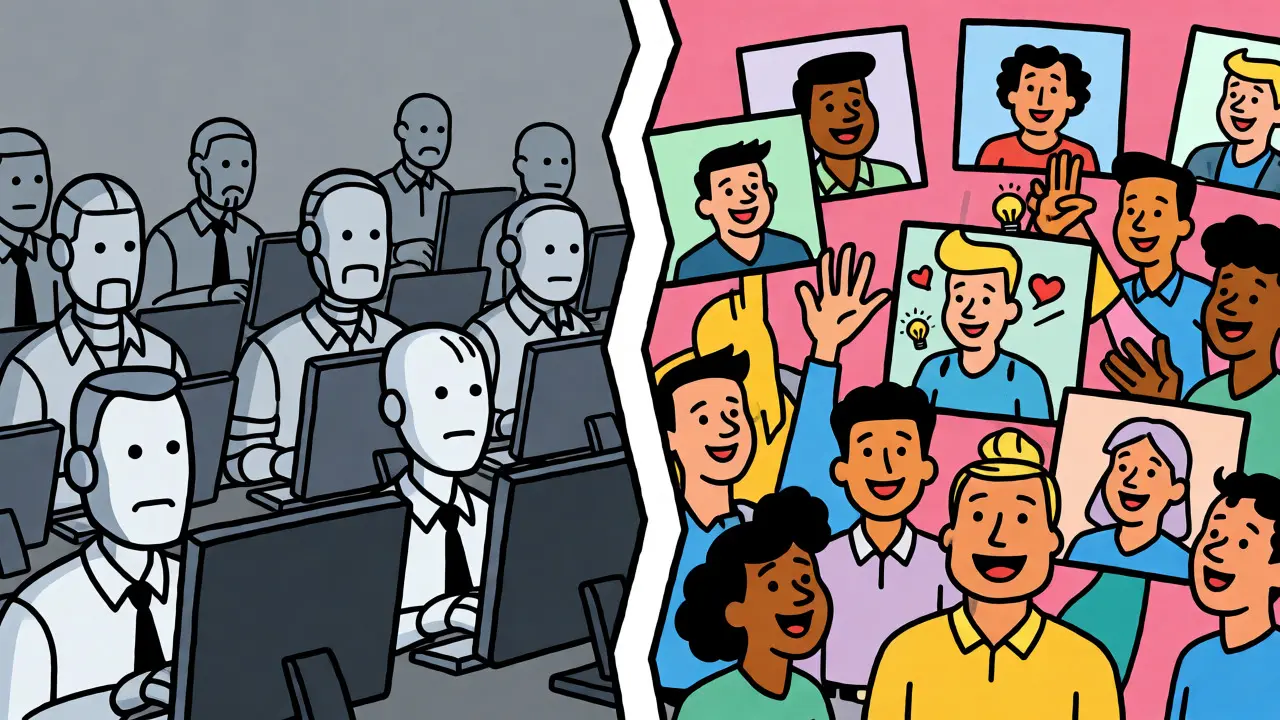
The biggest risk is authenticity. If your vibe documentation feels like mandatory HR homework, it fails. Gartner predicts that 60% of initial implementations will fail due to poor integration with existing workflows. To avoid this, start with a pilot. Connecteam’s guide suggests a 6-8 week rollout beginning with teams scoring above 7.5/10 on psychological safety assessments. Don’t roll this out company-wide during a restructuring; one fintech startup saw 78% rejection because they introduced vibe docs while cutting staff.
Appoint "vibe champions." ThoughtFarmer recommends one champion per 15 team members. These aren’t managers; they are respected peers trained in authentic documentation practices. Give them 8 hours of specialized training. Their job isn’t to police tone but to model good behavior. Show them how to tag a commit with #learning-curve instead of pretending everything is perfect. Doctolib’s model uses a leaderboard for "vibe snippets" tagged #hot-tips, which receive 3.2x more engagement than standard updates. Tie this lightly to performance reviews-Box accounts for 15% of quarterly reviews based on contribution quality, not quantity.
Measuring Success and ROI
How do you know if it’s working? Look beyond page views. Track onboarding time. One Agile Coach reported reducing onboarding from 8 weeks to 11 days by including "here’s how we actually make decisions" sections. Monitor context-switching. Box reduced context-switching by 29% when team members rotated projects because the vibe docs provided immediate social context. Also, watch for "vibe debt." Are people abandoning the wiki? If usage drops after three months, you’re likely asking too much effort for too little reward.
Be careful with data privacy. The EU clarified in June 2025 that emotional data qualifies as personal information under GDPR. Ensure your platform supports consent management for voice and video clips. Pew Research found that 58% of employees have privacy concerns about AI-analyzed vibe data. Transparency builds trust. Tell your team exactly how their emotional tags are used-to improve processes, not to judge personalities.
Frequently Asked Questions
What exactly is "vibe-coded" documentation?
It is a method of recording not just technical specifications but also the emotional and cultural context of a project. This includes team dynamics, decision-making atmospheres, and psychological safety indicators, often captured through tags, short videos, or narrative notes alongside standard code comments.
Do I need a special software tool for this?
While tools like ThoughtFarmer, ProofHub, and Nulab offer specific features like sentiment analysis or vibe tags, you can start with existing platforms like Confluence or Notion by creating custom templates. The key is integrating it into your daily workflow, such as Slack or Microsoft Teams, rather than forcing a separate login.
How long does it take to see benefits?
Most successful implementations see measurable improvements in onboarding speed and team retention within 3 to 6 months. However, cultural shifts take longer. Expect an initial dip in productivity as teams adjust to the new documentation habits before efficiency gains materialize.
Is this suitable for remote teams?
Yes, arguably more so. Remote teams lack the ambient cues of an office, making explicit vibe documentation crucial. Video demos and asynchronous audio clips help bridge the gap, providing the "water cooler" context that is otherwise missing in distributed environments.
What are the main risks of implementing vibe documentation?
The primary risk is "vibe-washing," where documentation becomes performative and inauthentic, leading to high abandonment rates. Another risk is privacy concerns regarding emotional data, especially under regulations like GDPR. Ensuring voluntary participation and clear data usage policies mitigates these issues.