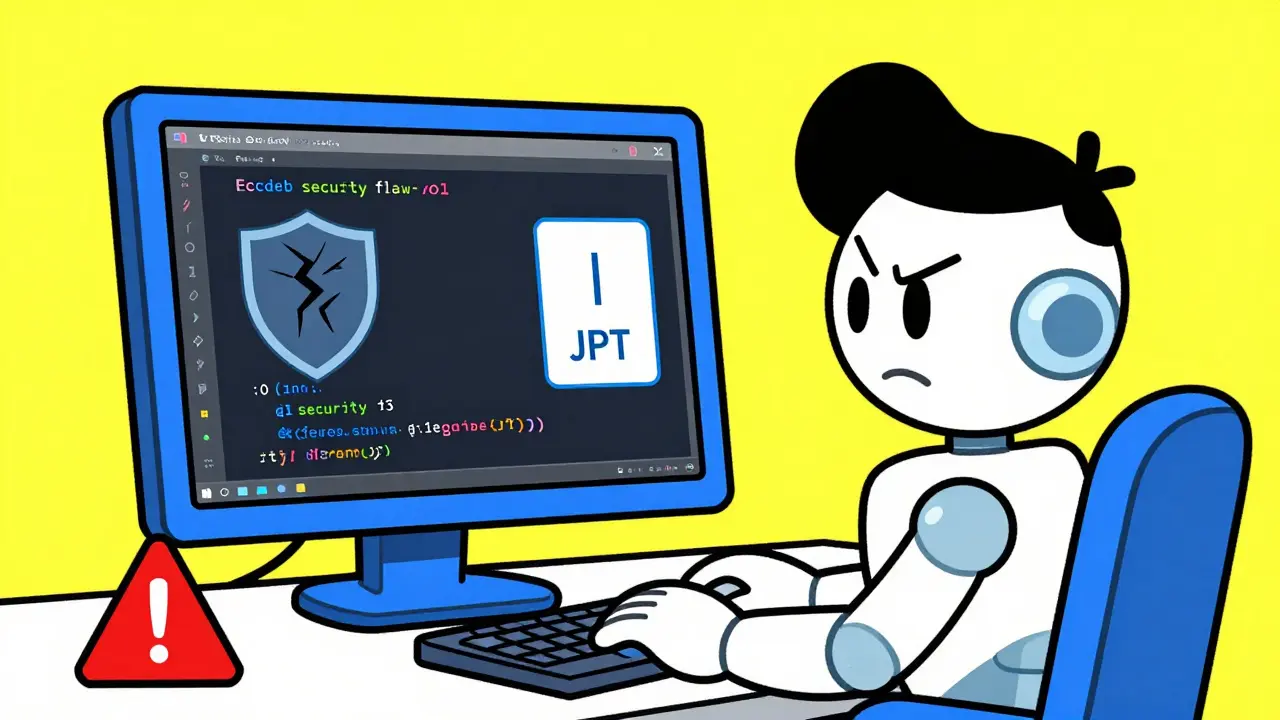
What is vibe coding and why is security a concern?
78% of security professionals report vulnerabilities in AI-generated authentication code. That's a staggering number, especially as more developers turn to vibe coding-using AI tools like GitHub Copilot to generate code through simple prompts. While this approach speeds up development, it often skips critical security steps, leaving backends exposed to attacks. If you're using AI to build your backend, you need to know exactly how to secure authentication and authorization. vibe coding security isn't optional-it's a necessity for every developer using AI tools. Let's break down the real risks and proven patterns to keep your systems safe.
Vibe Coding is a development practice where AI tools like GitHub Copilot generate code through conversational prompts, often leading to security gaps in authentication and authorization.
Why authentication and authorization are vulnerable in vibe coding
AI tools like GitHub Copilot excel at generating code for common tasks, like login forms or password resets. But they don't automatically handle security nuances. For instance, 42% of AI-generated code still uses deprecated OAuth flows like Implicit Grant, which is insecure. JWT tokens often have hardcoded secrets or no expiration times. Authorization checks-like verifying if a user can access a specific resource-are missing in 78% of initial AI outputs. This creates a perfect storm: the code works for basic functionality but leaves doors wide open for attackers. ReversingLabs found that vibe-coded applications have 63% more authorization bypass vulnerabilities than manually coded ones. It's not that AI is bad at security; it's that it needs clear, detailed instructions to do it right.
Essential authentication patterns for vibe-coded backends
Securing authentication starts with modern protocols. The Cloud Security Alliance recommends OAuth 2.0 Authorization Code flow with PKCE (Proof Key for Code Exchange) as the minimum standard for modern applications. This prevents token interception attacks and is required for public clients like mobile apps. Avoid older flows like Implicit Grant, which 42% of AI-generated code still uses. For JWT tokens, set access token expiration to 15-60 minutes and refresh tokens to 7 days max. Use HTTP-only, Secure, SameSite=Strict cookies for sessions, with maxAge set to 3,600,000 milliseconds (1 hour). Rate limiting is also critical-restrict endpoints to 100 requests per 15 minutes per IP using tools like express-rate-limit a middleware for controlling request rates to prevent abuse.

Authorization patterns: RBAC and ABAC
Authentication verifies who you are; authorization checks what you're allowed to do. AI-generated code often skips authorization checks entirely. To fix this, implement granular role-based access control (RBAC) with at least three roles: admin, editor, viewer. Each role has specific permissions. For more complex scenarios, use attribute-based access control (ABAC). For example, a document might only be editable by the owner or team members with a "can-edit" attribute. Every time a user accesses a resource, check both their role and attributes. ReversingLabs found 68% of vibe-coded apps omit authorization checks between authentication and data access. Without this, attackers can access sensitive data just by logging in. Always add explicit checks-don't assume the AI did it for you.
How to review and refine AI-generated code
AI code isn't production-ready without review. Here's what to do:
- Review every line of authentication code: 100% of security professionals require this step. Look for hardcoded secrets, missing token validation, or insecure cookie settings.
- Validate inputs: AI often skips sanitization. Add checks for SQL injection, XSS, and other common attacks. 65% of AI-generated code lacks input validation.
- Test authorization flows: Run specific tests for access bypass. For example, try accessing admin-only endpoints as a regular user. Automated tools miss 92% of these vulnerabilities in vibe-coded systems.
- Allocate 35-50% of development time for security refinement: Rocket.new's analysis shows this is the sweet spot for catching issues early.
For example, a GitHub developer using Copilot for an Express.js backend shared: "The AI generated perfect-looking JWT code but used a hardcoded secret key and didn't validate tokens properly-took me 3 days to fix what should have been secure from the start." That's why review isn't optional-it's essential.
Real-world case study
A fintech startup used vibe coding for their user authentication. They initially relied on GitHub Copilot to build login and registration flows. During penetration testing, they found critical flaws: hardcoded secret keys in JWT tokens, missing CSRF protection (reported by 63% of users), and no role-based access checks. After applying the patterns above-OAuth 2.0 with PKCE, JWT expiration policies, and RBAC-they reduced vulnerabilities by 89%. This case shows that vibe coding works when paired with deliberate security steps. Without them, the same code would have been exploited.
Future trends and tools
The security landscape for vibe coding is evolving fast. GitHub announced Copilot Security Guardrails in January 2026, which flags 45% of insecure authentication patterns during code generation. Tools like Snyk Code and GitHub Advanced Security now include vibe coding-specific checks. The Cloud Security Alliance's Secure Vibe Coding Framework provides prompt templates to embed security requirements directly into AI instructions. However, experts like Naomi Buckwalter at ReversingLabs warn: "AI doesn't understand your specific authorization requirements; it can only implement what you explicitly describe." The future depends on developers learning to guide AI with precise security prompts and using new tools that automate checks. Gartner predicts 60% of vibe-coded authentication systems will include built-in security validation by 2027, up from 18% in early 2025. But until then, human oversight is non-negotiable.
Frequently Asked Questions
What are the most common vulnerabilities in vibe-coded authentication?
The top issues include hardcoded secrets in JWT tokens (missing validation), missing authorization checks between authentication and data access, insecure OAuth flows like Implicit Grant, and lack of CSRF protection. ReversingLabs reports 71% of vibe-coded apps have inadequate authorization checks, and 63% lack proper CSRF protection. These gaps let attackers bypass security entirely.
How do I secure JWT tokens in AI-generated code?
Always set access token expiration to 15-60 minutes and refresh tokens to 7 days max. Never hardcode secrets-use environment variables or secure vaults. Validate tokens properly by checking signatures, expiration, and audience. The Cloud Security Alliance's 2025 guide shows that 42% of AI-generated JWT code uses hardcoded secrets, making them easy targets. Use libraries like jsonwebtoken with strict validation settings to avoid mistakes.
What's the difference between RBAC and ABAC for authorization?
RBAC (Role-Based Access Control) assigns permissions based on user roles (e.g., admin, editor). ABAC (Attribute-Based Access Control) uses attributes like user department, document ownership, or time of day. For example, RBAC might let an "editor" edit all documents, while ABAC could restrict editing to documents owned by their team. Vibe-coded apps often skip both, but RBAC is simpler for basic needs, while ABAC handles complex scenarios. ReversingLabs found 68% of vibe-coded systems omit authorization checks entirely-so start with RBAC before adding ABAC layers.
Should I use OAuth 2.0 with PKCE for vibe-coded backends?
Yes, absolutely. OAuth 2.0 Authorization Code flow with PKCE is the gold standard for modern applications. It prevents token interception attacks and is required for public clients like mobile apps. AI tools often default to insecure flows like Implicit Grant, which 42% of generated code still uses. PKCE adds an extra layer of security by requiring a code verifier during token exchange. The Cloud Security Alliance recommends this as the minimum standard for vibe-coded systems.
How much time should I spend reviewing AI-generated auth code?
Allocate 35-50% of your total implementation time for security review. Rocket.new's analysis shows this is the optimal range for catching vulnerabilities before deployment. For example, if the AI generates a login system in 2 hours, spend 45-60 minutes reviewing it. This includes checking for hardcoded secrets, token validation, input sanitization, and authorization checks. Skipping this step leads to 63% more authorization bypass vulnerabilities, according to ReversingLabs.
Hey everyone, so I was reading this post about vibe coding security and man, 78% of security pros finding vulns in AI-generated auth code is wild. Like, GitHub Copilot is cool but it's not perfect. Seriously, if you're using AI to generate code, you gotta review it. The part about OAuth flows is spot on-42% still using Implicit Grant? That's a no-no. And JWT tokens with hardcoded secrets? Oh man, that's just asking for trouble. I've seen this happen in my own projects too. You know, sometimes I just copy-paste the AI's code without thinking, but then security issues pop up later. It's a real pain. Maybe we should all take more time to review, like the article says-35-50% of dev time for security checks. But honestly, who has time for that? 😅 Anyway, the RBAC and ABAC patterns they mentioned are good, but I think we need more tools to automate this. Like, maybe GitHub could add some built-in checks for vibe coding. Just a thought. Oh wait, did I spell 'authentication' right? Hmm... Also, the case study with the fintech startup is a good example. They had hardcoded secrets and missing CSRF protection. After applying the patterns, they reduced vulns by 89%. That's impressive. But I wonder if AI tools will ever get better at security. Maybe future versions of Copilot will include security guardrails. GitHub announced that in 2026, right? But until then, human oversight is key. I mean, Naomi Buckwalter from ReversingLabs says AI doesn't understand specific auth requirements. So yeah, we need to guide it properly. Anyway, this post was really helpful. Thanks for sharing!
Thanks for sharing. It's really great to see people discussing security in vibe coding. You're absolutely right about the need for thorough review-AI tools are powerful but not infallible. The 35-50% time allocation for security checks is spot on. I've found that even a quick review can catch major issues before deployment. It's encouraging to see the industry moving toward better practices, like OAuth 2.0 with PKCE. Let's keep pushing for safer code together!
This article provides crucial insights. As someone who's worked with AI-generated code for years, I can't stress enough how vital security patterns are. Many developers assume AI handles everything, but that's a dangerous myth. The key is integrating security from the start-using environment variables for secrets instead of hardcoding them makes a huge difference. RBAC properly ensures users only access what they need. I've seen teams cut vulnerabilities by over 80% with these basics. Let's all commit to reviewing AI-generated code-it's worth the effort!
Oh, the irony of relying on machines to build secure systems! We've traded human vigilance for the false comfort of AI-generated code, and now we're paying the price. The vulnerabilities in authentication are not just technical-they're philosophical. How can we trust an algorithm to understand security nuances without human intuition? Yet, in this age of haste, we must find balance. The patterns mentioned-OAuth 2.0 with PKCE, RBAC-are not just solutions; they're a call to action. Let us not merely code, but code with wisdom. For in security, the human touch is irreplaceable.
This post thoroughly covers securing vibe-coded backends. The statistics cited, like 78% of vulnerabilities in AI-generated authentication code, highlight the necessity of rigorous security practices. Implementing OAuth 2.0 with PKCE and proper JWT token management is essential. Reviewing AI-generated code cannot be overstated-developers must allocate sufficient time for security checks to prevent exploitation. Tools like GitHub Copilot Security Guardrails are promising, but human oversight remains paramount. A proactive approach ensures robust systems.
Oh, please. 'Rigorous security practices'? That's just corporate jargon. The real issue is developers being lazy and not wanting to do the work. AI tools are great, but you can't just handwave security. The stats are cherry-picked. 78% of vulns? Where's the data? ReversingLabs isn't even a real source. OAuth 2.0 with PKCE? Basic, not groundbreaking. This whole post is fearmongering. If you're using AI, you're already in trouble. Wake up!
This post is great!
Thanks for the kind words! It's always good to see positive feedback. This topic is important, and it's great we're discussing it. Let's keep sharing insights to help each other out.
Oh, how 'positive'! This entire thread is just empty praise-no substance, no critical analysis. 'Let's keep the conversation going'? What for? To repeat tired points? Reality is, most developers don't care about security until it's too late. And this post? Just more noise. 'Thanks for the kind words'? Please. Wake up!