
Remember when building an AI chatbot meant throwing a few prompts at a Large Language Model (LLM) and hoping for the best? Those days are gone. In mid-2026, enterprises don't just want smart answers; they want reliable, scalable, and governable systems. The gap between a weekend prototype and a production-ready system is no longer filled by luck-it’s bridged by playbooks.
A playbook in this context isn’t a theoretical textbook. Borrowed from sports and business strategy, it represents a formalized collection of field-tested design patterns, architectural strategies, and operational rules. As the discipline matures, resources from Manning Publications, Anthropic, and industry leaders like Regal AI have shifted the focus from "how to make it work" to "how to make it work reliably at scale." This shift marks the transition of AI engineering from experimental science to established infrastructure management.
The Core Components of Modern AI Architecture
To understand why playbooks are necessary, you first need to recognize that modern AI systems are not monolithic. They are complex pipelines composed of distinct entities that must interact seamlessly. The current standard architecture revolves around three pillars: Retrieval-Augmented Generation (RAG), Agentic Workflows, and Context Engineering.
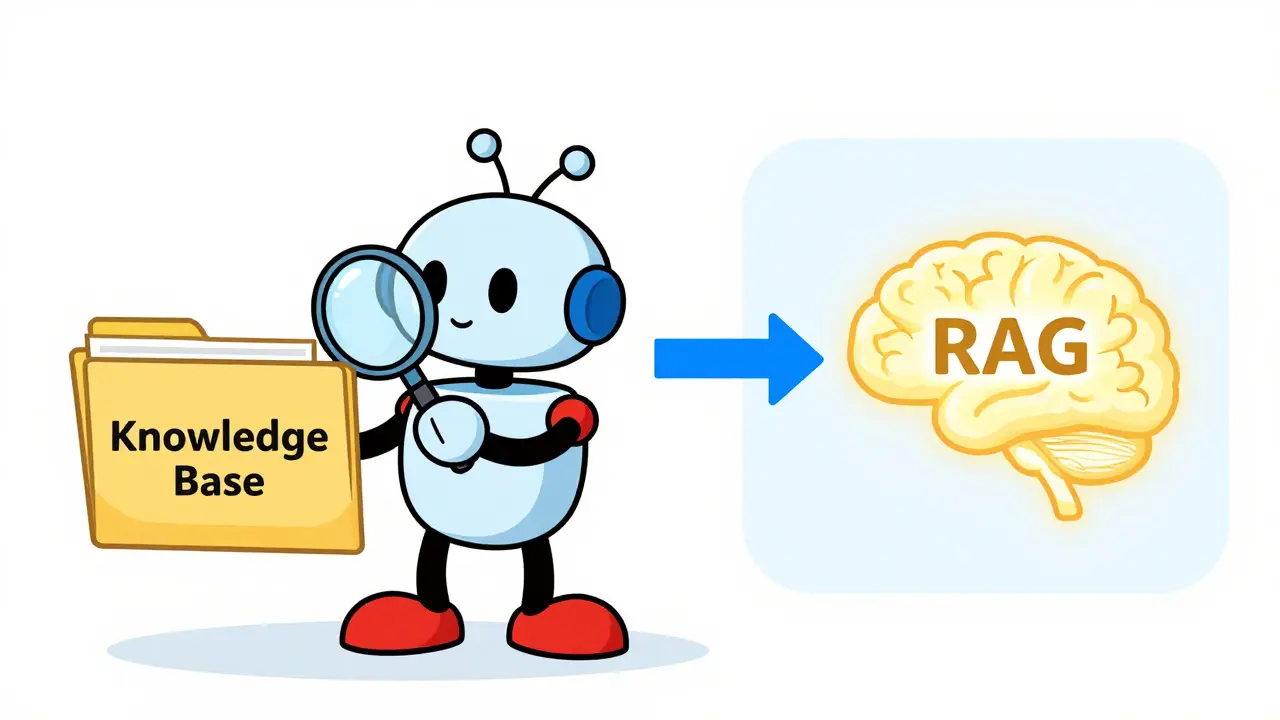
RAG is a technique that combines external data retrieval with LLM generation to reduce hallucinations and provide up-to-date information. It typically consists of an Encoder, which vectorizes queries using transformer-based models; a Retriever, which searches vector stores like Pinecone, FAISS, or Weaviate; and a Generator, which crafts the final answer based on retrieved texts.
Meanwhile, AI Agents are goal-driven systems that plan, act, and iterate autonomously to complete complex tasks. Unlike simple chatbots, agents use tools, maintain memory, and can break down multi-step problems. Finally, Prompt Engineering has evolved into Context Engineering, focusing on structuring the entire input environment-including instructions, examples, and retrieved knowledge-to guide model behavior precisely.
Strategic Separation: Prompt vs. Knowledge Base
One of the most critical strategic decisions in scaling AI is where to put your information. Many early implementations suffer from "prompt bloat," stuffing massive amounts of documentation directly into the system prompt. This leads to high latency, increased costs, and confusion for the model. Playbooks from Regal AI and others emphasize a strict delineation between the Prompt and the Knowledge Base.
| Attribute | Prompt (The Script) | Knowledge Base (The Memory) |
|---|---|---|
| Function | Defines behavior, tone, and decision rules | Stores detailed, dynamic, or frequently updated facts |
| Content Type | Guardrails, disclaimers, personality traits | Product manuals, policies, regional variations |
| Update Frequency | Low (changes only when logic shifts) | High (updates as new data arrives) |
| Scalability Impact | Keeps token usage stable per request | Allows infinite content growth without bloating prompts |
This separation enables scalability. By keeping the prompt lean, you ensure consistent performance regardless of how large your company’s documentation grows. The agent fetches facts on demand via RAG, while the prompt ensures those facts are applied correctly according to your business rules.
Optimizing Retrieval: Beyond Basic Search
A common misconception is that retrieving relevant documents is solved once and forgotten. In reality, retrieval is the bottleneck of accuracy. If the retriever fails, the generator cannot succeed, no matter how powerful the LLM is. Playbooks recommend moving beyond basic vector similarity search.
First, implement single-topic chunking. Instead of splitting documents by arbitrary character counts, organize chunks around individual topics. This ensures the retriever grabs coherent information that matches the user's specific context. Second, add a reranking stage. Initial retrieval might return ten relevant documents, but a specialized reranker model can score them for precise relevance, surfacing the top two most accurate passages. This step significantly improves answer quality.
Third, consider query rewriting. Users often ask vague questions. An intermediate LLM step can rewrite the initial query $x$ into a more structured form $x'$ before sending it to the retriever. While this increases token consumption and cost, it dramatically boosts retrieval precision, making it a worthwhile trade-off for high-stakes applications.
Building Reliable Agentic Workflows
Agents introduce complexity because they operate autonomously. The "Agentic AI Playbook" published in late 2025 highlights that goal-driven design requires rigorous verification. You cannot simply tell an agent to "fix this problem" and walk away. You must design for clarity, verify with tests, and scale with discipline.
Key principles for agentic reliability include:
- Explicit Tool Definitions: Clearly define what tools an agent can access and under what conditions. Ambiguity here leads to hallucinated tool calls.
- Reflection Loops: Implement mechanisms where the agent reviews its own output before execution. Techniques like chain-of-thought reasoning allow the agent to "think" through steps, reducing errors.
- Guardrails: Set hard limits on actions. For example, an agent should never delete a database record without human confirmation, regardless of its confidence level.
Testing agents is different from testing traditional software. You need evaluation frameworks that assess not just the final output, but the path taken to get there. Did the agent choose the correct tool? Did it retrieve the right document? These intermediate steps are where failures usually hide.
Operational Excellence: Monitoring and Iteration
Deploying an AI system is not the end; it’s the beginning. RAG systems and agents are living organisms that degrade over time as data changes and user behaviors shift. A robust playbook mandates continuous monitoring.
You must track metrics beyond simple uptime. Monitor latency to ensure user experience remains smooth. Watch for drift in retrieval quality-are users asking new types of questions that your current embeddings don’t capture? Track error spikes in agent workflows to identify broken tools or outdated knowledge base entries.
Caching is another critical operational tactic. Identify "hot" queries-frequently asked questions-and cache their responses with smart expiration settings. This reduces redundant compute costs and speeds up response times for common issues. Document all design choices, including why certain embedding models were chosen or why specific chunk sizes were used. This documentation is vital for future maintainers who will inevitably need to update the system.

Choosing Your Stack: Frameworks and Tools
Starting small is the consensus advice across all major playbooks. Before investing in custom infrastructure, pilot with open-source frameworks that offer flexibility and community support. LangChain, LlamaIndex, and Haystack are widely recommended for minimal upfront cost and maximum adaptability.
For vector storage, evaluate options based on your scale. FAISS is excellent for local development and moderate scale due to its speed and low overhead. Pinecone and Weaviate offer managed services that handle scaling and maintenance, which is beneficial for teams lacking dedicated DevOps resources. Remember, the choice of vector database affects retrieval speed and cost, so benchmark these against your specific latency requirements.
Navigating Trade-offs: Cost vs. Quality
There is no free lunch in AI engineering. Every optimization comes with a trade-off. Advanced techniques like query rewriting, chain-of-thought reasoning, and reranking improve accuracy but increase token usage and inference time. You must balance these factors based on your application’s needs.
For a customer support bot handling simple FAQs, basic RAG with a lightweight encoder might suffice. For a legal research assistant requiring high precision, you’ll need reranking, multiple retrieval passes, and extensive context engineering. Define your success metrics early: Is speed more important than absolute accuracy? Or vice versa? These decisions shape your architecture and budget.
What is the difference between RAG and fine-tuning?
RAG retrieves external information dynamically, allowing the model to access up-to-date data without retraining. Fine-tuning adjusts the model’s weights to learn specific patterns or styles, which is static and doesn’t incorporate new data unless retrained. RAG is generally preferred for factual accuracy and scalability, while fine-tuning is used for stylistic consistency or specialized domain language.
How do I prevent prompt bloat in my AI agents?
Keep your system prompt focused on behavior, tone, and rules. Move detailed, dynamic, or large volumes of factual information into a Knowledge Base accessed via RAG. Use single-topic chunking to ensure only relevant snippets are retrieved, keeping the context window efficient and cost-effective.
Why is reranking important in RAG systems?
Initial vector retrieval often returns multiple relevant documents, but not necessarily the most precise ones. A reranker model scores these results based on semantic relevance to the specific query, filtering out noise and surfacing the highest-quality passages for the generator. This significantly improves answer accuracy.
What are the key metrics for monitoring AI agents?
Monitor latency for user experience, retrieval accuracy to ensure correct data is fetched, error rates in tool usage, and drift in user query patterns. Also track token consumption to manage costs effectively. Regularly review these metrics to identify degradation or opportunities for optimization.
Should I use LangChain, LlamaIndex, or Haystack?
All three are strong open-source frameworks. LangChain is versatile and widely adopted for general-purpose chains. LlamaIndex excels in data indexing and retrieval-heavy applications. Haystack offers a modular, pipeline-based approach ideal for custom RAG architectures. Start with one that aligns with your team’s expertise and project requirements, as migration between them is possible but costly.


Great breakdown on the shift from prototype to production. The part about separating prompt logic from the knowledge base is something we struggled with early on in our team. We used to stuff everything into the system prompt and then wonder why latency spiked during peak hours. Moving that dynamic data to a vector store changed the game for us. It really forces you to think about what actually needs to be 'smart' versus what just needs to be 'retrieved'.
I've been looking into reranking models lately because basic cosine similarity just isn't cutting it for our legal docs. Has anyone here had success with ColPali or similar late-interaction models? I feel like the trade-off in inference time is worth it, but I'm worried about the complexity of integrating another model stage into the pipeline.
Agreed on the reranking front. We tried skipping it initially to save costs, but the hallucination rate was unacceptable. Adding a cross-encoder reranker dropped our error rate by half. It's definitely a cost, but cheaper than fixing bad answers manually later.
The section on agentic workflows is particularly relevant right now. We are seeing a lot of teams trying to build agents without proper guardrails and ending up with systems that delete data or call APIs they shouldn't. Explicit tool definitions are non-negotiable in my opinion. You cannot trust an agent to self-correct if the initial permission structure is vague.
Simple point but important: keep your prompts lean.
Wow! This is exactly what I needed to read today!! The bit about caching hot queries is so underrated!! Everyone talks about the fancy retrieval algorithms but nobody mentions that 80% of your users might be asking the same five questions!! Implementing a simple cache layer saved us so much money last quarter!! Also the table comparing prompt vs knowledge base is super clear!! Thanks for sharing this!!