Most corporate innovation dies in a slide deck. You might have a team that just built a game-changing internal tool using AI prompts instead of a six-month engineering sprint, but if you announce it as "a successful pilot of a new development paradigm," nobody will care. To get your organization to actually adopt vibe coding is the practice of creating functional software through conversational AI interactions and natural language prompts rather than manual line-by-line programming , you have to stop talking like a project manager and start telling stories that hit the bottom line.
The secret to internal adoption isn't proving the tech works-it's proving that the vibe coding approach solves a specific, painful business problem faster and cheaper than the traditional route. When you shift the narrative from "look at this cool AI tool" to "here is how we reclaimed 30% of our revenue," you stop being a technical curiosity and start being a strategic necessity.
The Anatomy of a Win: Moving from Tech to Impact
If you want stakeholders to buy into a new way of working, you need a narrative framework that focuses on outcomes, not outputs. An output is "we built an app." An outcome is "we stopped losing customers to third-party delivery fees." The latter is what gets budgets approved.
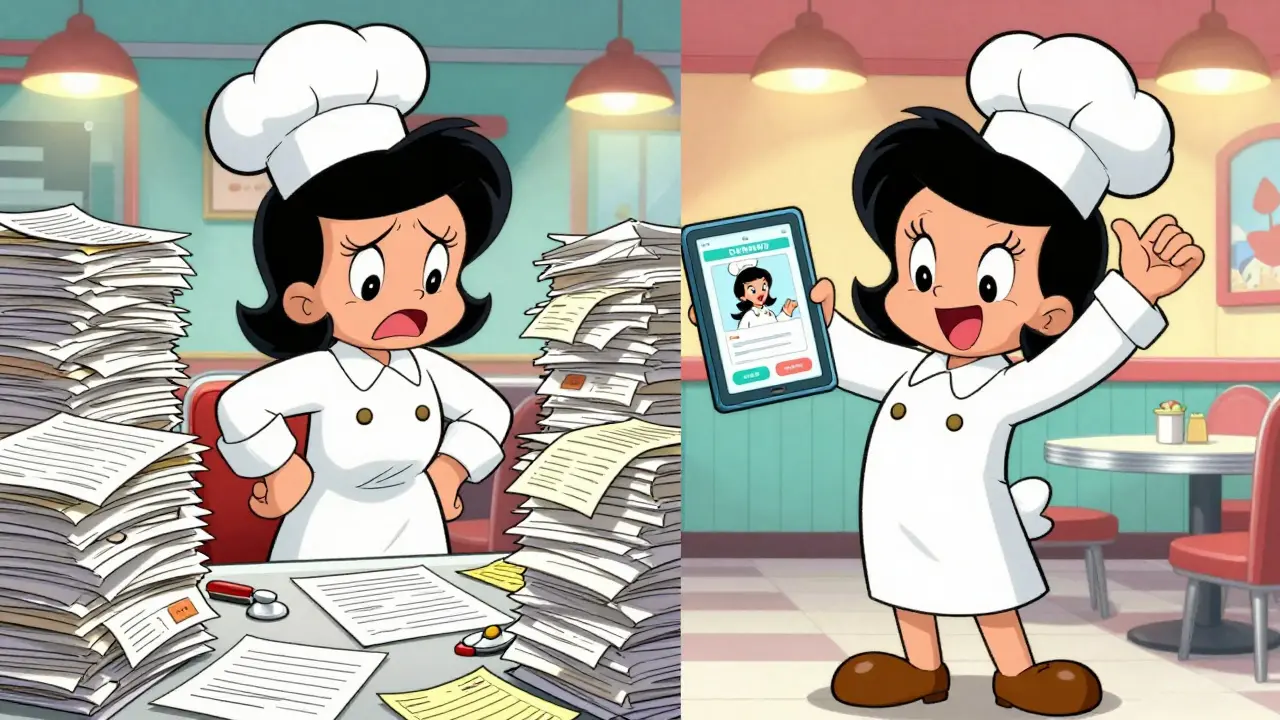
Take the example of Maria, a restaurant owner in Manchester. She didn't just "vibe code" an app; she solved a bleeding wound in her business model. She was losing 20% to 30% of her revenue to delivery platforms. By using visual development tools to build her own ordering system in just three weeks, she didn't just get a piece of software-she got her margins back. Within two months, her takeaway orders jumped by 60%. That is the story you tell internally: Pain Point → Rapid Action → Quantifiable Gain.
When documenting your own internal wins, avoid the temptation to explain the prompt engineering or the specific LLM version used. Instead, highlight these four pillars:
- Revenue Increase: Did the tool open a new sales channel or stop a leak?
- Timeline Compression: Did a project that usually takes six months get done in two weeks?
- Cost Elimination: Did you avoid a $50k agency contract?
- Operational Efficiency: Did you eliminate a manual process that was eating 50% of someone's week?
Scaling the Narrative Across Different Roles
Your story needs to change depending on who is listening. A developer cares about stability; a CFO cares about ROI; a Product Manager cares about time-to-market. To drive adoption, you must map the success story to the specific "job" that person is trying to do.
| Stakeholder | What they fear | The "Vibe Coding" Win to Highlight | Key Metric |
|---|---|---|---|
| Executives / CFO | Wasted budget / Low ROI | Cost avoidance and rapid revenue generation | % Increase in Margin |
| Engineering Leads | Technical debt / Unstable code | Rapid prototyping to validate ideas before "hard-coding" | Dev Hours Saved |
| Ops / Business Users | Complex tools / Long wait times | Direct control over the solution (Domain Expertise) | Time-to-Deployment |
Consider the case of Marcus, a personal trainer. His win wasn't that he learned to code; it was that he stopped spending 50% of his sessions repeating the same instructions. He used Visual Development Tools to build a progress tracker in six weeks. For an internal audience, the "win" here is the reclamation of time. If you can show a department head that their team can stop doing manual data entry because a non-technical lead built a tool in a weekend, you've won.
Leveraging the "Domain Expert" Advantage
The most powerful argument for vibe coding is that it puts the power in the hands of the person who actually understands the problem. For too long, we've had a "translation gap" where a business person explains a need to a developer, and the result is slightly off because the developer doesn't live the problem every day.
Vibe coding kills the translation gap. Whether it's Cursor , Lovable , or v0 , these tools allow the person with the domain expertise to be the creator. When Tim Metz at Animalz built an SEO calculator as a lead magnet using Cursor, he wasn't acting as a coder; he was acting as a marketer who could finally build exactly what his prospects needed without waiting for a dev ticket to be cleared.
To market this internally, frame vibe coding as "The Democratization of Execution." Explain that the goal isn't to replace engineers, but to allow the people closest to the customer to build the first 80% of a solution. This reduces the burden on the technical team and ensures the final product actually fits the user's needs.
Overcoming the "Too Good to be True" Skepticism
You will encounter skeptics. Some will argue that these success stories are outliers or that the founders had "hidden" technical skills. For instance, some analysts pointed out that the founder of CreatorHunter, who reached $30,000 in monthly revenue, had some prior familiarity with programming concepts. This is a fair point, but it shouldn't derail your narrative.
The counter-argument is simple: the barrier to entry has shifted. It no longer takes four years of a Computer Science degree to launch a profitable app; it takes a few weeks of curiosity and a deep understanding of a user's pain. The fact that some users have a technical background only proves that the tools are even more powerful when paired with foundational knowledge.
When presenting your wins, be honest about the iterations. Don't present a polished final product as something that happened in one prompt. Show the "ugly" first version and the subsequent pivots based on real user feedback. This makes the story authentic and proves that the real value is in the iteration speed, not the initial magic.
From Single Wins to Organizational Culture
Once you have one or two quantified wins, don't just stop at a shout-out in the company Slack channel. Create a repeatable system for capturing and sharing these victories to build a culture of internal innovation.
- The "Vibe Log": Create a simple internal repository where anyone can post a tool they've built, the prompt they used, and the specific business problem it solved.
- Demo Days: Host short, 15-minute sessions where the "vibe coder" shows the tool in action and explains the before vs. after of the business process.
- The "Build and Grow" Challenge: Borrow a page from the hackathon world. Encourage teams to pick one operational bottleneck and try to "vibe" a solution for it within two weeks.
The goal is to move from a world where software is a "request" you send to another department, to a world where software is a "capability" every employee possesses. When you market these wins correctly, you aren't just promoting a tool; you're promoting a mindset of extreme ownership and rapid problem-solving.
Isn't vibe coding just "no-code" with a different name?
Not exactly. While no-code uses visual drag-and-drop interfaces to hide the code, vibe coding uses AI to actually generate the code in the background. This means you have more flexibility, the ability to export the code if needed, and the power to create complex logic that traditional no-code platforms often struggle with.
How do I handle security concerns when non-technical staff build apps?
This is the most common internal pushback. The best approach is to frame vibe coding as a "prototyping and validation" phase. Use it to prove the concept and get the user experience right. Once the tool reaches a certain scale or handles sensitive data, hand it over to the professional engineering team for a security audit and hardening. It's far better to have a secure tool that people actually use than a perfectly secure tool that solves the wrong problem.
What is the best way to measure the ROI of an internally vibe-coded tool?
Focus on three metrics: (1) Time-to-Value: How many days from the idea to the first user? (2) Resource Savings: How many developer hours were saved by not building this traditionally? (3) Business Outcome: Did it increase a specific KPI, like lead conversion or order volume? If a tool takes two weeks to build and saves 10 hours of manual work per week, it pays for itself almost immediately.
Which tools should I recommend to beginners for their first win?
Start with tools that have the lowest friction. Lovable and v0 are fantastic for rapidly iterating on a frontend UI. Once the "vibe" is right and the user wants more complex logic or fine-tuning, transition to Cursor, which allows for deeper editing of the codebase while still leveraging AI prompts. The key is to start with the simplest tool that solves the most immediate pain point.
How do I deal with a technical team that feels threatened by this approach?
Position vibe coding as a way to clear the "noise" from their backlog. Every simple request for a calculator or a basic tracking tool that a business user builds themselves is one less boring ticket for a developer. Frame it as a partnership: the business users handle the rapid prototyping and validation, and the developers handle the architecture, scaling, and security. It allows engineers to focus on the hard problems they actually enjoy solving.