
Remember the last time you got stuck in a phone tree, listening to robotic voices repeat the same three options while your blood pressure rose? For decades, that was the standard for automated customer support. But something shifted recently. The rigid, script-following bots of the past are being replaced by systems that actually understand what you’re saying, why you’re frustrated, and how to fix it. This isn’t just about faster answers; it’s about a fundamental change in how companies interact with their customers.
Generative AI is a type of artificial intelligence that uses large language models (LLMs) to generate human-like text and responses based on context rather than predefined scripts. Unlike traditional rule-based systems that break if you ask a question slightly differently than expected, generative AI adapts. It reads between the lines, detects sentiment, and offers solutions that feel personal. According to IBM research, 62% of executives now believe this technology will disrupt how they design customer experiences. That’s not hype-it’s a strategic pivot happening right now across retail, finance, healthcare, and tech.
The Shift from Scripts to Understanding
If you’ve ever tried to cancel a subscription via a legacy chatbot, you know the pain. You type "I want to leave," and the bot asks if you mean "Leave" as in "Depart" or "Leave" as in "Abandon." Traditional chatbots rely on decision trees. If your input doesn’t match a keyword, you hit a dead end. Natural Language Understanding (NLU) is the capability of AI systems to detect user intent and emotional sentiment from unstructured text or speech, which allows modern virtual agents to grasp nuance. They don’t just look for keywords; they analyze the whole message.
This shift means fewer escalations to human agents. Gartner research indicates that AI-powered chatbots can deflect up to 30% of repetitive support tickets. Imagine cutting nearly a third of your routine inquiries-like "Where is my order?" or "What’s my balance?"-without hiring more staff. That’s operational efficiency at scale. But it goes deeper than volume. These systems use Natural Language Generation (NLG) to craft responses that sound like a helpful colleague, not a database query result. They can apologize sincerely, offer alternatives, and guide you through complex steps without making you feel like you’re talking to a wall.
Empowering Human Agents with Real-Time Copilots
A common fear among support teams is that AI will replace them. In reality, the most successful deployments treat AI as a copilot, not a replacement. Think of it as having a senior specialist whispering in your ear during every call. Platforms like Google Cloud’s Agent Assist or Balto provide real-time assistance that transforms agent performance.
Here’s how it works: As a customer speaks, the AI transcribes the conversation live. It scans your company’s knowledge base, past tickets, and CRM data. Then, it pops up suggested answers, relevant articles, or compliance reminders directly on the agent’s screen. A Harvard Business School study found that agents using this kind of generative AI assistance responded to chat inquiries approximately 20% faster. For newer employees, the boost is even higher because they aren’t fumbling through documentation while trying to stay polite.
This isn’t just about speed. It’s about accuracy and consistency. When an agent gets a suggestion backed by verified data, the risk of giving wrong information drops. Furthermore, features like automatic summarization save hours of after-call work. Instead of typing out notes for ten minutes, the AI generates a structured summary instantly. This reduces Average Handle Time (AHT) and lets agents move to the next customer sooner, all while keeping detailed records for future reference.

Automating Knowledge Management
One of the biggest headaches in customer service is outdated knowledge bases. Information changes fast-prices drop, policies update, new products launch. Keeping manuals current is a full-time job that often falls behind. Generative AI solves this by automating knowledge creation and maintenance.
Instead of waiting for a subject matter expert to write a new FAQ article, the system analyzes thousands of resolved tickets. It identifies recurring questions and drafts answers automatically. These drafts then go through a quick human review before going live. This keeps your self-service portal fresh and accurate. For example, if a shipping delay affects a specific region, the AI can spot the trend in chats and suggest a proactive banner notification or a new help article before customers even start searching.
| Feature | Traditional Rule-Based Bots | Generative AI Systems |
|---|---|---|
| Response Logic | Predefined scripts and decision trees | Context-aware generation based on LLMs |
| Adaptability | Low; breaks with unexpected phrasing | High; handles synonyms and varied syntax |
| Personalization | Basic name insertion only | Tailored recommendations based on history |
| Implementation Time | Weeks to months of coding | Days to hours using natural language playbooks |
| Agent Support | Minimal or none | Real-time suggestions, summaries, coaching |
Multichannel Consistency and Voice Innovation
Customers don’t care which channel they use; they care about getting the answer. Whether it’s WhatsApp, email, web chat, or a voice call, the experience should be seamless. Generative AI excels here by maintaining context across channels. If a customer starts a chat online but switches to a phone call later, the AI ensures the agent has the full history and context, so the customer doesn’t have to repeat themselves.
Voice interactions have seen the biggest leap forward. New features, like Google Cloud’s Call Companion, allow users to see visual options on their phone screen while talking to a voicebot. You can click buttons or type details instead of struggling to say long addresses or account numbers aloud. This multimodal approach-combining voice, text, and visuals-makes complex transactions easier and faster. It bridges the gap between the convenience of self-service and the clarity of human interaction.
Moreover, language barriers are dissolving. Real-time translation capabilities are emerging, allowing an agent speaking English to converse seamlessly with a customer speaking Spanish. The AI translates both ways instantly, preserving tone and intent. This opens global markets to local-level support without hiring multilingual teams for every region.

Measurable Impact on Business Metrics
Let’s talk numbers. Implementing generative AI isn’t just a tech upgrade; it’s a financial strategy. Companies report significant improvements in key performance indicators (KPIs). First-Call Resolution (FCR) rates climb because agents have instant access to the right information. Quality Assurance (QA) scores improve because AI evaluates every call against compliance standards, not just a random sample.
Customer Satisfaction (CSAT) and Net Promoter Score (NPS) also benefit. When issues are resolved quickly and empathetically, loyalty grows. Plus, operational costs drop. By automating administrative tasks like tagging, routing, and summarizing, businesses reduce overhead. Some organizations use these savings to reinvest in training or better tools for their remaining human staff, creating a positive feedback loop of improvement.
Getting Started: From Experimentation to Scale
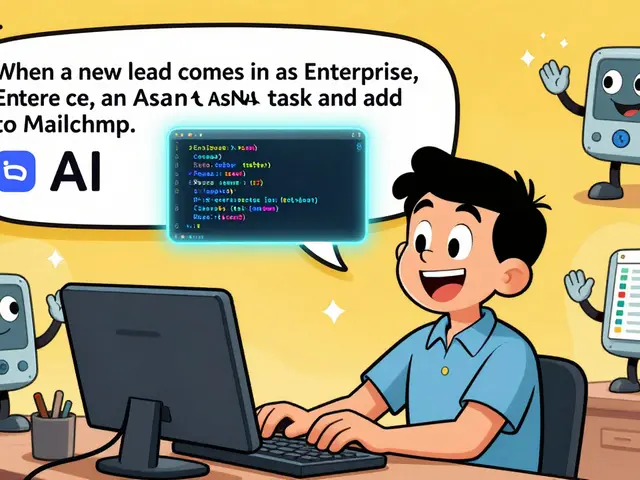
You don’t need a massive engineering team to start. Modern platforms offer low-code or no-code interfaces. Non-technical staff can describe workflows in plain English-essentially writing a playbook-and the AI builds the logic. This democratizes innovation. Your customer service managers, who know the pain points best, can tweak bots and workflows without waiting for developers.
Start small. Pick one high-volume, low-complexity task, like password resets or order tracking. Deploy a generative AI agent there. Monitor its performance. Does it resolve tickets effectively? Are customers satisfied? Once you prove value, expand to more complex scenarios. Integration with existing CRM systems is crucial. The AI needs access to customer data to personalize responses. Without that connection, it’s just a smart dictionary, not a service partner.
The future of customer service isn’t human vs. machine. It’s human plus machine. Generative AI handles the routine, the repetitive, and the administrative, freeing humans to handle the complex, the emotional, and the strategic. This partnership builds trust, drives efficiency, and ultimately creates a better experience for everyone involved.
Will generative AI replace human customer service agents?
No, generative AI is designed to augment, not replace, human agents. It handles routine, repetitive tasks and provides real-time support to humans, allowing agents to focus on complex, emotionally sensitive, or high-value interactions that require empathy and nuanced judgment.
How does generative AI differ from traditional chatbots?
Traditional chatbots follow predefined scripts and decision trees, breaking down if a user phrases a question unexpectedly. Generative AI uses Large Language Models (LLMs) to understand context, intent, and sentiment, generating dynamic, personalized responses that adapt to the conversation flow naturally.
Can generative AI handle multiple languages?
Yes, modern generative AI platforms support multilingual capabilities. They can detect the language used by the customer and respond in the same language, or even translate conversations in real-time between different languages, enabling seamless global support.
How quickly can a company deploy a generative AI customer service bot?
Thanks to low-code platforms and natural language configuration tools, deployment time has dropped significantly. While traditional coding took weeks or months, many companies can now build and launch functional AI agents in days or even hours.
Does generative AI improve agent productivity?
Absolutely. Studies show that agents using AI-assisted tools respond approximately 20% faster. Features like real-time response suggestions, automatic call summaries, and instant knowledge retrieval reduce average handle time and improve first-call resolution rates.
Is generative AI secure enough for customer data?
Leading enterprise-grade generative AI platforms prioritize security and compliance. They include features like Personally Identifiable Information (PII) redaction during transcription and ensure that data integration with CRMs follows strict privacy regulations, though companies must still configure their own governance policies.


I honestly think the part about AI acting as a copilot is the most underrated aspect here. We spent months training our team on new software, and having those real-time suggestions pop up has been a game changer for our newer hires. It’s not just about speed; it’s about confidence. They stop second-guessing themselves because they know the system has their back with verified data. I’ve seen retention rates improve simply because agents feel less stressed during complex calls. It’s nice to see tech actually helping people rather than just replacing them.
Yeah, great until the LLM hallucinates a policy that doesn't exist and you have to explain to an angry customer why the 'AI' said they could return a used item after six months. The article conveniently ignores the massive cleanup crew required when these models decide to get creative with facts. Gartner numbers are nice, but they don't measure the hours we spend fixing bot mistakes. It's efficient until it isn't, and then it's a liability nightmare wrapped in friendly chat bubbles.
OH MY GOD FINALLY someone gets it! The old bots were literally driving me insane. I typed "cancel" and it asked if I meant "can cell" like seriously?! These new ones actually understand what I mean without me needing to speak in code. It feels so much better to just talk normally and get help. No more screaming at screens. This is exactly what we needed years ago. I’m so happy this exists now.
The drama of being stuck in a phone tree is real pain. But let's be honest, sometimes I miss the simplicity of pressing one for English and two for sales. Now I'm talking to a ghost who pretends to care about my feelings while I wait for a human who will probably just read from a script anyway. Is it progress or just a different kind of hell? I can't tell anymore. My blood pressure is still rising, just with nicer words attached.
Listen, if you're sitting on the fence, start small. Don't try to boil the ocean. Pick one workflow, automate it, and watch your metrics shift. The fear of replacement is valid, but the opportunity for elevation is huge. Your agents aren't becoming obsolete; they're becoming specialists. Empower them with these tools. If you don't adapt, you'll be left behind handling tickets manually while competitors scale effortlessly. Go out there and lead the change!
This is such a hopeful perspective! I love how it focuses on partnership instead of replacement. It really does seem like the future where humans handle the heart and machines handle the head. Makes me feel optimistic about working in support roles long-term.
We must consider the ontological implications of a machine simulating empathy. When an algorithm generates an apology, is it truly remorseful, or merely executing a probabilistic sequence designed to de-escalate tension? The article glosses over the existential dread of interacting with a simulacrum of care. We are outsourcing our humanity to silicon brains that do not dream, only calculate. It is efficient, yes, but at what cost to the soul of the interaction? The seamless channel integration mentioned is a technological marvel, yet it masks the profound disconnect between genuine human connection and algorithmic mimicry. We are building walls of convenience around our isolation.
Love the vibe here! 🌟 It’s wild how far we’ve come from those clunky decision trees. I remember trying to dispute a charge and getting looped into infinity. Now it feels like chatting with a super-helpful friend who happens to have access to all the company files. Super cool stuff!