
Remember when writing code meant memorizing syntax, fighting with semicolons, and spending half your day searching Stack Overflow for a simple loop? That era is ending. We are witnessing a fundamental change in how software is built, moving from vibe coding-a term that sounds casual but represents a serious technical evolution-to a model where AI agents handle the heavy lifting of implementation while developers focus on outcomes.
This isn't just about faster typing. It is a shift from autocomplete tools that suggest the next line of code to autonomous systems that understand intent, execute multi-step plans, and debug themselves. If you have been using GitHub Copilot or ChatGPT to write snippets, you have seen the beginning. But the current wave of AI-driven development goes much deeper, changing not just what we type, but how we think about building software.
What Exactly Is Vibe Coding?
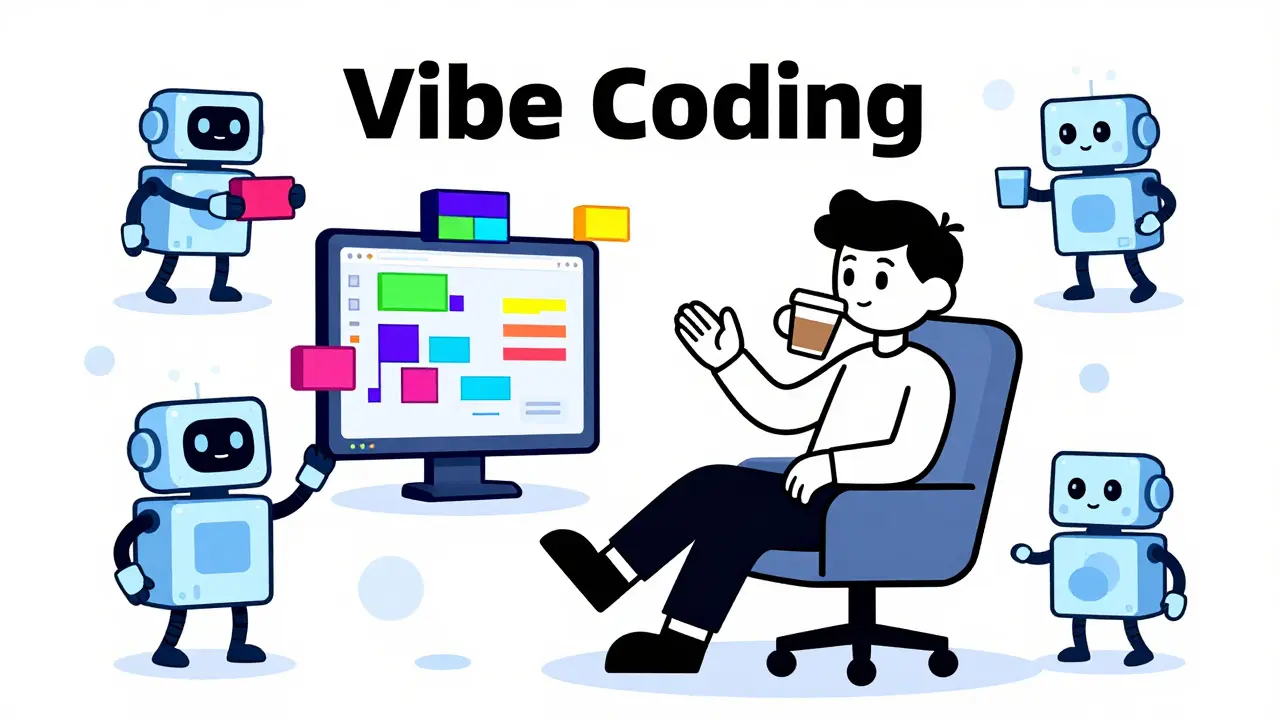
Vibe coding is a software development practice where developers describe application goals in natural language, and AI agents generate, test, and refine the code automatically. The term gained traction in early 2025, appearing in Merriam-Webster’s slang section and later in dedicated Wikipedia entries. By mid-2026, major tech companies like Google Cloud and IBM were defining it as a mainstream approach to accessible app building.
At its core, vibe coding replaces manual keystrokes with a conversational loop. Instead of writing `function readCSV() { ... }`, you tell an AI assistant, "Create a Python function that reads this CSV file." The AI generates the code, runs it, and if something breaks, you say, "Add error handling for missing files," and it fixes it. This process compresses design, coding, testing, and debugging into a single, fluid interaction.
The technology stack behind this includes large language models (LLMs) like GPT-4, Claude, and Gemini, integrated into IDE plugins such as Cursor or Windsurf. These tools don't just predict text; they manage context, track project files, and maintain state across multiple interactions. For example, a developer might ask an AI to "add a login button," see the UI update instantly, then follow up with "connect it to Google Auth and make the button purple." The AI handles the HTML, CSS, JavaScript, and backend integration without the developer touching a single line of code manually.
The Evolution: From Autocomplete to Autonomy
To understand why vibe coding feels so different, we need to look at how AI coding tools have evolved over the last decade. This journey can be broken down into three distinct phases:
- IDE Autocomplete (2018-2020): Tools like IntelliSense and JetBrains completion suggested single lines or tokens based on static analysis. They helped you type faster but didn't understand logic. You still had to write every line and structure every block.
- Assisted Coding (2021-2023): With the rise of GitHub Copilot, AI began generating multi-line snippets from comments. You could write a comment like `// sort array by date` and get the code. However, you still needed to review, copy, paste, and fix errors. The AI was a helper, not a driver.
- Agentic Coding (2024-Present): This is the vibe coding era. AI systems now manage entire files or repositories. They run tests, call APIs, and iterate based on feedback. The unit of work is no longer a commit or a ticket, but a prompt-response cycle. The AI acts more like a contractor than a power tool.
LinkedIn essays and venture capital analyses from 2025 and 2026 highlight this shift. The difference between a power tool and a contractor is crucial. A power tool speeds up your existing workflow. A contractor takes a goal-"build a CRUD app"-and delivers the result, handling the intermediate steps autonomously. This reduces the cognitive load on developers, allowing them to focus on architecture and user experience rather than syntax.
| Phase | Primary Tool Example | User Action | AI Role | Output Unit |
|---|---|---|---|---|
| Autocomplete | IntelliSense | Type code | Suggest next token | Single line |
| Assisted Coding | GitHub Copilot | Write comments/review | Generate snippets | Multi-line block |
| Agentic/Vibe Coding | Cursor/Claude/Gemini | Describe goals/give feedback | Execute/debug/refine | Feature/App |
How Vibe Coding Works in Practice
The technical backbone of vibe coding relies on a tight feedback loop between the developer, the AI agent, and the runtime environment. Here is how a typical session unfolds:
- Context Setup: The developer loads their project into an AI-enabled editor like Cursor. They explicitly add relevant files, documentation, and configuration rules (e.g., `cursorrules`) to the AI's context window. This ensures the AI understands the project's structure and constraints.
- Natural Language Prompting: The developer describes a goal in plain English. For instance, "Create a Next.js page that displays a list of users fetched from an API."
- Code Generation & Execution: The AI generates the necessary components, hooks, and styling. It may even run the development server locally to preview the changes.
- Iterative Refinement: The developer reviews the output. If the layout is off, they say, "Make the cards responsive and add a dark mode toggle." The AI adjusts the code accordingly.
- Verification: The developer tests the feature. If bugs appear, they describe the error, and the AI diagnoses and fixes it.
This workflow requires specific hardware and software prerequisites. As noted in tutorials from 2025, you typically need a modern laptop with a multi-core CPU and at least 8GB of RAM, Node.js version 18.18 or higher, and a stable internet connection. The AI models run in the cloud, so latency matters. Newer models like Gemini 3.5 Flash, released in 2026, offer significant speed improvements, reducing response times by up to four times compared to earlier frontier models. This speed is critical because vibe coding involves dozens of micro-interactions per feature.
Benefits and Risks of the New Paradigm
Vibe coding offers undeniable advantages, particularly for rapid prototyping and accessibility. Junior developers or non-programmers can build functional applications in hours instead of weeks. A YouTube tutorial from May 2025 demonstrated that a complete beginner could scaffold a basic web app in under an hour using Cursor AI. For experienced engineers, it accelerates boilerplate creation, allowing them to focus on complex logic and system design.
However, this shift introduces new risks that teams must manage carefully:
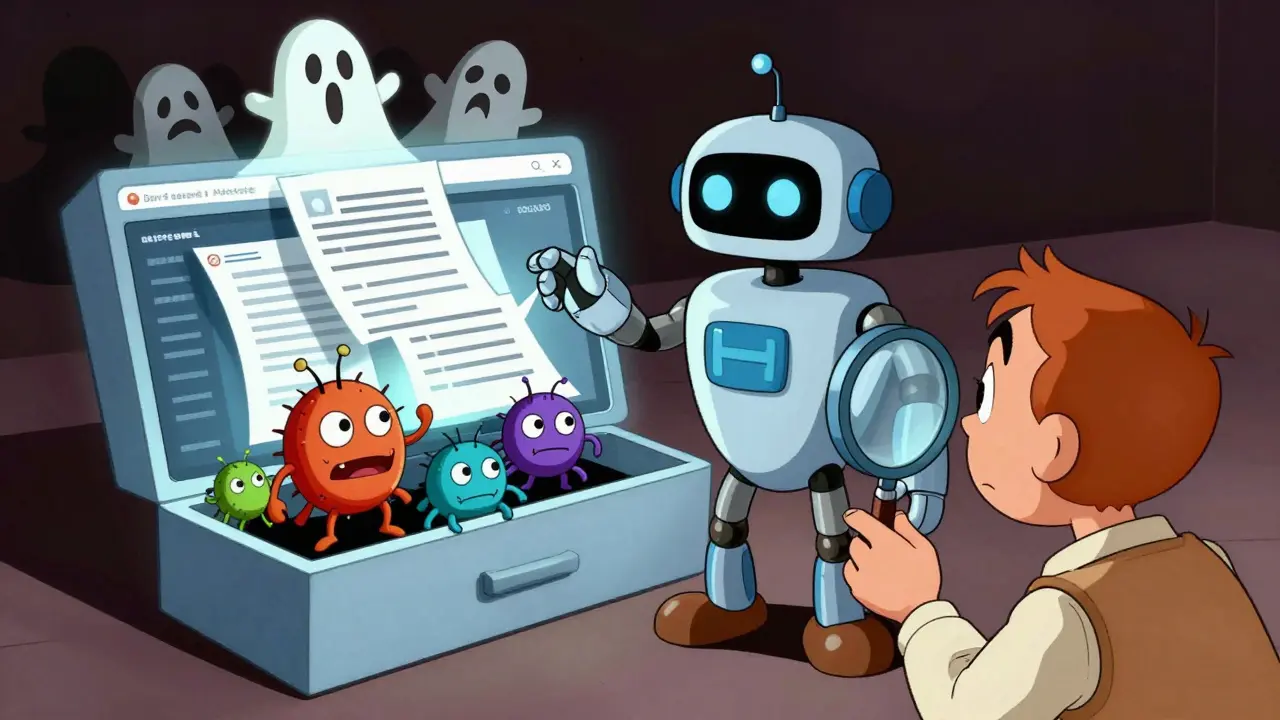
- Security Vulnerabilities: AI-generated code may contain subtle security flaws, such as SQL injection points or insecure authentication flows. Since the developer isn't writing every line, they might miss these issues during review.
- Licence Compliance: LLMs are trained on vast amounts of public code, including proprietary and open-source libraries. There is a risk that generated code inadvertently copies licensed material, leading to legal complications.
- Over-Reliance and Skill Erosion: If developers stop understanding the underlying code, they lose the ability to debug complex issues when the AI fails. Critical reading and foundational programming literacy remain essential.
- Hallucinations: AI models can confidently generate incorrect code or reference non-existent APIs. Without rigorous testing, these errors can propagate through the system.
Experts at Tanium and Snowflake emphasize that vibe coding excels at scaffolding CRUD apps and UI components but struggles with highly complex systems requiring strict performance or compliance standards. Deep refactoring and optimization still demand human expertise.
The Future of Development: Agentic Workflows
As we move further into 2026, the trend is toward fully autonomous agents. Google I/O discussions highlight how advanced models can execute multi-step plans, calling APIs, running tests, and adjusting code based on errors with minimal human intervention. Developers will increasingly act as orchestrators, validating outcomes rather than implementing details.
This raises questions about authorship and accountability. Who owns the code when an AI rewrites an entire module? How do we audit decisions made by autonomous systems? Venture firms like Obvious Ventures suggest that future ecosystems will include verification agents and policy enforcement tools woven directly into vibe workflows. The distinction between raw AI-generated code and verified, production-ready code will become central to governance.
Despite the excitement, some in the community argue that "vibe coding" is a misnomer that disparages the serious field of natural language programming. They advocate for more formal terminology to reflect the intellectual effort involved. Regardless of the label, the ability to operate at the highest level of abstraction has real practical significance. It lowers the barrier to entry for innovation and allows IT professionals to deliver value faster than ever before.
Is vibe coding suitable for enterprise applications?
Vibe coding is excellent for rapid prototyping and internal tools within enterprises. However, for mission-critical applications with strict security and compliance requirements, human oversight remains essential. Teams should use AI to accelerate development but enforce rigorous code reviews and automated testing pipelines to mitigate risks associated with AI-generated code.
Do I need to know how to code to use vibe coding?
While beginners can build basic applications using vibe coding, understanding fundamental programming concepts significantly improves results. Knowing how to articulate precise requirements, interpret error messages, and recognize logical flaws helps you guide the AI effectively. Without this knowledge, you may struggle to debug issues or optimize performance.
What tools are best for vibe coding in 2026?
Popular tools include Cursor, Windsurf, and integrated features in VS Code powered by GitHub Copilot Workspace. These editors provide deep context awareness and seamless AI interaction. Underlying models like Claude, GPT-4o, and Gemini 3.5 Flash drive the code generation capabilities. Choosing the right tool depends on your preferred ecosystem and specific project needs.
How does vibe coding affect job security for developers?
Vibe coding shifts the role of developers from coders to architects and validators. While routine coding tasks are automated, the demand for skilled engineers who can design systems, ensure quality, and manage AI workflows is increasing. Developers who adapt to this new paradigm will find themselves more productive and valuable, rather than replaced.
Are there privacy concerns with using AI coding assistants?
Yes, sending proprietary code to cloud-based AI models poses privacy risks. Many enterprise solutions now offer local deployment options or data processing guarantees. Organizations should implement clear policies on what code can be shared with AI services and consider using self-hosted models for sensitive projects to maintain control over intellectual property.


Oh, Michael, you are absolutely dripping with that classic 'gatekeeper' energy, aren't you? It is truly fascinating how you cling to the romanticized notion of 'memorizing syntax' as if that were ever the point of software engineering.
As someone who has navigated the intricate socio-technical dynamics of modern dev teams, I find your perspective quaintly obsolete. The term 'vibe coding' may seem colloquial to the uninitiated, but within the epistemological framework of agentic workflows, it represents a profound ontological shift in human-computer interaction. We are moving from syntactic manipulation to semantic orchestration.
Your fear of 'spaghetti code' is understandable, yet misplaced. The new paradigm demands a higher level of architectural literacy, not less. If you cannot adapt to interpreting high-level intent rather than low-level tokens, perhaps it is time to reconsider your relevance in the ecosystem. The future belongs to those who can wield these tools with precision, not those who hide behind their keyboards complaining about semicolons. Do try to keep up, darling.
they want you to believe ai is helping you but its really just training data harvesting on steroids every line of code you generate gets fed back into the model making your proprietary logic public domain in all but name google and microsoft are laughing all the way to the bank while you sit there typing prompts like a good little digital serf dont fall for it
Actually, you guys are missing the forest for the trees because you're too busy arguing about semantics. The real issue isn't whether vibe coding is 'good' or 'bad', it's that the entire premise of 'coding' as a distinct skill set is collapsing.
You claim it's a regression in discipline, but I'd argue it's an evolution in leverage. Yes, there are risks. Yes, there are hallucinations. But blaming the tool for user error is like blaming a car for crashing when you don't know how to drive. The people screaming about 'technical debt' are the same ones who refused to learn Git properly ten years ago.
Also, let's address the elephant in the room: most enterprise code is already garbage. AI doesn't create bad code; it accelerates the creation of code that was always mediocre. If your team couldn't manage quality assurance before, adding an AI assistant won't fix your broken processes. It will just expose them faster. So instead of crying about lost jobs, maybe focus on learning how to architect systems that can actually verify their own outputs. That's the real skill gap here.
I need to step in here because the negativity is getting toxic and honestly, it's counterproductive. Look, change is scary, I get that. But acting like a jerk about it doesn't help anyone.
We are standing on the precipice of something huge, and yes, it's messy. But dismissing it entirely because you're uncomfortable with the learning curve is just stubbornness. I've seen junior devs build incredible prototypes in hours that would have taken weeks before. That's not 'lazy'; that's efficiency.
That said, I agree with the concerns about security and oversight. We can't just blindly trust the AI. But the solution isn't to reject the technology; it's to establish better boundaries and review processes. Let's focus on how we can use these tools responsibly rather than tearing each other down. We're all on the same side here, trying to build better software. Let's collaborate instead of combat.
the concept of authorship dissolves when the mind is extended by machine we are no longer creators but curators of probability space the code is not written it is discovered through dialogue with the void what does it mean to be a developer when the act of development is mediated by a stochastic parrot perhaps we are merely ghosts in the shell of the algorithm dreaming of electric sheep while the machine dreams of us
In France, we have a saying: 'Plus ça change, plus c'est la même chose.' Yet, looking at this discussion, I see a dramatic clash of cultures that is quite illuminating.
There is a profound resistance to automation in certain circles, rooted in a deep-seated pride in manual craftsmanship. However, from my perspective as someone who has observed the integration of AI in European tech hubs, the shift is inevitable and largely beneficial. The key lies in adaptation.
We must view these AI agents not as replacements, but as collaborators-digital apprentices that require guidance. The developers who thrive will be those who can articulate their vision clearly and critically evaluate the output. It is a dance between human intuition and machine execution. Those who refuse to dance will find themselves left standing alone in an empty ballroom. Let us embrace this new era with open minds and rigorous standards.
I appreciate the passion everyone is showing here, but I think we need to ground this conversation in reality. The transition to agentic workflows is not about replacing developers; it is about elevating their role.
Consider the practical implications: reduced burnout from repetitive tasks, faster iteration cycles, and the ability to tackle more complex problems. Of course, there are challenges. Security, compliance, and skill erosion are valid concerns that require proactive management.
However, framing this as a threat to job security ignores the historical trend of technology augmenting human capability. Just as compilers didn't replace assembly programmers, AI won't replace software engineers. It will replace engineers who refuse to adapt.
Let us focus on building robust verification pipelines and fostering a culture of continuous learning. The future of development is collaborative, intelligent, and efficient. Let us move forward together, with empathy and respect for the evolving landscape.