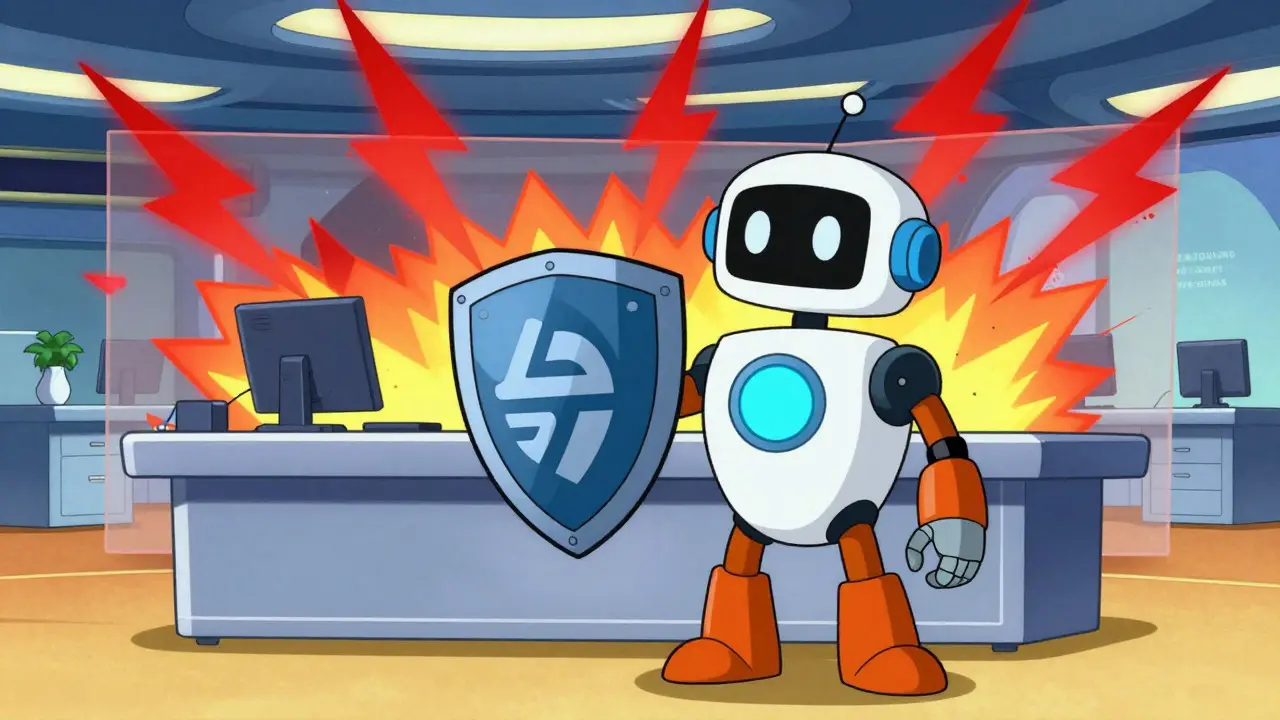
Imagine launching a customer service chatbot that accidentally reveals sensitive patient data or gives financial advice that violates federal regulations. In the world of enterprise Large Language Models (LLMs), this isn't just a hypothetical nightmare-it's a daily risk without proper controls. By mid-2026, deploying AI without robust safety nets is no longer an option; it’s a liability. The solution lies in designing and approving rigorous LLM guardrails-the digital equivalent of seatbelts and airbags for your AI applications.
Guardrails are not just code snippets; they are strategic frameworks that monitor inputs, control generation, and filter outputs to ensure safety, accuracy, and compliance. As enterprises scale their AI usage, the gap between a successful deployment and a public relations disaster often comes down to how well these guardrails are designed and approved. This guide breaks down the technical architecture, the critical approval workflows, and the real-world trade-offs you need to navigate to protect your organization while unlocking AI value.
Understanding the Anatomy of Enterprise Guardrails
To build effective protection, you first need to understand what you're protecting against. Modern guardrail systems operate on three distinct intervention levels, each serving a specific purpose in the data flow.
- Pre-generation (Input Validation): This layer acts as the bouncer at the door. It sanitizes user prompts before they ever reach the model, blocking known prompt injection patterns and detecting personally identifiable information (PII). For instance, NVIDIA's NeMo Guardrails uses pattern matching databases updated weekly to block 99.7% of known injection attempts.
- In-generation (Real-time Monitoring): This layer watches the model as it thinks. It monitors token-by-token generation to detect drift toward toxic content or factual hallucinations. If the model starts going off-track, the system can interrupt the stream immediately.
- Post-generation (Response Filtering): This is the final quality check. Before the response reaches the user, it passes through scoring metrics for toxicity, factual consistency, and brand voice alignment. Systems like AWS Comprehend achieve 98.2% accuracy in PII detection at this stage.
The goal isn't just to stop bad things from happening but to maintain brand integrity and regulatory compliance. According to Lasso Security's 2024 case study, organizations with comprehensive multi-layered guardrails reported 63% fewer security incidents. However, adding layers adds complexity. You must balance security with speed. A 'Fast + Safe' approach using simple regex rules might process requests in under 50ms but only covers 68% of threats. Conversely, a 'Safe + Accurate' approach using specialized classification models like Microsoft's PromptShield covers 92% of threats but introduces 350-500ms of latency. Most enterprises aim for a hybrid 'Fast + Accurate' approach, maintaining sub-100ms response times while achieving 85% threat coverage.
The Five-Stage Approval Workflow
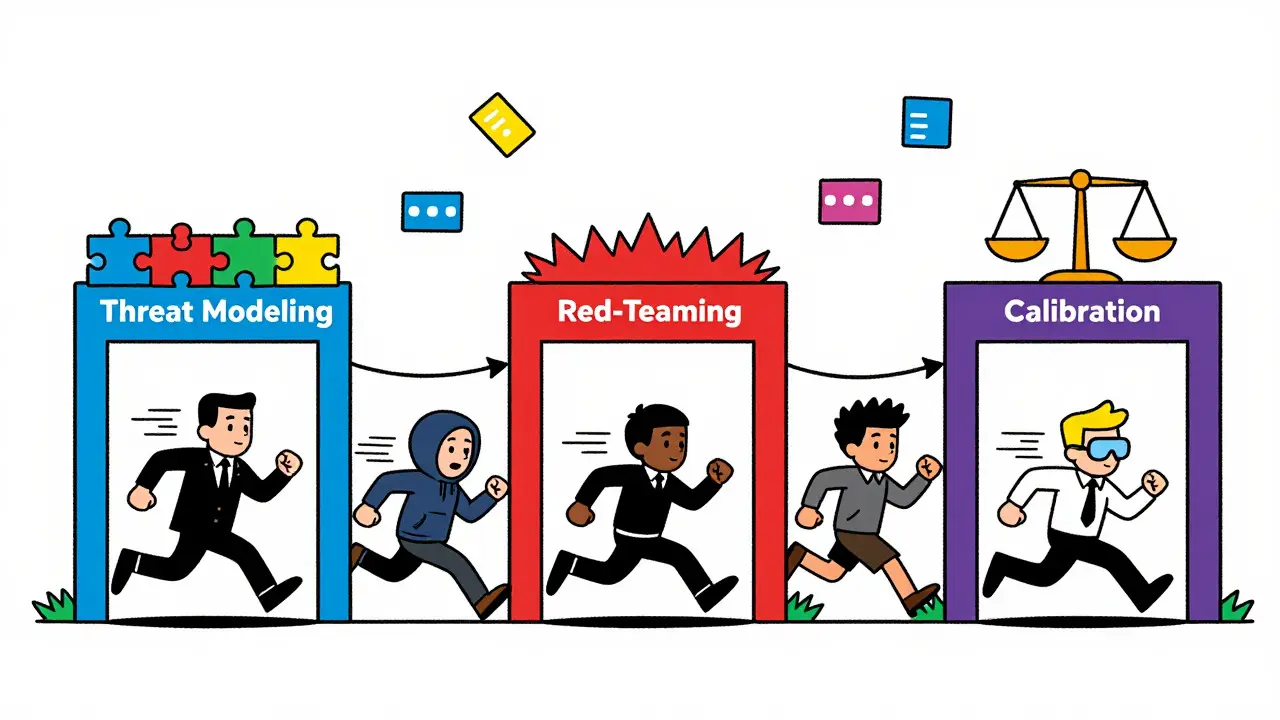
Designing the tech is only half the battle. The other half is getting it approved by stakeholders who speak different languages-security, legal, product, and engineering. A haphazard rollout leads to shadow IT and unvetted risks. Leanware’s framework suggests a structured five-stage approval workflow that typically takes 12 to 22 weeks for enterprise deployments.
- Threat Modeling (2-3 Weeks): Identify what could go wrong. Map out potential attack vectors, such as jailbreaks or data leakage, specific to your industry. For healthcare, HIPAA compliance is paramount; for finance, GDPR and CCPA take center stage.
- Red-Teaming (1-2 Weeks): Hire experts to break your system. MIT’s AI Policy Research Group found that organizations using red-teaming protocols reduced successful jailbreak attempts by 92.3% compared to those relying solely on static rules. This phase involves adversarial testing with curated test cases covering at least 17 threat categories.
- Layered Implementation (4-8 Weeks): Build the guardrails based on the insights from the previous stages. This is where you integrate tools like Guardrails AI or proprietary solutions into your pipeline.
- Calibration Testing (3-5 Weeks): Fine-tune the sensitivity. This is crucial because overly aggressive guardrails can be just as harmful as weak ones. Dr. Alan Chen from Stanford’s HAI warned that overly strict filters can increase user abandonment rates by 32%. You need to find the sweet spot where false positives stay between 1.5% and 2.5%.
- Governance Integration (2-4 Weeks): Embed the guardrails into your broader security operations. This includes integrating with Security Information and Event Management (SIEM) systems, which can take 8-12 weeks to resolve fully according to CSA surveys.
This process ensures that every stakeholder has a say. Legal approves the compliance checks, security validates the threat mitigation, and product teams confirm that the user experience remains smooth.
Choosing Your Tech Stack: Open Source vs. Commercial
One of the biggest decisions in guardrail design is whether to build, buy, or borrow. The market offers a mix of open-source frameworks and commercial APIs, each with distinct trade-offs in cost, customization, and support.
| Solution | Type | Key Strength | Weakness/Cost | Best For |
|---|---|---|---|---|
| NVIDIA NeMo Guardrails | Open Source / Hybrid | High customization via Colang language | Steep learning curve; 8-12 week implementation | Enterprises needing deep control over dialogue flows |
| Microsoft Azure Content Safety API | Commercial API | Seamless Azure integration; fast processing | Higher operational costs ($0.60 per 1k units) | Teams already heavily invested in the Microsoft ecosystem |
| Guardrails AI | Open Source | Cost-effective; large community support | Requires 37% more engineering resources for maintenance | Startups or teams with strong NLP engineering skills |
| Knostic.ai ContextGuard | Commercial SaaS | High contextual relevance (89.4% accuracy) | Premium pricing; vendor lock-in risk | Industries requiring high-fidelity context awareness (e.g., Finance) |
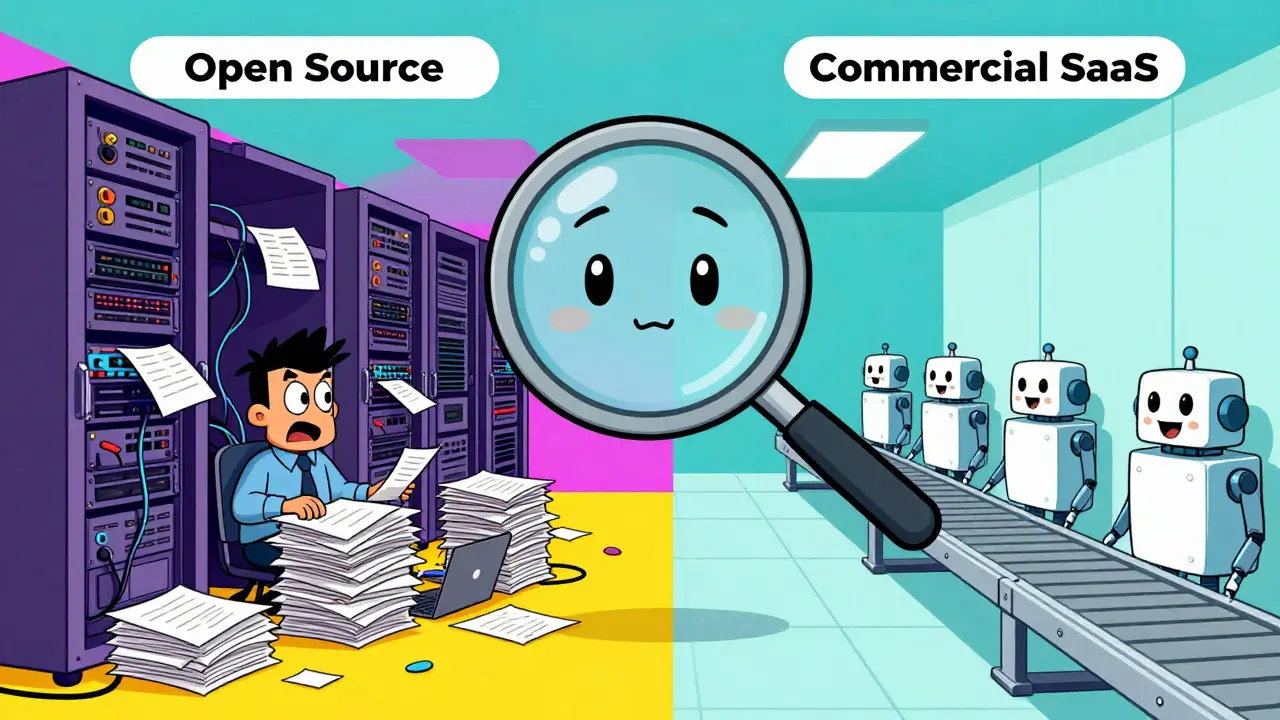
If you choose open-source options like Guardrails AI, you save on licensing fees but pay in engineering hours. Maintaining these systems requires skilled NLP engineers, whose salaries range from $145,000 to $195,000 annually. On the flip side, commercial solutions like Knostic.ai offer higher contextual accuracy out of the box, reducing false positives significantly. However, they come with recurring costs and potential vendor lock-in. The decision should hinge on your internal expertise and budget constraints. Remember, the most significant differentiator is often contextual awareness. Basic implementations might have a 72.1% contextual relevance accuracy, while optimized enterprise solutions hit 89.4%, directly impacting user trust.
Regulatory Pressures and Compliance Drivers
You aren't just building guardrails to keep hackers out; you're building them to keep regulators happy. The landscape shifted dramatically in late 2024 and early 2025. The EU AI Act began enforcement on November 1, 2024, prompting 89% of enterprises to tighten their guardrail policies. Similarly, the U.S. AI Executive Order set a compliance deadline of March 31, 2025, leading 72% of companies to adjust their governance frameworks.
Dr. Sarah Robinson from the Cloud Security Alliance noted that enterprises without multi-layered guardrails face a 4.7x higher likelihood of regulatory penalties. This isn't theoretical. Bank of America documented $2.8 million in annual savings from reduced compliance violations after implementing robust guardrails. In healthcare, providers reported 47% faster HIPAA-compliant patient interactions using contextual filtering systems. These numbers show that good guardrail design pays for itself by avoiding fines and speeding up compliant workflows.
As we move through 2026, expect standardized guardrail certifications to emerge. The Cloud Security Alliance’s updated guidelines now mandate Data Loss Prevention (DLP) integration and online tokenization for financial sector deployments. Staying ahead of these requirements means treating guardrails as a living part of your compliance strategy, not a one-time project.
Common Pitfalls and How to Avoid Them
Even with the best intentions, many guardrail projects stumble. Gartner analyst Melissa Davis pointed out that 78% of failed enterprise LLM deployments resulted from inadequate testing under real-world conditions, not from flaws in the model itself. Here are the most common traps:
- Over-Filtering: Blocking too much legitimate content frustrates users. If your false positive rate exceeds 2.5%, you’re likely hurting more than helping. Use human-in-the-loop escalation protocols to review edge cases rather than auto-blocking everything.
- Ignoring Latency: Adding multiple heavy classification models can slow down your app. If your response time jumps from 200ms to 1 second, users will notice. Opt for hybrid approaches that use lightweight checks for obvious threats and heavier models only when necessary.
- Static Rule Sets: Threats evolve. Relying on a fixed list of banned words is ineffective against sophisticated jailbreaks. Implement dynamic guardrails that adjust sensitivity based on user role and data context. For example, a CEO’s query might get looser filters than a junior intern’s.
- Poor Documentation: If your team doesn’t understand why a guardrail exists, they’ll disable it. Ensure clear documentation for every rule. NVIDIA NeMo receives high marks for comprehensiveness, but even its docs require 60+ hours of training to master. Invest in internal knowledge sharing.
Another major challenge is integration with existing infrastructure. Sixty-three percent of enterprises reported taking 8-12 weeks to integrate guardrails with their SIEM systems. Plan for this upfront. Treat your guardrail system as a core component of your security stack, not an add-on.
Future Trends: Dynamic and Automated Guardrails
The field is moving fast. By mid-2026, the focus is shifting from static rules to dynamic, adaptive systems. NVIDIA’s release of NeMo Guardrails 2.4 introduced automated red-teaming capabilities, cutting manual testing requirements by 65%. This automation allows teams to continuously stress-test their models without dedicating full-time staff to breaking them.
We’re also seeing a rise in context-aware systems. Fifty-four percent of enterprises are piloting guardrails that adjust sensitivity based on the user’s role and the data’s sensitivity level. For instance, a query about public marketing data might pass through lightly, while a query touching payroll data triggers strict PII detection and human review. This nuance reduces friction for end-users while maintaining high security where it matters most.
Looking ahead, Gartner predicts that guardrail systems will become as essential as firewalls in enterprise security infrastructure by 2027. Standardized certification frameworks are expected to formalize best practices, making it easier to audit and compare solutions. For now, the winners will be those who treat guardrail design as an ongoing discipline, balancing innovation with rigorous, adaptable safety controls.
What is the typical cost of implementing enterprise LLM guardrails?
Costs vary widely based on the approach. Open-source solutions like Guardrails AI have low licensing costs but require significant engineering resources, potentially costing $145,000-$195,000 annually per engineer for maintenance. Commercial APIs like Microsoft Azure Content Safety charge per usage, averaging $0.60 per 1,000 text units. Total implementation costs including development, testing, and integration typically range from $50,000 to $200,000+ depending on complexity and scale.
How long does it take to deploy a secure guardrail system?
A comprehensive enterprise deployment following a structured approval workflow typically takes 12 to 22 weeks. This includes 2-3 weeks for threat modeling, 1-2 weeks for red-teaming, 4-8 weeks for implementation, 3-5 weeks for calibration, and 2-4 weeks for governance integration. Simpler setups may launch faster, but thorough testing is critical to avoid security gaps.
What are the key differences between pre-generation and post-generation guardrails?
Pre-generation guardrails act on user inputs before the LLM processes them, focusing on input validation, PII removal, and blocking prompt injections. Post-generation guardrails analyze the model's output before it reaches the user, checking for toxicity, factual hallucinations, and brand voice consistency. Both are essential for a complete security posture.
Can guardrails negatively impact user experience?
Yes, if poorly calibrated. Overly aggressive guardrails can block legitimate queries, leading to user frustration. Studies show that false positive rates above 2.5% can increase user abandonment by up to 32%. To mitigate this, use hybrid approaches that balance speed and accuracy, and implement human-in-the-loop reviews for edge cases rather than hard blocks.
Which industries require the most stringent guardrail standards?
Financial services and healthcare lead in adoption and stringency due to strict regulations like GDPR, CCPA, and HIPAA. Financial services saw 82% adoption among Fortune 500 companies by late 2024, while healthcare reached 76%. These sectors prioritize data privacy and regulatory compliance, driving demand for high-accuracy PII detection and contextual filtering.