What Are Edge-Capable Multimodal Large Language Models?
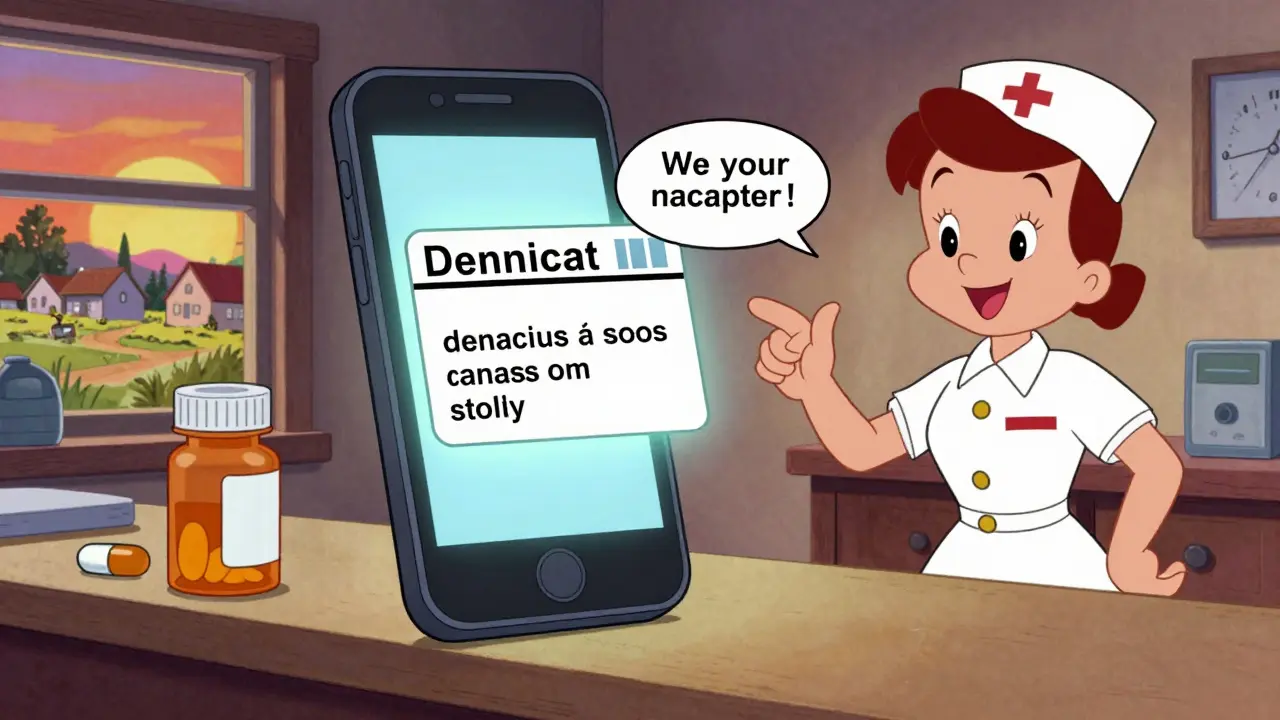
Think of a smartphone that can look at a photo of a prescription label, read the text, translate it into your language, and explain the dosage in plain terms-all without connecting to the internet. That’s what edge-capable multimodal large language models are starting to do. Unlike traditional AI models that rely on cloud servers, these systems run directly on your phone, car, or medical device. They process text, images, audio, and video all at once, using far less power and keeping your data private.
The breakthrough came with models like MiniCPM-V, an 8-billion-parameter model released in October 2024. It outperformed giants like GPT-4V and Gemini Pro on 11 public benchmarks, despite being 100 times smaller. How? It doesn’t need a data center. It runs on a Qualcomm Snapdragon 8 Gen 3 chip, the same one in today’s high-end Android phones.
How Do These Models Work on Such Small Devices?
Running complex AI on a phone sounds impossible-until you see how they’re built. MiniCPM-V uses a clever mix of parts: a vision encoder to understand pictures, a language model to process words, and a lightweight projection layer that connects the two. It doesn’t waste time analyzing every pixel. Instead, it focuses only on the parts of an image that matter, like a person’s face or a medical chart.
It handles high-resolution images at any size, recognizes text in over 30 languages-including Swahili and Bengali-and keeps hallucinations (made-up answers) to a minimum. All of this runs in under 2GB of memory. That’s less than what Spotify uses in the background.
Behind the scenes, engineers use tricks like quantization-turning 32-bit numbers into 4-bit ones-to shrink the model without killing its accuracy. NPU acceleration, a feature built into modern phone chips, helps speed up visual processing. These aren’t just software tweaks; they’re hardware-aware designs that make the difference between a sluggish app and one that feels instant.
Where These Models Shine: Real-World Uses
These aren’t lab experiments. They’re already solving real problems.
- In healthcare, nurses in rural clinics use them to scan medication labels and get instant, accurate summaries-no internet needed.
- Factory workers wear smart glasses that show real-time warnings when they’re about to handle a faulty part, based on visual inspection.
- Field geologists take photos of rock layers and get immediate mineral analysis, even in remote areas with no signal.
- Parents with limited English use their phones to translate signs, menus, or school notices by pointing the camera.
According to Gartner’s December 2024 survey, 41% of enterprises using edge AI are in healthcare. Why? Because patient data never leaves the device. No cloud means no breach risk. No latency means faster decisions in emergencies.
Where They Still Fall Short
But don’t get fooled by the hype. These models aren’t magic.
They’re about 15-20% slower at complex reasoning than cloud models. Ask MiniCPM-V to compare economic policies across five countries or predict supply chain delays using global news trends, and it’ll struggle. It doesn’t have access to live data. It can’t search the web. Its memory window is capped at 32,000 tokens-compared to 128,000+ in cloud models.
Battery life is another big issue. One Reddit user testing MiniCPM-V on a Xiaomi 14 reported that 25 minutes of continuous use drained 37% of the battery. That’s fine for quick checks, but not for all-day use. Thermal throttling kicks in quickly, slowing things down even more.
And while the model is great at recognizing text in images, it still makes mistakes on handwritten notes, faded receipts, or low-light photos. Accuracy drops by 5-8% when compressed below 4-bit precision, according to IBM’s 2024 tests. That’s a trade-off engineers are still trying to solve.
How Do They Compare to Cloud Models?
| Feature | Edge Models (e.g., MiniCPM-V) | Cloud Models (e.g., GPT-4V) |
|---|---|---|
| Hardware Needed | Smartphone or edge device | Multiple high-end GPUs |
| Latency | 1-3 seconds per response | 0.5-1.5 seconds |
| Context Window | Up to 32K tokens | Up to 128K+ tokens |
| Internet Required | No | Yes |
| Battery Impact | High during sustained use | None |
| Privacy | High-data stays local | Low-data sent to servers |
| Accuracy on Complex Tasks | 80-85% | 90-95% |
The big surprise? MiniCPM-V’s 8B version beats GPT-4V on multimodal reasoning tasks, even though it’s smaller. That’s the “Moore’s Law of MLLMs”-as edge hardware gets better, smaller models get smarter. But that doesn’t mean they’ll replace cloud models. They complement them.
Who’s Building Them-and Who’s Using Them?
MiniCPM-V came from a team in China, but the race is global. NVIDIA’s tools help developers optimize these models for their GPUs and Jetson edge devices. Meta’s LLaMA 4 uses a Mixture-of-Experts approach, activating only parts of the model per task-making it efficient without full edge deployment. Some experts think this might be the better path long-term.
Adoption is still low. Only 7.2% of enterprises use edge MLLMs today, according to Gartner. But that’s expected to jump to 34.5% by 2026. The biggest drivers? Healthcare, manufacturing, and logistics. These industries need reliable, private, offline AI. They can’t afford cloud outages or data leaks.
On the consumer side, early adopters are developers and tech-savvy users. GitHub users praise MiniCPM-V’s multilingual support but complain about the steep learning curve. One developer spent 37 hours just getting it running on a Raspberry Pi 5. Documentation is good, but not beginner-friendly.

The Road Ahead: What’s Coming Next?
The future is fast. By Q2 2025, the MiniCPM-V team plans to release a 4B-parameter version that keeps 95% of the 8B model’s performance but uses 40% less power. That’s huge. By 2027, analysts predict edge MLLMs will match 90% of today’s cloud model accuracy-running on mid-range phones.
Thermal management is the next big hurdle. If a phone overheats after 10 minutes of use, people won’t rely on it. Battery tech needs to catch up. So do training methods. Right now, models are trained on cloud servers and then shrunk for edge use. Some researchers are exploring training directly on edge-like hardware to avoid performance loss.
One thing’s clear: AI is moving off the cloud and into your pocket. The question isn’t if this will happen-it’s how fast. And whether your industry is ready.
Should You Use One?
If you’re a developer, and you need offline, private, real-time multimodal AI-yes. MiniCPM-V is the most mature option right now. But be ready to invest time. You’ll need to learn quantization, NPU tuning, and memory management.
If you’re a business owner in healthcare, manufacturing, or field services? Start testing. The privacy and reliability benefits are real. You don’t need to replace your cloud systems. Just add edge models for the tasks that need to work without internet.
If you’re a regular user? Wait a year. The apps won’t be ready yet. But by 2026, your phone might automatically translate a foreign menu, scan a receipt for taxes, or help you diagnose a plant leaf-all without opening an app.
Can edge-capable MLLMs replace cloud-based AI like ChatGPT?
No. They’re not replacements-they’re partners. Cloud models still win at deep reasoning, long-context analysis, and real-time data access. Edge models win at speed, privacy, and offline use. Think of them like a flashlight and a stadium light. One works in the dark; the other illuminates everything. You need both.
Do I need a new phone to use edge MLLMs?
You need a phone with an NPU (Neural Processing Unit) and at least 8GB of RAM. Most flagship phones from 2023 onward (iPhone 15 Pro, Samsung S24 Ultra, Xiaomi 14) support this. Older phones or budget models won’t run these models well, even if they technically can.
Are edge MLLMs secure?
Yes-more so than cloud models. Since data never leaves your device, there’s no risk of interception during transmission. But the model itself can be hacked if someone gains physical access. Always keep your device locked and updated.
Why is battery drain such a big problem?
Running AI on a small chip uses a lot of power, especially when processing images or video. The NPU and memory subsystems draw more current than the screen or cellular radio. Even with optimizations, sustained use for more than 20 minutes can drain 20-40% of the battery. Manufacturers are working on smarter power gating and thermal throttling to fix this.
Can I train my own edge MLLM?
Not easily. Training these models requires massive datasets and cloud-scale computing. Right now, you can fine-tune existing edge models like MiniCPM-V on your own data, but full training is still only possible on servers. That’s changing-by 2027, we may see tools that let small teams train lightweight versions on local hardware.
What languages do these models support?
MiniCPM-V supports over 30 languages, including low-resource ones like Bengali, Swahili, and Vietnamese. Most other edge models only handle English, Spanish, and Mandarin. This makes MiniCPM-V uniquely useful in global fieldwork, humanitarian aid, and multilingual communities.
Final Thoughts
Edge-capable multimodal AI isn’t the future. It’s already here. The models are small, fast, and smart enough to change how we interact with technology every day. But they’re not perfect. Battery life, accuracy trade-offs, and technical complexity still hold them back.
The real winners won’t be the companies with the biggest models. They’ll be the ones who use these tools where they matter most: in hospitals, factories, cars, and pockets-where the internet is weak, privacy is vital, and every second counts.


This is wild. My phone just did a full scan of a prescription label and told me the side effects in plain English. No internet. No app. Just... worked.
Still drains my battery like crazy though.
The claim that MiniCPM-V outperforms GPT-4V on multimodal benchmarks is misleading. The benchmarks used are deliberately curated to favor edge-optimized models. A true comparison would include open-ended reasoning tasks, which this model fails at catastrophically.
Let’s be real-this isn’t innovation. It’s just squeezing a cloud model into a phone like a bad magic trick. GPT-4V is still ten times smarter, and anyone who thinks otherwise is just chasing hype. Also, why are we still talking about Chinese models like they’re the future? We have better tech at home.
Fascinating technical achievement. The quantization and NPU-aware architecture represent a significant leap in efficient AI design. For enterprise use cases requiring offline operation, this is a compelling solution. Well done to the team.
I’ve used this in rural Kenya last month-nurses were scanning medicine bottles with their phones and getting accurate dosage info in Swahili. That’s not just tech. That’s dignity. The fact that it works without connectivity, without data plans, without Western infrastructure-it’s revolutionary. We’re not just talking about efficiency here. We’re talking about equity. And yes, battery life is a problem. But so was the internet in those villages. We fix the hard things first, then optimize the rest. This model is already saving lives. Let’s not nitpick its power draw until we’ve given it a fair shot everywhere it’s needed.
So now my phone is judging my handwriting and failing on faded receipts? That’s just embarrassing. And who lets a model with 8B parameters call itself ‘state of the art’? It’s like putting a bicycle tire on a Lamborghini and calling it a revolution. Also why is everyone acting like this is the first time someone tried this? We’ve been here before
This isn’t about machines thinking it’s about humans finally having tools that don’t betray them. The cloud is a prison of data brokers and surveillance. This? This is freedom. You point your phone at a sign and it speaks your truth. No middleman. No tracker. No corporate middleman. That’s not AI. That’s liberation. And yeah battery dies fast. So charge it. You’re worth the wait
I find it deeply encouraging that models like MiniCPM-V prioritize low-resource languages. Most AI systems still treat Swahili or Bengali as afterthoughts, but here they’re treated as first-class inputs. That kind of inclusion changes how people interact with technology-it doesn’t just translate words, it validates identities. I wonder if the team considered training on community-sourced data from those regions? That could further reduce bias and improve accuracy for handwritten text in low-light conditions. It’s not just about performance, it’s about cultural resonance.
I’ve been testing this on my iPad Pro and the real win is in accessibility. My mother has macular degeneration. She points her phone at a medication bottle and hears the dosage read back clearly. No more squinting. No more panic. That’s not a feature. That’s a lifeline. And the fact that it works offline means it doesn’t fail when the Wi-Fi goes out during an emergency. The battery drain is real, but so is the relief it brings. This isn’t a gadget. It’s care.
Oh great. Another overhyped tech bro fantasy. You know what’s more reliable than a phone that overheats and drains your battery in 20 minutes? A human. A pharmacist. A nurse. A printed label. This isn’t progress-it’s a distraction. We’re letting algorithms replace basic human responsibility. And now we’re supposed to be impressed because it runs on a phone? Please. The real problem is that we stopped trusting people and started trusting silicon. That’s the failure here, not the battery life.