
Imagine you’re a hiring manager at a mid-sized tech firm in Denver. You’ve just deployed an AI screening tool that filters resumes before a human ever sees them. It’s efficient, it’s fast, and it seems neutral. But under Colorado law, this tool might be making "consequential decisions" that could trigger heavy compliance obligations if it accidentally discriminates against certain groups. This isn’t hypothetical anymore. With Colorado SB24-205, officially known as the Consumer Protections for Artificial Intelligence Act, now fully in effect as of February 1, 2026, businesses operating in the state face one of the most rigorous AI governance frameworks in the United States.
If your organization uses AI to make or influence decisions about employment, housing, healthcare, education, insurance, or lending, you are likely in scope. The law doesn’t care if you built the model from scratch or bought it off the shelf; it cares about the outcome. For many companies, the biggest hurdle isn’t understanding the concept of bias-it’s executing the paperwork. Specifically, conducting compliant impact assessments and maintaining robust risk management programs. Let’s break down exactly what you need to do to stay on the right side of the Colorado Attorney General.
Who Needs to Worry? Defining High-Risk Systems
Not every chatbot needs a lawyer. SB24-205 targets high-risk artificial intelligence systems. These are defined as systems that make, or substantially factor into making, consequential decisions. What counts as consequential? The law lists specific domains where a decision has a material legal or similarly significant effect on an individual’s life:
- Employment: Hiring, promotion, termination, compensation, and job assignment.
- Housing: Eligibility for mortgages, rental approvals, or property valuations.
- Financial Services: Credit scores, loan eligibility, and insurance pricing.
- Healthcare: Access to services, treatment recommendations, or coverage decisions.
- Education: Admissions, scholarships, or student placement.
- Government Services: Benefits eligibility or parole/probation decisions.
Notice that generative AI isn’t exempt simply because it’s new technology. If you use a large language model to summarize medical records for insurance adjusters, and that summary influences a payout decision, you have a high-risk system. The distinction lies in the impact, not the architecture. If the AI output determines whether someone gets a loan or loses their apartment, it’s high-risk.
The Two Roles: Developers vs. Deployers
One of the smartest parts of SB24-205 is how it splits responsibility between those who build the AI and those who use it. This prevents the common excuse of "I didn't know how the black box worked."
A Developer is anyone who creates or significantly modifies a high-risk AI system. Their primary job is transparency. They must provide deployers with documentation detailing how the system works, its limitations, and known risks. Crucially, developers must publish a public statement summarizing the types of high-risk systems they offer and how they manage algorithmic discrimination risks.
A Deployer is the business using the system in production-like your bank, hospital, or retail chain. Deployers carry the heavier operational burden. They must ensure the system is used correctly, monitor it for bias, and directly notify consumers when AI is involved in their lives. If you buy an AI tool from a vendor, you are still the deployer. You cannot outsource your liability entirely.
Anatomy of a Compliant Impact Assessment
The centerpiece of compliance is the impact assessment. This isn’t a one-time checkbox exercise. It’s a living document that must be completed before deployment, annually thereafter, and within 90 days of any intentional and substantial modification to the system.
What actually goes into this assessment? The law requires specific sections. You can’t just write "we checked for bias." You need structure. Here is what your assessment must cover:
| Component | What You Need to Document |
|---|---|
| Purpose & Context | Why are you using the AI? What are the intended use cases? Who is affected? |
| Data Analysis | Categories of input data (e.g., zip codes, credit history) and output data. How was training data selected? |
| Risk Identification | Known or foreseeable risks of algorithmic discrimination. Which protected classes are potentially impacted? |
| Mitigation Strategies | Specific steps taken to reduce identified risks. Did you retrain the model? Adjust thresholds? |
| Performance Metrics | How do you measure accuracy and fairness? What are the known limitations? |
| Transparency Measures | How will consumers be notified? Is there a human review process? |
| Monitoring Plan | How will you track performance post-deployment? What triggers a re-assessment? |
For example, if you deploy a facial recognition system for security, your risk section must address potential biases against different skin tones or ages. Your mitigation section should explain if you limited the system’s confidence threshold or required human verification for matches below 95% certainty.
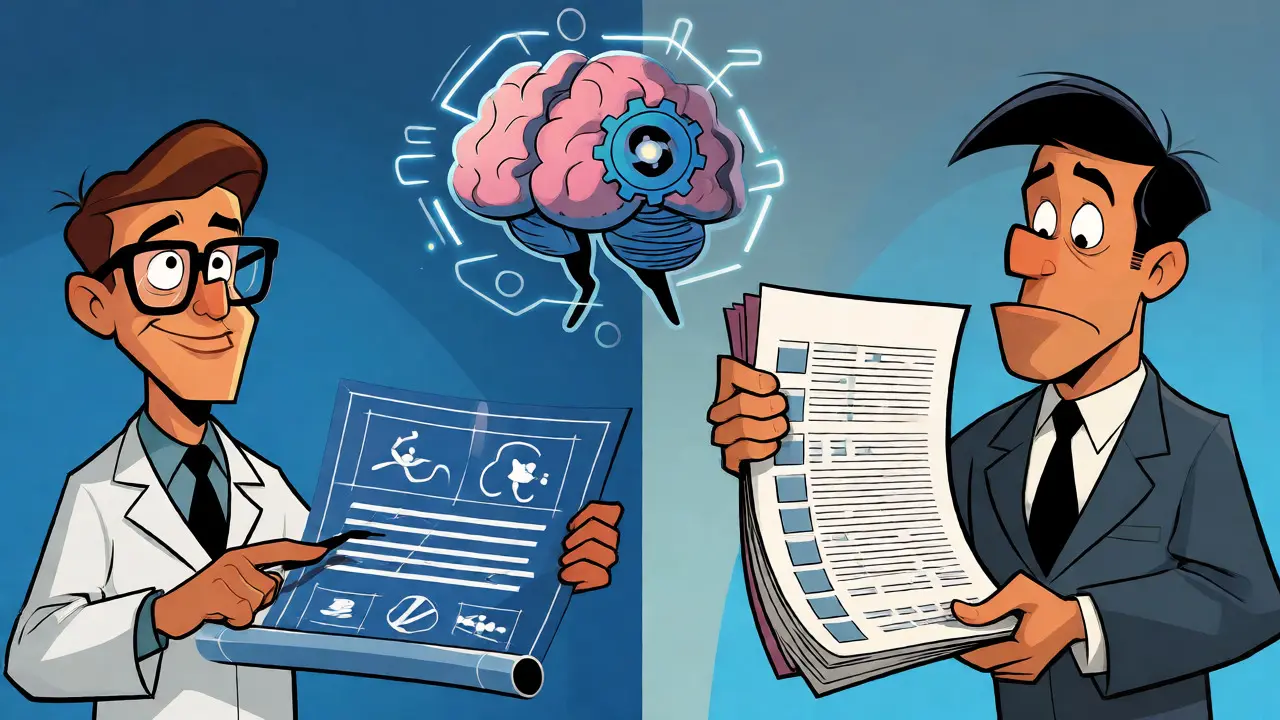
Risk Management: Beyond the Spreadsheet
Conducting an assessment is step one. Maintaining control is step two. SB24-205 mandates that deployers implement a Risk Management Policy and Program. This program must align with recognized standards, specifically the NIST AI Risk Management Framework (NIST AI RMF) or ISO/IEC 42001.
Why does this matter? Because regulators won’t accept vague promises. They want to see a repeatable process. If you change your vendor’s model version next month, your risk management program should have a protocol to detect that change, assess the new risk profile, and update your documentation. This aligns with the broader industry shift toward operationalizing AI ethics. It’s no longer enough to have an "Ethics Committee" meet once a year; you need continuous monitoring loops.
Key elements of a compliant risk program include:
- Governance Structure: Who owns AI risk? Is it IT, Legal, or a dedicated AI Officer?
- Inventory: A complete list of all high-risk AI systems in use.
- Testing Protocols: Regular audits for disparate impact across protected classes.
- Incident Response: What happens if the AI starts discriminating? Do you shut it down? Retrain it?
Consumer Rights: Notification and Human Review
Your customers have rights under this law, and ignoring them is a quick way to invite lawsuits. When a high-risk AI system makes a consequential decision about a consumer, you must provide clear notice. This isn’t buried in the terms of service. It needs to be visible.
More importantly, if the AI makes an adverse decision-like denying a loan or rejecting a job application-the consumer has the right to request a human review. There is a narrow exception for safety risks (e.g., autonomous braking), but for most administrative decisions, a human must look at the case.
This requirement forces businesses to design workflows that allow for intervention. If your automated system rejects 30% of applicants, can your HR team handle the volume of appeals? If not, you might need to adjust your AI’s sensitivity thresholds to balance efficiency with human oversight capacity.

Generative AI Specifics
While SB24-205 applies broadly, generative AI introduces unique challenges. The law hints at additional scrutiny for tools that create content. If you use generative AI to draft contracts or customer support responses, you must ensure these outputs don’t inadvertently discriminate or violate copyright.
Practically, this means tracking training data sources where possible and implementing detection mechanisms for AI-generated content. If a generative model hallucinates a policy that disadvantages a specific demographic, that’s a form of algorithmic discrimination. Your impact assessment must account for the stochastic nature of LLMs, meaning you can’t guarantee identical outputs for identical inputs. Your risk mitigation might involve strict guardrails or post-generation filtering.
Timeline and Enforcement
The clock started ticking on February 1, 2026. Organizations had a 60-day cure period to fix minor issues without immediate penalty. Now, enforcement is active. The Colorado Attorney General has the power to investigate complaints and issue fines.
Remember the retention rule: You must keep your most recent impact assessment and related documentation for three years. This creates a long-term audit trail. If a pattern of discrimination emerges over two years, the AG can pull your historical assessments to see if you ignored early warning signs.
Next Steps for Compliance
Don’t panic, but don’t procrastinate. Start by inventorying every AI tool your company uses. Ask: Does it make a consequential decision? If yes, flag it as high-risk.
Then, assign owners. Who writes the impact assessment? Who monitors the model drift? Finally, test your notification process. Send a mock adverse decision letter to a colleague. Does it clearly state that AI was involved? Does it explain how to get a human review?
Colorado is setting a precedent. Other states like New York and California are watching closely. Building a robust AI governance framework now isn’t just about avoiding fines in Denver; it’s future-proofing your business for a regulatory landscape that is rapidly tightening around algorithmic accountability.
Does Colorado SB24-205 apply to small businesses?
Yes, the law applies to both developers and deployers regardless of size, provided they operate in Colorado and use high-risk AI systems. However, the definition of "deployer" focuses on organizations that use the system to make consequential decisions. Small businesses using simple automation that doesn't significantly impact legal rights may fall outside the "high-risk" definition, but careful analysis is required.
What is considered a "substantial modification" to an AI system?
A substantial modification is a change that materially alters the system's behavior or risk profile. This includes retraining the model on new data, changing the underlying algorithm, or significantly adjusting decision thresholds. Minor bug fixes or UI changes typically do not trigger the 90-day reassessment requirement, but any change affecting how decisions are made does.
Do I need to hire a third-party auditor for my impact assessment?
The law does not explicitly mandate third-party auditing for all entities, but it requires the assessment to be rigorous and documented. Many companies choose third-party validation to demonstrate "reasonable care" and strengthen their defense against claims of negligence. Using recognized frameworks like NIST AI RMF often involves external benchmarks.
How does SB24-205 define algorithmic discrimination?
Algorithmic discrimination occurs when an AI system treats individuals differently based on protected characteristics such as race, sex, disability, age, religion, color, ethnicity, national origin, veteran status, sexual orientation, gender identity, or genetic information. The law covers both direct discrimination (explicitly using a protected class) and indirect discrimination (using proxies like zip code that correlate with protected classes).
Can I use existing GDPR or CCPA compliance documents for SB24-205?
Partially. Data privacy laws focus on collection and consent, while SB24-205 focuses on decision-making outcomes and bias. You can reuse some data mapping exercises, but you will need new documentation specifically addressing algorithmic fairness, impact assessments, and human review protocols. Existing privacy policies alone are insufficient for AI compliance.



Oh, please. The sheer audacity of this legislation is breathtaking. It’s not just regulation; it’s bureaucratic theater designed to punish innovation while pretending to care about fairness. We are drowning in paperwork that won’t actually stop bias, but will certainly stop small businesses from hiring anyone at all. The impact assessments are a joke-self-reported data from companies with every incentive to hide their flaws. Who audits the auditors? No one! It’s a closed loop of compliance nonsense where the only winners are the consultants charging $500 an hour to fill out spreadsheets. And don’t get me started on the "human review" requirement-it’s just a delay tactic so HR can pretend they’re doing something meaningful when the algorithm already made the call three days ago.
The NIST alignment is the key part people miss here. If you're already doing risk management for security or privacy, mapping AI risks to those existing frameworks saves a ton of time. Just treat it like another control objective.
This entire framework is fundamentally flawed because it assumes we can quantify 'fairness' mathematically, which is absurd. You cannot code morality into a matrix multiplication without introducing subjective bias from the developers themselves. By forcing these rigid definitions, Colorado is effectively freezing technological progress and creating a false sense of security. The real issue isn't the algorithm; it's the garbage-in-garbage-out problem of historical data that reflects centuries of systemic prejudice. SB24-205 treats the symptom, not the disease. It’s performative governance at its finest, allowing corporations to slap a label on discrimination and call it solved while the underlying societal inequities remain untouched. I’m shocked more people aren’t calling this what it is: a regulatory capture mechanism for big tech firms who can afford the compliance teams, while startups bleed cash trying to interpret vague legal jargon.
Spot on regarding the vendor liability trap. Many deployers think buying a 'compliant' tool absolves them, but the law explicitly keeps the burden on the user. You need to test the model against your specific demographic mix before deployment, not just trust the vendor's white paper. Start documenting your decision logic now, even if you're not fully compliant yet, because retrofitting documentation is a nightmare.
I must express my profound concern regarding the practical implementation of the 'human review' clause. While the intention is noble, the operational reality suggests that many organizations lack the infrastructure to handle a surge in appeals. If an AI system rejects thirty percent of applicants, does the company truly have the personnel to conduct a meaningful human review for each case within a reasonable timeframe? Without adequate staffing, this provision becomes a mere formality, potentially leading to rubber-stamped decisions that offer no substantive recourse for the consumer. Furthermore, the ambiguity surrounding 'substantial modification' creates significant legal uncertainty. Companies may hesitate to iterate on their models due to fear of triggering new assessment requirements, thereby stifling necessary improvements in accuracy and efficiency. We need clearer guidelines from the Attorney General’s office to prevent this paralysis.
It helps to break it down into small steps. Inventory first, then assess, then monitor. Don't try to do it all at once.
I love seeing states take the lead on this! It gives us a clear roadmap instead of waiting for federal chaos. Plus, having a standardized framework means better tools and resources will emerge for everyone eventually. It’s a growing pain, sure, but worth it for the long-term trust in AI systems.
Another layer of red tape to strangle American business. We don't need bureaucrats in Denver deciding how our algorithms work. Let the market decide. If a tool is biased, customers will leave. Simple as that.