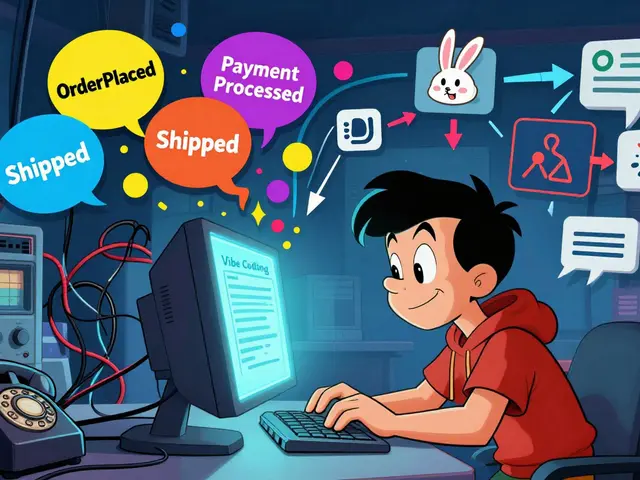
Imagine telling a computer exactly what you want your app to do-like "build me a chat server that handles user logins and keeps messages in separate rooms"-and watching it write the entire backend in seconds. That is vibe coding. It isn't just another buzzword; it's a shift where natural language becomes the primary interface for building software. You describe the intent, and an AI model generates the functional code.
This approach changes who can build technology and how fast they can do it. But where does it actually work best? Is it good enough for banking systems, or should you stick to traditional coding for high-frequency trading? We'll break down the real-world applications of vibe coding across different industries, showing you exactly where this tech shines and where you still need human engineers in the loop.
What Actually Is Vibe Coding?
Vibe coding is a development paradigm where users generate application code through natural language prompts rather than writing syntax manually. Think of it as the evolution of low-code tools, but with a brain. Instead of dragging and dropping blocks, you talk to the system. The AI parses your request, understands the context, and spits out working code in languages like Python, JavaScript, or SQL.
You might ask, "Is this just autocomplete on steroids?" Not quite. Autocomplete helps you finish a line of code you already started. Vibe coding creates the whole structure from scratch based on a conversation. It handles boilerplate, logic implementation, and even architectural scaffolding. For developers, it means skipping the tedious setup. For non-technical founders, it means turning an idea into a clickable prototype without hiring a dev team.
Rapid Prototyping and MVP Development
The most immediate win for vibe coding is speed. If you are a startup founder or a product manager, your biggest enemy is time. Traditional development cycles take weeks to set up environments, configure databases, and write basic CRUD (Create, Read, Update, Delete) operations. With vibe coding, you can spin up a Minimum Viable Product (MVP) in hours.
Consider a scenario where you need to test if users want a new feature in your SaaS platform. Instead of waiting for a sprint cycle, you prompt an AI tool: "Create a simple dashboard that displays user activity logs and allows filtering by date." The AI generates the front-end components and the back-end API endpoints. You deploy it, share the link with five users, and get feedback the same day. This fluid iteration allows you to fail fast and cheaply.
- Landing Pages: Marketing teams use vibe coding to create polished, responsive landing pages. You describe the layout, color scheme, and copy, and tools like Lovable generate the HTML/CSS/JS instantly.
- Internal Tools: Companies build custom admin panels or data visualization dashboards without bothering the IT department. A sales manager can prompt the system to "create a report showing monthly revenue by region," and get a working tool immediately.
- Investor Demos: Founders can show tangible interfaces to investors instead of static slides. You can tweak features live during a demo by simply telling the AI, "Change the button color to blue and add a loading spinner."
Enterprise Backend Automation and Node.js Applications
Vibe coding isn't just for pretty front-ends. It has serious muscle when it comes to backend infrastructure, particularly in Node.js environments. Enterprise developers use it to automate repetitive tasks that usually eat up valuable engineering hours.
Take real-time collaboration platforms, for example. Setting up WebSockets and Socket.io involves handling connection management, room creation, and message broadcasting. It’s complex and error-prone. With vibe coding, a developer can prompt: "Generate a Node.js server using Socket.io that supports user authentication and channel-based messaging." The AI produces the complete implementation, including the event listeners and state management. Developers then review the code, optimize specific performance bottlenecks, and deploy.
E-commerce solutions benefit similarly. Imagine building a shopping cart system. You need product schemas in MongoDB, RESTful APIs for inventory management, and integration with payment gateways like Stripe. Vibe coding generates the entire backend scaffold. It creates the database models, defines the API routes, and writes the logic for adding items to the cart and calculating totals. This doesn't replace senior architects, but it removes the grunt work, allowing them to focus on scaling issues and security protocols.
Data Pipelines and Machine Learning Integration
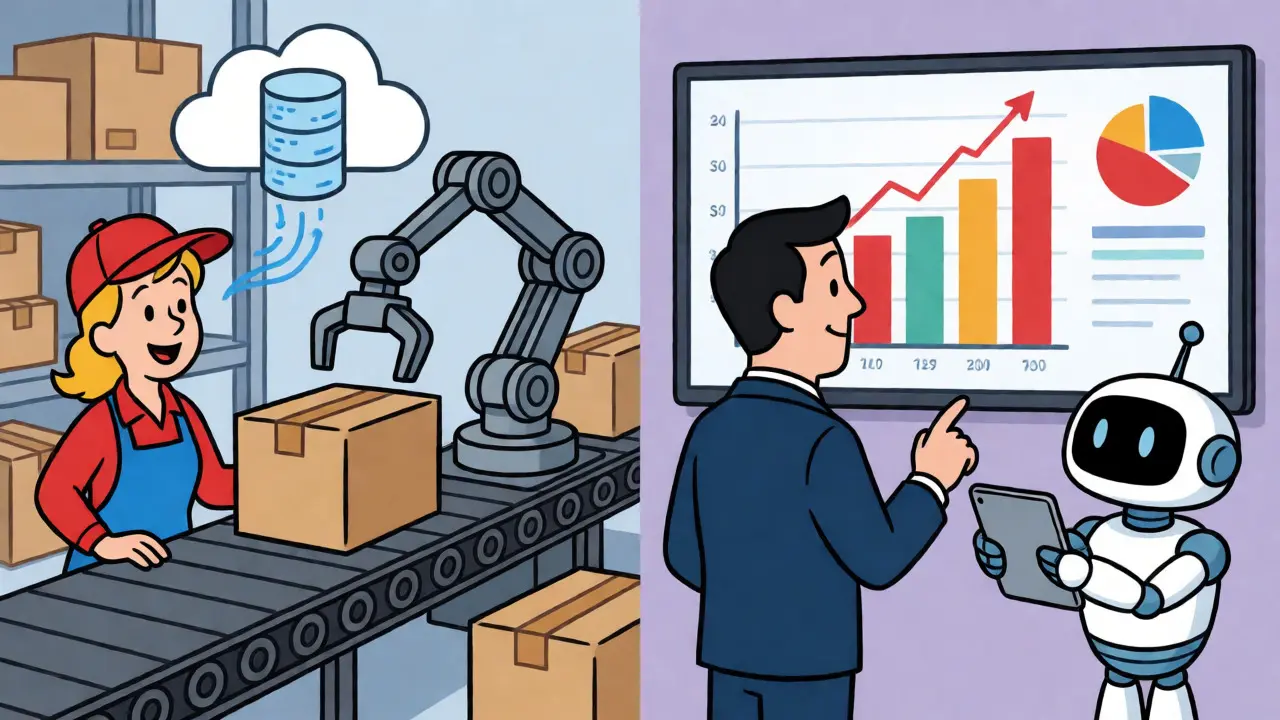
Data science teams often spend more time cleaning data than analyzing it. Writing scripts to ingest CSV files, clean null values, transform formats, and load data into PostgreSQL is tedious. Vibe coding automates this pipeline construction.
A data engineer can say, "Write a Python script that reads a CSV file, removes rows with missing email addresses, converts dates to ISO format, and inserts the data into a PostgreSQL table named 'customers'." The AI generates the script with proper error handling and type conversions. If the data structure changes, you don't rewrite the script; you update the prompt. "Add a step to deduplicate entries based on phone number." The AI updates the code accordingly.
This extends to machine learning inference endpoints. Instead of manually wrapping a model in a Flask or FastAPI service, you prompt the AI to "create an endpoint that accepts JSON input, runs it through my trained scikit-learn model, and returns the prediction." The resulting code is ready for deployment, significantly shortening the gap between model training and production usage.
IoT and Cloud-Native Infrastructure
The Internet of Things (IoT) presents unique challenges due to the sheer volume of devices and the complexity of communication protocols like MQTT and CoAP. Managing thousands of connected devices requires robust server-side logic for telemetry storage and remote command execution. Vibe coding helps scaffold these systems quickly.
Developers can generate the logic for device registration, heartbeat monitoring, and data ingestion pipelines. For cloud-native SaaS applications, vibe coding assists in creating microservices boilerplate. It generates Docker configurations, Kubernetes deployment scripts, and AWS Lambda functions. It can even implement tenant-specific logic for multi-tenancy, ensuring data isolation between different customer accounts. While the core business logic still needs careful human design, the infrastructure glue is generated rapidly, reducing configuration errors.
| Industry | Primary Use Case | Vibe Coding Benefit | Human Oversight Required? |
|---|---|---|---|
| Startups & Agencies | MVPs, Landing Pages, Internal Tools | Extreme speed, low cost, easy iteration | Low (mostly aesthetic/logic checks) |
| E-commerce | Backend APIs, Shopping Carts, Inventory | Automated CRUD operations, schema generation | Medium (security, payment logic) |
| Fintech | Data Pipelines, Reporting Tools | Rapid data transformation, visualization | High (compliance, accuracy) |
| Gaming | Prototypes, Mini-games, Logic Scripts | Creative experimentation, quick testing | Medium (game balance, performance) |
| Education | Interactive Quizzes, Learning Apps | Personalized content generation | Low (content validation) |
Security and Financial Considerations
Here is the catch: vibe coding is powerful, but it isn't infallible. In industries like finance and healthcare, security is non-negotiable. Can you trust AI-generated code with sensitive user data? The answer is yes, but only with strict oversight.
Vibe coding can generate code that implements standard security measures like input sanitization, data encryption, and JWT authentication. However, AI models sometimes hallucinate or miss edge cases. A prompt asking for "secure login" might produce code that works but lacks rate limiting or protection against timing attacks. Therefore, in high-stakes environments, vibe coding serves as a starting point. Security experts must review the generated code, refine it, and run comprehensive penetration tests. It accelerates the initial build but doesn't eliminate the need for rigorous quality assurance.
Gaming and Creative Experiments
Gaming might seem like an unlikely candidate for vibe coding, given the performance requirements. Yet, it is one of the fastest-growing areas for adoption. Indie developers and hobbyists use AI to generate game mechanics, dialogue trees, and simple physics engines. You can prompt an AI to "create a JavaScript function for a character jump mechanic with gravity," and it will provide a working snippet.
This lowers the barrier to entry for creative professionals who have great ideas but lack deep programming knowledge. Game designers can prototype levels and interactions quickly, testing fun factors before committing to full-scale development. While AAA studios won't replace their engine programmers anytime soon, the prototyping phase benefits immensely from this rapid generation capability.
The Future of Work with Vibe Coding
We are moving toward a world where technical literacy means knowing how to articulate problems clearly to an AI. The role of the developer shifts from writing every line of code to reviewing, architecting, and refining AI outputs. Non-technical employees in marketing, HR, and operations become "citizen developers," building their own tools without waiting for IT tickets.
For organizations, this means faster innovation cycles and reduced dependency on scarce engineering talent. But it also demands new skills: prompt engineering, code review capabilities, and a strong understanding of system architecture. Those who learn to collaborate effectively with AI coding assistants will lead the next wave of software development.
Is vibe coding suitable for large-scale enterprise applications?
Yes, but primarily for scaffolding and component generation. Large enterprises use vibe coding to accelerate the creation of microservices, API endpoints, and internal tools. However, critical business logic and core architecture still require experienced human engineers to ensure scalability, maintainability, and adherence to company standards.
Do I need to know how to code to use vibe coding?
Not necessarily. Many tools allow non-technical users to generate applications entirely through natural language prompts. However, having basic coding knowledge helps significantly in debugging, refining, and integrating the generated code into existing systems. For complex projects, a hybrid approach involving both technical and non-technical team members yields the best results.
How secure is code generated by vibe coding tools?
AI-generated code follows common patterns and libraries, which are generally secure, but it can miss specific vulnerabilities. It is crucial to treat AI output as a draft. Always perform security reviews, static analysis, and penetration testing, especially for applications handling sensitive financial or personal data. Human oversight remains essential for production-grade security.
Can vibe coding replace traditional software developers?
No, it transforms their role. Developers move from manual coding to higher-level tasks like system design, architecture, and code review. Vibe coding handles the repetitive boilerplate, freeing developers to solve complex business problems and optimize performance. The demand for skilled engineers who can leverage AI tools is likely to increase, not decrease.
What are the limitations of vibe coding?
Current limitations include difficulty with highly specialized domain logic, potential hallucinations (generating incorrect code), and challenges in maintaining very large, legacy codebases. It works best for greenfield projects, prototypes, and modular components. Complex, tightly coupled systems may require significant manual refactoring after generation.