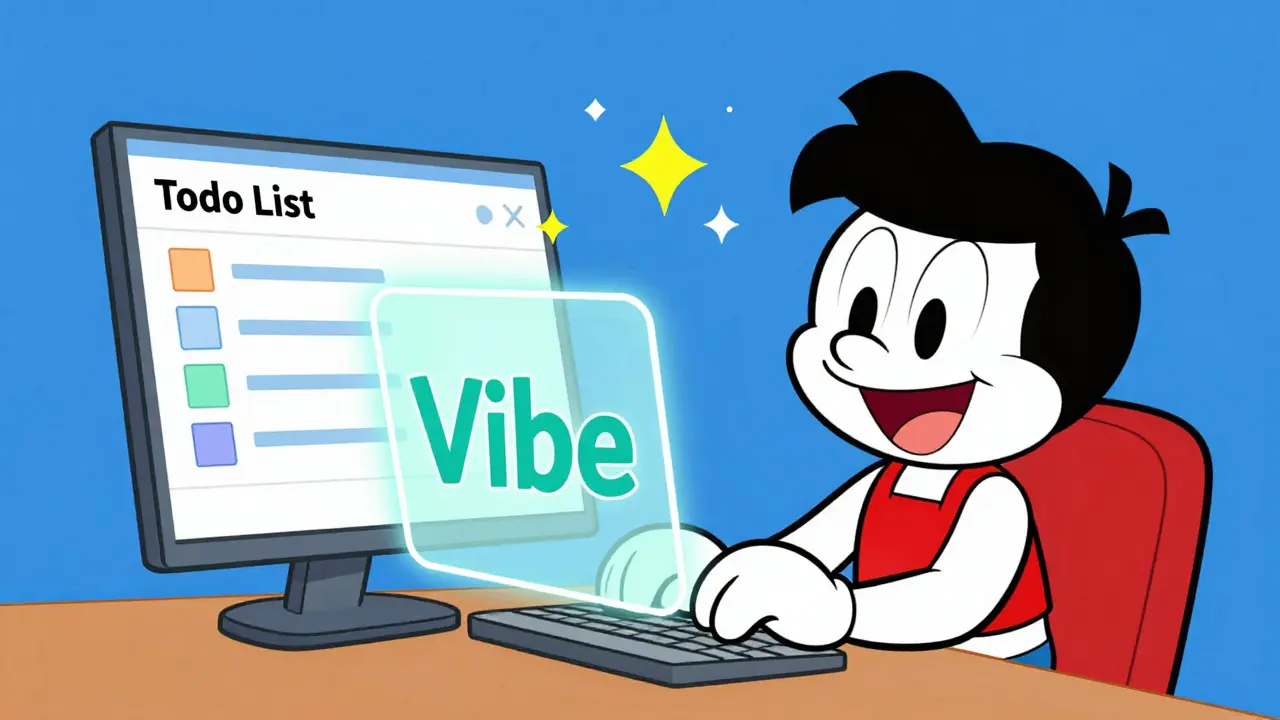
Building a basic Todo app or a simple blog is easy. You can basically "vibe" those into existence with a few prompts and a bit of luck. But when you move into the world of complex distributed systems-where you're dealing with network partitions, eventual consistency, and race conditions-the "vibes" can quickly turn sour. Vibe coding, the practice of leveraging AI to generate software through intuitive, natural language conversations rather than rigid upfront specs, is currently hitting a wall of reality in the enterprise space.
The core problem is that distributed systems are deterministic by necessity, but AI is probabilistic by nature. You can't just hope your consensus algorithm "feels right"; it either works or your entire cluster collapses. The challenge for modern engineers is figuring out where this fluid, AI-driven approach actually adds value and where it creates a technical debt bomb waiting to explode.
| Feature | Vibe Coding Approach | Traditional Approach |
|---|---|---|
| Initial Prototype Speed | 38% Faster deployment | Slower, spec-heavy start |
| Technical Debt Accumulation | 63% Higher in complex environments | Managed and documented |
| Pattern Compliance | ~67% without governance | ~92% adherence to best practices |
| Iterative Refinement Cycles | 22% More cycles required | Fewer, more targeted cycles |
The Shift from Syntax to Strategy
For years, we've focused on syntax. We worried about brackets, semicolons, and the specific way a library handled a promise. Vibe coding changes the game by moving the developer's role from a "writer" to an "editor-in-chief." Instead of typing out every line, you're guiding an AI like GitHub Copilot or Gemini for Developers through the architectural intent.
This is great for prototyping. In fact, some organizations report a 30-45% acceleration in the prototyping phase. But when you move beyond basic Create, Read, Update, Delete (CRUD) operations, the gaps appear. A vibe-coded system might look perfect on the surface, but it often misses the "invisible" requirements-like idempotency in a payment service or the compensation logic needed for a Saga pattern. Without these, a simple network hiccup can lead to duplicate charges or ghost orders.
Why "Vibing" Fails in Distributed Environments
Distributed systems are governed by harsh laws, most notably the CAP Theorem. You have to make a conscious choice between Consistency, Availability, and Partition Tolerance. AI, however, often tries to give you the "best of all worlds" answer, which in reality is an impossible architectural state.
Common failure points in vibe-coded distributed systems include:
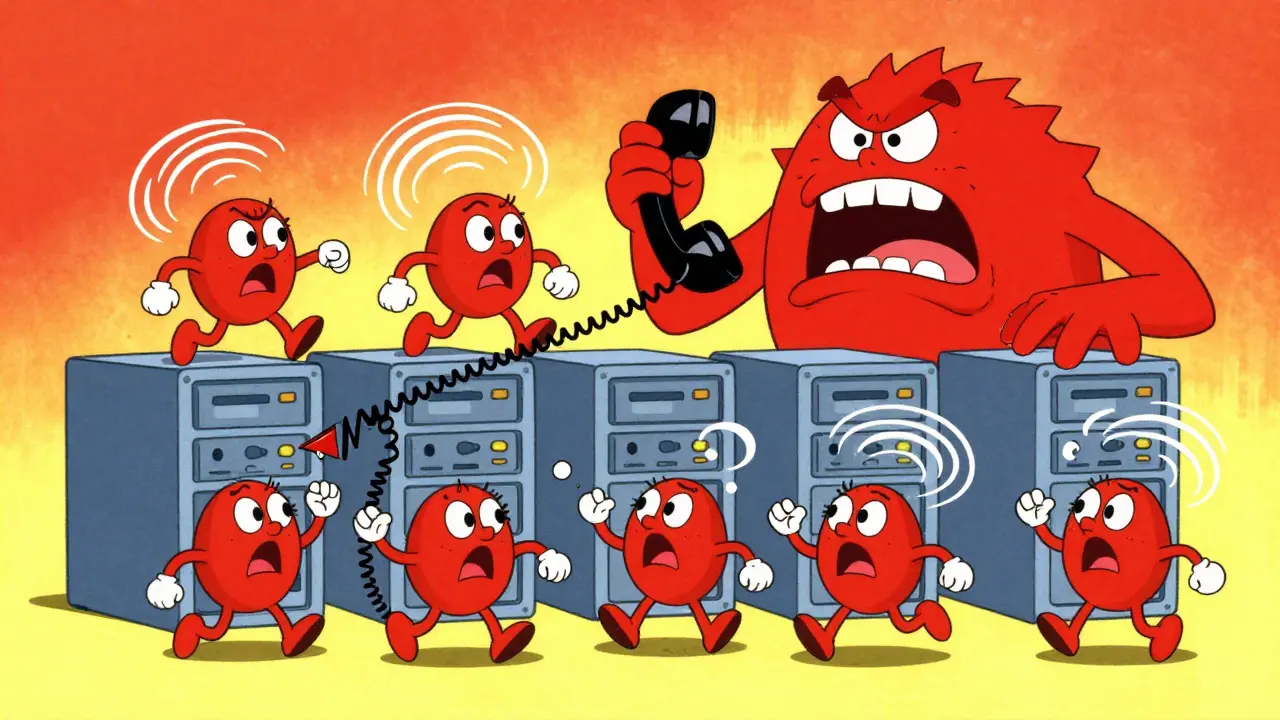
- Missing Circuit Breakers: AI often generates "happy path" code. If a downstream service hangs, the vibe-coded system may lack the logic to trip a circuit breaker, leading to cascading failures across the whole network.
- Incorrect Retry Logic: Simple retries are easy. Implementing exponential backoff with jitter to avoid thundering herd problems is a nuance that AI frequently overlooks unless explicitly prompted.
- Race Conditions: Because AI doesn't "run" the system in its head, it can't anticipate the millisecond-level timing issues that occur when three different microservices try to update the same record simultaneously.
Real-world data shows that while initial deployment is fast, vibe-coded systems often suffer from 17% higher latency in cross-service communication and significantly higher error rates during network partitions. You're essentially trading long-term stability for short-term velocity.
Building the Guardrails: How to Actually Do This
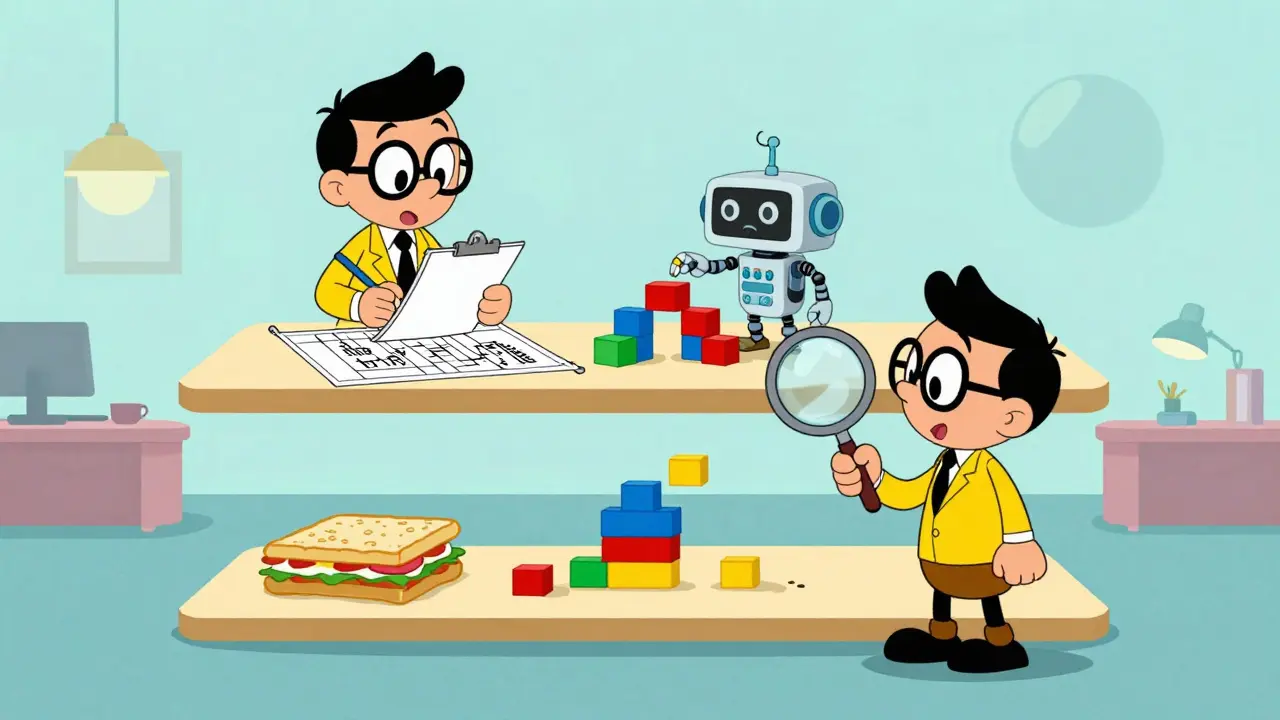
If you're going to use vibe coding for anything more complex than a dashboard, you can't just prompt and pray. You need a validation layer. The most successful teams are using a "Sandwich Approach": Human Architecture $\rightarrow$ AI Implementation $\rightarrow$ Human Validation.
To make this work, you need three critical components:
- Contextual Awareness Frameworks: You can't just prompt one file at a time. You need the AI to understand the entire map of your microservices. This ensures that a change in the Order Service doesn't accidentally break the Inventory Service.
- Real-time Constraint Validation: Using tools like the Superblocks Vibe Governance Suite can help enforce architectural boundaries. These tools check the AI's output against a set of hard rules (e.g., "No service may call the database of another service directly").
- Automated Chaos Testing: Since you can't trust the AI to handle every edge case, you have to force the failures. Integrating Chaos Mesh allows you to intentionally break the network to see if your vibe-coded retry logic actually holds up.
The Skillset Pivot: What Developers Need Now
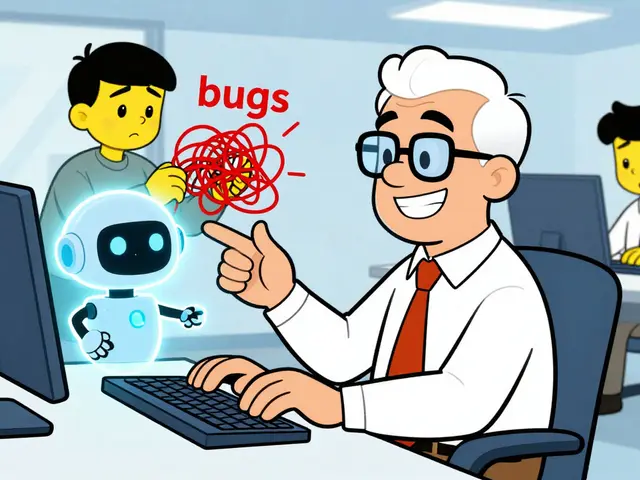
The irony of vibe coding is that it actually requires more deep systems knowledge, not less. When you wrote every line of code, the compiler caught your mistakes. When the AI writes the code, the only thing catching the mistakes is your ability to spot a flaw in the logic.
If you want to survive this shift, you need to master three things:
- Distributed Tracing: You need to be an expert with observability tools. When a vibe-coded system fails, it doesn't fail loudly with a syntax error; it fails quietly with a timeout or a data inconsistency. You need to know how to trace a request across five services to find the ghost in the machine.
- Advanced Prompt Engineering: You can't just say "make a distributed system." You need to be able to specify: "Implement this using a Raft consensus algorithm, ensuring that leader election handles a minority node failure without losing state."
- Failure Mode Analysis: You have to become a professional pessimist. Your job is no longer to build the feature, but to imagine every way the feature could possibly break in a distributed environment.
The Future: From Probabilistic to Deterministic AI
We are starting to see a move toward "Domain-Specific AI." For example, the release of specialized tools like Distributed Systems Copilot from Google Cloud suggests a future where the AI isn't just guessing based on general patterns, but is grounded in the actual mathematics of distributed computing (like Paxos or Raft).
By 2027, it's predicted that over half of all distributed systems will use vibe coding for non-critical components. But for the core transactional heart of a business-the parts where losing a single packet means losing a million dollars-the traditional, rigorous approach will remain the gold standard. The goal isn't to replace the engineer with a vibe, but to use the vibe to handle the boilerplate so the engineer can focus on the hard, deterministic problems.
Is vibe coding safe for production financial systems?
Generally, no. Not without extreme governance. Vibe coding is probabilistic, and financial systems require 100% determinism. Case studies have shown that vibe-coded implementations often miss critical compensation logic in distributed transactions, leading to high failure rates in systems requiring strict transactional integrity.
Does vibe coding increase technical debt?
Yes, significantly. In complex distributed environments, technical debt can increase by as much as 63% because the AI may generate code that works for the current request but violates long-term architectural principles or introduces subtle inefficiencies that only appear at scale.
Which languages are best for vibe coding distributed systems?
Based on industry data, Python, TypeScript, and Go are the most common. Python is often used for the high-level logic, while Go is preferred for the actual distributed primitives due to its concurrency model. For infrastructure, Terraform remains the dominant tool for vibe-coding the environment.
How do I stop my AI-generated code from failing during network partitions?
You must explicitly define your CAP theorem trade-offs in the prompt. Don't let the AI decide. Tell it exactly how to handle a partition-whether to favor availability (returning stale data) or consistency (returning an error). Then, use a tool like Chaos Mesh to simulate a partition and verify the behavior.
Can vibe coding replace the need for a Distributed Systems Architect?
Quite the opposite. Vibe coding makes the architect more important. Because the AI can generate a working prototype in hours, the bottleneck is no longer "how to build it," but "what to build" and "how to verify it's correct." The architect is now the essential filter that prevents probabilistic AI errors from hitting production.

man this is so true lol... i've seen so many juniors try to prompt their way into a k8s setup without knowing what a pod even is and then wonder why the whole thing crashes on first load. just gotta keep learning the basics while using the tools
It is absolutely laughable that we are even calling this "vibe coding" as if giving a fancy name to lazy prompting somehow mitigates the catastrophic failure of basic engineering principles, and honestly, the 63% technical debt increase is probably a conservative estimate because most people are too incompetent to even realize the AI is hallucinating a consensus algorithm that doesn't actually exist in the real world, meaning we're just automating the creation of garbage software at a scale we've never seen before and pretending it's a "pivot in skillset" when in reality it's just a race to the bottom for anyone who actually cares about system stability.
Interesting take on the sandwich approach.
The duality of the machine!!! We are merely ghosts guiding the probabilistic wind... towards a deterministic shore!!! It's not just about code, it's about the soul of the architecture!!!
Oh wow, a table with percentages. I'm sure those numbers are totally legit and not just vibes themselves. Imagine thinking a "governance suite" is going to save you from the fundamental reality that you've let a chatbot design your database schema. Truly revolutionary stuff.
The obsession with velocity is a mask for the fear of deep understanding. We trade the stillness of a well-thought-out spec for the noise of iterative failures.
I remember trying to use an AI for a similar project and it just felt like the tool was gaslighting me into believing my network was the problem when the logic was just broken from the start 😩 it's honestly so draining to spend six hours debugging a "vibe" that only the AI understood 📉🫠
Focusing on observability is definitely the way forward here. Let's use these tools to clear the boilerplate and get back to the real challenges!