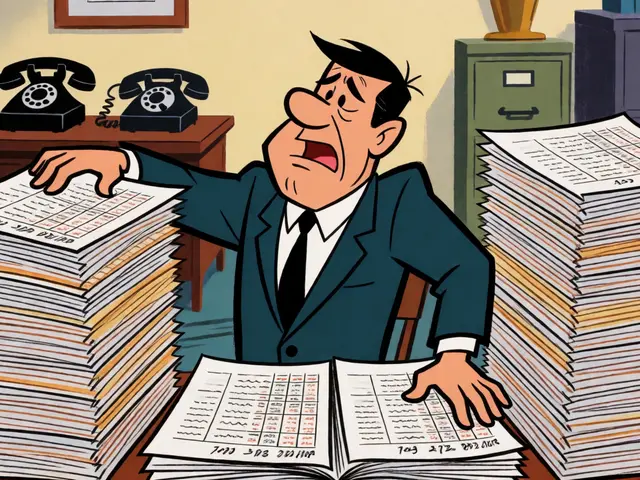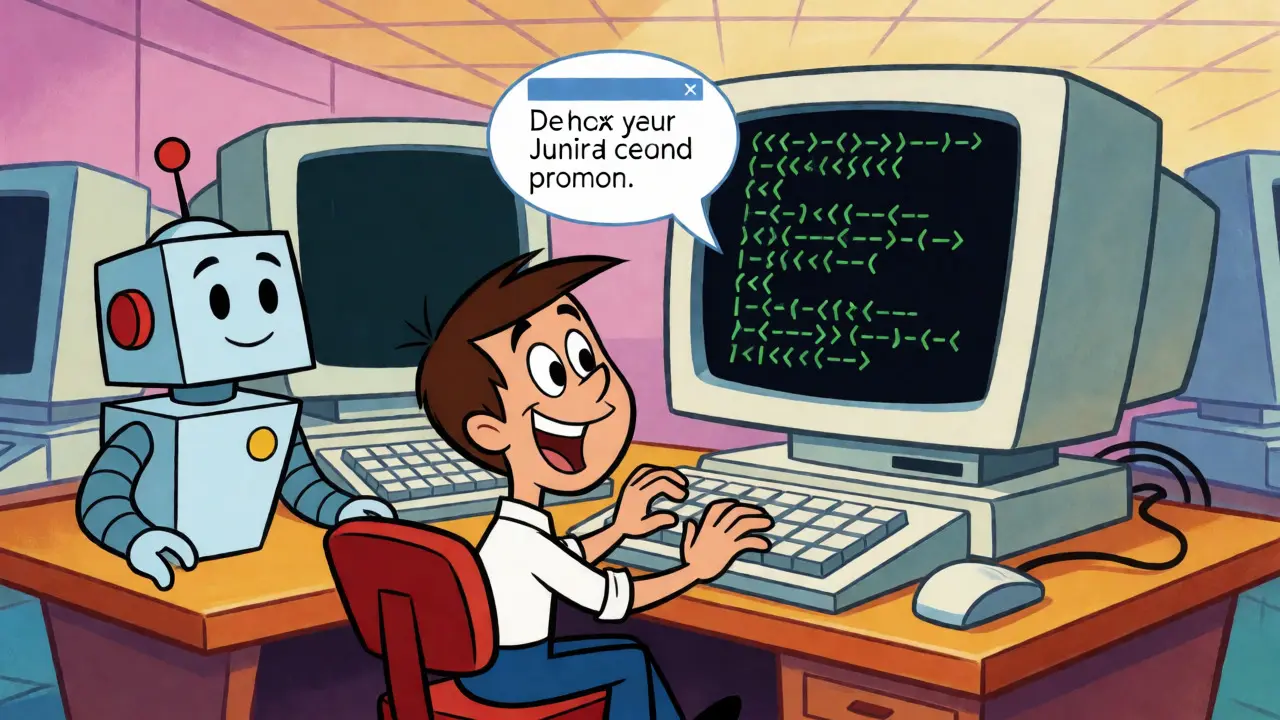
You just shipped a feature in record time. The code looks clean, the tests pass, and your manager is happy. But did you actually write that code? Or did an AI generate it based on a vague prompt you typed into a chat window? This is the reality of vibe coding, an AI-assisted development methodology where developers use natural language prompts to generate code, shifting their role from creators to reviewers. It sounds efficient, but it raises a terrifying question: when that code breaks production or leaks user data, who takes the fall?
We are seeing a massive shift. Microsoft’s CEO Satya Nadella noted in April 2024 that up to 30% of their code is now AI-generated. Google reported similar numbers around the same time. While this speeds up development-GitHub studies show users finish tasks 55% faster-it creates an ethical gray zone. Are we building software, or are we just guessing at what the AI wants us to approve? This article breaks down the real risks, the legal landscape, and how you can protect yourself and your company.
Key Takeaways
- Responsibility remains human: Even if AI writes the code, you own the outcome. Legal frameworks like the EU Cyber Resilience Act do not blame the algorithm; they blame the manufacturer.
- Security is the biggest risk: A Carnegie Mellon study found 40% of AI-generated code contains vulnerabilities. You must treat AI output as untrusted input.
- Skill erosion is real: Junior developers using vibe coding may lack the foundational knowledge to debug complex issues, leading to long-term technical debt.
- Regulation is tightening: New guidelines from ENISA and NIST require documented human oversight for any AI-generated code used in critical systems.
The Illusion of Ownership
Let’s be honest: most of us don’t read every line of AI-generated code. We skim it. If it looks right, we hit enter. This behavior is dangerous because it assumes the AI understands context better than you do. It doesn’t. Large Language Models (LLMs) predict the next likely token based on patterns, not logical intent. They don’t know your specific business rules unless you explicitly tell them, and even then, they might hallucinate.
Consider the case of a healthcare provider in 2024. An AI-generated database connector caused a $4.2 million breach due to improper input validation. The code looked standard. It passed basic linting. But it failed under specific edge cases that only a human with domain knowledge would have anticipated. When the incident occurred, the engineering team couldn’t quickly explain why the AI chose that specific implementation. They had no mental model of the code because they never truly engaged with it. That’s the core ethical problem: accountability requires understanding. If you don’t understand the code, you can’t defend it.
Who Pays for the Bugs?
In traditional software development, blame is clear. If you wrote a function with a bug, you fix it. With vibe coding, the lines blur. Did the AI make a mistake? Or did you fail to prompt it correctly? Or did you fail to review it properly? Most organizations haven’t updated their liability policies to reflect this.
The European Union’s Cyber Resilience Act (CRA), which reached provisional agreement in December 2023, clarifies one thing: manufacturers are responsible. The law doesn’t care if a human or a robot wrote the code. If your product has a vulnerability, you pay for the remediation. This means companies deploying vibe-coded applications face strict conformity assessments. For high-risk categories, you might need full quality assurance modules, effectively negating some of the speed benefits.
Here is how different stakeholders view responsibility:
| Stakeholder | Perceived Role | Actual Liability Risk | Mitigation Strategy |
|---|---|---|---|
| Developer | Prompt Engineer / Reviewer | High (Professional negligence if code isn't reviewed) | Implement mandatory peer reviews for AI code |
| Organization | Manufacturer / Deployer | Very High (Regulatory fines, reputational damage) | Adopt formal security gates and audit trails |
| AI Provider | Tool Vendor | Low (Usually covered by terms of service) | Provide transparency reports and training data info |
Notice that the AI provider carries the least risk. Their contracts typically state that the output is "as-is." This leaves the developer and the organization holding the bag. You cannot sue GitHub Copilot for a SQL injection flaw. You have to fix it yourself.
The Security Blind Spot
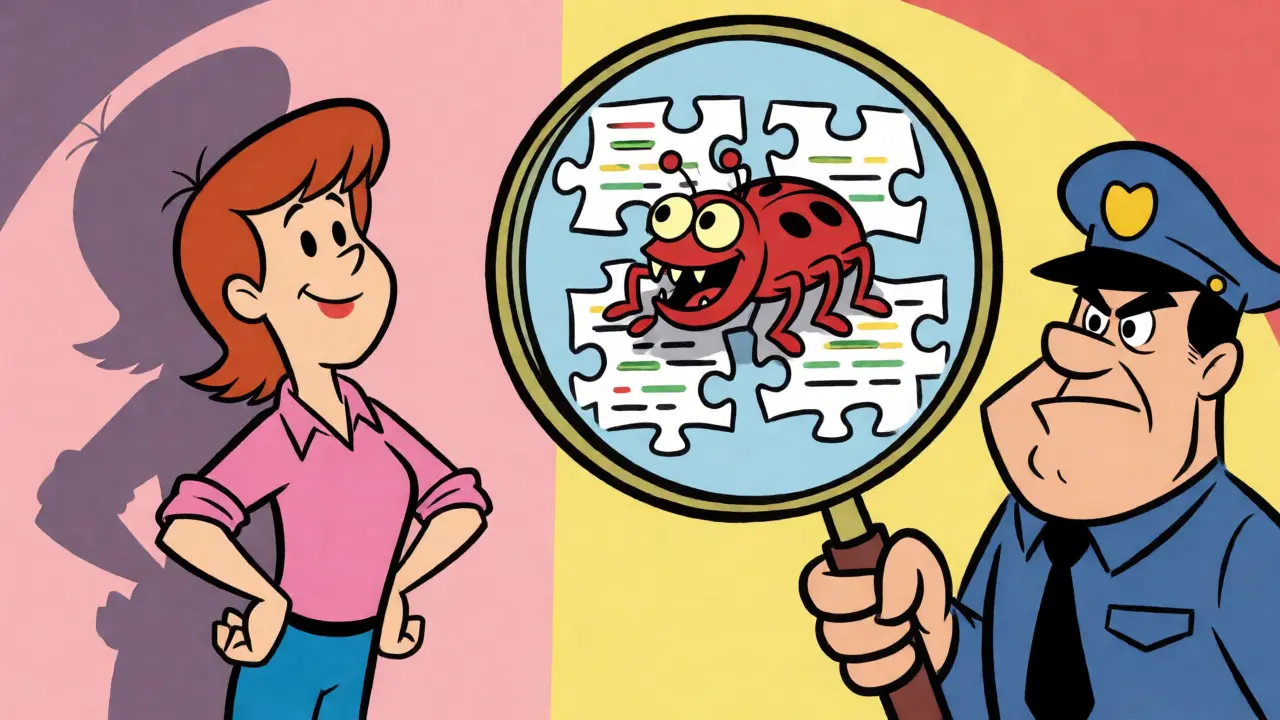
Vibe coding often prioritizes functionality over security. Why? Because LLMs are trained on historical code, much of which contains deprecated practices. Dr. David Wheeler from the Linux Foundation warned in May 2024 that these models embed vulnerabilities at scale. They learn bad habits from millions of repositories.
A 2023 study by Carnegie Mellon University found that 40% of AI-generated code samples contained security flaws. Of those, 27% were critical issues like SQL injection or broken authentication. Imagine deploying code where nearly half has potential holes. Now imagine doing that without a dedicated security review step. That’s exactly what many startups are doing to save time.
Developers often fall into the trap of trusting the "happy path." The AI generates code that works for the main scenario. But does it handle null inputs? Does it sanitize user data? Does it respect rate limits? Often, no. One Reddit user described deploying AI-generated code with hardcoded credentials that went undetected for 47 days. That’s not just a bug; it’s a security incident waiting to happen.
Erosion of Developer Skills
There’s a subtle ethical cost to vibe coding: skill decay. Senior developers can spot AI mistakes because they’ve seen the underlying logic before. Junior developers, however, are learning to code *through* the AI. They might not understand why a certain pattern is insecure because they never struggled through writing it manually.
Pluralsight’s March 2024 study highlighted this gap. Senior developers need about 40 hours of training to effectively audit AI code. Juniors need 80+ hours just to develop sufficient security awareness. If you rely too heavily on AI, you risk creating a workforce that can assemble components but cannot debug fundamental issues. When the AI hallucinates a library that doesn’t exist, or suggests a deprecated API, the junior dev might accept it blindly. This creates long-term technical debt that future teams will struggle to pay off.
Navigating the Regulatory Landscape
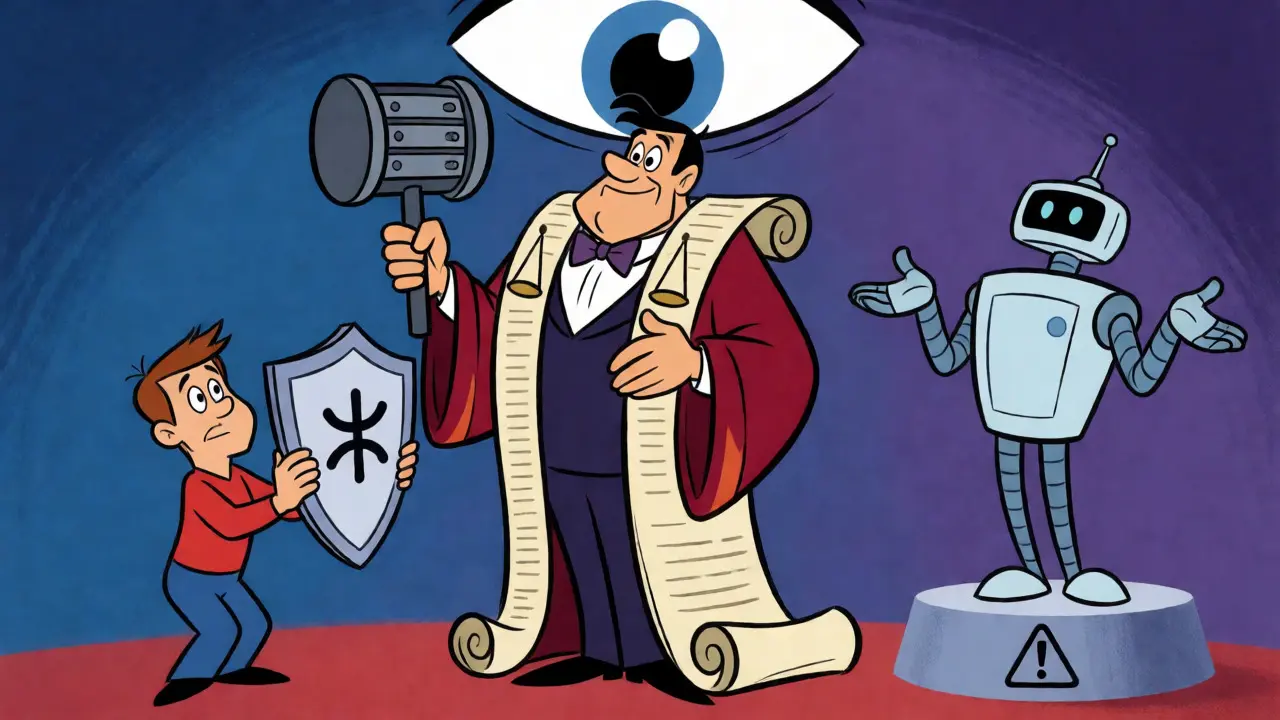
If you think regulations won’t touch your code, think again. The US National Institute of Standards and Technology (NIST) released draft guidelines in February 2024 specifically for validating AI-generated code. Similarly, the European Union Agency for Cybersecurity (ENISA) published guidelines in September 2024 requiring human oversight for all production code generated by AI.
These aren’t just suggestions. They signal a move toward mandatory documentation. You may soon need to prove that a human reviewed specific AI outputs. This means logging prompts, recording review decisions, and tagging code sections as "AI-generated" in your version control system. Failing to do this could expose you to compliance violations, especially in sectors like finance and healthcare.
Practical Steps for Ethical Vibe Coding
So, should you stop using AI tools? No. But you need to change how you use them. Here is a checklist to keep your conscience-and your job-safe:
- Treat AI output as untrusted input: Never commit code without reading it line-by-line. Assume it’s wrong until proven right.
- Enforce security scanning: Use tools like SonarQube or GitHub Advanced Security to scan AI-generated code automatically. Flag any new warnings immediately.
- Document your prompts: Keep a log of the prompts used to generate key features. This helps when debugging later and proves due diligence during audits.
- Pair program with AI: Don’t let one person work alone with AI. Have a second developer review the output. This mimics traditional pair programming but adds an AI layer.
- Categorize risk levels: Not all code needs the same scrutiny. High-risk areas (authentication, payments, data storage) require triple verification. Low-risk UI tweaks might get a lighter review.
The Future of Accountability
The debate isn’t going away. As AI agents become more autonomous, capable of executing full workflows rather than just generating snippets, the question of responsibility gets harder. If an AI agent decides to refactor a module and breaks it, who is at fault? The developer who set the initial goal? The manager who approved the timeline? The vendor who built the agent?
Dr. Jessica Barker noted at the RSA Conference in July 2024 that we are facing a wave of preventable security incidents if we don’t establish clear accountability frameworks. We are moving fast, perhaps too fast. The technology is outpacing our legal and ethical norms.
For now, the rule is simple: You own the code, regardless of who-or what-wrote it. Embrace the speed of vibe coding, but never sacrifice your duty to understand, verify, and secure what you ship.
Is vibe coding legal?
Yes, vibe coding is legal. However, copyright laws regarding AI-generated content are still evolving. In the US, pure AI-generated code may not be copyrightable, but code significantly modified by humans usually is. Always check your company's policy and local jurisdiction regarding IP ownership of AI outputs.
Can I fire a developer for bugs in AI-generated code?
Generally, yes. Since the developer is responsible for reviewing and approving the code, they are accountable for its quality. Employers typically expect developers to ensure that any tool-assisted output meets professional standards before deployment.
Does AI-generated code count towards my experience?
It depends on your engagement level. If you merely copy-paste, you gain little expertise. If you critically analyze, debug, and refine AI suggestions, you are actively practicing engineering judgment. Many seniors argue that true experience comes from solving problems the AI couldn't solve alone.
What is the biggest security risk in vibe coding?
The biggest risk is the propagation of known vulnerabilities. AI models are trained on public codebases that contain outdated or insecure patterns. Studies show up to 40% of AI-generated code contains security flaws, such as SQL injection points or hardcoded secrets, which may go unnoticed without rigorous static analysis.
How do I prove I reviewed AI-generated code?
Use version control metadata and pull request templates. Tag commits with "AI-assisted," include the original prompt in the PR description, and require explicit approval comments from reviewers. Some enterprises use specialized plugins that track AI interactions for audit trails.