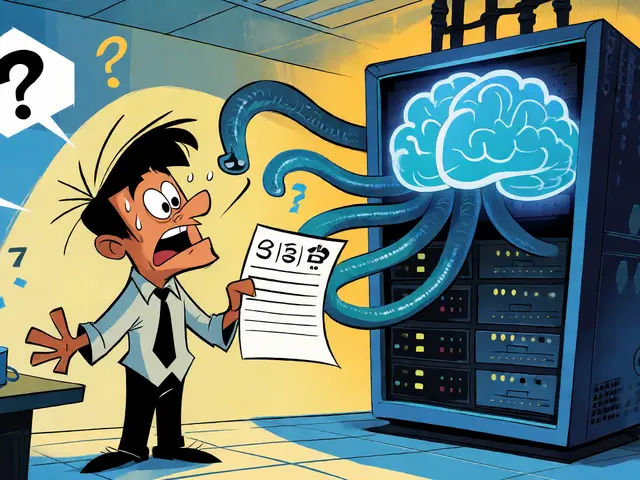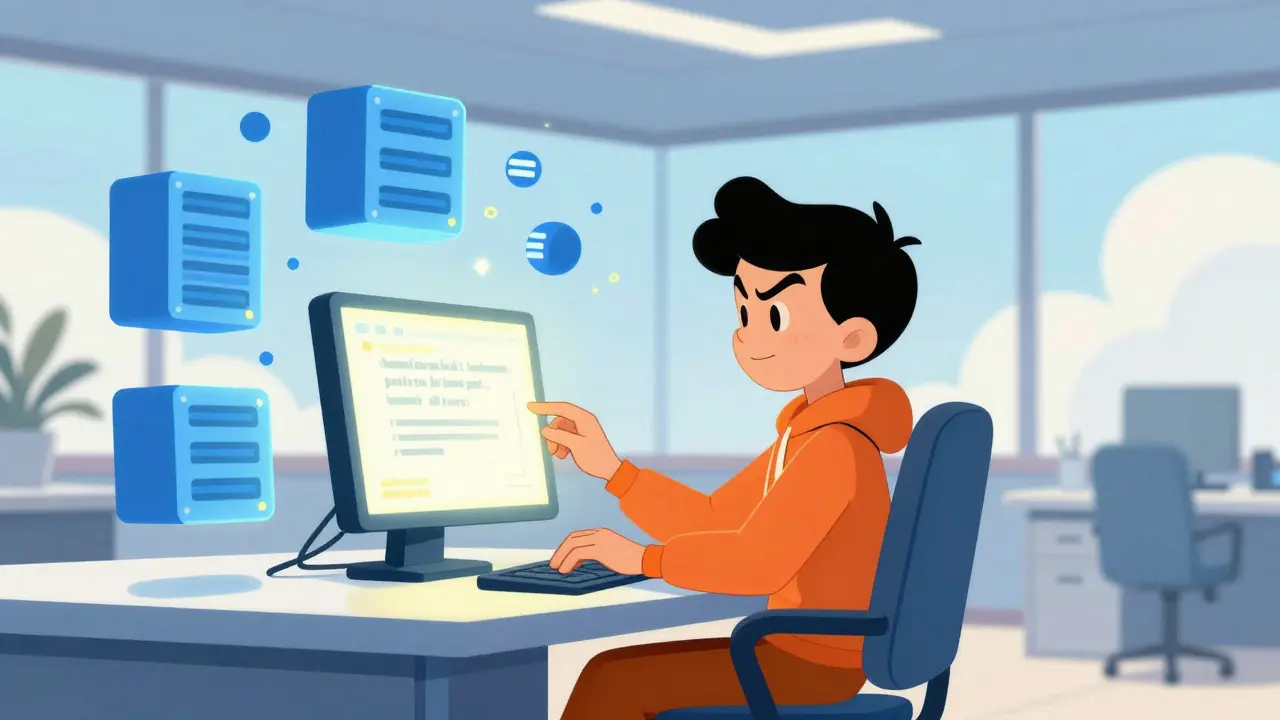
Imagine typing a single sentence into your terminal: "Spin up a staging environment with last week's data, but keep it isolated from production." Ten seconds later, the infrastructure is live. No YAML files. No SSH sessions. No hunting through documentation. This is Vibe Coding, a development paradigm where natural language prompts replace manual scripting for both application logic and infrastructure setup. It’s not just about writing code faster; it’s about dissolving the friction between an idea and its execution in the cloud.
For years, DevOps has focused on bridging the gap between development and operations through rigorous CI/CD pipelines and strict change management. But as AI agents become more capable, the traditional model of human-in-the-loop approval for every minor change is starting to feel like a bottleneck. The industry is shifting toward what some call "VibeOps"-an operational state where deployment, testing, and scaling happen as fast as you can think, without breaking your flow. If you’re managing pipelines or sitting on-call, this shift isn’t a distant future trend. It’s happening now, and it’s changing who does what.
The Core Shift: From Scripting to Intent
Traditional software development relies on explicit instructions. You write a function, define a variable, and handle edge cases manually. In vibe coding, the developer acts as a director rather than a typist. You express intent, and an AI agent handles the implementation. This concept gained traction after Dr. Andrej Karpathy popularized the term, describing it as a style of programming where you lean into the flow state and let the AI do the heavy lifting.
In a DevOps context, this means the difference between writing a complex Terraform module and simply asking for one. Consider the technical approach: instead of using AI to summarize existing code or generate a single script, vibe coding employs autonomous agents to build entire frameworks. For example, a platform engineer might prompt an agent to "Create a Kubernetes custom controller that watches for new pods and automatically assigns them to the nearest edge node based on latency." The agent generates the Go code, writes the unit tests, and updates the Helm chart. The human’s job shifts from syntax validation to architectural review.
- Speed: Features move from months of planning to minutes of prompting.
- Ambition: Long-term goals shrink into weekend projects because the barrier to entry drops.
- Autonomy: Individual developers gain the output of small teams, accessing insights previously siloed in ops departments.
- Creativity: Manual coding burdens are removed, allowing engineers to focus on innovative solutions.
Transforming the CI/CD Pipeline
The continuous integration and continuous delivery pipeline is the heartbeat of modern software delivery. Traditionally, these pipelines are rigid sequences of scripts triggered by git commits. Vibe coding introduces a layer of intelligence that makes these pipelines adaptive. Instead of static checks, we see multi-agent orchestration where different AI entities handle specific stages of the release process.
Take GitLab’s Agentic AI Platform as a real-world example. Here, build agents monitor commits and trigger builds, but they also validate outputs against project-specific conventions. Test agents don’t just run predefined suites; they identify edge cases that human testers might miss and perform intelligent test execution. Deploy agents manage rollouts, performing self-healing operations if a service fails health checks. Monitor agents watch production metrics and trigger automated remediations before a user even notices a blip.
| Workflow Stage | Traditional Approach | Vibe Coding / VibeOps Approach |
|---|---|---|
| Infrastructure Setup | Manual YAML/Terraform scripting | Natural language prompts to AI agents |
| Testing | Static, pre-defined test suites | Dynamic, AI-generated edge case coverage |
| Deployment | Human-approved gates and manual triggers | Autonomous gating based on risk assessment |
| Monitoring | Reactive alerts on fixed thresholds | Predictive anomaly detection with auto-remediation |
This transition requires a mindset shift. Teams must trust the agents to make decisions within defined boundaries. For instance, an autonomous deployment agent can analyze system readiness and automatically gate releases based on predefined criteria. It performs intelligent rollout strategies, such as canary deployments, and monitors deployment health. If issues are detected, it rolls back automatically. The human engineer steps in only when the AI flags a decision that exceeds its confidence threshold.
Redefining On-Call and Incident Response
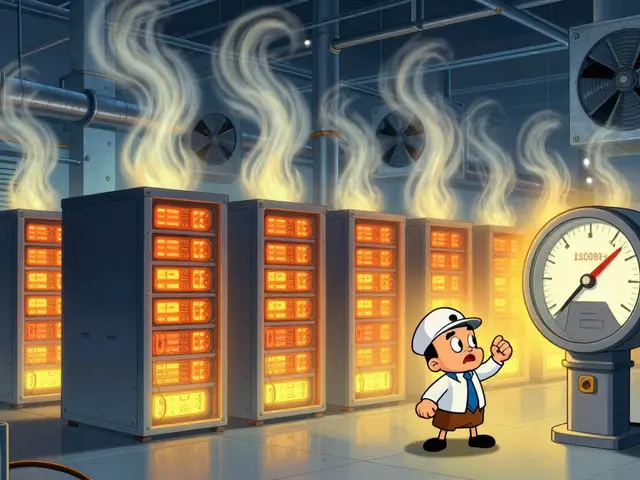
If you’ve ever been paged at 3 AM for a memory leak in a microservice, you know the pain of on-call duty. Vibe coding is reshaping this practice by moving from reactive alerting to proactive healing. The goal is no longer just to notify a human that something is wrong, but to fix it while the human is still asleep.
In a vibe-coded environment, monitoring agents don’t just watch dashboards. They correlate logs, metrics, and traces in real-time. When an anomaly occurs, an AI-powered root cause analysis kicks in. The system might detect that a recent deployment increased CPU usage by 15% and automatically scale the resources or revert the change. This reduces mean time to resolution (MTTR) significantly because the "investigation" phase is handled by machine speed, not human fatigue.
However, this doesn’t eliminate the need for on-call engineers. It changes their role. Instead of debugging low-level issues, on-call staff become supervisors of the AI fleet. They review the actions taken by the agents, adjust the guardrails, and handle complex, novel incidents that require creative problem-solving. The cognitive load shifts from mechanical troubleshooting to strategic oversight.
Tools and Platforms Driving the Change
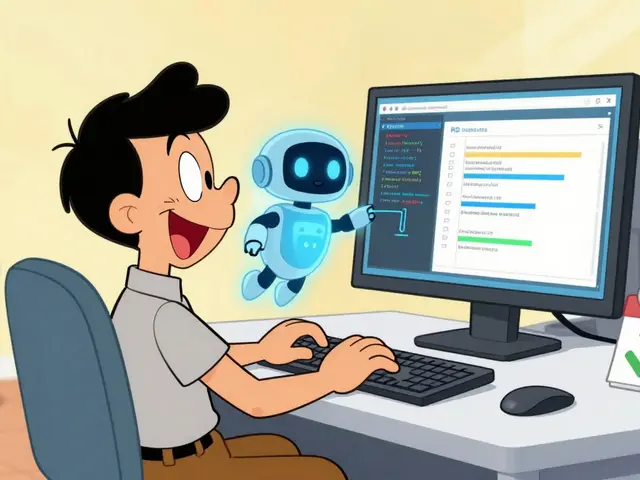
You don’t need to build your own AI agents from scratch to adopt these practices. Several tools are already embedding vibe coding capabilities into their workflows. GitHub Copilot is a prime example, particularly with its assistant and agent modes. Developers can use Visual Studio Code to ask Copilot to generate entire documentation sets, create Kubernetes controllers, or verify cloud resources. The agent mode specifically enables building entire frameworks through conversational commands.
Other platforms are focusing on the infrastructure side. Spacelift’s Saturnhead AI helps manage infrastructure as code by understanding the context of your cloud environment. AWS CodeGuru provides recommendations for cost optimization and performance, acting as an advisory agent. These tools lower the barrier to entry, allowing individuals who may not have extensive scripting expertise to leverage AI agents for complex infrastructure tasks.
The learning curve varies, but the fundamental value proposition remains consistent: practice with natural language prompts, and you’ll find that the transition from traditional coding to vibe coding workflows significantly lowers the effort required for automation. Documentation quality and community support for these tools are improving rapidly as adoption grows.
Security and Governance: The Double-Edged Sword
With great power comes great responsibility, and vibe coding is no exception. The speed gains are undeniable, but they introduce new risks. If an AI agent can deploy infrastructure in seconds, it can also misconfigure it in seconds. Security concerns emerge when organizations scale these tools without proportionally scaling their security measures.
Traditional security scans were scheduled and static. In a vibe-coded world, security must be continuous and context-aware. Organizations need to establish governance frameworks around AI agents. This includes defining clear boundaries for what an agent can do autonomously versus what requires human approval. For example, an agent might be allowed to restart a failed service, but changing database schemas should require a human sign-off.
Furthermore, the code generated by AI needs to be auditable. While the agents produce clean, standardized code, humans must still verify that the logic aligns with business requirements. The risk isn’t just in the code itself, but in the assumptions the AI makes. Establishing comprehensive security practices ensures that productivity gains don’t come at the expense of reliability.

Future Frontiers: Edge Computing and Distributed Systems
The impact of vibe coding isn’t limited to central cloud data centers. As distributed systems grow, AI agents will play a crucial role in managing complexity across edge devices and fog computing layers. Imagine a scenario where an agent automatically optimizes workload placement across hundreds of edge nodes based on real-time latency, cost, and device capability. This level of dynamic adaptation is difficult to achieve with static scripts but natural for an AI agent with full visibility into the network.
Real-time adaptation to changing network conditions represents the next frontier. Unified monitoring and management across distributed environments will rely on AI to provide a coherent view of system health. This extends the vibe coding philosophy beyond just code generation to holistic system orchestration, where the AI manages the entire lifecycle from edge to core.
Frequently Asked Questions
What is the main difference between vibe coding and traditional AI-assisted coding?
Traditional AI assistance often focuses on autocomplete or generating single functions. Vibe coding uses autonomous AI agents to build entire applications, frameworks, and infrastructure configurations based on high-level natural language intents, reducing the need for manual scripting entirely.
How does vibe coding affect on-call responsibilities?
It shifts the role from reactive debugging to proactive supervision. AI agents handle routine incident response and root cause analysis, allowing on-call engineers to focus on complex, novel problems and adjusting the guardrails for autonomous systems.
Which tools are best for implementing vibe coding in DevOps?
Popular options include GitHub Copilot (agent mode), GitLab’s Agentic AI Platform, Spacelift’s Saturnhead AI, and AWS CodeGuru. These tools integrate with existing CI/CD pipelines to enable prompt-driven infrastructure management and deployment.
Is vibe coding secure enough for production environments?
Yes, provided there is strong governance. Organizations must implement continuous, context-aware security analysis and define clear boundaries for autonomous agent actions. Human approval gates should remain for high-risk changes like database schema modifications.
Do I need to be an expert programmer to use vibe coding?
No. The primary requirement is the ability to clearly articulate technical intent in plain language. While familiarity with cloud concepts helps, the AI agents handle the syntactic and structural complexities, lowering the barrier to entry for infrastructure automation.