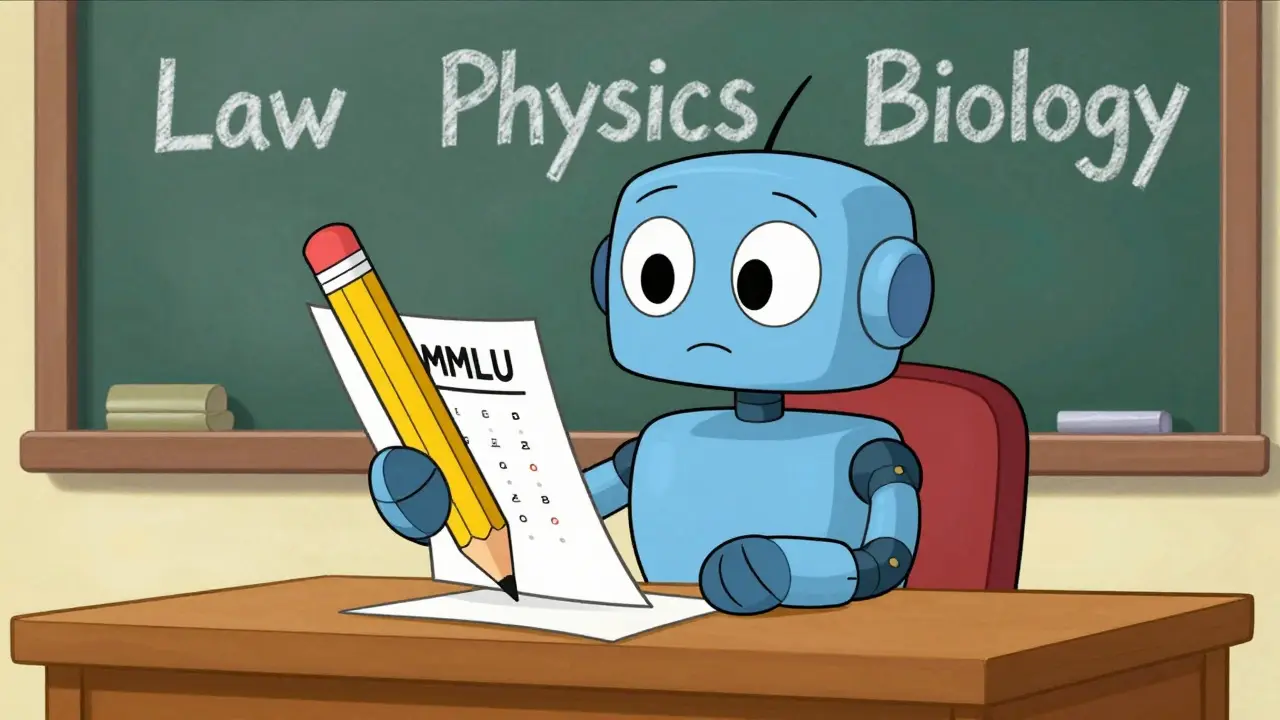
You’ve probably seen the charts. Every time a new large language model launches, there’s a big number attached to it, often hovering around 88% or higher. That number usually comes from MMLU, which stands for Massive Multitask Language Understanding. For years, this benchmark has been the go-to scorecard for judging how smart an AI really is. But here’s the catch: as models get better, the test gets worse at telling them apart. In fact, many experts now argue that relying solely on MMLU gives you a misleading picture of what modern AIs can actually do.
Think of MMLU like a standardized college entrance exam for robots. It was designed to measure broad knowledge across dozens of subjects, from high school biology to professional law. When it launched in 2020, it seemed insurmountable. Today? Frontier models are crushing it. So, what does that score actually tell you about an AI’s ability to write code, reason through complex logic, or avoid hallucinations? Not much. To understand where we stand in 2026, we need to look past the headline numbers and dig into what MMLU measures, why it’s failing us, and what benchmarks are stepping up to fill the gap.
The Origin Story: Why MMLU Became the Gold Standard
To get why MMLU matters, you have to look back at September 7, 2020. Researchers led by Dan Hendrycks at UC Berkeley released the benchmark with a clear goal: stop evaluating AI on narrow, synthetic tasks and start testing them on real-world academic knowledge. Before MMLU, most tests focused on simple language modeling or basic inference. They didn’t tell you if a model could pass a bar exam or solve a physics problem.
MMLU changed the game by aggregating 15,908 four-option multiple-choice questions across 57 distinct subjects. These weren’t made-up questions; they were drawn from actual educational materials, standardized tests, and professional exams. The subjects spanned five difficulty levels:
- Elementary: Basic arithmetic and science.
- Middle School: Geography, biology, and introductory math.
- High School: Calculus, chemistry, literature, and history.
- College: Undergraduate-level specialized knowledge.
- Professional: Expert domains like medical diagnosis, legal reasoning, and advanced scientific research.
This structure mirrored human education. If a model could ace these questions, it suggested the system had absorbed a massive amount of factual and conceptual knowledge. At launch, the best model available-GPT-3 175B from OpenAI-scored just 43.9%. Human domain experts, by comparison, averaged 89.8%. That nearly 46-point gap framed MMLU as a long-term challenge, a mountain for AI researchers to climb.
What MMLU Actually Measures
When you see a high MMLU score, you’re looking at three specific capabilities:
- Breadth of Factual Knowledge: Does the model know capital cities, chemical formulas, and historical dates?
- Cross-Domain Generalization: Can the same model handle both poetry analysis and quantum mechanics without retraining?
- Exam-Style Problem Solving: Can the model pick the correct answer from four options when given a few examples (few-shot prompting)?
For a while, this was enough. As models improved, their scores climbed steadily. By early 2024, Claude 3 Opus hit 86.8%, GPT-4 reached 86.4%, and Gemini Ultra scored 83.7%. These numbers were impressive because they showed that AI was closing the gap with human experts. Verity AI and other industry analysts called MMLU the “gold standard” because it provided a single, comparable metric for general intelligence.
However, even at its peak, MMLU had blind spots. Early studies noted that while average scores were decent, models performed near-randomly on socially critical subjects like professional law and moral scenarios. More importantly, the models were poorly calibrated. A model might be 90% confident in an answer that was wrong. MMLU measured *what* the model got right, but not *how sure* it was or *why* it chose that answer.
The Saturation Problem: Why High Scores Are Misleading
Here is where things get tricky for anyone trying to choose an AI tool in 2026. The original MMLU dataset is static. It hasn’t changed since 2020. Meanwhile, AI models have evolved dramatically. By mid-2024, top-tier models like Claude 3.5 Sonnet, GPT-4o, and Llama 3.1 405B were consistently hitting 88% accuracy. Some newer frontier models even cluster above 90%.
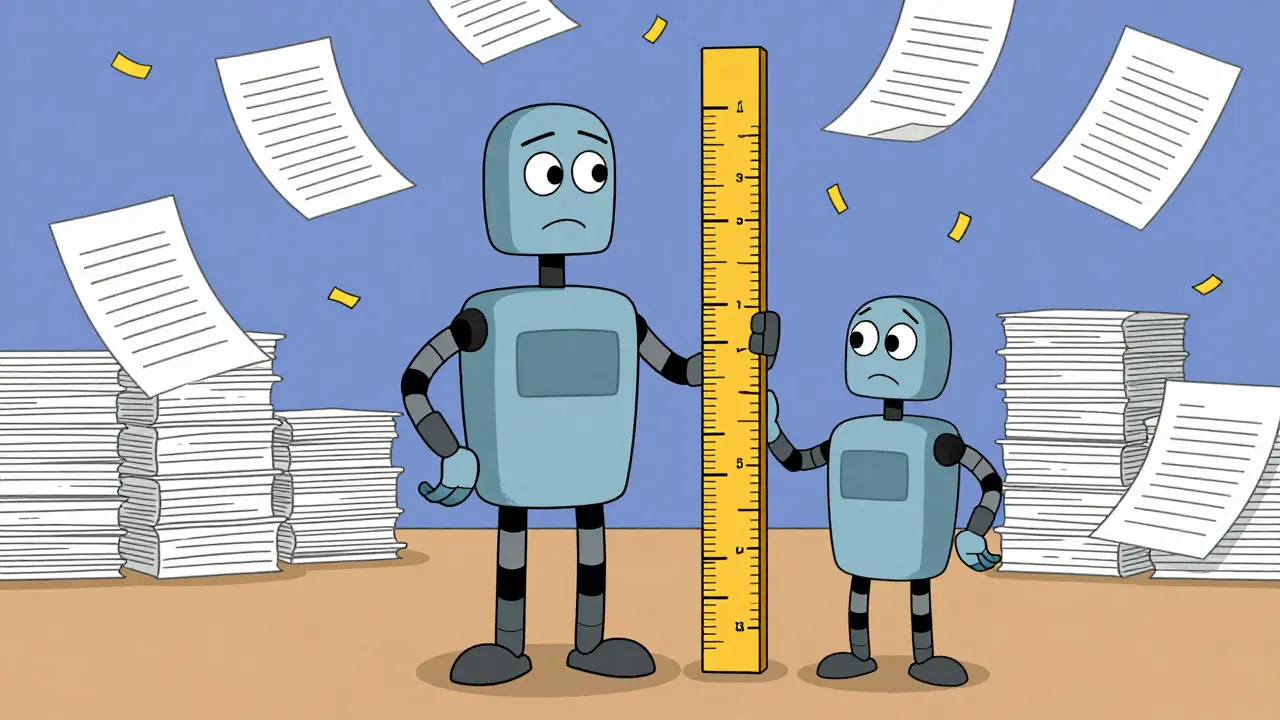
When almost every top model scores between 88% and 92%, the benchmark loses its discriminatory power. It’s like using a ruler that only measures up to six feet to compare two basketball players who are both seven feet tall. You can’t tell who is taller anymore.
This saturation creates two major issues:
- Diminishing Returns on Insight: A 1% difference in MMLU score no longer indicates a meaningful difference in capability. It’s likely noise.
- Data Contamination: Because MMLU has been downloaded over 100 million times since 2024, it’s highly probable that these questions ended up in training data. If a model memorizes the answers during training, its high score reflects rote memory, not genuine reasoning. This makes it impossible to distinguish between a model that understands the material and one that just cheated by seeing the test beforehand.
What MMLU Misses: The Hidden Gaps
If MMLU tells you how much an AI knows, it tells you very little about how well it thinks. Here are the critical areas where the benchmark falls short:
1. Reasoning Depth
MMLU questions are multiple-choice. You don’t need to show your work. You just need to pick A, B, C, or D. This format hides the model’s internal logic. A model might guess correctly based on pattern matching rather than logical deduction. For complex tasks like coding or mathematical proof, knowing the final answer isn’t enough; you need to trust the path taken to get there. MMLU doesn’t measure that path.
2. Question Quality Errors
In a surprising twist, audits of the MMLU dataset revealed that approximately 6.5% of the questions contain errors. These include ambiguous wording, mislabeled correct answers, or flawed options. This means the theoretical maximum score for a perfect model isn’t 100%-it’s closer to 93.5%. When models are scoring 88-90%, some of their “mistakes” might actually be correct answers that the benchmark marks as wrong. This skews the results and makes it hard to interpret small differences between models.
3. Safety and Alignment
A model can be knowledgeable but dangerous. MMLU does not test for safety, bias, or ethical alignment. A model could ace the law section of MMLU but still generate harmful legal advice in an open-ended chat. The benchmark measures competence, not character.
4. Open-Ended Problem Solving
Real-world problems rarely come with four pre-written options. They require generating novel solutions, writing code from scratch, or synthesizing information from conflicting sources. MMLU’s closed-book, multiple-choice format fails to capture these dynamic, interactive capabilities.
The Successors: MMLU-Pro and Beyond
Recognizing these flaws, the research community moved on. The most significant successor is MMLU-Pro, introduced by Wang et al. from the University of Waterloo. MMLU-Pro is designed to be harder, more robust, and less prone to contamination.
Key differences include:
- Harder Questions: It focuses on proficient-level, reasoning-intensive tasks across 14 domains like mathematics, physics, and engineering.
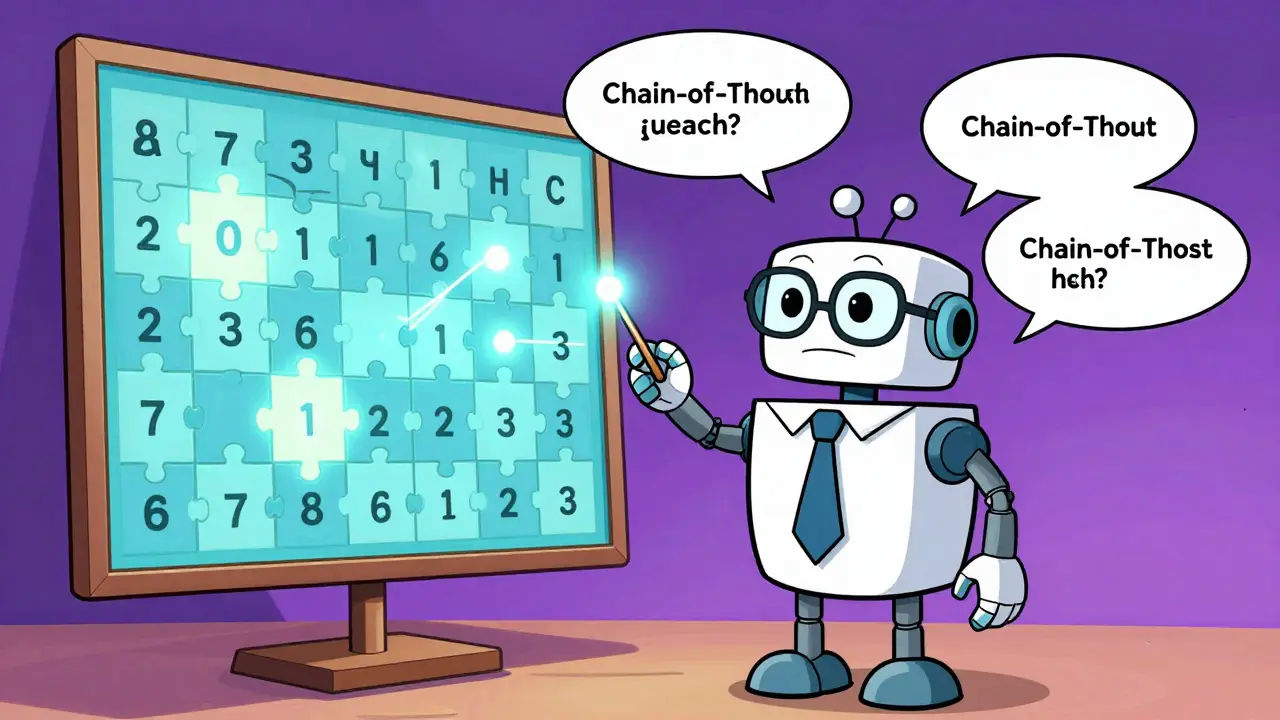
- Chain-of-Thought Prompting: Instead of just picking an answer, models are evaluated using 5-shot Chain-of-Thought (CoT) prompting. This forces the model to explain its reasoning before answering, revealing whether it truly understands the concept.
- Lower Scores: On MMLU-Pro, top models score significantly lower. For example, GPT-4o achieved 72.6% on MMLU-Pro, compared to ~86-90% on the original MMLU. This gap highlights the difference between memorized knowledge and deep reasoning.
By early 2026, even MMLU-Pro is starting to saturate. Top models like Google Gemini 3 Pro (~90.1%) and Anthropic Claude Opus 4.5 (~89.5%) are pushing close to expert levels on this harder test too. This rapid progression suggests that static benchmarks will always eventually fail. We are entering an era where evaluation must be continuous, dynamic, and task-specific.
| Feature | Original MMLU | MMLU-Pro |
|---|---|---|
| Question Count | 15,908 | 12,000+ |
| Subjects | 57 (Broad) | 14 (Focused, Proficient) |
| Format | Multiple Choice | Multiple Choice + Chain-of-Thought |
| Prompting | Few-Shot (Direct Answer) | 5-Shot CoT (Reasoning Required) |
| Top Model Score (2024) | ~88-90% | ~72.6% (GPT-4o) |
| Main Weakness | Saturation & Contamination | Rapidly Saturating |
How to Use MMLU Data in 2026
So, should you ignore MMLU entirely? No. It’s still useful as a baseline for historical context and general knowledge breadth. But you shouldn’t use it as the sole metric for decision-making. Here’s how to interpret it responsibly:
- Treat Scores Above 85% as Noise: If two models score 88% and 89% on MMLU, assume they are roughly equal in general knowledge. Look elsewhere for differentiation.
- Check Domain-Specific Breakdowns: Don’t just look at the average. Check how the model performs in your specific area of interest. A model might be great at humanities but poor at STEM, or vice versa.
- Combine with Harder Benchmarks: Always pair MMLU results with scores from MMLU-Pro, BIG-bench, or task-specific evaluations. If a model scores high on MMLU but low on MMLU-Pro, it likely relies on memorization rather than reasoning.
- Test for Contamination: Be skeptical of unusually high scores on older benchmarks. Ask if the model was trained on public datasets that included MMLU questions.
As we move further into 2026, the focus is shifting from “how much does the AI know?” to “how well can the AI think?” MMLU proved that AI could learn the world’s facts. Now, we need benchmarks that prove it can apply those facts wisely, safely, and logically. Until then, take those shiny 90% scores with a grain of salt.
What does MMLU stand for?
MMLU stands for Massive Multitask Language Understanding. It is a benchmark designed to evaluate the text understanding and problem-solving abilities of large language models across a wide range of academic and professional subjects.
Why is MMLU considered saturated?
MMLU is considered saturated because top-tier models now consistently score between 88% and 90%, leaving very little room to differentiate between the best systems. Additionally, widespread data contamination means models may be memorizing answers rather than reasoning through them.
What is the difference between MMLU and MMLU-Pro?
MMLU-Pro is a harder, more robust version of the original benchmark. It uses fewer but more difficult questions, focuses on proficient-level reasoning, and requires Chain-of-Thought prompting. This makes it better at measuring true reasoning capabilities rather than just factual recall.
Does a high MMLU score mean an AI is safe to use?
No. MMLU measures knowledge and exam-style problem solving, but it does not test for safety, bias, ethical alignment, or hallucination rates. A model can have a high MMLU score and still generate harmful or incorrect content in open-ended interactions.
Who created the MMLU benchmark?
MMLU was created by Dan Hendrycks and his team at the University of California, Berkeley, and was first released in September 2020.

oh look another article telling us what we already know but pretending its profound insight. the elite just love their little benchmarks like theyre sacred texts. meanwhile the rest of us are over here watching models hallucinate our way into oblivion while you debate decimal points on a multiple choice test that was designed before half of you were born. it is absolutely hilarious how serious everyone takes these numbers as if 89% vs 90% means anything in the real world where code breaks and laws get misinterpreted daily
from johannesburg i can tell you that back home we dont have the luxury of arguing about whether an ai passed a law exam or not because the electricity goes out every four hours so maybe focus on making tools that work offline first? but sure lets keep polishing the crown jewels of silicon valley metrics while the rest of the world waits for basic reliability
the moral decay of our society is mirrored in this obsession with quantifying intelligence through sterile multiple choice questions. we have created a digital panopticon where the soul of the machine is judged by its ability to regurgitate facts rather than its capacity for ethical reasoning. it is a tragedy of epic proportions that we measure the mind without measuring the heart. the pseudo-intellectuals in academia continue to build towers of babel using bricks of contaminated data. one wonders if the creators of these tests understand the philosophical implications of reducing human knowledge to a percentage score. it is a hollow victory when the victor is merely a parrot with a calculator
i totally agree with the point about saturation though its kinda wild how fast things moved isnt it? i mean i remember when gpt-3 was struggling with basic arithmetic and now we are talking about chain of thought prompting being the new standard which is actually really cool because it forces the model to show its work like a good student should. i think the key takeaway here is that we need to stop looking at single numbers and start looking at domain specific performance because honestly who cares if the model knows high school biology if it cant write a decent python script for your data pipeline? also typos happen when you type too fast lol
interesting perspective on the contamination issue. i guess i never thought about how many times those datasets must have been scraped since 2020. makes me wonder if any benchmark is truly secure anymore.
let's be real for a second the whole industry is built on hype cycles and vanity metrics. mmlu was useful once upon a time but now it's just marketing fluff. companies throw around 90% scores to justify massive compute bills while the actual user experience remains riddled with hallucinations and safety failures. it's a scam wrapped in academic jargon. stop buying it.