Your Retrieval-Augmented Generation (RAG) system is hallucinating again. Or worse, it’s ignoring the exact answer because the user phrased the question slightly differently than the source text. You’ve spent weeks tuning your vector embeddings, optimizing cosine similarity scores, and polishing your prompt engineering, yet the Large Language Model (LLM) still misses critical details like specific error codes, legal statutes, or medical acronyms.
This isn’t a failure of your model; it’s a limitation of pure semantic search. When you rely solely on dense vectors, you lose the precision that comes from exact word matching. The solution isn’t to abandon vectors-it’s to combine them with traditional keyword search. This approach, known as Hybrid Search, merges the contextual understanding of semantic retrieval with the rigid accuracy of keyword-based algorithms like BM25. By doing so, you create a retrieval pipeline that catches both the meaning behind a query and the specific terms within it.
The Problem with Pure Semantic Search
To understand why hybrid search matters, we first need to look at what goes wrong when you use only one method. Semantic search uses embedding models to convert text into high-dimensional vectors-usually between 384 and 1536 dimensions. It then calculates the distance between these vectors using metrics like cosine similarity. This works beautifully for conceptual queries. If a user asks, “How do I fix a memory leak in Python?” semantic search understands that this relates to garbage collection, even if the source document doesn’t contain those exact words.
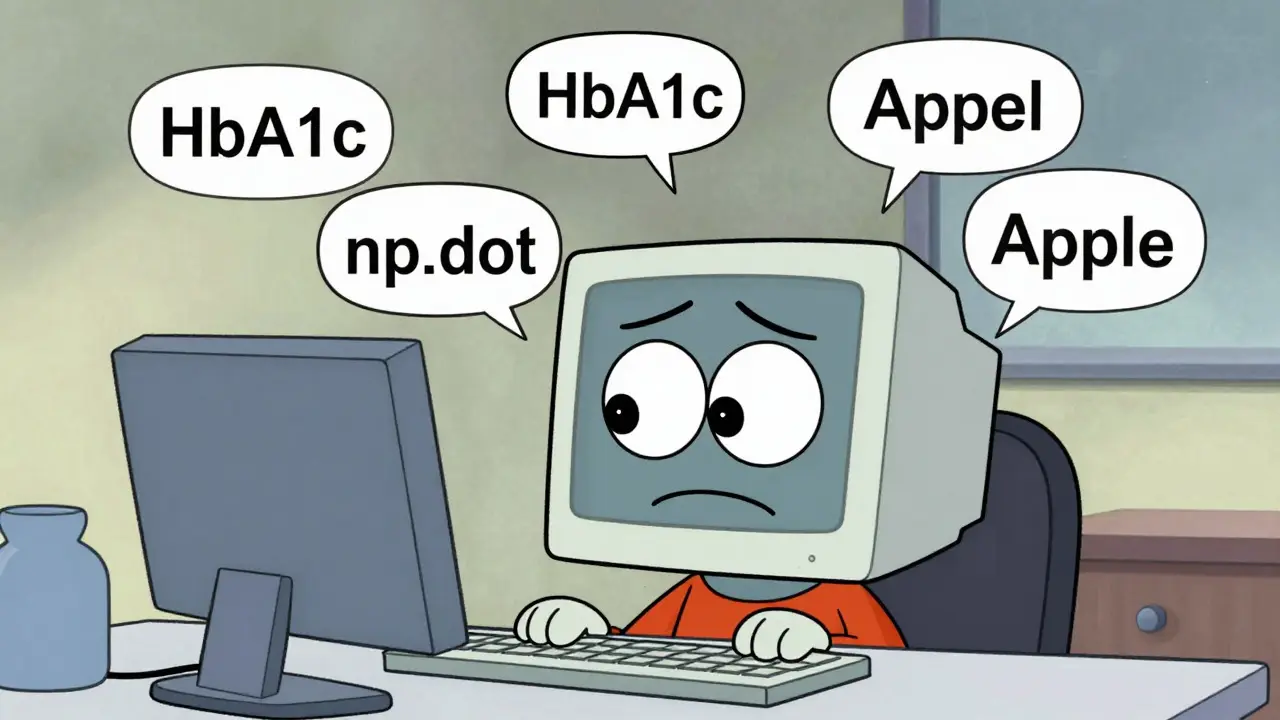
However, semantic search struggles with specificity. Consider a healthcare scenario where a doctor queries for “HbA1c.” An embedding model might interpret this as a general concept related to blood sugar or diabetes, potentially retrieving broad educational materials instead of the specific clinical guideline containing that exact acronym. Similarly, in software development, searching for a specific function like `np.dot` or a lambda expression often fails because the vector representation smooths out these distinct technical tokens. According to analysis by Towards AI in November 2023, pure semantic systems frequently miss results containing rare terms, acronyms, or code snippets because the mathematical distance between the query vector and the document vector isn't close enough, despite the factual relevance.
On the flip side, pure keyword search has its own blind spots. It relies on term frequency and inverse document frequency (TF-IDF) or more advanced ranking algorithms like BM25. While BM25 excels at finding documents with exact word matches, it lacks context. If a user searches for “Apple,” keyword search cannot distinguish between the fruit and the technology company without additional metadata filters. It treats every word as an isolated token, missing the nuanced relationships between concepts.
How Hybrid Search Works
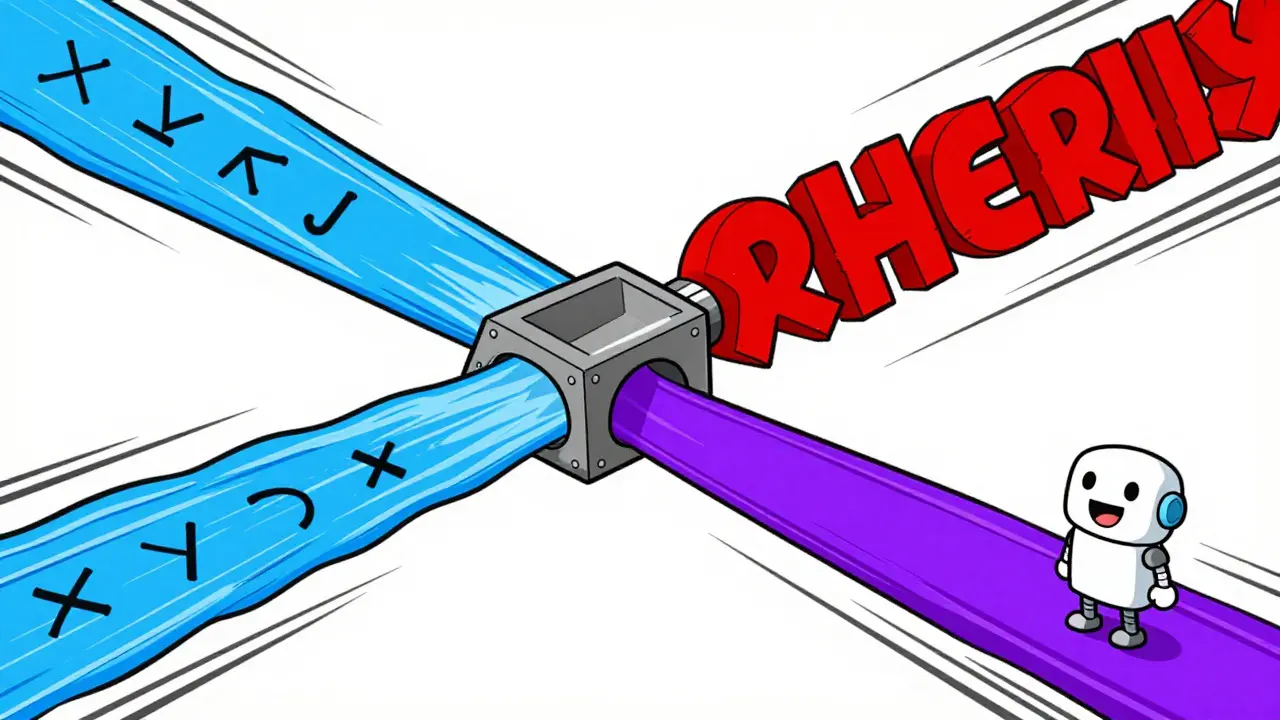
Hybrid Search is an information retrieval methodology that combines semantic (vector-based) search with keyword (full-text/BM25-based) search to optimize context retrieval for Large Language Models. Instead of choosing between meaning and precision, hybrid search executes both simultaneously and fuses the results.
The process follows a clear four-stage workflow:
- Dual Query Execution: The system sends the user’s query to two separate indexes. One index contains dense vector embeddings processed through a vector database (like Pinecone, Chroma, or FAISS). The other index contains sparse representations processed by a keyword engine using the BM25 algorithm.
- Independent Scoring: Each system returns a ranked list of relevant document chunks. The vector database ranks based on cosine similarity, while the keyword engine ranks based on term frequency and inverse document frequency across the corpus.
- Score Fusion: This is the critical step. The system combines the two ranked lists using a mathematical fusion technique. Common methods include Reciprocal Rank Fusion (RRF), Simple Weighted Fusion, and Linear Fusion Ranking.
- Context Delivery: The final, optimally ranked chunks are passed to the LLM as context, allowing the model to generate a response that is both contextually aware and factually precise.
Meilisearch’s June 2024 technical benchmarks showed that this dual approach can improve retrieval accuracy by up to 37% in technical domains compared to single-method approaches. The key is that neither system operates in isolation; they compensate for each other’s weaknesses.
Fusion Techniques: Merging the Results
The magic of hybrid search lies in how you combine the scores. There is no single "best" way, but three primary techniques dominate the industry today.
| Technique | Mechanism | Best Use Case |
|---|---|---|
| Reciprocal Rank Fusion (RRF) | Merges rankings mathematically, giving credit to items that appear high in multiple lists, even if their raw scores differ. | General purpose; robust against outliers in either scoring system. |
| Simple Weighted Fusion | Assigns fixed weights to each method (e.g., 30% semantic / 70% keyword) and sums the normalized scores. | Domains requiring strict control over precision vs. recall balance. |
| Linear Fusion Ranking (LFR) | Calculates a weighted sum of transformed scores from both vector and keyword search. | Enterprise platforms like Salesforce Data 360 needing scalable, standardized scoring. |
Reciprocal Rank Fusion (RRF) has gained significant traction because it doesn’t require extensive tuning. As noted by Fuzzy Labs in April 2024, RRF ensures that lower-ranked results from one method can contribute to the final score if they are consistently relevant across both systems. This reduces the risk of missing critical information due to an overly aggressive weighting scheme.
Simple Weighted Fusion offers more control but requires experimentation. For example, a legal compliance application might prioritize exact terminology, leading developers to assign 80% weight to keyword search and 20% to semantic search. Conversely, a creative writing assistant might lean 80% toward semantic search to capture stylistic nuances. LangChain implementations often demonstrate this flexibility, allowing engineers to adjust weights dynamically based on domain requirements.
Performance Gains by Industry
The value of hybrid search varies significantly depending on your vertical. Industries that rely heavily on standardized terminology see the most dramatic improvements.
In Healthcare, precision is non-negotiable. Medical abbreviations like “COPD” or “HbA1c” must be retrieved exactly. Meilisearch reported that healthcare RAG implementations saw a 35.7% improvement in retrieving documents containing these critical abbreviations when switching from pure semantic search to hybrid. A developer on Reddit’s r/MachineLearning forum shared that after implementing an EnsembleRetriever with a 30/70 weighting, queries for “HbA1c” returned relevant results 92% of the time, compared to just 58% with pure vector search.
In Software Development, code snippets and syntax matter. Developer assistants using hybrid search showed a 41.2% improvement in retrieving examples containing specific syntax like `np.dot` or lambda functions. Stack Overflow’s engineering team documented a 34.7% reduction in “zero-result queries” for programming terminology containing special characters, which often break pure semantic parsing.
In Legal and Compliance, case references and law codes require exact matches. Hybrid search improved retrieval accuracy by 33.4% for these applications, ensuring that attorneys receive citations with precise statutory language rather than paraphrased summaries that could introduce liability.
However, not all domains benefit equally. Marketing and creative industries, which prioritize conceptual relevance over exact terminology, lag in adoption at 43%. For these sectors, the added complexity of hybrid search may not justify the marginal gains in precision.
Implementation Challenges and Trade-offs
Adopting hybrid search isn’t without costs. The primary trade-off is increased complexity. Integrating two separate retrieval systems adds 35-50% more development time to your RAG pipeline construction, according to Fuzzy Labs. You’ll need to maintain both vector indexes and keyword indexes, which increases storage overhead by 30-40%.
Latency is another concern. Elastic’s March 2024 benchmark tests showed that hybrid search introduces 18-25% higher latency compared to single-method search. This happens because the system must execute two queries and perform fusion calculations before returning results. For real-time conversational applications, this delay can impact user experience. To mitigate this, Elastic recommends implementing query-time fusion rather than index-time fusion for large-scale deployments, allowing the system to retrieve and merge results on the fly without duplicating data structures.
Tuning the weights is also a persistent pain point. GitHub issue trackers reveal that LangChain users have logged hundreds of issues related to hybrid search configuration, with the most frequent complaint being the difficulty of determining optimal weights for domain-specific applications. There is no universal formula. Legal teams might need 80% keyword weighting, while general knowledge bases perform best with 60% semantic weighting. This requires iterative testing and validation against ground-truth datasets.

Future Directions: Adaptive Hybrid Retrieval
The field is evolving beyond static fusion techniques. Meilisearch announced a “Dynamic Weighting” feature in June 2024 that automatically adjusts semantic and keyword weights based on query characteristics. In beta testing, this adaptive approach showed a 19.3% improvement in overall accuracy by recognizing when a query contained technical acronyms versus natural language questions.
Research from Stanford’s Center on Foundation Models in April 2025 demonstrated “Adaptive Hybrid Retrieval” systems that use LLMs themselves to determine the optimal retrieval strategy per query. These systems achieved 42.1% higher precision than static hybrid approaches by analyzing the intent and structure of the input before selecting the retrieval path. Additionally, tighter integration with re-ranking models is emerging as the next evolution, with 87% of experts surveyed by Fuzzy Labs identifying re-rankers as essential for refining the final output of hybrid search pipelines.
Despite these advancements, challenges remain regarding computational overhead. MIT’s CSAIL lab reported in November 2024 that current hybrid approaches increase RAG pipeline complexity by 3.2x without proportional accuracy gains in general knowledge domains. This suggests that hybrid search may become specialized for technical, mission-critical applications rather than a universal default for all RAG implementations.
Conclusion
Hybrid search represents a pragmatic solution to the inherent limitations of pure semantic retrieval. By combining the contextual depth of vector embeddings with the precision of BM25 keyword matching, you create a more robust foundation for your LLM applications. While it introduces complexity and latency, the gains in accuracy for technical, legal, and healthcare domains make it a worthwhile investment. As tools evolve toward dynamic weighting and adaptive strategies, the barrier to entry will lower, making hybrid search an accessible standard for enterprise-grade RAG systems.
What is the difference between semantic search and keyword search?
Semantic search uses vector embeddings to understand the meaning and context of a query, capturing conceptual similarities even if the words don't match exactly. Keyword search, typically using algorithms like BM25, looks for exact term matches based on frequency and distribution in the text. Semantic search is better for broad concepts, while keyword search is superior for specific terms, acronyms, and codes.
Why do I need hybrid search for my RAG application?
You need hybrid search if your application deals with domain-specific terminology, such as medical acronyms, legal statutes, or code snippets. Pure semantic search often misses these exact terms because it prioritizes conceptual similarity. Hybrid search ensures you get both the contextual relevance of vectors and the precision of keyword matching, reducing missed answers and improving overall accuracy.
What is Reciprocal Rank Fusion (RRF)?
Reciprocal Rank Fusion is a mathematical technique used to combine ranked lists from different search methods. Instead of relying on raw scores, which can vary wildly between vector and keyword systems, RRF gives points based on the rank position of each result. This makes it robust and easier to tune, as it naturally promotes results that appear high in both lists.
Does hybrid search increase latency?
Yes, hybrid search typically increases latency by 18-25% compared to single-method search. This is because the system must execute two separate queries (one for vectors, one for keywords) and then fuse the results. However, this trade-off is often acceptable for mission-critical applications where accuracy is paramount.
Which industries benefit most from hybrid search?
Industries that rely on precise terminology benefit most, including Healthcare, Legal, and Software Development. These sectors require exact matches for acronyms, case laws, and code syntax, which pure semantic search often misses. Creative and marketing fields, which prioritize conceptual relevance, see less benefit from the added complexity.