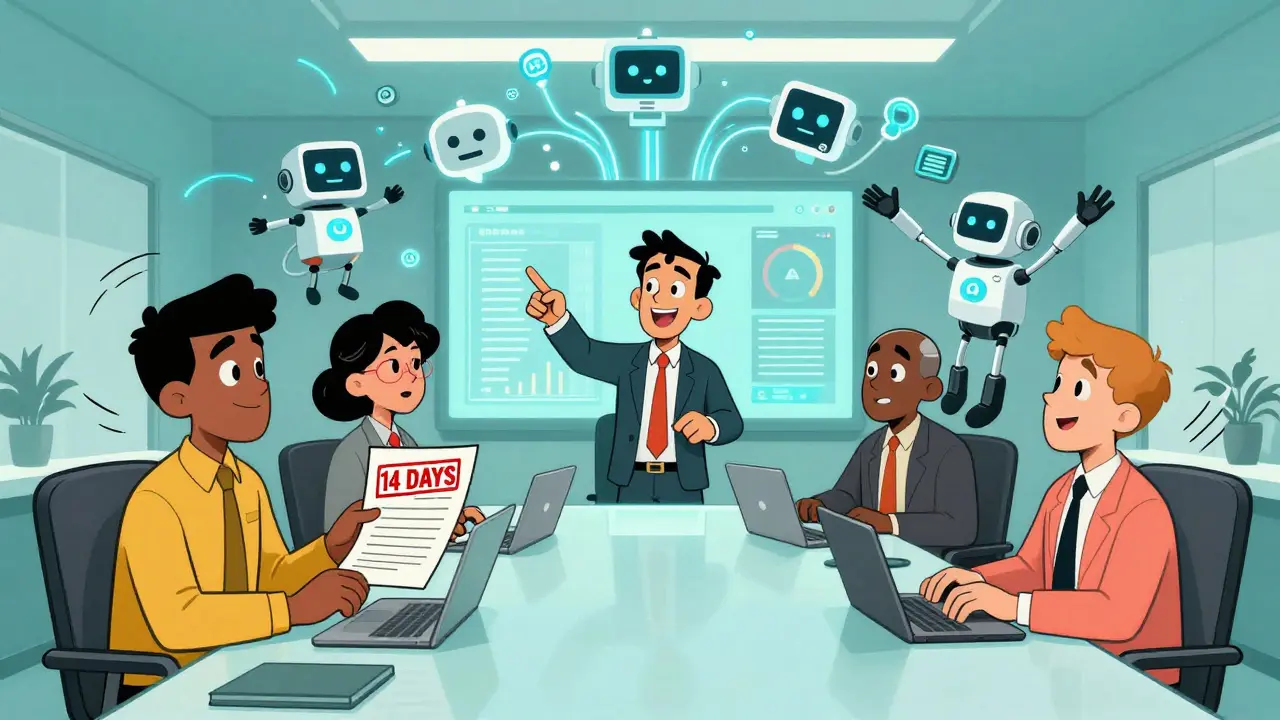
By early 2026, if your board or C-suite hasn’t started learning about generative AI, you’re already behind. This isn’t about coding or algorithms-it’s about strategy. Companies that treat AI as a tech problem are losing to those that treat it as a leadership challenge. The question isn’t whether generative AI will change your business. It’s whether your leaders are ready to lead that change.
Why Executives Can’t Afford to Wait
By 2026, 75% of enterprises will have launched at least one generative AI initiative, according to Gartner. That means your competitors are already using AI to cut costs, speed up product development, personalize customer experiences, and even rewrite internal processes. But here’s the catch: most of these efforts fail-not because the tech doesn’t work, but because leadership doesn’t know how to use it.
Executives who think they can outsource AI to IT departments are setting themselves up for disappointment. AI doesn’t live in a silo. It reshapes marketing, HR, finance, legal, and operations. If your CEO doesn’t understand how AI can automate contract reviews or your CFO can’t assess its impact on payroll forecasting, you’re flying blind.
Look at the data: 89% of participants in top-tier executive AI programs implemented at least one AI initiative within six months of finishing. At MIT and Wharton, that number jumps to 94% and 92%. The difference? These programs don’t just teach AI-they teach leadership.
What These Programs Actually Teach (And What They Don’t)
Forget the hype. The best executive programs skip the technical deep dives. You won’t learn how to fine-tune a large language model. You won’t need to write Python. Instead, you’ll learn how to ask the right questions.
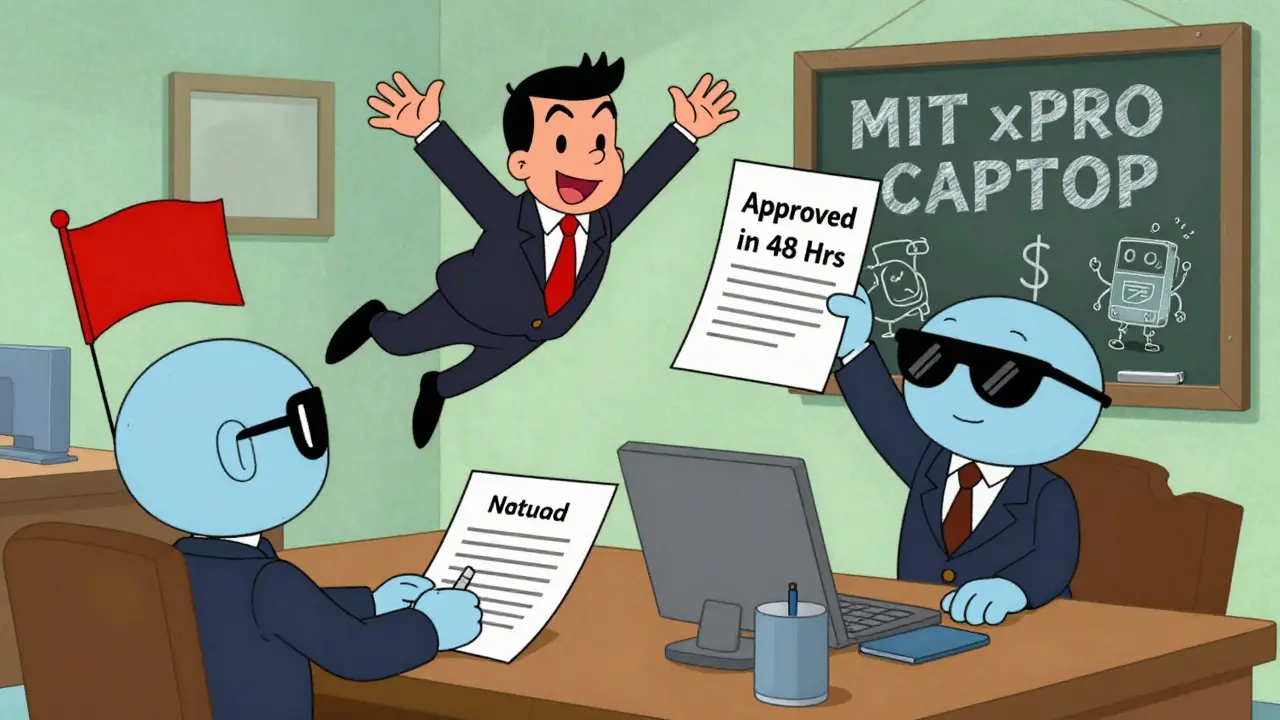
MIT xPRO’s six-month program, ranked #1 in 2026, focuses on six core areas: AI use cases, risks, integration, workflow automation, data-driven R&D, and Microsoft Copilot enablement. But the real value? The capstone project. Every participant must build a custom AI strategy for their own organization. One CFO who completed it in 2025 used it to automate invoice processing across 12 subsidiaries-cutting approval time from 14 days to 48 hours.
Harvard Kennedy School’s program cuts through the noise with a simple philosophy: leaders need intuitive understanding, not technical expertise. Their curriculum walks executives through real-world scenarios-like how AI can detect fraud in insurance claims or predict supply chain delays-without a single line of code.
Meanwhile, Kellogg’s program highlights something most others ignore: agentic intelligence. This isn’t just about chatbots answering emails. It’s about AI systems that make decisions independently-like an AI agent that negotiates vendor contracts or reassigns workloads based on real-time performance. If your leadership team doesn’t understand the difference between generative AI and autonomous AI agents, you’re missing the next wave.
Top Programs Compared: Cost, Time, and Value
Not all programs are created equal. Here’s how the leading options stack up in early 2026:
| Program | Provider | Duration | Cost | Key Strength | Best For |
|---|---|---|---|---|---|
| AI for Senior Executives | MIT xPRO | 6 months | $15,000 | Capstone strategy project, MIT CSAIL faculty | CEOs, board members needing deep, long-term transformation |
| Leadership Program in AI and Analytics | Wharton | 6 months | $14,500 | Oxford 4Ps framework, regulatory compliance modules | Executives in regulated industries (finance, healthcare) |
| AI Strategies for Business Transformation | Kellogg | 8 weeks | $3,900 | Agentic intelligence, real-world case studies | Leaders needing quick, actionable insights |
| The Business of AI | Columbia Business School | 10 weeks | $12,000 | Interdisciplinary faculty (engineering, neuroscience, marketing) | Companies with complex, cross-functional teams |
| Generative AI: How to Use It and Why It Matters | Harvard Kennedy School | 6 weeks | $2,800 | Step-by-step guidance for non-technical leaders | Public sector, nonprofits, healthcare leaders |
| Generative AI for Executives | IBM | 2 months | $79/month | Low cost, flexible | Executives testing the waters before investing |
MIT xPRO is the most expensive-but it’s also the most comprehensive. The $15,000 price tag includes one-on-one coaching, access to MIT’s AI research labs, and a certificate from Purdue University. Wharton’s program adds regulatory depth after the EU AI Act went live in August 2025. Kellogg’s shorter format makes it ideal for leaders who need to act fast. And if your company won’t pay for a $12,000 program, IBM’s $79/month subscription gives you the basics without the prestige.
The Hidden Cost of Choosing Wrong
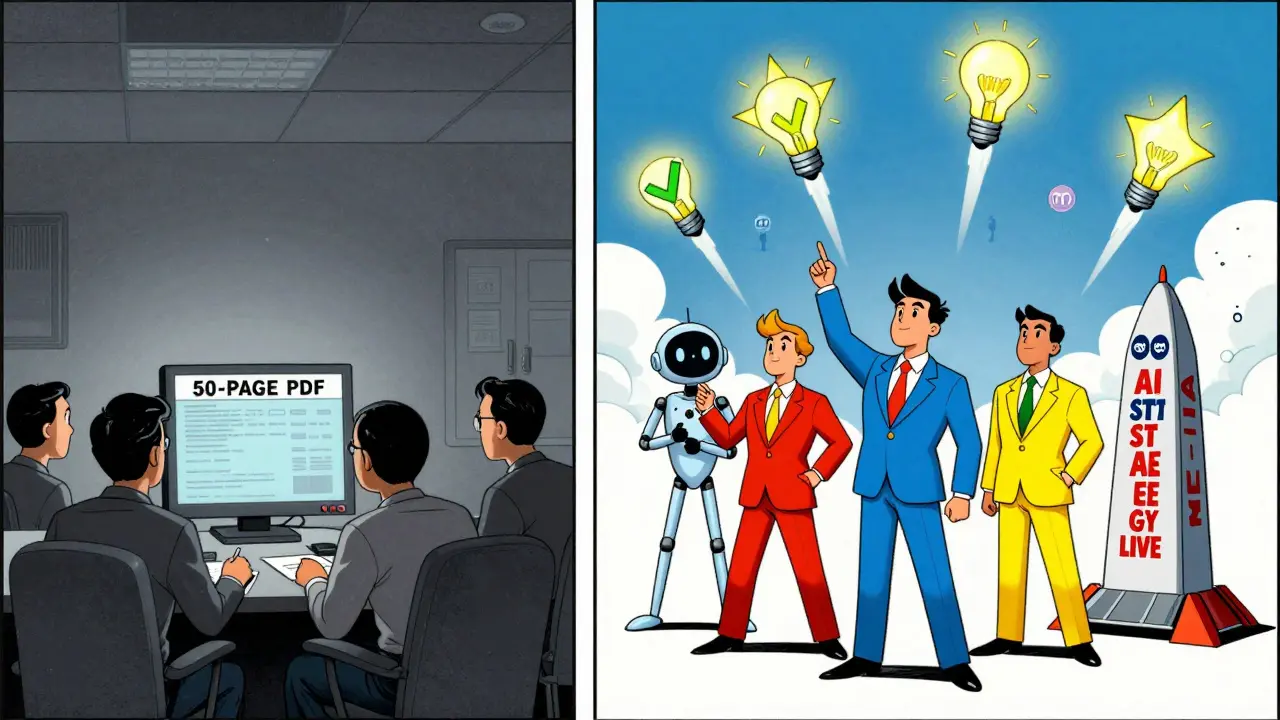
Not all programs deliver. In 2025, 41% of new entrants in the executive AI education market failed to meet their promised outcomes, according to Digital Defynd. Many offered theoretical overviews with no practical frameworks. One executive from a Fortune 500 company posted on Glassdoor in December 2025: “We spent $10,000 per person and got a 50-page PDF. Nothing changed.”
What separates the winners? Three things: real projects, faculty credibility, and follow-up support. Top programs now offer post-completion consulting-65% in 2026, up from just 22% in 2024. That means after you finish, you still get help implementing what you learned.
Also watch for ethics. In 2025, only 37% of programs covered bias and IP risks in depth. By 2026, that number jumped to 68%. If a program doesn’t address how AI can amplify discrimination in hiring or steal creative work, walk away. This isn’t theoretical-it’s legal.
Who Should Enroll? And Who Should Wait?
These programs aren’t for everyone. They’re for leaders who control budgets, set strategy, or answer to the board. That means:
- CEOs, CFOs, COOs, and CTOs
- Board members and audit committee chairs
- Heads of marketing, HR, legal, and operations
- Divisional presidents and senior VPs
If you’re a mid-level manager without decision-making power, these programs won’t help you much. You’ll need to start with internal training or online courses. But if you’re the one signing off on AI budgets, you need this.
And if you’re wondering whether your company should pay? The numbers say yes. In 2025, 78% of participants in top programs had their tuition covered by their employer-up from 42% in 2023. That’s because companies are seeing ROI. One financial services firm that sent 12 executives through Kellogg’s program saw a 30% reduction in customer service response time and a 22% increase in cross-sell success rates within six months.
What Happens After You Finish?
Finishing a program isn’t the end-it’s the beginning. The real work starts when you return to your office. That’s why the best programs build in implementation support.
MIT xPRO assigns each participant a success coach who helps align learning with their leadership goals. Wharton runs workshops where teams simulate AI-driven decision-making under pressure. Kellogg connects graduates to a network of alumni who are already using AI in their companies.
One chief strategy officer from a Fortune 500 company shared on LinkedIn after completing MIT xPRO: “The capstone forced me to build a real plan-not just a presentation. Six months later, we’ve launched three AI initiatives that came straight from my project.”
That’s the goal. Not to know more. But to do more.
Where the Market Is Headed
By 2027, analysts predict only 25-30 high-quality executive AI programs will remain out of the 120+ that exist today. The market is consolidating. The cheapest, flashiest courses are fading. The ones that survive are those tied to top business schools with real research labs, experienced faculty, and proven outcomes.
The next big shift? Integration with corporate AI roadmaps. Programs that offer post-completion consulting-helping you actually deploy AI inside your company-are becoming the new standard. If a program doesn’t offer that, it’s already outdated.
And the focus is moving beyond chatbots. Agentic AI-systems that act autonomously-is now core to every top curriculum. If your leadership team doesn’t understand what happens when AI starts making decisions without human input, you’re not ready for 2027.

Okay but let’s be real-most execs still think AI is just a fancy chatbot that writes emails for them. I saw a CFO last week ask if AI could ‘auto-reply to shareholders’ like it’s a Twitter DM. 😅 We’ve got a long way to go.
im glad someone finally said this. i work in a bank and our ceo keeps saying ‘we need ai like chatgpt’ and i’m like bro its not about chatbots its about automating loan approvals and fraud detection. also typo sorry 😅
This is the kind of post that makes me want to drop everything and sign up for a program. Seriously. I’ve been watching my company waste millions on AI consultants who don’t even understand our business. If you’re leading a team and you’re not learning how AI changes your job-not just IT’s job-you’re doing everyone a disservice. The fact that MIT and Wharton are making leaders build real strategies? That’s gold. No more PowerPoint fluff. Real projects. Real impact. I’m telling my boss next Monday: ‘We’re doing this.’
YES!! 😍 I just finished Kellogg’s 6-week program and OMG-it changed how I run HR. We used AI to screen resumes without bias and cut hiring time by 40%. And no, I didn’t write a single line of code. Just learned to ask the right questions. If your company isn’t investing in this for leaders, they’re sleeping on the future 💪✨
most of these programs are too expensive. my company wont pay. i read the article and got the point. ai is not just for tech people. leaders need to get it. thats all.
i used to think this was all hype. but after seeing how our legal team automated contract reviews with copilot-cutting 3 weeks down to 3 days-I get it now. it’s not about being a tech wizard. it’s about letting your team do better work. thanks for laying this out so clearly.
MIT xPRO? $15k? Cute. The real edge is in the agentic AI stuff-Kellogg’s program is the only one that gets it. Everyone else is still stuck in 2023. Also, ‘certificate from Purdue’? LOL. That’s not even a top school. 😴
Hey Rohit, I get you’re trying to be edgy but come on-MIT’s faculty are legit. And Purdue? They’re just the credentialing partner, not the brain behind it. Honestly, I’m glad you’re pushing for better standards, but let’s not trash the people who are actually making progress. I sent three of my team through Wharton last year-now they’re leading our AI governance team. That’s not fluff. That’s impact. And if you’re not ready to invest in that kind of leadership, maybe you’re the one who’s behind.
There’s a comma missing after ‘2026’ in the first paragraph. Also, ‘agentic intelligence’ isn’t even a real term-it’s just marketing jargon for ‘autonomous agents.’ And why is IBM’s program listed as ‘$79/month’ without a total? That’s misleading. Someone needs to fact-check this before posting.