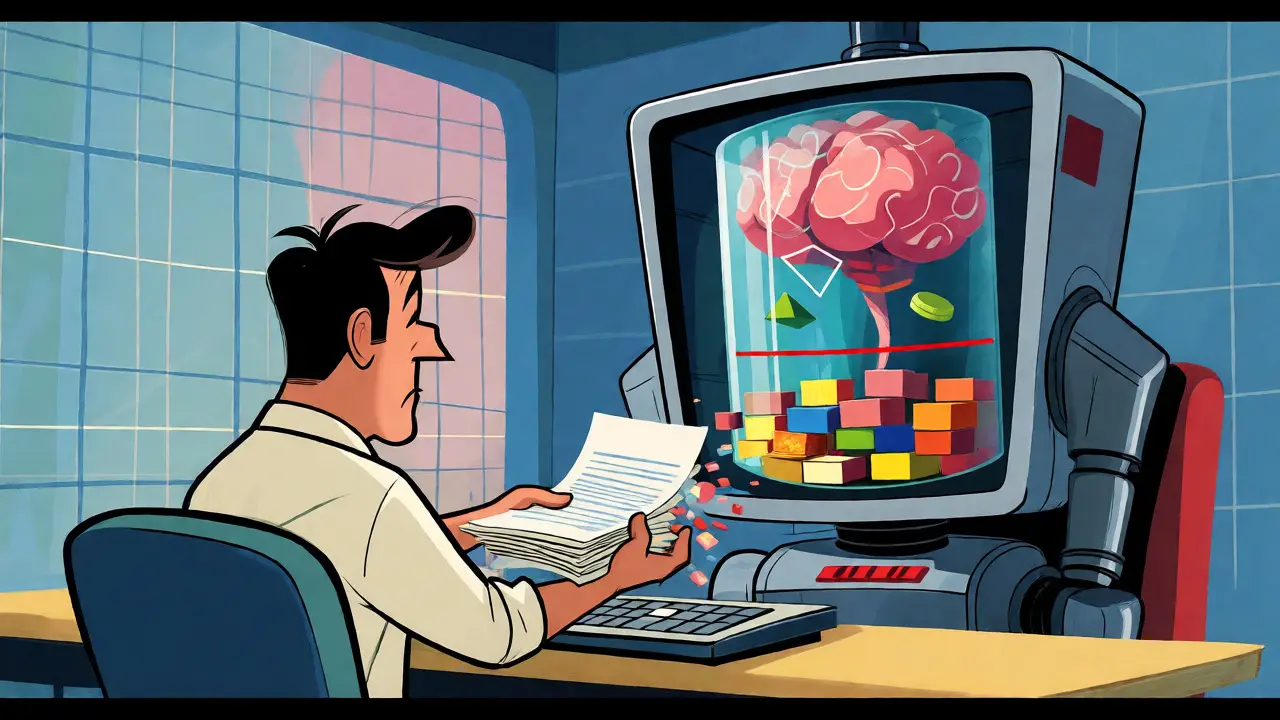
You’ve probably felt it. You’re deep in a conversation with an Large Language Model, pasting chunks of code or long documents, and suddenly the AI starts forgetting what you said ten minutes ago. It’s not that the model is "dumb"; it’s hitting its context window. Think of this as the AI’s working memory. Just like you can’t hold every word of a two-hour lecture in your head while trying to solve a math problem, an LLM has a hard limit on how much text it can "see" at once.
In 2026, these windows have exploded in size. We went from GPT-2’s modest 2,048 tokens in 2019 to models like Claude 3.7 Sonnet handling 200,000 tokens and Gemini 1.5 Pro experimenting with 1 million. But bigger isn’t always better. There are hidden costs, performance drops, and weird hallucinations that creep in when you push these limits. This guide cuts through the noise to explain exactly what context windows are, where they break, and how to use them without wasting money or getting confused answers.
What Exactly Is a Context Window?
A context window is the maximum amount of text data-measured in tokens-that a model can process in a single prompt during inference. It includes everything: your instructions, the previous turns of the conversation, any documents you uploaded, and the response the model generates. If you exceed this limit, the oldest information gets dropped, often silently.
Tokens aren’t just words. They are fragments. The word "apple" might be one token, but "internationalization" could be four. Different models tokenize differently, so a 100-page PDF might cost different amounts depending on whether you’re using OpenAI’s tokenizer or Anthropic’s. Generally, 1,000 tokens roughly equal 750 words of English text. So, a 128,000-token window sounds huge, but it’s effectively about 96,000 words. That’s a lot, but it fills up fast if you’re debugging a massive codebase or analyzing legal contracts.
The concept emerged with transformer architectures, which rely on attention mechanisms to weigh the importance of different parts of the input. Without a fixed window, computing attention across infinite text would be computationally impossible. So, we trade infinite memory for finite, manageable processing power.
The Hardware Reality Behind Big Numbers
Why don’t all models have 1-million-token windows? Because hardware hates it. Processing long contexts requires massive amounts of Video RAM (VRAM) and computational time. When you feed a model more tokens, the complexity doesn’t grow linearly; it grows quadratically in standard transformer implementations. This means doubling the context length can quadruple the compute cost.
For example, running a 200,000-token context on NVIDIA A100 GPUs can require around 3.2GB of VRAM just for the attention mechanism’s key-value cache. Inference times also suffer. While a small model might respond in 2 seconds, a large-context query can take 18-22 seconds per 1,000 tokens generated. If you’re building a real-time chatbot, waiting 20 seconds for a reply is a dealbreaker. If you’re analyzing quarterly reports overnight, it’s fine. Understanding this trade-off is crucial for engineering decisions.
Comparing Leading Models in 2026
Not all context windows are created equal. Some models handle long contexts gracefully; others degrade quickly. Here’s how the major players stack up based on current benchmarks and developer reports.
| Model | Max Context Window | Best Use Case | Known Limitations |
|---|---|---|---|
| Claude 3.7 Sonnet | 200,000 tokens | Long document analysis, coding | Cost increases significantly beyond 100k tokens |
| GPT-4 Turbo | 128,000 tokens | General purpose, balanced speed/cost | Performance dips slightly near max capacity |
| Gemini 1.5 Pro | 1,000,000 tokens (experimental) | Huge datasets, video understanding | Can hallucinate details in very long inputs |
| Llama 3 70B | 8,192 - 32,000 tokens | Open-source flexibility, local deployment | Struggles with multi-document reasoning |
Claude 3.7 Sonnet currently leads in practical enterprise tasks requiring long contexts. Stanford’s CRFM Benchmark showed it outperformed GPT-4 Turbo by nearly 20% in summarizing documents over 100,000 tokens. However, Gemini 1.5 Pro’s 1-million-token window is tempting. Users report it occasionally "hallucinates" details in 500+ page contracts, likely due to attention dilution-the model struggles to pinpoint specific facts buried deep in the middle of the text.
The Hidden Costs: Attention Dilution and Noise
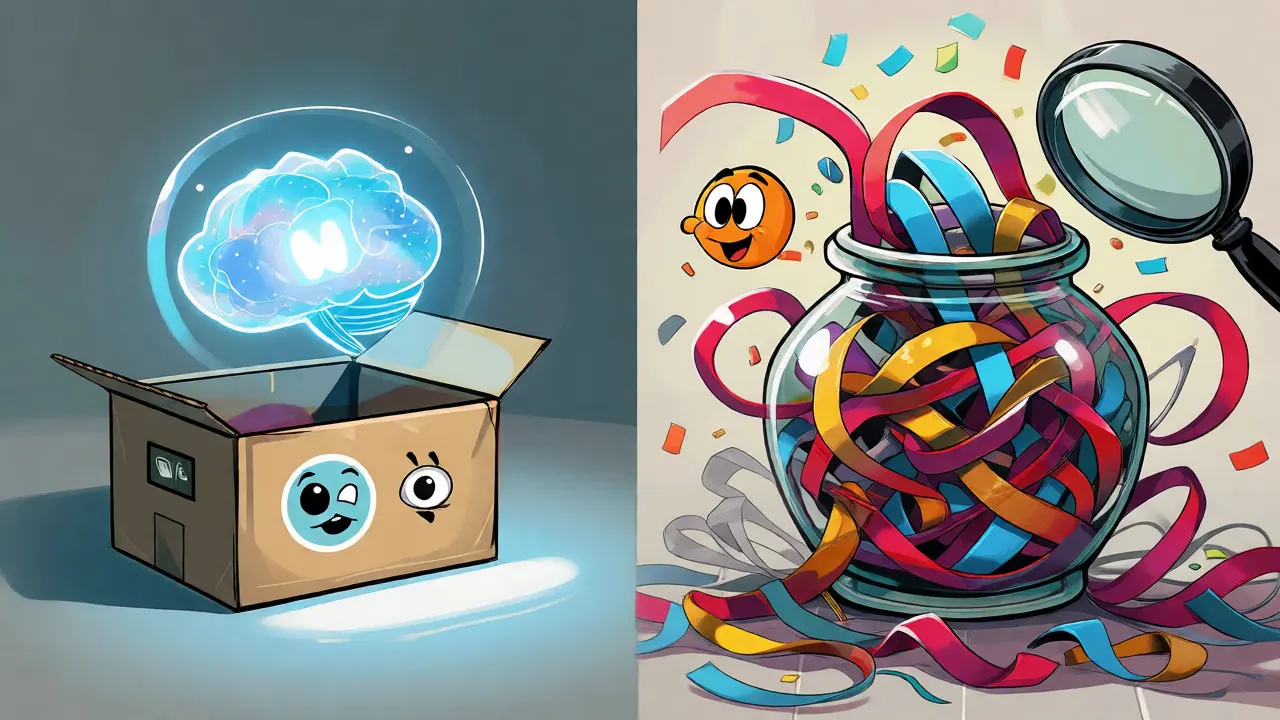
Here’s the counter-intuitive part: adding more context can make your answers worse. Researchers call this "attention dilution." When a model scans 200,000 tokens, it must assign weights to each token. If you bury the critical instruction in the middle of a sea of irrelevant data, the model might miss it. Anthropic’s internal testing showed that response quality drops by 8.3% on average when moving from 100,000 to 200,000 tokens, even though the information is technically present.
This is why "needle in a haystack" tests are popular. Can the model find a specific fact hidden in a massive document? Often, yes. But can it reason complexly about that fact while ignoring 99% of the surrounding noise? Not always. Microsoft Research found that coherence degrades in conversational threads beyond 150,000 tokens in 63% of cases. The model starts losing track of the thread’s logic, even if it remembers the individual facts.
Best Practices for Managing Context
You don’t need to fill the window to get good results. In fact, you shouldn’t. Here are strategies developers and engineers use to keep their LLM apps efficient and accurate.
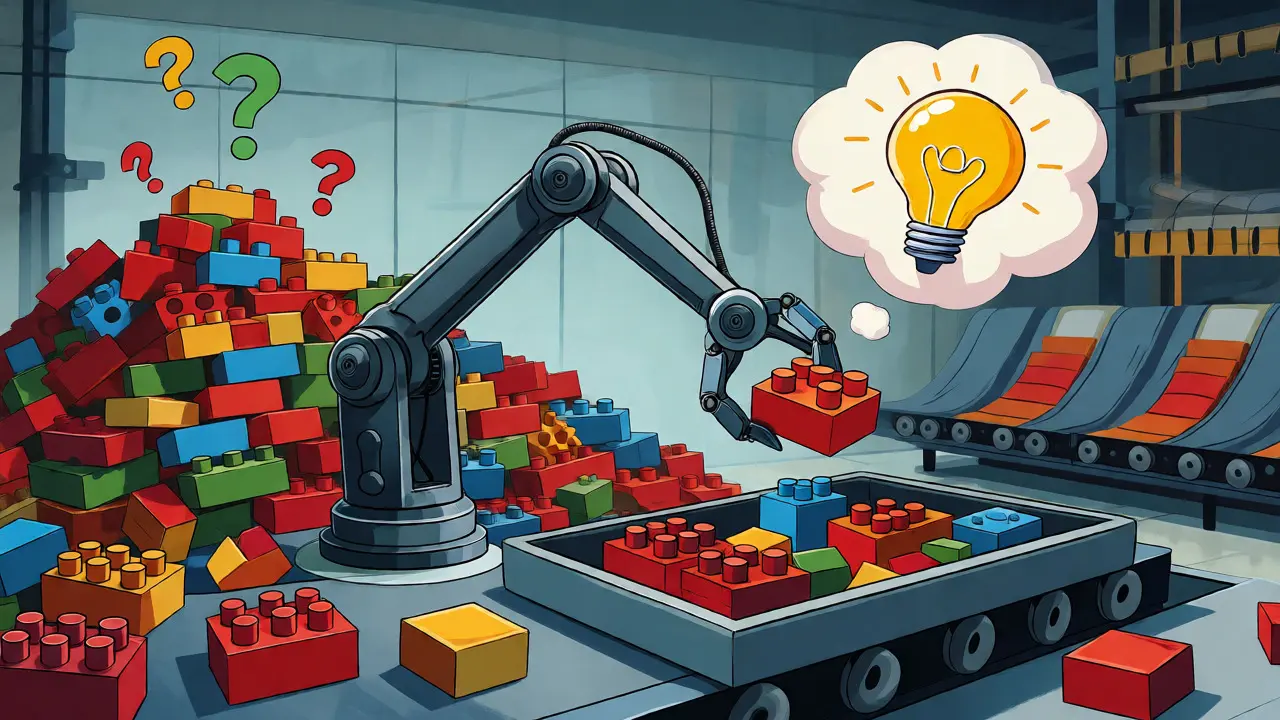
- Use Retrieval-Augmented Generation (RAG): Don’t paste entire databases into the prompt. Instead, retrieve only the relevant chunks of information and feed those to the model. LangChain users report optimal results by chunking documents at 75% of the max context capacity with 10% overlap. This ensures continuity between chunks.
- Implement Automatic Summarization: When a conversation exceeds 80% of the context window, summarize the older parts and replace them with the summary. This keeps the active context small and focused. Tools like Anthropic’s automatic context pruning help automate this.
- Be Explicit About Token Limits: Always include the context window size in your system prompts. Tell the model, "You have a 128k context window. Prioritize recent messages." This helps the model manage its own attention.
- Monitor Token Usage: Use libraries like `tiktoken` to count tokens before sending requests. Surprises happen when you think you’re under the limit but hit truncation because of unexpected tokenization patterns.
One common pitfall is assuming larger windows mean you can skip RAG. You still need RAG for efficiency. Sending 200,000 tokens every time is expensive and slow. Retrieving the top 5 relevant paragraphs and sending 2,000 tokens is faster, cheaper, and often more accurate because the signal-to-noise ratio is higher.
Future Trends and Regulatory Notes
The race for longer contexts continues. By 2027, McKinsey predicts commercial models will routinely offer 1-million-token windows. However, NVIDIA warns that without fundamental architectural changes, hardware limits may cap practical implementations at 500,000 tokens before 2030. We’re seeing innovations like Dynamic Context Allocation, which prioritizes relevant segments within large windows, improving quality by 14% in enterprise tests.
Regulation is catching up too. The EU AI Act now requires disclosure of context window sizes for high-risk applications. If you’re building tools for healthcare or finance, transparency about what the model can "remember" is becoming a compliance requirement, not just a technical detail.
Frequently Asked Questions
Does a larger context window always mean better performance?
No. Larger windows can lead to "attention dilution," where the model struggles to focus on relevant information amidst excessive noise. Quality often peaks at moderate lengths (e.g., 100k tokens) and may decline at maximum capacity unless specialized techniques like sliding window attention are used.
How many words are in a token?
On average, 1 token equals approximately 0.75 words in English. However, this varies by language and content type. Code, URLs, and non-English text often consume more tokens per character.
What happens when I exceed the context window?
The model typically truncates the oldest content in the prompt. Depending on the implementation, this might be done via a sliding window (dropping the earliest messages) or by throwing an error. Silent truncation is common in API calls, leading to unexpected behavior if not monitored.
Is it cheaper to use a smaller context window?
Yes, significantly. Most APIs charge per token processed. Using a 128k window instead of a 1M window reduces costs drastically. Additionally, smaller contexts generally result in faster inference times, lowering server costs.
Can I extend the context window manually?
You cannot change the underlying architecture's limit without retraining. However, you can simulate longer contexts using techniques like Recursive Summarization or Vector Database retrieval (RAG), where you store history externally and inject only relevant parts into the prompt.