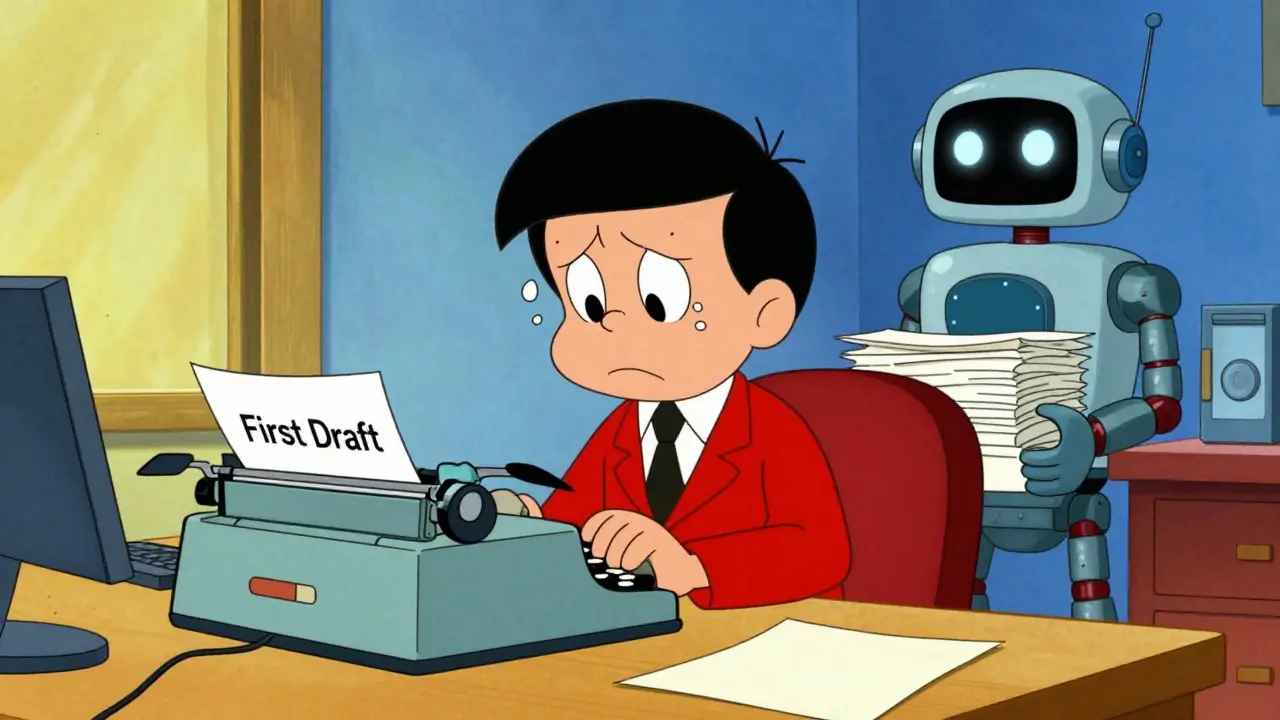
Stop writing the first draft. Seriously. If you are still typing out every single word of your blog posts, email newsletters, or social media captions from a blank screen, you are working harder than you need to be in 2026. The landscape has shifted. Large Language Models (LLMs) are advanced artificial intelligence systems trained on massive datasets to generate human-like text. They are no longer just a novelty for tech enthusiasts; they are the engine behind modern marketing operations.
The numbers don't lie. According to Salesforce's 2024 State of Marketing Report, 76% of marketers now use generative AI for basic content creation. Another 71% view it as a primary source of creative inspiration. This isn't about replacing writers; it's about amplifying them. But here is the catch: throwing a prompt at an LLM and hitting publish is a recipe for disaster. To actually win with generative AI, you need to understand how these models think, where they fail, and how to integrate them into your workflow without losing your brand voice or your search rankings.
How LLMs Actually Work in Marketing
You might think an LLM is just a fancy autocomplete tool. It’s not. Under the hood, these models use transformer-based neural network architectures. Instead of reading words one by one like an old-school robot, they analyze the relationships between all words in a sentence simultaneously. This allows them to predict what comes next with startling accuracy based on patterns learned from trillions of words across the internet, books, and articles.
Here is what this means for you: speed. LLMs can produce content 5-10 times faster than a human writer. Wrike’s analysis highlights that these models maintain contextual relevance over thousands of words, allowing you to generate a full blog post structure or a series of ad variants in minutes. However, there is a critical limitation you must respect. LLMs do not browse the live internet in real-time unless specifically connected to external data sources. They generate responses based on their training data cutoff dates. If you ask an LLM about a news event from last week, it will likely hallucinate or give you outdated information unless you provide that context yourself.
This distinction is vital for marketing. You cannot rely on an LLM to fact-check current events or verify live inventory levels on its own. That is why frameworks like MarketingFM utilize Retrieval-Augmented Generation (RAG) techniques to ground AI content in real-time product data. By connecting the LLM to your actual database, you get the speed of AI with the accuracy of your live data.
SEO Strategy in the Age of AI Search
Search engines have changed. Google and other platforms are increasingly prioritizing authoritative, high-quality sources with strong editorial control. Oleg Egorov, CMO at Flowwow, noted that unlike traditional keyword matching, modern search algorithms favor content that demonstrates genuine expertise and credibility. This makes LLM content generation a double-edged sword for SEO.
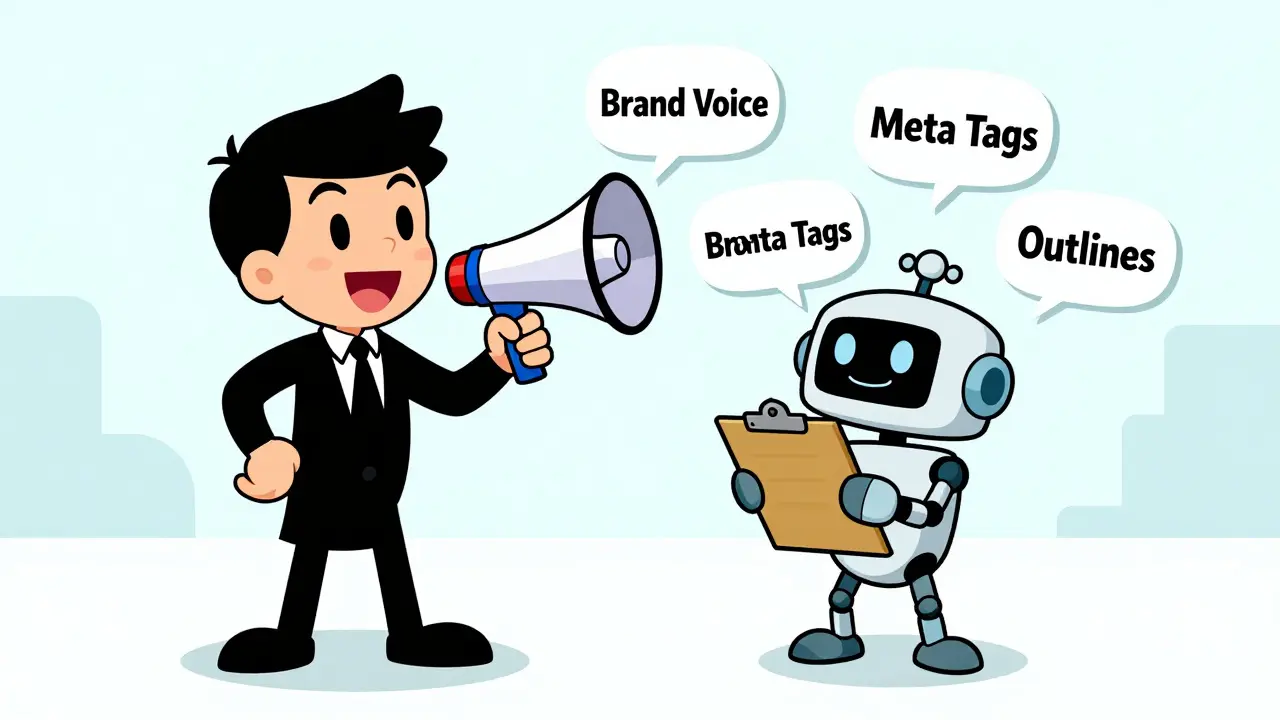
If you use an LLM to spit out generic, fluff-filled articles stuffed with keywords, you will get buried. Search engines are getting better at detecting low-effort AI content. However, if you use LLMs to enhance research, structure outlines, and optimize meta descriptions, you gain a massive advantage. ZeroGravityMarketing found that LLMs excel at producing SEO-optimized meta descriptions and title tags, reducing creation time from hours to minutes while maintaining click-through rates.
To rank well, you need a hybrid approach:
- Outline First: Use the LLM to create a comprehensive outline based on top-ranking competitors. Then, inject your unique insights, case studies, and personal experiences into each section.
- Optimize Metadata: Generate five variations of meta titles and descriptions for A/B testing. This is a low-risk, high-reward task where AI shines.
- Internal Linking: Ask the LLM to suggest internal links based on your existing content library. This improves site architecture and user retention.
Remember, the goal is topical authority. An LLM can help you cover the breadth of a topic quickly, but only you can provide the depth and nuance that satisfies both users and search algorithms.
Revolutionizing Ad Copy and Personalization
In advertising, speed and personalization are everything. HubSpot’s 2024 research reveals that 72% of marketers leverage AI specifically for personalization. Why? Because generic ads die. Customized content lives.
Imagine running a Facebook ad campaign. Traditionally, you might write three headlines and two body copies. With an LLM, you can generate 30 variations tailored to different audience segments. For example, you can ask the model to rewrite the same offer for "budget-conscious students," "busy professionals," and "tech-savvy early adopters." Each version uses language that resonates with that specific group.
The MarketingFM framework demonstrated this power in a June 2025 study. By using Retrieval-Augmented Generation to pull real-time product specs into ad copy, they achieved a 22% higher engagement rate compared to generic AI-generated ads. The key was grounding the creativity in factual data. Without RAG, the LLM might invent features that don't exist, leading to misleading ads and wasted spend.
Here is a simple workflow for ad copy:
- Define the core value proposition and target audience.
- Prompt the LLM to generate 10 headline options focusing on pain points.
- Generate 5 body copy variations, each highlighting a different benefit.
- Review and refine. Ensure tone matches your brand guidelines.
- Run A/B tests to see which combination performs best.
This process turns a day-long task into a morning activity. But again, human oversight is non-negotiable. You must ensure the claims are accurate and the tone is appropriate.
The Human Touch: Why You Still Matter
Let’s address the elephant in the room: Will AI replace marketers? No. But marketers who use AI will replace those who don’t. The anxiety is real-57% of marketers feel pressured to learn AI tools to stay relevant, according to CoreMedia. Yet, the data shows that pure AI output often falls short in emotional resonance.
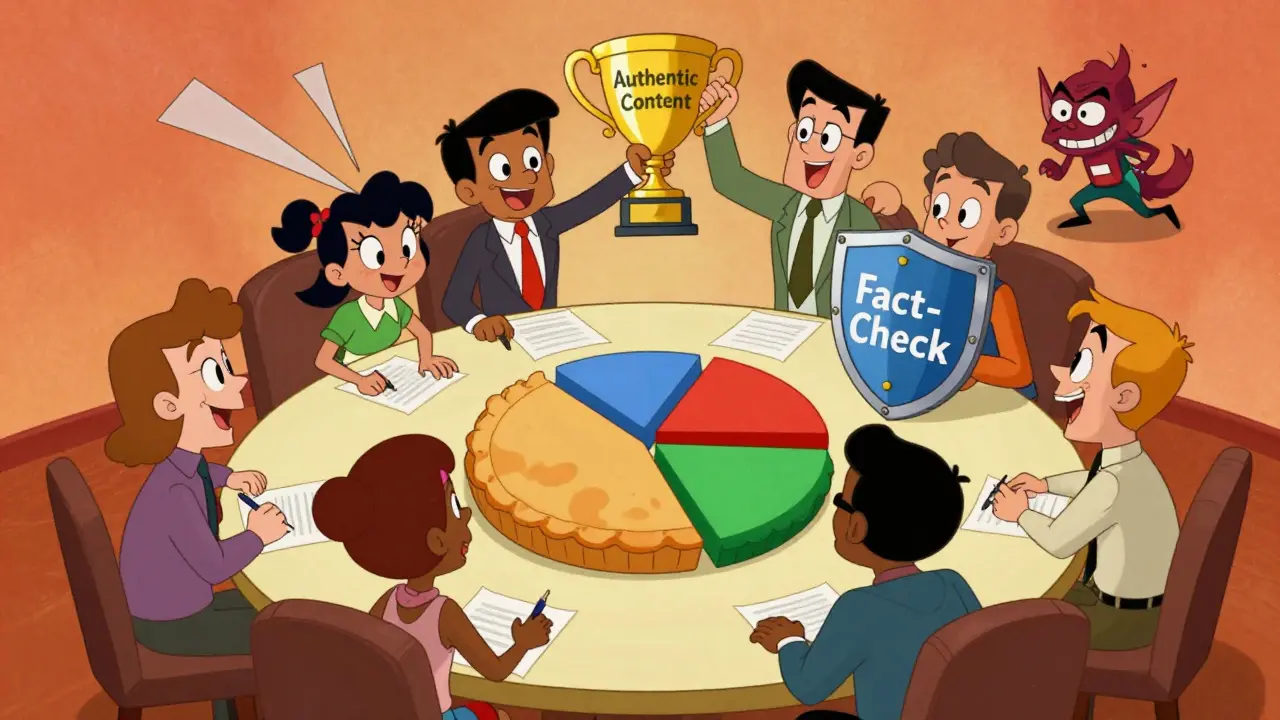
ZeroGravityMarketing’s analysis found that highly creative campaigns relying solely on LLMs saw 35% lower engagement when compared to human-refined content. Why? Because AI lacks true empathy and lived experience. It can mimic emotion, but it doesn't feel it. Complex storytelling, nuanced humor, and deep cultural references require a human touch.
Think of the LLM as a junior intern. It’s fast, tireless, and knows a lot of facts. But it needs direction. It needs you to set the tone, correct its mistakes, and infuse the work with soul. Successful teams establish clear brand voice guidelines and develop template prompts for common content types. They also implement strict human review checkpoints. A major retailer experienced a 15% drop in conversion rates after publishing AI-generated product descriptions that contained subtle factual errors. That mistake cost them money and trust. Verification is part of the job now.
Implementation Guide: Getting Started Without the Headache
So, how do you start? Don’t try to boil the ocean. Pick one repetitive task and automate it. Here is a practical path forward based on industry best practices:
Week 1-2: Foundation and Voice Gather your best-performing content. Feed examples into your LLM with instructions to analyze the tone, style, and structure. Create a "Brand Voice Document" that includes dos and don’ts. This becomes your system prompt for future generations.
Week 3-4: Prompt Engineering Basics Learn to write effective prompts. Vague prompts get vague results. Use the formula: Context + Task + Format + Constraints. For example: "Act as a senior SEO copywriter. Write a 500-word blog introduction about sustainable packaging. Use a conversational tone. Include three bullet points. Avoid jargon." Whalesync’s analysis showed that enterprise teams took 3-4 weeks to master effective prompting strategies. Expect a learning curve.
Ongoing: Integration and Feedback Connect your LLM to your CMS or CRM if possible. Tools like CoreMedia’s AI-powered platforms enable real-time personalization based on user behavior. Set up feedback loops. When an AI-generated piece underperforms, analyze why. Was the tone off? Did it miss key information? Refine your prompts accordingly.
| Metric | Traditional Workflow | AI-Assisted Workflow |
|---|---|---|
| Drafting Speed | Hours per article | Minutes per draft (5-10x faster) |
| Personalization Scale | Low (manual segmentation) | High (dynamic content adaptation) |
| Fact-Checking | Manual verification required | Requires RAG integration for accuracy |
| Creative Originality | High (human-driven) | Medium (requires human refinement) |
| Cost Efficiency | Higher labor costs | Lower marginal cost per asset |
Avoiding Common Pitfalls
Even with the best intentions, things can go wrong. Here are the most frequent traps marketers fall into:
- Hallucinations: LLMs can confidently state false information. Always verify facts, especially statistics, quotes, and product specifications. Never trust an LLM blindly.
- Brand Voice Drift: Without consistent prompting, AI output can sound robotic or inconsistent. Regularly audit your content against your brand guidelines.
- Over-Automation: Not everything should be automated. High-stakes communications, crisis management, and deeply personal customer interactions require human judgment.
- Ignoring Compliance: Regulations like the EU AI Act require transparency about AI-generated content in commercial contexts. Disclose when appropriate to maintain trust.
The global LLM market is projected to reach $259.8 billion by 2030. This growth signals that AI is here to stay. But technology alone doesn't win markets. Strategy does. By combining the speed and scale of LLMs with human creativity and oversight, you can build a marketing engine that is both efficient and authentic.
Can LLMs replace human copywriters?
No. While LLMs can generate drafts and handle routine tasks efficiently, they lack the emotional intelligence, cultural nuance, and strategic thinking required for high-level creative work. The most successful workflows combine AI speed with human refinement.
How do I prevent AI hallucinations in my content?
Use Retrieval-Augmented Generation (RAG) to ground the AI in verified data sources. Additionally, always implement a human review process to fact-check outputs, especially for statistics, dates, and product details.
Is AI-generated content bad for SEO?
Not inherently. Search engines prioritize quality and user satisfaction. If AI content is accurate, helpful, and well-edited, it can rank well. However, thin, duplicate, or factually incorrect AI content will hurt your rankings.
What is the best LLM for marketing?
Models like GPT-4 and Claude are popular due to their strong contextual understanding and ability to maintain brand voice. The best choice depends on your specific needs, budget, and integration capabilities with your existing tech stack.
How long does it take to train a team on AI tools?
Most teams require 3-4 weeks to develop effective prompting strategies and integrate AI into their workflows comfortably. Initial productivity may dip slightly during this learning phase before improving significantly.


Look, the real philosophical question here isn't about whether AI writes better than us, it's about what we lose when we outsource our thinking to a probabilistic engine. I've been experimenting with this for months and while the speed is undeniable, there's a certain... hollowness to the output if you don't inject your own soul into it. The post mentions RAG techniques which is smart because grounding the model in your actual data prevents that generic sludge feel. But remember, an LLM is just a mirror reflecting the internet back at you. If you want unique insights, you have to provide unique inputs. Don't let the tool dictate the strategy.
OMG! Yes!!! This is exactly what I needed to hear today!! I have been so stressed about keeping up with all these new tools and feeling like I'm falling behind!! But reading this makes me realize that it's not about replacing ourselves, it's about amplifying who we already are!! The part about using AI for meta descriptions and outlines is genius!! I tried it yesterday and saved literally hours of work!! We need to embrace this change together instead of fighting it!! Let's grow together!!
the idea that ai lacks empathy is interesting but maybe we are projecting human traits onto machines that do not have them. it is just math. probability. nothing more. the success comes from understanding the patterns not from pretending the machine feels something. efficiency is the only metric that matters in the end.
another article written by people who clearly have never struggled to make rent or understand the basic economic realities facing working class americans right now. you talk about 'brand voice' and 'creative inspiration' while ignoring that most small businesses are being crushed by algorithms they cant control. this tech is built on exploitation of data scraped from everywhere without consent. typical elite disconnect. nobody cares about your seo tips when the whole system is rigged against anyone who doesnt have millions to spend on ad spend anyway. pathetic really.
lol wow another take on how AI is gonna save us all. i mean sure if you ignore the fact that half the content online is now garbage generated by bots. i tried using one of these models for my client last week and it hallucinated a product feature that didnt exist and we had to pull the campaign. total disaster. the 'human touch' is basically just paying someone to fix the mess the AI made. why not just hire a writer in the first place? seems like extra steps to me tbh.
one must consider the ontological status of the text produced by such systems. is it art or merely simulation? the distinction may be semantic but the implications for marketing are profound. if the audience cannot distinguish between human and machine then perhaps the authenticity was never in the origin but in the reception. yet we cling to the notion of the author as creator even when the tool does the heavy lifting. it is a paradox we must sit with.
Listen up. If you are still manually writing every single word you are wasting money. Time is the only asset you cannot buy back. Use the tools. Automate the grunt work. Focus on strategy. The people complaining about 'soul' are usually the ones who couldn't write well to begin with. Adapt or get left behind. It's that simple. Stop making excuses.
I love this perspective on hybrid workflows! It's so important to remember that technology should serve us, not the other way around. Setting boundaries with AI usage is key-knowing when to let it handle the tedious tasks and when to step in with genuine human connection. I've found that using AI for brainstorming helps break through writer's block, but the final polish always needs that personal touch. Keep sharing these helpful tips!
The nuance here regarding Retrieval-Augmented Generation (RAG) is critical for any sophisticated digital marketer. Without grounding the Large Language Model in proprietary, real-time datasets via vector databases, you are merely generating plausible-sounding nonsense that lacks factual integrity. The synergy between transformer architectures and external knowledge graphs allows for dynamic content adaptation that maintains brand consistency while leveraging predictive text capabilities. It is imperative that professionals understand the underlying mechanics rather than treating these tools as black boxes.
they want you to believe its just a tool but its actually a surveillance mechanism designed to track every interaction and feed data back to big tech. the 'personalization' is just profiling you for targeted manipulation. dont trust the algorithm. keep your data offline. they are watching.