You’ve spent months curating a massive dataset and weeks configuring your GPU cluster. The loss curve is flattening, but you’re staring at the cloud bill, wondering if you should keep pushing or call it quits. This is the million-dollar question in Large Language Model (LLM) development today. It’s not just about throwing more data at the wall; it’s about understanding the precise mathematical boundaries of efficiency. If you stop too early, you leave performance on the table. If you go too long, you burn cash for marginal gains that might never pay off in inference costs.
The Shift from Kaplan to Chinchilla
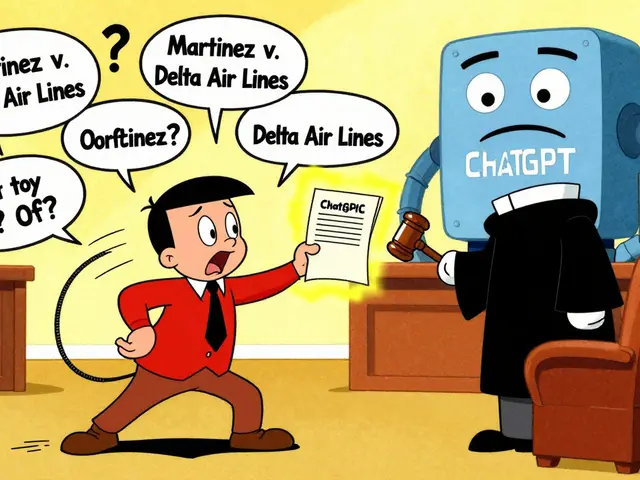
For years, the industry operated under the guidance of Kaplan Scaling Laws, published by OpenAI in 2020. These laws suggested that for a fixed compute budget, you should prioritize making the model larger rather than training it longer. The logic was simple: bigger models learn faster. But this assumption had a blind spot. In 2022, DeepMind researchers Hoffmann et al. dropped a bombshell with their "Chinchilla" paper. They proved that most existing models, including GPT-3, were significantly undertrained relative to their parameter count.
Chinchilla Scaling Laws flipped the script. They demonstrated that for optimal performance, you need to scale model parameters (N) and training tokens (D) proportionally. Specifically, both should grow as the square root of the compute budget (C). This means if you double your compute, you should roughly increase both your model size and your data volume. The implication? Many "large" models were actually inefficient because they hadn't seen enough data to justify their size.
| Approach | Primary Focus | Data-to-Parameter Ratio | Best For |
|---|---|---|---|
| Kaplan (2020) | Model Size | Low (~20x) | Inference speed priority |
| Chinchilla (2022) | Balanced Efficiency | High (~20x-50x)* | Training cost minimization |
| Overtraining (2023+) | Inference Performance | Very High (100x-400x) | Production deployment |
Theoretical Optimal vs. Practical Reality
If Chinchilla is so efficient, why isn’t everyone using it? Because theoretical optimality doesn’t always align with business reality. The core tension lies between Training Compute and Inference Cost. A Chinchilla-optimal model gives you the best possible loss for a specific amount of training money. However, production teams often care less about the training bill and more about how fast and cheap the model runs once it’s live.
This has led to the rise of Overtraining. Companies like Meta with their LLaMA series deliberately train smaller models on vastly more data than Chinchilla suggests. For example, LLaMA-2 7B was trained on 2 trillion tokens-roughly 14 times more than the Chinchilla-optimal point. Why? Because a smaller model that has seen way more data can be deployed cheaper and faster later on. You trade higher upfront training costs for lower long-term operational expenses.
Identifying Your Stopping Point
So, when do you actually hit "stop"? There isn’t one universal number, but there are concrete heuristics used by leading labs. Cameron Wolfe’s analysis of industry practices highlights three critical metrics to monitor during training:
- Loss Plateau: Watch the validation loss. If the improvement per 100 billion tokens drops below 0.01, you’re likely hitting diminishing returns.
- Perplexity Stability: Monitor validation perplexity. If improvements drop below 0.5% per additional 10 billion tokens, the model has likely saturated its capacity for that architecture.
- Downstream Benchmark Saturation: This is the most practical check. Run evaluations on benchmarks like MMLU or HellaSwag periodically. If the statistical significance of improvement vanishes (p > 0.05), further training is likely wasted compute.
It’s worth noting that these thresholds shift based on your goals. Research labs aiming for pure scientific discovery might stick closer to Chinchilla limits to prove efficiency. Product teams, however, often push into the "overtraining regime," where scaling laws still hold but predict slower gains. Wei et al. (2023) showed that scaling laws remain predictive even up to 32x overtraining, allowing you to extrapolate final performance without running the full experiment.

The Hidden Costs of Scaling
Ignoring infrastructure realities can derail your stopping criteria. As you scale, communication overhead becomes a silent killer. NVIDIA’s research indicates that in multi-node training, network communication can consume 30-60% of total compute time. Strong scaling-where adding GPUs linearly increases throughput-typically breaks down around 2,048 GPUs due to bottlenecks.
If you’re running on Ethernet-based clusters, strong scaling might degrade beyond 512 GPUs. On NVLink-connected systems, you might sustain efficiency up to 4,096 GPUs. This means your "optimal" stopping point isn’t just about math; it’s about hardware. Continuing training past the point where communication overhead outweighs compute gains is financially reckless. Always factor in your cluster topology when defining your maximum token limit.
Data Quality Over Quantity
A common misconception is that scaling laws only care about the sheer volume of tokens. Microsoft’s Phi Series challenged this notion. By training small models (1.3B-2.7B parameters) on highly curated, synthetic "textbook-quality" data, they achieved performance rivaling much larger models. Their approach involved extreme overtraining (up to 8x Chinchilla-optimal) but on a tiny, high-signal dataset.
This introduces the concept of the Densing Law, proposed by Microsoft Research in 2024. It suggests that data quality acts as a multiplier for effective scale. If your data is noisy, you need more tokens to achieve the same loss. If your data is pristine, you can reach equivalent performance with fewer tokens. Before deciding to stop training, ask yourself: Is the plateau due to model saturation, or is the model struggling to learn from low-quality noise?

Regulatory and Economic Ceilings
We are approaching physical and economic limits. Training a Chinchilla-optimal 1-trillion-parameter model could cost upwards of $500 million. With the EU AI Act proposing restrictions on training runs exceeding 10^25 FLOPs, regulatory compliance may soon dictate stopping points as much as performance curves do.
Enterprises must now balance technical ambition with financial viability. Gartner reports that 78% of enterprises now use scaling law predictions to guide decisions, moving away from "train until it looks good" to "train until the ROI turns negative." The break-even point for overtraining is typically reached after 3-5 months of heavy inference usage. If your model won’t see that traffic, don’t overtrain it.
Frequently Asked Questions
What is the Chinchilla scaling law?
The Chinchilla scaling law, introduced by Hoffmann et al. in 2022, states that for a fixed compute budget, model performance is optimized when model size and training data size are scaled proportionally. Unlike previous laws that favored larger models, Chinchilla proves that undertrained large models are less efficient than smaller, well-trained ones.
Why do companies like Meta overtrain their models?
Companies overtrain to improve inference performance. While Chinchilla-optimal models minimize training costs, overtrained models often have better generalization and require less computational power during inference (when the model is actually used). This shifts the cost burden from expensive, one-time training to cheaper, ongoing operations.
How do I know if my LLM is undertrained?
If your validation loss is still decreasing significantly with each new batch of data and hasn't plateaued, your model is likely undertrained. Additionally, if you are following Kaplan scaling laws (prioritizing size over data) and seeing poor sample efficiency, you are probably undertrained according to modern Chinchilla standards.
Do scaling laws apply to fine-tuning?
Traditional pre-training scaling laws differ from post-training dynamics. Fine-tuning follows different patterns, often governed by task-specific data quality and the alignment method (like RLHF). Recent work suggests separate scaling laws exist for test-time compute and reinforcement learning phases.
Is it better to have more data or a bigger model?
It depends on your constraint. If you want to minimize training cost, balance them equally (Chinchilla). If you want to minimize inference cost, prefer a smaller model with more data (Overtraining). If you have unlimited compute but limited data, a larger model will extract more signal from the available text.